
Skip to content Site Search

Menu

Home

We’re an independent, nonprofit newsroom reporting on gender, politics, policy and power. Read our story.

Topics

  • Politics
  • LGBTQ+
  • Health
  • Justice
  • Caregiving
  • Education
  • Abortion
View all topics

Daily Newsletter

Your trusted source for contextualizing the latest election news.

Look for a confirmation sent to

Did you mean

The email didn't go through.

or Contact us for support
  • Latest Stories
  • Our Mission
  • Our Team
  • Strategic Plan
  • Support the 19th
  • Search
  • Contact
Donate

Republish This Story

* Please read before republishing *

We’re happy to make this story available to republish for free under an Attribution-NonCommercial-NoDerivatives Creative Commons license as long as you follow our republishing guidelines, which require that you credit The 19th and retain our pixel. See our full guidelines for more information.

To republish, simply copy the HTML at right, which includes our tracking pixel, all paragraph styles and hyperlinks, the author byline and credit to The 19th. Have questions? Please email partnerships@19thnews.org.

— The Editors

Loading...

Modal Gallery

/
Home

We’re an independent, nonprofit newsroom reporting on gender, politics, policy and power. Read our story.

Daily Newsletter

Your trusted source for contextualizing the latest election news.

Look for a confirmation sent to

Did you mean

The email didn't go through.

or Contact us for support

Become a member

We’re an independent, nonprofit newsroom reporting on gender, politics, policy and power. Read our story.

Two speech bubbles, one with an outlined border and one with a lilac fill.

Make sense of the midterms

Get through election week with our daily newsletter covering the women and queer people still fighting to be seen and heard in our democracy.

Subscribe Now

The 19th thanks our sponsors. Become one.

Coronavirus

Joining a broader movement to fight for tenant rights

Philadelphia is the poorest big city in America, with nearly a quarter of its citizens living below the federal poverty line and more than one in 10 Philadelphians in deep poverty. About 47 percent of residents are renters, with 54 percent paying at least 30 percent of their income in rent.

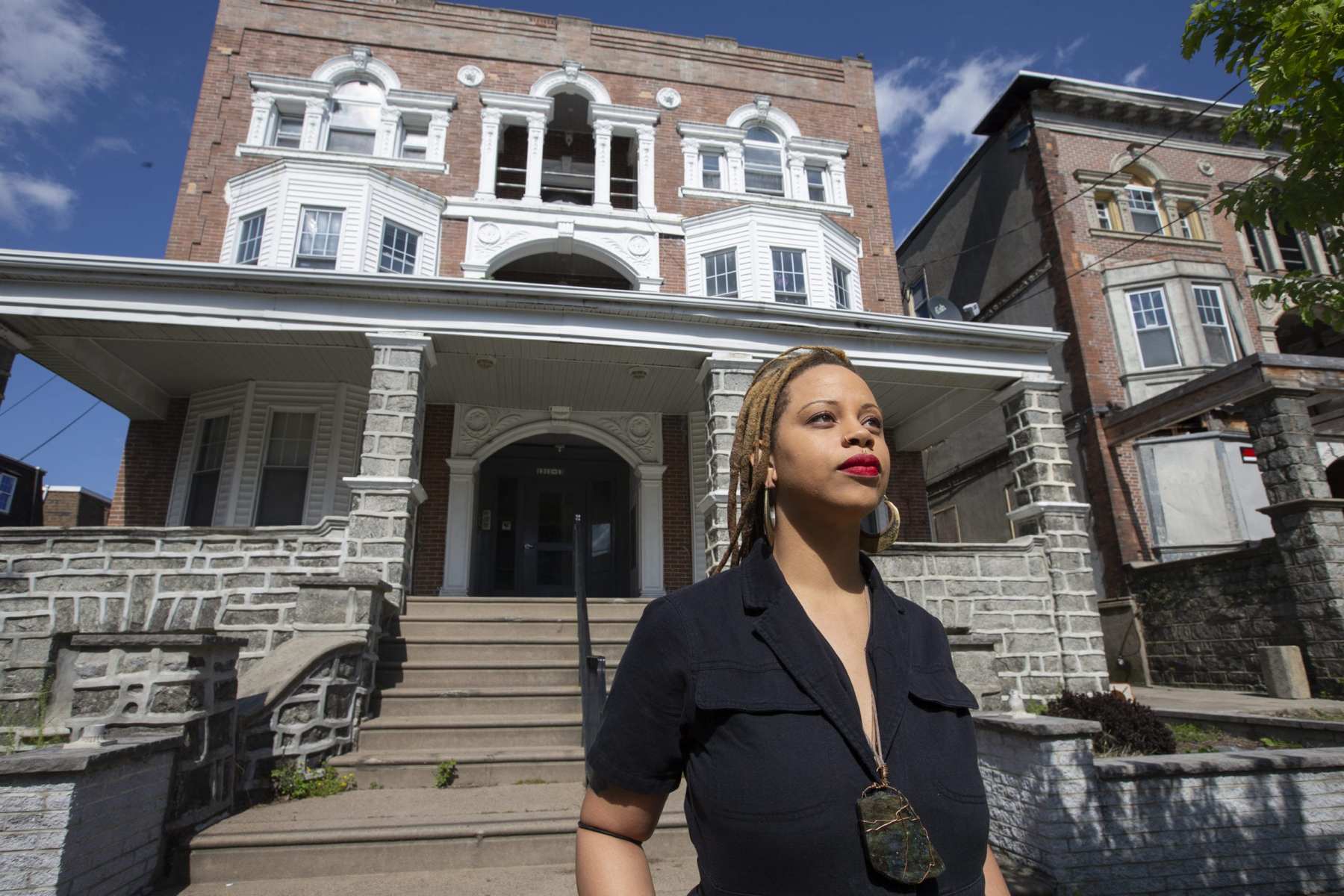
Shani Akilah of The Black and Brown Workers’ Collective organized her fellow tenants to ensure that their landlord did not kick them or their neighbors out of their six-unit apartment building in southwest Philadelphia. She is shown in front of the building on April 15, 2020.
Shani Akilah of The Black and Brown Workers’ Collective organized her fellow tenants to ensure that their landlord did not kick them or their neighbors out of their six-unit apartment building in southwest Philadelphia. She is shown in front of the building on April 15, 2020. Charles Fox (The Philadelphia Inquirer)

Errin Haines

Editor-at-large

Published

2020-04-16 05:00
5:00
April 16, 2020
am
America/Chicago

Share

  • Bluesky
  • Facebook
  • Reddit
  • Email

This collection, Portraits of a Pandemic, is a co-production between The Philadelphia Inquirer and The 19th. This work is supported by the Pulitzer Center and The Lenfest Institute.

Shani Akilah Robin started the year fighting housing displacement in Philadelphia, both as the cofounder of the Black and Brown Workers Cooperative and as a frustrated tenant living on the third floor of a six-unit stone-facade building in the southwest part of the city.

Robin said that there were mice in the two-bedroom apartment and that a kitchen cabinet fell off the wall and onto Robin’s head. In protest, Robin, who uses they/them pronouns, refused to pay rent until repairs were made and concerns were addressed.

The 19th thanks our sponsors. Become one.

Then the pandemic hit and paying rent was not just about a protest — it wasn’t an option.

The paid trainings Robin conducts “slowed down to zero,” as clients were all social distancing and in-person training became impossible. Grants that were pending were on hold.

“Anything that me and my family are living off of is simply what we had in the bank account, which for a lot of working people is really not that much,” Robin, 36, said.

As the coronavirus crisis worsened in Philadelphia, Robin and the cooperative watched the national conversation around rent strikes and decided to join the broader movement.

“It was really a call to action, knowing that at any day, it could be me as well,” Robin said.

Philadelphia is the poorest big city in America, with nearly a quarter of its citizens living below the federal poverty line and more than one in 10 Philadelphians in deep poverty. About 47% of residents are renters, with 54% paying at least 30% of their income in rent.

Sign up for more news and context delivered to your inbox, daily

Delivered directly to your inbox every weekday.

Look for a confirmation sent to

Did you mean

The email didn’t go through.

or Contact us for support
An email newsletter edition on a lilac background - the email shows an intro written by reporter Shefali Luthra

In mid-March, Philadelphia City Council enacted a moratorium on evictions, and the Pennsylvania Supreme Court also declared that no landlord or bank could evict tenants for at least two weeks due to failure to pay.

In Robin’s building, where they have lived for six years, there were neighbors who worked frontline jobs in delivery and the gig economy, nurses and young people whose hours were being cut. Robin sent a letter to everyone in the building ahead of April 1 to gauge their feelings amid the looming public health threat and their financial situation, as well as their interest in a collective rent strike.

At first, Robin said, only one other unit responded, but slowly others began reaching out. Within days, two-thirds of the building replied and a tenants’ council was formed. At the end of March, four renters sent a letter to landlord Eugene Smith outlining their rights and informing him that they would update him about their ability to return to work.

On April 6, the landlord responded in a letter not only to Robin and the neighbors, but to his tenants across the city, stating his intention to work with them during the crisis. He asked tenants who are able to pay to do so and said that payment plans would be available for those who will need to catch up.

Smith said in an interview Thursday that he is also in a bind, as a property owner whose mortgage is due regardless of his tenants’ ability to pay.

“It’s unfortunate, but as soon as that situation is over, they’re going to have to catch up,” Smith said, adding that he is paying for insurance and utilities as well as the mortgages on more than two dozen properties across the city.

Robin said the cooperative will continue to fight for housing rights during the pandemic.

“This pandemic has only exposed the fact that housing insecurity … was in and of itself a pandemic in this country. Everything has really just exacerbated the issues that have already been there,” Robin said. “This is about human rights.”

Share

  • Bluesky
  • Facebook
  • Reddit
  • Email

Recommended for you

  • Two people sit in chairs looking at the camera.
    Evictions impact millions of kids. These schools get an alert when it happens to their students.
  • Renee Hill Joyner, Linda James-Rivera and Zoe Ganslaw stand together in front of shelves stocked with food and household supplies.
    Women help feed their communities. Federal cuts are making that harder.
  • A group of preschoolers in uniforms hug New York Mayor Zohran Mamdani.
    Under Mamdani, New York will be the first to open a free childcare center for city workers
  • A person in a white parka and green knit hat faces a line of heavily equipped federal law enforcement officers wearing gas masks behind yellow police tape on a smoky Minneapolis street.
    Single mothers lost months of income hiding from ICE — and now can’t afford to renew immigration papers

From the Collection

Collection: Portraits of a Pandemic

Illustration of a woman wearing a mask and holding up the coronavirus
  • For family caregivers, COVID is a mental health crisis in the making
    Shefali Luthra · October 8
  • A new database tracks COVID-19’s effects on sex and gender
    Shefali Luthra · September 15
  • Pregnant in a pandemic: The 'perfect storm for a crisis'
    Shefali Luthra · August 25

Daily Newsletter

Your trusted source for contextualizing the latest election news.

Look for a confirmation sent to

Did you mean

The email didn't go through.

or Contact us for support

Become a member

Explore more coverage from The 19th

  • Politics
  • LGBTQ+
  • Health
  • Justice
  • Caregiving
View all topics

Site Footer

Support representative journalism today.

Learn more about membership.

  • Give $19
  • Give $50
  • Give $100
  • Any amount

Transparency

  • About
  • Team
  • Contact
  • Privacy Policy
  • Community Guidelines
  • Gift Acceptance Policy
  • Financials

Newsroom

  • Latest Stories
  • Strategic Plan
  • 19th News Network
  • Events
  • Careers
  • Fellowships

Newsletters

  • Daily
  • The Amendment
  • Menopause
  • The Mom Guilt Economy
  • View all

Support

  • Ways to Give
  • Sponsorship
  • Republishing
  • Volunteer
  • Merch

The 19th is a reader-supported nonprofit news organization. Our stories are free to republish with these guidelines.