
Skip to content Site Search

Menu

Home

We’re an independent, nonprofit newsroom reporting on gender, politics, policy and power. Read our story.

Topics

  • Politics
  • LGBTQ+
  • Health
  • Justice
  • Caregiving
  • Education
  • Abortion
View all topics

Daily Newsletter

Your trusted source for contextualizing the latest election news.

Look for a confirmation sent to

Did you mean

The email didn't go through.

or Contact us for support
  • Latest Stories
  • Our Mission
  • Our Team
  • Strategic Plan
  • Support the 19th
  • Search
  • Contact
Donate

Republish This Story

* Please read before republishing *

We’re happy to make this story available to republish for free under an Attribution-NonCommercial-NoDerivatives Creative Commons license as long as you follow our republishing guidelines, which require that you credit The 19th and retain our pixel. See our full guidelines for more information.

To republish, simply copy the HTML at right, which includes our tracking pixel, all paragraph styles and hyperlinks, the author byline and credit to The 19th. Have questions? Please email partnerships@19thnews.org.

— The Editors

Loading...

Modal Gallery

/
Home

We’re an independent, nonprofit newsroom reporting on gender, politics, policy and power. Read our story.

Daily Newsletter

Your trusted source for contextualizing the latest election news.

Look for a confirmation sent to

Did you mean

The email didn't go through.

or Contact us for support

Become a member

We’re an independent, nonprofit newsroom reporting on gender, politics, policy and power. Read our story.

Two speech bubbles, one with an outlined border and one with a lilac fill.

Make sense of the midterms

Get through election week with our daily newsletter covering the women and queer people still fighting to be seen and heard in our democracy.

Subscribe Now

The 19th thanks our sponsors. Become one.

Health

Biden administration kills food stamp restriction that could have affected 1.3 million Americans

The restriction would have particularly affected Black women and Latinas, who remain disproportionately affected by the recession.

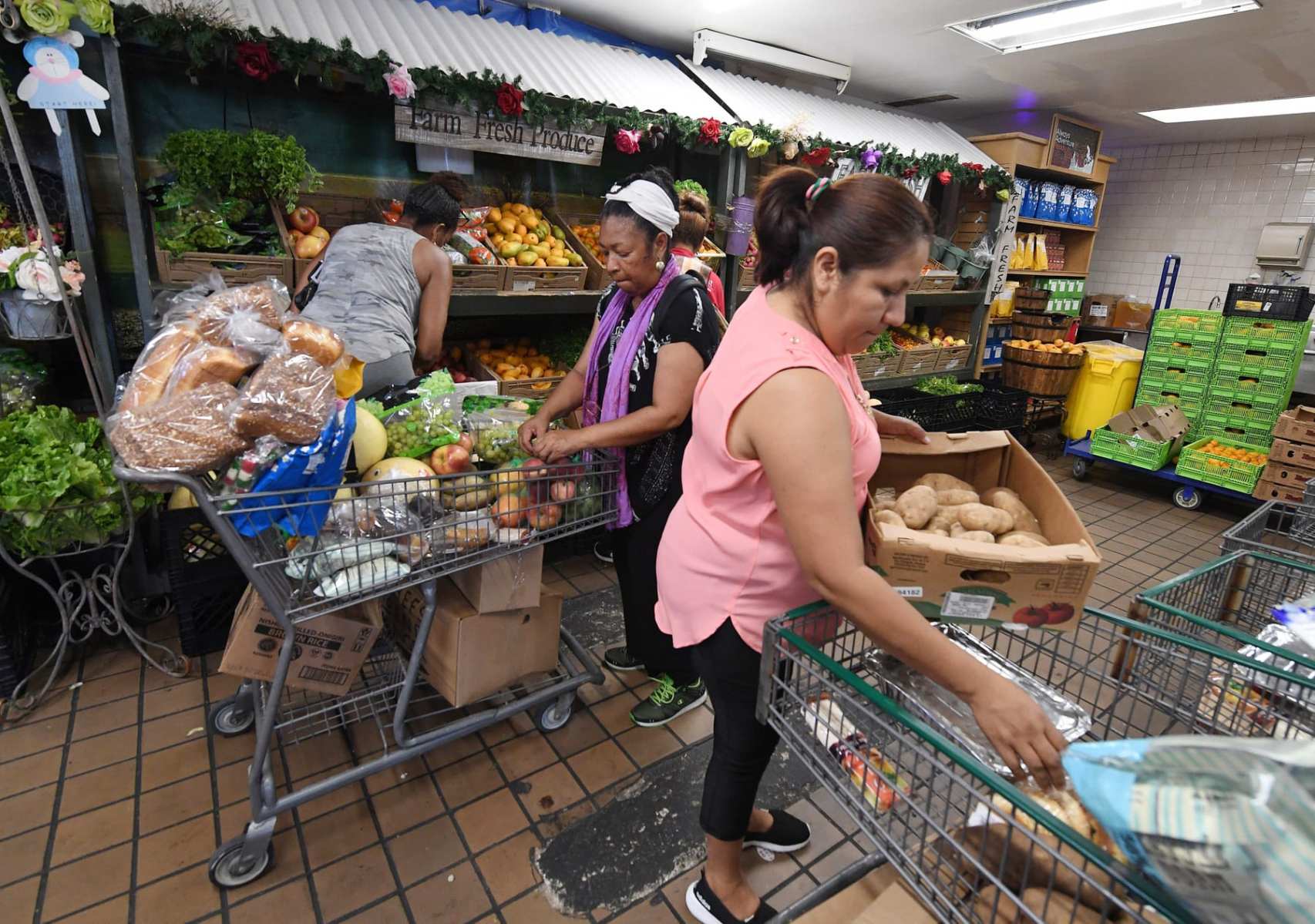
People shopping at a food bank.
(Photo by MARK RALSTON/AFP via Getty Images)

Shefali Luthra

Reproductive Health Reporter

Published

2021-04-02 12:21
12:21
April 2, 2021
pm
America/Chicago

Share

  • Bluesky
  • Facebook
  • Reddit
  • Email

The Biden administration has abandoned a federal proposal to impose stricter work requirements for people seeking food stamps — a policy that could have affected more than 1.3 million people, in particular the Black women and Latinas who remain disproportionately impacted by the recession.

The proposal, put forth in 2018 by the Trump administration, would have made it significantly harder for states to opt out of the work requirements for people receiving benefits from the Supplemental Nutrition Assistance Program (SNAP). Typically, states with high unemployment rates can seek waivers from the federal government so that, if it is already difficult to find work, people who are unemployed can still access SNAP benefits. 

The rule never took effect. In March 2020, the U.S. District Court for Washington, D.C., issued a national injunction blocking the Trump rule, pending results from a lawsuit advocacy groups had filed opposing the rule. Federal coronavirus legislation then suspended any work requirements for people seeking SNAP benefits. 

The 19th thanks our sponsors. Become one.

The policy would have been particularly damaging for people who lost work in the past year and have struggled to find employment. Per federal jobs data, high unemployment numbers for Black women and Latinas during the pandemic have not subsequently improved. 

Now, the Biden administration’s move to withdraw the rule means that, in many states, people who are unemployed will remain eligible for food stamps even after the coronavirus crisis ends.

The Trump administration had anticipated about 700,000 people would have lost access to food stamps if the policy took effect. But an independent analysis by the Brookings Institution, which looked at individual estimates from every state, put the figure much higher: at least 1.3 million people. That estimate was done before the COVID-19 crisis spurred far worse economic conditions. 

“It would be horrendous for the economy for all of these people who lost income to be kicked off SNAP in three months because they’re not working, because there are no jobs available,” said Lauren Bauer, an economics fellow at Brookings who has studied the policy’s effects. “Unlike in previous recessions where male-dominated industries tended to be more affected … women would have been negatively affected by a work requirement for SNAP more than usual.” 

Food insecurity — the lack of consistent, stable access to healthy food — remains a national crisis, federal data suggests. As of early March, 22 million adults, or about 11 percent of all U.S. adults, reported not having enough food for their households at some point in the past week. Research suggests that increasing SNAP benefits is one of the most effective ways to combat the problem.

The Trump proposal would have affected only people without dependents — meaning single mothers, who are particularly vulnerable to food insecurity, would not necessarily have been affected. But parents who do not live with their children would have been subject to the work requirements, Bauer noted. And women who do not have children would have been particularly vulnerable.  

“We’re thinking about older Black and Latina women — and younger ones,” Bauer said.

Share

  • Bluesky
  • Facebook
  • Reddit
  • Email

Recommended for you

  • Two children wearing black clothes and facing away from the camera wait in a long hallway alone.
    How Trump’s immigration crackdown is harming children — including U.S. citizens
  • Marshall standing and speaking at a mic surrounded by darkness.
    How women’s stories are reshaping a high-stakes Kansas Senate race
  • US Capitol building against a blue sky.
    Women voted on affordability. What can Congress do to deliver on it?
  • Protesters hold signs calling for the abolition of ICE and immigrant rights during a demonstration in front of a brightly lit display.
    ICE is detaining pregnant immigrants. Most Americans say they shouldn’t.

Daily Newsletter

Your trusted source for contextualizing the latest election news.

Look for a confirmation sent to

Did you mean

The email didn't go through.

or Contact us for support

Become a member

Explore more coverage from The 19th

  • Politics
  • LGBTQ+
  • Health
  • Justice
  • Caregiving
View all topics

Site Footer

Support representative journalism today.

Learn more about membership.

  • Give $19
  • Give $50
  • Give $100
  • Any amount

Transparency

  • About
  • Team
  • Contact
  • Privacy Policy
  • Community Guidelines
  • Gift Acceptance Policy
  • Financials

Newsroom

  • Latest Stories
  • Strategic Plan
  • 19th News Network
  • Events
  • Careers
  • Fellowships

Newsletters

  • Daily
  • The Amendment
  • Menopause
  • The Mom Guilt Economy
  • View all

Support

  • Ways to Give
  • Sponsorship
  • Republishing
  • Volunteer
  • Merch

The 19th is a reader-supported nonprofit news organization. Our stories are free to republish with these guidelines.