
Skip to content Site Search

Menu

Home

We’re an independent, nonprofit newsroom reporting on gender, politics, policy and power. Read our story.

Topics

  • Politics
  • LGBTQ+
  • Health
  • Justice
  • Caregiving
  • Education
  • Abortion
View all topics

Daily Newsletter

Your trusted source for contextualizing the latest election news.

Look for a confirmation sent to

Did you mean

The email didn't go through.

or Contact us for support
  • Latest Stories
  • Our Mission
  • Our Team
  • Strategic Plan
  • Support the 19th
  • Search
  • Contact
Donate

Republish This Story

* Please read before republishing *

We’re happy to make this story available to republish for free under an Attribution-NonCommercial-NoDerivatives Creative Commons license as long as you follow our republishing guidelines, which require that you credit The 19th and retain our pixel. See our full guidelines for more information.

To republish, simply copy the HTML at right, which includes our tracking pixel, all paragraph styles and hyperlinks, the author byline and credit to The 19th. Have questions? Please email partnerships@19thnews.org.

— The Editors

Loading...

Modal Gallery

/
Home

We’re an independent, nonprofit newsroom reporting on gender, politics, policy and power. Read our story.

Daily Newsletter

Your trusted source for contextualizing the latest election news.

Look for a confirmation sent to

Did you mean

The email didn't go through.

or Contact us for support

Become a member

We’re an independent, nonprofit newsroom reporting on gender, politics, policy and power. Read our story.

Two speech bubbles, one with an outlined border and one with a lilac fill.

Make sense of the midterms

Get through election week with our daily newsletter covering the women and queer people still fighting to be seen and heard in our democracy.

Subscribe Now

The 19th thanks our sponsors. Become one.

Inside The 19th

Why we need more empathy in journalism

Brianna McNeal, an Olympic champion whose recovery from an abortion inadvertently launched an investigation, told The 19th's Orion Rummler that past interviews on the subject had made her too afraid to say everything she wanted to say.

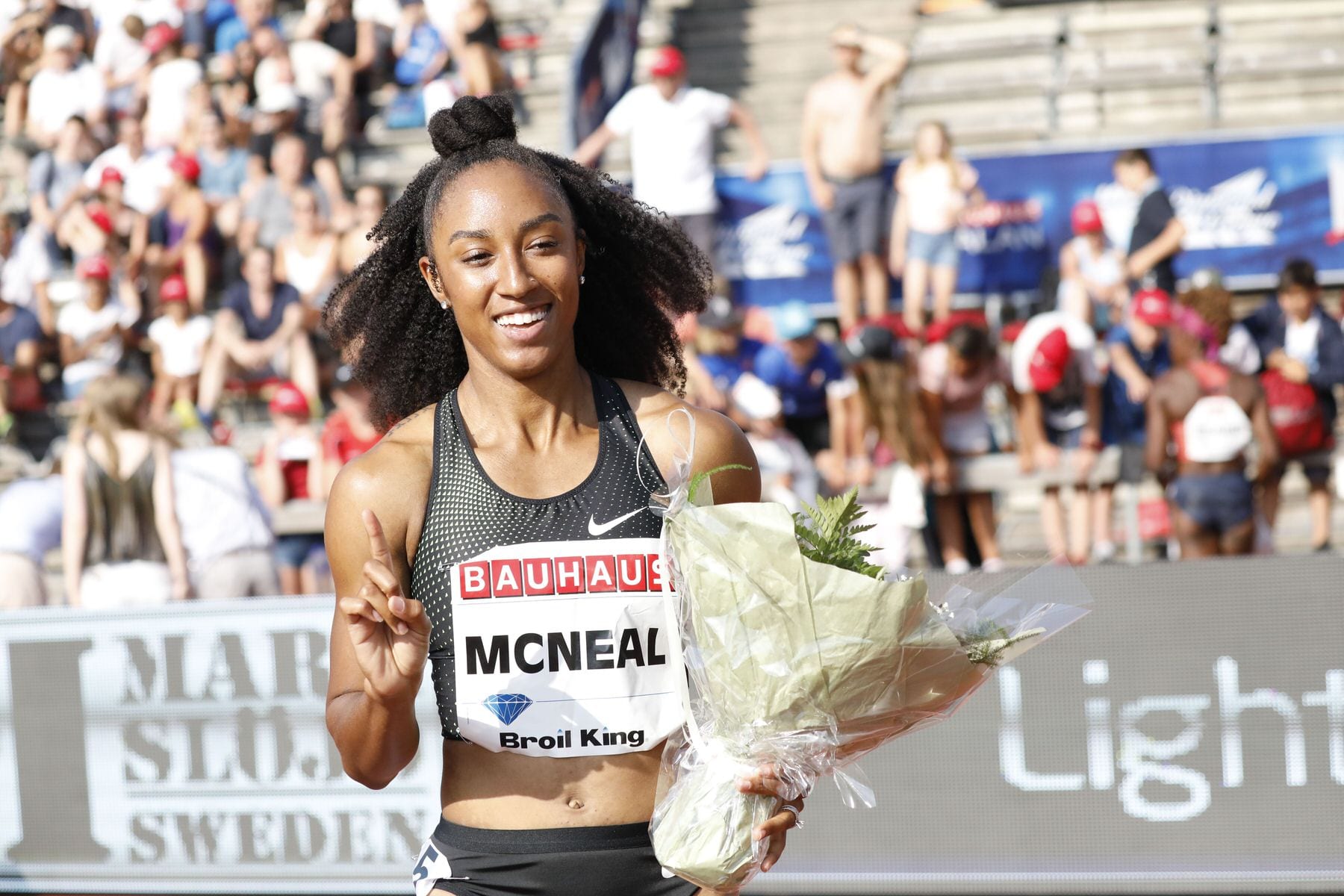
Brianna McNeal from USA, reacts after winning the women's 100m hurdles.
Brianna McNeal from USA, reacts after winning the women's 100m hurdles event at the IAAF Diamond League 2018 meeting at Stockholm Olympic Stadium in Stockholm, Sweden, on June 10, 2018. (Photo by CHRISTINE OLSSON/AFP via Getty Images)

Orion Rummler

LGBTQ+ Reporter

Published

2021-07-09 16:44
4:44
July 9, 2021
pm
America/Chicago

Share

  • Bluesky
  • Facebook
  • Reddit
  • Email

This column originally ran in The 19th’s weekly newsletter. Subscribe here.

Brianna McNeal, a 2016 track and field Olympic champion whose recovery from an abortion inadvertently launched a World Athletics investigation, told me that past interviews on the subject had made her too afraid to say everything she wanted to say.

At The 19th, our standard is clear: We cover everyone with empathy. 

The 19th thanks our sponsors. Become one.

I was honored when McNeal said she felt comfortable opening up about the emotional weight she had been carrying for over a year. She had had an abortion. Her younger brother had died. And an organization governing her livelihood seemed unable to acknowledge that upheaval. 

“A lot of these things, I get so nervous and I get anxious and afraid, and I end up not speaking how I want,” she told me towards the end of our interview over the phone. 

“And I’m later like — I wish I said this or I forgot to say this. But this was easy, I would say, to communicate about it.”

An interview that prevents someone in a vulnerable position from saying everything they want to say — from painting a full picture of their circumstances and emotions to the reporter — is another hindrance for newsrooms as they learn to accurately report on marginalized communities.  

I think this is an especially important lesson for White men reporters, like myself, to learn. Responsible reporting demands “baseline literacy in trauma concepts,” as Bruce Shapiro, executive director of the Dart Center for Journalism & Trauma, wrote last month. 

Sign up for more news and context delivered to your inbox, daily

Delivered directly to your inbox every weekday.

Look for a confirmation sent to

Did you mean

The email didn’t go through.

or Contact us for support
An email newsletter edition on a lilac background - the email shows an intro written by reporter Shefali Luthra

The importance of journalists being trauma-informed is evident in Naomi Osaka and Sha’Carri Richardson’s stories, too. Osaka, fined $15,000 for not speaking to the media, called for press conferences to be more empathetic in her TIME magazine essay on Thursday. Richardson said she first learned of her biological mother’s death from a reporter.

Establishing empathy with a source, showing that you appreciate what they’ve been through, is key to establishing baseline trust with them — especially if you experience the world in an entirely different way than they do. 

“It’s hard for me not to sit here and cry, honestly,” McNeal told me at one point in our conversation, after reflecting on the emotional burdens that the case, her abortion, and losing her baby brother had put on her and her family. 

McNeal’s raw emotional honesty is what propelled our story forward and connected with readers — and using empathy to earn that kind of honesty should be a priority for reporters. 

Share

  • Bluesky
  • Facebook
  • Reddit
  • Email

Recommended for you

  • A commuter looks on as masked members of the White nationalist group Patriot Front ride the metro on the 250th anniversary of independence.
    The Black woman on the train did not look away. How much longer will we?
  • Collage showing Donald Trump in front of a presidential limousine, a Trump-branded pickup truck, a man waving a checkered flag, and an IndyCar display, all set against a textured red background.
    Real men don’t bike: How cars became the symbol of American manhood
  • Two cyclists ride by a protest encampment with signage showing support for Palestine and a UCI sign on a light pole nearby.
    For college students, a school’s state politics can matter as much as its academics
  • Alsobrooks and Blunt Rochester laugh as they whisper to each other while seated together.
    Two senators, two hopefuls and history on the line

Daily Newsletter

Your trusted source for contextualizing the latest election news.

Look for a confirmation sent to

Did you mean

The email didn't go through.

or Contact us for support

Become a member

Explore more coverage from The 19th

  • Politics
  • LGBTQ+
  • Health
  • Justice
  • Caregiving
View all topics

Site Footer

Support representative journalism today.

Learn more about membership.

  • Give $19
  • Give $50
  • Give $100
  • Any amount

Transparency

  • About
  • Team
  • Contact
  • Privacy Policy
  • Community Guidelines
  • Gift Acceptance Policy
  • Financials

Newsroom

  • Latest Stories
  • Strategic Plan
  • 19th News Network
  • Events
  • Careers
  • Fellowships

Newsletters

  • Daily
  • The Amendment
  • Menopause
  • The Mom Guilt Economy
  • View all

Support

  • Ways to Give
  • Sponsorship
  • Republishing
  • Volunteer
  • Merch

The 19th is a reader-supported nonprofit news organization. Our stories are free to republish with these guidelines.