
Skip to content Skip to search

Republish This Story

* Please read before republishing *

We’re happy to make this story available to republish for free under an Attribution-NonCommercial-NoDerivatives Creative Commons license as long as you follow our republishing guidelines, which require that you credit The 19th and retain our pixel. See our full guidelines for more information.

To republish, simply copy the HTML at right, which includes our tracking pixel, all paragraph styles and hyperlinks, the author byline and credit to The 19th. Have questions? Please email partnerships@19thnews.org.

— The Editors

Loading...

Modal Gallery

/
Sign up for our newsletter

Menu

Topics

  • Abortion
  • Politics
  • Education
  • LGBTQ+
  • Caregiving
  • Environment & Climate
  • Business & Economy
View all topics

Daily Newsletter

A smart, relatable digest of our latest stories and top news affecting women and LGBTQ+ people.

Look for a confirmation sent to

Did you mean

The email didn't go through.

or Contact us for support
  • Latest Stories
  • Our Mission
  • Our Team
  • Strategic Plan
  • Ways to Give
  • Search
  • Contact
Donate
Home

We’re an independent, nonprofit newsroom reporting on gender, politics, policy and power. Read our story.

Topics

  • Abortion
  • Politics
  • Education
  • LGBTQ+
  • Caregiving
  • Environment & Climate
  • Business & Economy
View all topics

Daily Newsletter

A smart, relatable digest of our latest stories and top news affecting women and LGBTQ+ people.

Look for a confirmation sent to

Did you mean

The email didn't go through.

or Contact us for support
  • Latest Stories
  • Our Mission
  • Our Team
  • Strategic Plan
  • Ways to Give
  • Search
  • Contact

We’re an independent, nonprofit newsroom reporting on gender, politics, policy and power. Read our story.

Daily Newsletter

A smart, relatable digest of our latest stories and top news affecting women and LGBTQ+ people.

Look for a confirmation sent to

Did you mean

The email didn't go through.

or Contact us for support

Become a member

Support The 19th

At a time of escalating threats to press freedom and our democracy, we will continue to have courage in our coverage, clarity in our mission and community at our core. As a nonprofit newsroom, we rely on donations to power our journalism. Donate today, and your gift will be matched.

Donate

The 19th thanks our sponsors. Become one.

Abortion

Abortions can continue in Louisiana and Utah for now after judges block trigger laws

When the Supreme Court overturned Roe v. Wade on Friday morning, 13 states were poised to quickly ban abortion. Louisiana and Utah on Monday became the first to have the bans blocked.

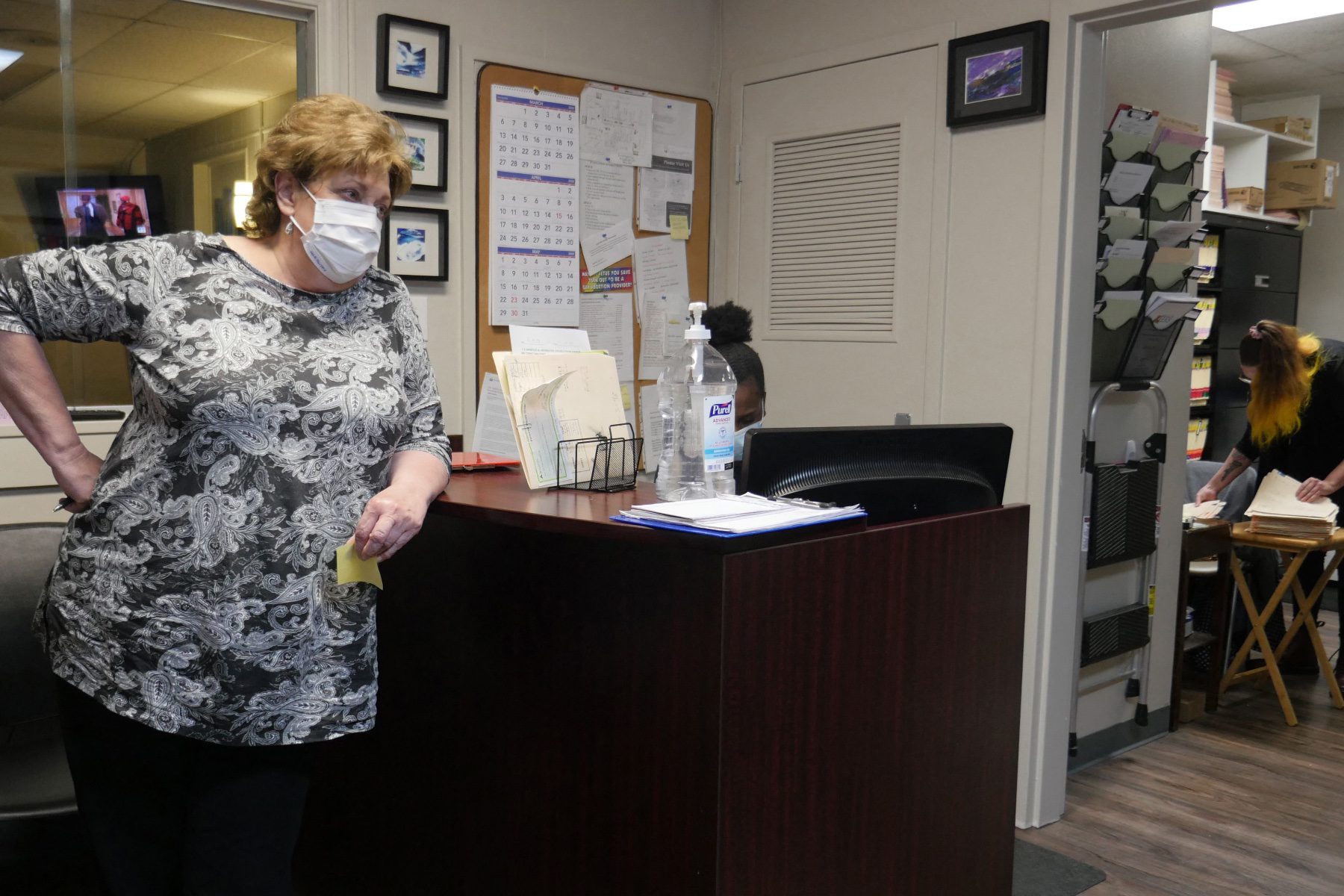
Kathaleen Pittman, administrator of the Hope Medical Group for Women stands in an office in Shreveport, Louisiana, April 19, 2022. (Photo by François Picard / AFP) (Photo by FRANCOIS PICARD/AFP via Getty Images)

Mariel Padilla

General Assignment Reporter

Published

2022-06-27 18:11
6:11
June 27, 2022
pm
America/Chicago

Republish this story

Share

  • Bluesky
  • Facebook
  • Email

Republish this story

Louisiana and Utah’s abortion trigger bans were blocked Monday after lawsuits were filed in separate state courts. A state district judge in New Orleans temporarily blocked an immediate statewide abortion ban until July 8, when the court will consider the legal challenge. A judge in Utah also blocked a ban for the next 14 days after Planned Parenthood filed against its trigger law. More lawsuits are coming in other states with trigger laws and pre-Roe bans on abortion.

As two of the 13 states with trigger laws on the books, Louisiana and Utah had abortion restrictions that would go into effect immediately or shortly after Roe v. Wade was overturned Friday. Louisiana was one of only three states — along with Kentucky and South Dakota — that banned abortion immediately after the Supreme Court’s decision was announced. Utah’s trigger law went into effect Friday night after the decision was certified. 

Louisiana state Rep. Mandie Landry, a lawyer who has tried and failed to pass legislation to prevent criminal prosecutions for people who seek an abortion, said it felt like a “Hail Mary pass” when the Center for Reproductive Rights and abortion providers filed a lawsuit on Monday morning. 

The 19th thanks our sponsors. Become one.

“It was really amazing to see the court agree that there’s a likelihood that our trigger bans as they stand are unconstitutional,” Landry told The 19th. “So it was a little bit of a welcome surprise. I think there’s going to be a lot of lawsuits in many states, and it’s going to look different per state.” 

Louisiana’s trigger law was blocked first, then Utah followed shortly after. Many similar legal battles are underway across the country as last week’s Supreme Court ruling, Dobbs v. Jackson Women’s Health Organization, left the question of abortion access up to states. Similar lawsuits challenging bans have been filed in Idaho, Kentucky, Mississippi and Texas. In Florida, abortion advocates asked a judge on Monday to block a 15-week ban. 

For many, these legal challenges are only likely to buy limited time for abortion providers. In the coming weeks, 26 states are certain or likely to move quickly to ban abortion, according to the Guttmacher Institute.

Sign up for more news and context delivered to your inbox, daily

Delivered directly to your inbox every weekday.

Look for a confirmation sent to

Did you mean

The email didn’t go through.

or Contact us for support
Preview of the daily newsletter from The 19th

Louisiana Attorney General Jeff Landry, who is not related to the state representative, said on social media following the judge’s injunction that he stood by the state’s trigger law, which was passed in 2006. “We would remind everyone that the laws that are now in place were enacted by the people … We are fully prepared to defend these laws in our state courts, just as we have in our federal courts,” he tweeted.

Going back more than five decades, Landry, the state legislator, said that Louisiana has more abortion-related laws than any state, many of which overlap or apply to the same situations — making it difficult for clinics and doctors to do their jobs. 

“They’re a mess,” she said. “They’re chaos, and I dealt with it this year in the legislature trying to clarify some of them … The issue is because we have multiple different laws that talk about a trigger ban or talk about what will happen if Roe is overturned — they’re a little bit different. It’s not clear what it means for clinics, patients, when it happens, how fast and if there are any exceptions.” 

At least one of Louisiana’s three abortion clinics said it would re-open its doors on Tuesday, but Landry wasn’t certain the others would do the same and risk the legal repercussions or potential violence that she predicted in the coming days and weeks. 

“People just need to be realistic about what’s happening,” she said. “This is a reprieve, but anything that buys time and gets people to listen to what’s going on is helpful. I think so many people, including some of my colleagues and prior legislators, always kind of hid behind Roe — thinking it wasn’t going to be overturned, and now it is. And now they’re faced with the reality of what they’ve done.” 

Republish this story

Share

  • Bluesky
  • Facebook
  • Email

Recommended for you

A pink Mifeprex (mifepristone) pill box marked “First Class Mail” appears centered over a dark silhouette of the state of Texas. A vintage purple postage stamp and black postal cancellation lines sit in the top right corner of the image. The background is a light speckled blue.
Texas’ new abortion ban aims to stop doctors from sending abortion pills to the state
A collage-style illustration shows a woman with her head resting on her folded arms on the ground. Behind her is a small dark house with a bright orange roof, and orange scribble-like lines surround her on the floor.
Abortion bans reshaped reproductive health, and now the rental market
President Donald Trump enters the House Chamber to deliver the State of the Union address at the Capitol.
Trump didn’t mention abortion in the State of the Union
Illustrated image of the Virginia State Capitol building on a grassy hill, overlaid with a torn-paper collage of a legislative document referencing a proposed constitutional amendment on reproductive freedom against a purple and blue background.
Virginia voters will decide the future of abortion access

Daily Newsletter

A smart, relatable digest of our latest stories and top news affecting women and LGBTQ+ people.

Look for a confirmation sent to

Did you mean

The email didn't go through.

or Contact us for support

Become a member

Explore more coverage from The 19th

  • Abortion
  • Politics
  • Education
  • LGBTQ+
  • Caregiving
View all topics

Support representative journalism today.

Learn more about membership.

  • Give $19
  • Give $50
  • Give $100
  • Any amount
  • Transparency
    • About
    • Team
    • Contact
    • Privacy Policy
    • Community Guidelines
    • Gift Acceptance Policy
    • Financials
  • Newsroom
    • Latest Stories
    • Strategic Plan
    • 19th News Network
    • Events
    • Careers
    • Fellowships
  • Newsletters
    • Daily
    • The Amendment
    • Menopause
  • Support
    • Ways to Give
    • Sponsorship
    • Republishing
    • Volunteer

The 19th is a reader-supported nonprofit news organization. Our stories are free to republish with these guidelines.