
Skip to content Site Search

Menu

Home

We’re an independent, nonprofit newsroom reporting on gender, politics, policy and power. Read our story.

Topics

  • Politics
  • LGBTQ+
  • Health
  • Justice
  • Caregiving
  • Education
  • Abortion
View all topics

Daily Newsletter

A smart, relatable digest of our latest stories and top news affecting women and LGBTQ+ people.

Look for a confirmation sent to

Did you mean

The email didn't go through.

or Contact us for support
  • Latest Stories
  • Our Mission
  • Our Team
  • Strategic Plan
  • Support the 19th
  • Search
  • Contact
Donate

Republish This Story

* Please read before republishing *

We’re happy to make this story available to republish for free under an Attribution-NonCommercial-NoDerivatives Creative Commons license as long as you follow our republishing guidelines, which require that you credit The 19th and retain our pixel. See our full guidelines for more information.

To republish, simply copy the HTML at right, which includes our tracking pixel, all paragraph styles and hyperlinks, the author byline and credit to The 19th. Have questions? Please email partnerships@19thnews.org.

— The Editors

Loading...

Modal Gallery

/
Sign up for our newsletter
Home

We’re an independent, nonprofit newsroom reporting on gender, politics, policy and power. Read our story.

Daily Newsletter

A smart, relatable digest of our latest stories and top news affecting women and LGBTQ+ people.

Look for a confirmation sent to

Did you mean

The email didn't go through.

or Contact us for support

Become a member

We’re an independent, nonprofit newsroom reporting on gender, politics, policy and power. Read our story.

Multi-color socks with

Our new merch store is now live!

Represent the newsroom that represents you. Every purchase directly supports our nonprofit newsroom.

Shop Now

The 19th thanks our sponsors. Become one.

Politics

What college basketball tells us about women and winning

When we see people participate, we normalize their leadership in public life. It’s a lesson in sports and politics.

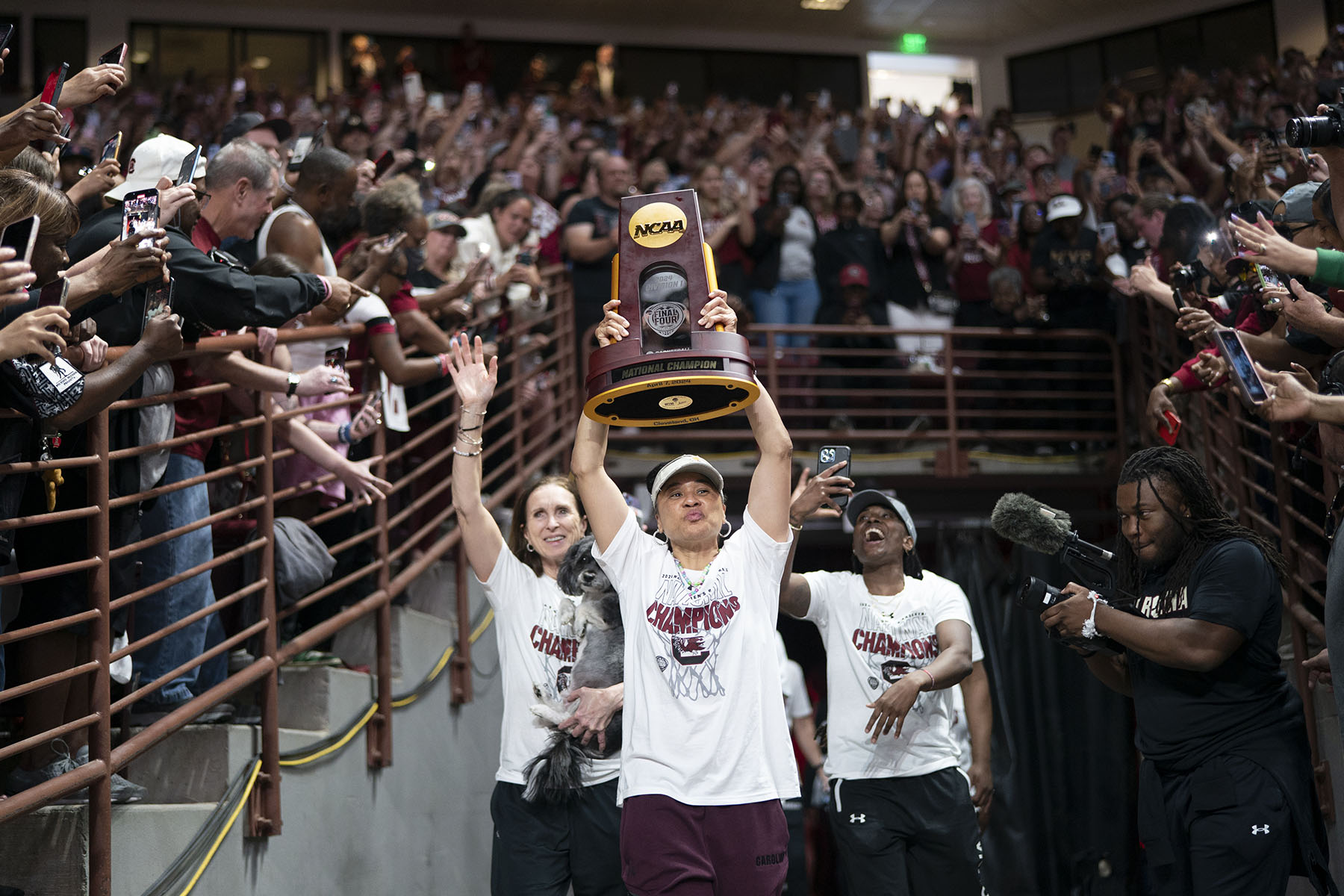
South Carolina coach Dawn Staley raises the NCAA Women's Basketball Championship trophy at a celebration at the Colonial Life Arena, in Columbia, South Carolina.
South Carolina coach Dawn Staley raises the NCAA Women's Basketball Championship trophy at a celebration at the Colonial Life Arena, in Columbia, South Carolina, on April 8, 2024. (Sean Rayford/Getty Images)

Errin Haines

Editor-at-large

Published

2024-04-11 05:00
5:00
April 11, 2024
am
America/Chicago

Share

  • Bluesky
  • Facebook
  • Reddit
  • Email

This column first appeared in The Amendment, a biweekly newsletter by Errin Haines, The 19th’s editor-at-large. Subscribe today to get early access to future analysis.

Call it The Year of the Woman for college basketball. 

This week, an average of 18.9 million viewers tuned in to watch the women’s NCAA championship game, setting a record and eclipsing the ratings for the men’s championship for the first time in tournament history. (See what I did there?) The tournament also set records for attendance. More than half a century after the landmark Title IX legislation clearing the way for gender equity in college sports, the women’s game is having a hard-fought, well-deserved moment. 

The 19th thanks our sponsors. Become one.

Electoral politics has had multiple “years of the woman,” the first coming in 1992. The path for that representation was cleared by the 19th Amendment to the Constitution. In the years that followed its passage in 1920, more women cast ballots and ran for office, breaking barriers at every level of government. The Voting Rights Act of 1965 cleared the way for voters of color, who were in turn able to elect more candidates who shared their lived experiences and identities. The Americans with Disabilities Act, passed in 1990, demanded full and equal access to the ballot for voters with disabilities.  

Whether in our sports or our democracy, we know there is a correlation between the ability for historically marginalized people to participate and Americans’ ability to normalize their leadership in public life. And the increased visibility of women can often lead to excitement and enthusiasm when they are in roles from which they were previously excluded. 

Everyone, it seems, is watching women win. It wasn’t always this way. 

  • Listen To The Amendment Podcast:
    An illustrative image of Jemele Hill
  • Listen To The Amendment Podcast: The Amendment: Everyone Watches Women’s Sports with Jemele Hill

South Carolina Gamecocks Coach Dawn Staley, who guided her team to its third championship in seven years on Monday night, has had a career that has mirrored — and that has also shaped — the evolution of the sport and its growing popularity. Her nickname in high school was “Title IX,” a nod to the promise of the policy made real through her talent on the court. 

Staley didn’t win a championship as a player at the University of Virginia; there were no lucrative Name, Image and Likeness (NIL) deals for student athletes then, either. The WNBA was still five years away when she graduated. 

When Staley arrived at South Carolina in 2008, the team’s average attendance that season was 2,793 — up 992 from the previous season and the seventh highest attendance in the country at the time. This season, the undefeated team had an NCAA-leading average attendance of 16,067. 
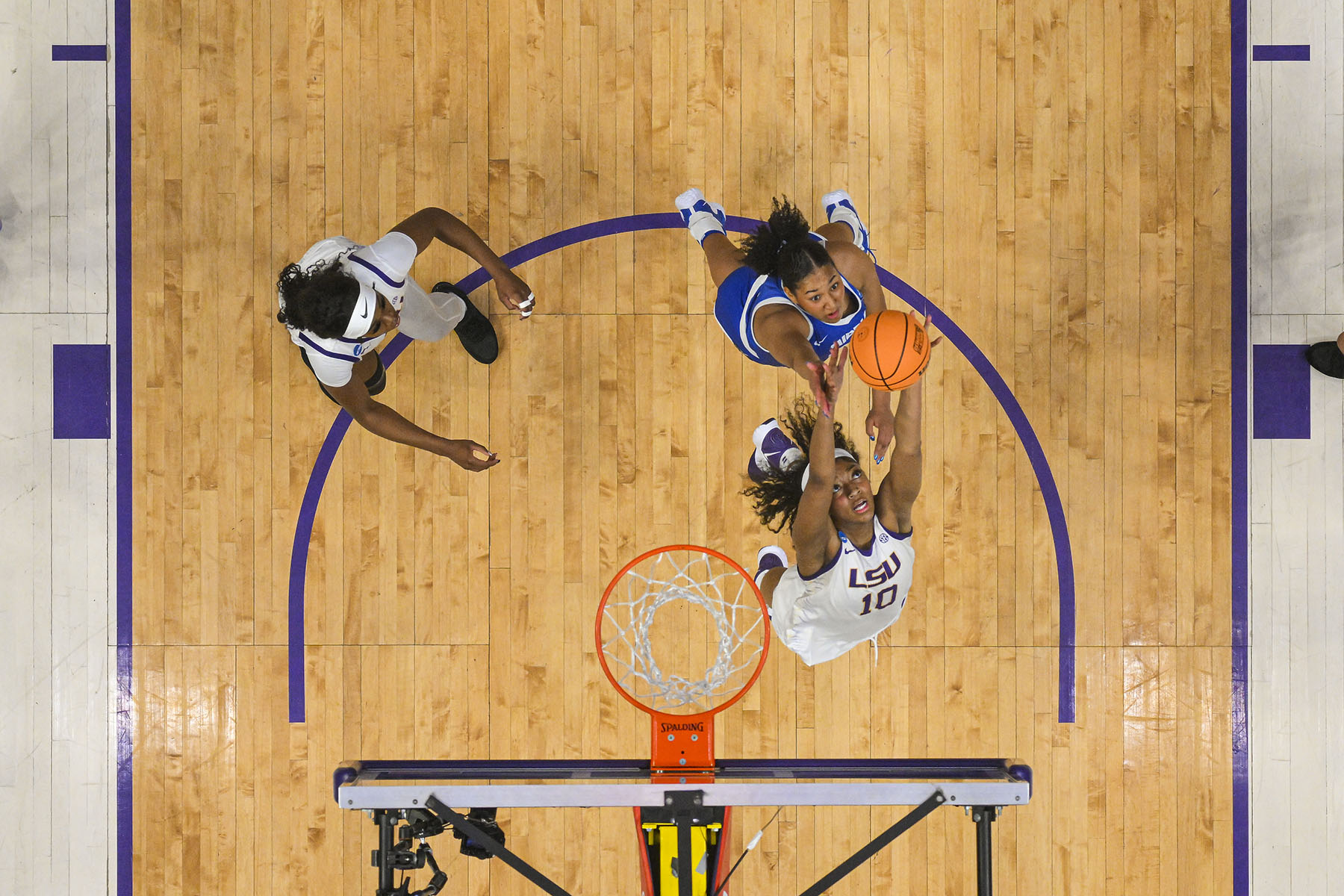
Angel Reese of the LSU Tigers and Jada Grannum of the Middle Tennessee Blue Raiders jump for a rebound during the second round of the 2024 NCAA Women's Basketball Tournament.
Angel Reese of the LSU Tigers and Jada Grannum of the Middle Tennessee Blue Raiders jump for a rebound during the second round of the 2024 NCAA Women’s Basketball Tournament held at Pete Maravich Assembly Center in Baton Rouge, Louisiana, on March 24, 2024. (Andy Hancock/NCAA Photos/Getty Images)

Just a few years after poor marketing and unequal facilities were making headlines during March Madness, the women’s game is dominant, backed with institutional resources, coverage of compelling storylines, and equal billing at the tournament. The result? A women’s game that this season arguably found even more fans of all genders. 

But the bigger stage also came with criticism, tinged with racism and misogyny. 

Sports journalist Jemele Hill points to comments about LSU’s Angel Reese during her college career, casting her as a villain.

The newsletter for the new electorate, delivered to your inbox every other week

Analysis and interviews from Errin Haines, delivered to your inbox every other week.

Look for a confirmation sent to

Did you mean

The email didn’t go through.

or Contact us for support
Preview of Errin Haine's newsletter, The Amendment

“I think for a lot of people, it’s uncomfortable to see women in these positions. … They’re not doing anything that we don’t celebrate men for,” Hill told me for the latest episode of the Amendment podcast. When men talk trash and are demonstrative, she said, they get celebrated. “It’s funny. It becomes a meme.”

After losing in the Final Four, Reese talked about her experience in an emotional press conference and days later announced in a Vogue photo shoot that she would enter the 2024 WNBA draft. Reese is a sign of the sport’s growing popularity, with NIL deals that put her in the top 10 earners of all college athletes.

It’s a moment made possible because of years of struggle and sacrifice that happened far from the spotlight, by women and other supporters of the game, both on and off the court. 

Imagine the same investment for women’s participation in our democracy, from donors, political parties and voters. Where would our politics be at the end of an election season? Championing women in a way that allows them to compete fairly is a win for society. 
Share

  • Bluesky
  • Facebook
  • Reddit
  • Email

Recommended for you

  • Angie Nixon laughs while seated in a church pew at a campaign event, wearing a bright pink blazer. Supporters around her hold pink Angie Nixon for U.S. Senate signs.
    Angie Nixon has been working years for this moment
  • A portrait of McIver in an office surrounded by flags and holding her pregnant belly.
    Rep. LaMonica McIver isn’t just fighting for reelection — she’s fighting for freedom
  • Crystal Mason sits hat a table in a room surrounded by photos of famous Black activists.
    Crystal Mason’s belief in democracy was shaken — but not destroyed
  • A photo illustration of Brown speaking with the words Deliver for Voting Rights below her portrait.
    Her grandparents fought to join American democracy. She’s fighting to complete it.

From the Collection

Collection: The Amendment

  • Angie Nixon has been working years for this moment
    Errin Haines · October 19
  • Rep. LaMonica McIver isn’t just fighting for reelection — she’s fighting for freedom
    Errin Haines · August 26
  • Cori Bush is making her case for a comeback
    Errin Haines · July 29

Daily Newsletter

A smart, relatable digest of our latest stories and top news affecting women and LGBTQ+ people.

Look for a confirmation sent to

Did you mean

The email didn't go through.

or Contact us for support

Become a member

Explore more coverage from The 19th

  • Politics
  • LGBTQ+
  • Health
  • Justice
  • Caregiving
View all topics

Site Footer

Support representative journalism today.

Learn more about membership.

  • Give $19
  • Give $50
  • Give $100
  • Any amount

Transparency

  • About
  • Team
  • Contact
  • Privacy Policy
  • Community Guidelines
  • Gift Acceptance Policy
  • Financials

Newsroom

  • Latest Stories
  • Strategic Plan
  • 19th News Network
  • Events
  • Careers
  • Fellowships

Newsletters

  • Daily
  • The Amendment
  • Menopause
  • The Mom Guilt Economy
  • View all

Support

  • Ways to Give
  • Sponsorship
  • Republishing
  • Volunteer
  • Merch

The 19th is a reader-supported nonprofit news organization. Our stories are free to republish with these guidelines.