Skip to content Site Search

Republish This Story

* Please read before republishing *

We’re happy to make this story available to republish for free under an Attribution-NonCommercial-NoDerivatives Creative Commons license as long as you follow our republishing guidelines, which require that you credit The 19th and retain our pixel. See our full guidelines for more information.

To republish, simply copy the HTML at right, which includes our tracking pixel, all paragraph styles and hyperlinks, the author byline and credit to The 19th. Have questions? Please email partnerships@19thnews.org.

— The Editors

Loading...

Modal Gallery

/
Sign up for our newsletter

Menu

Home

We’re an independent, nonprofit newsroom reporting on gender, politics, policy and power. Read our story.

Topics

  • Politics
  • LGBTQ+
  • Health
  • Justice
  • Caregiving
  • Education
  • Abortion
View all topics

Daily Newsletter

What matters today in gender and politics (we checked).

Look for a confirmation sent to

Did you mean

The email didn't go through.

or Contact us for support
  • Latest Stories
  • Our Mission
  • Our Team
  • Strategic Plan
  • Support the 19th
  • Search
  • Contact
Donate
Home

We’re an independent, nonprofit newsroom reporting on gender, politics, policy and power. Read our story.

Daily Newsletter

What matters today in gender and politics (we checked).

Look for a confirmation sent to

Did you mean

The email didn't go through.

or Contact us for support

Become a member

The 19th thanks our sponsors. Become one.

Abortion

States with abortion bans saw steep declines in birth control prescriptions after Roe

The declines were particularly steep in Texas, the largest state with a near-total abortion ban in place. 

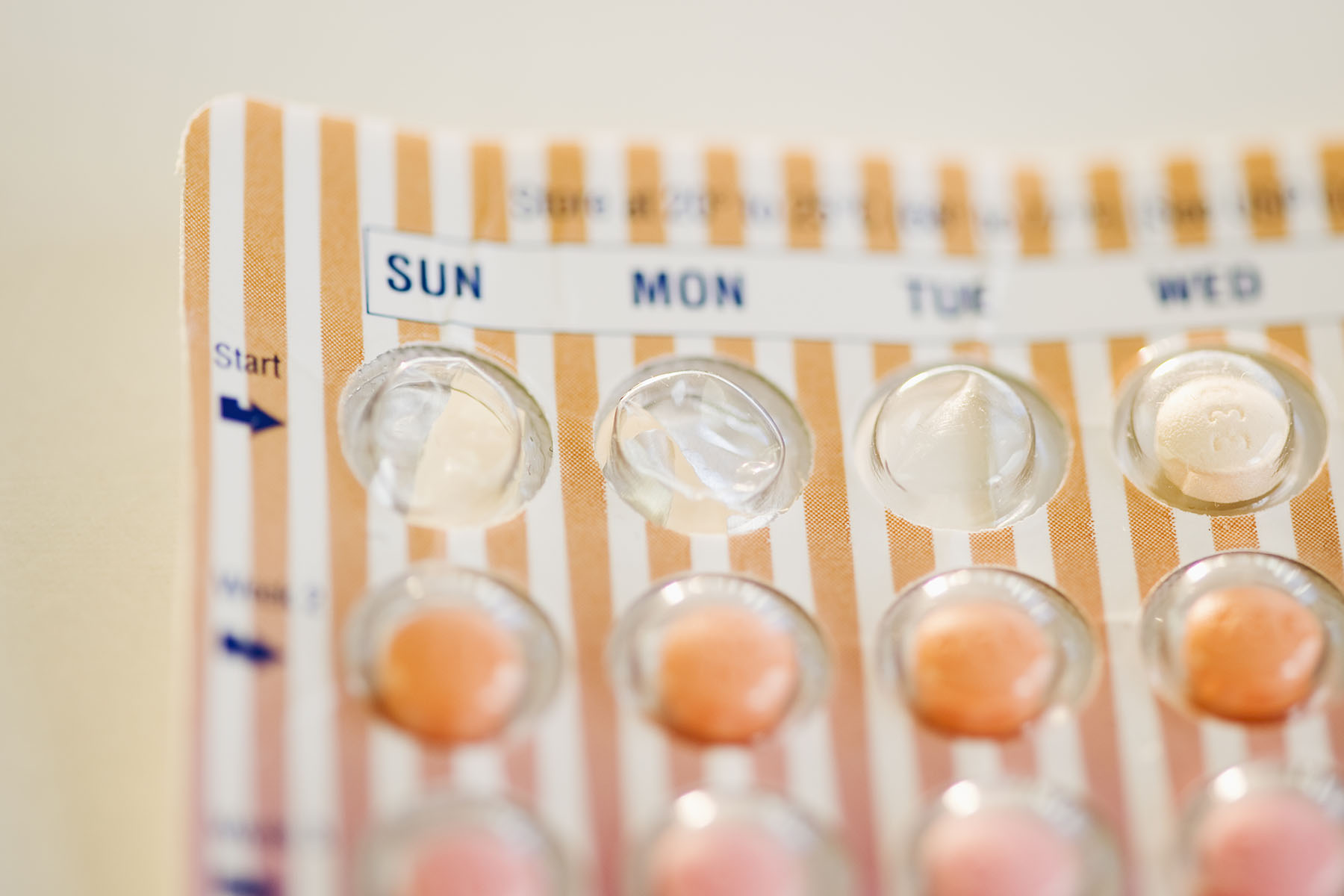
A close-up of a birth control pill pack. The package is striped in orange and white.
After Roe's reversal, contraceptive prescriptions dropped sharply in restrictive states, with Texas seeing a 28% decline. (Getty Images)

Carrie N. Baker, Ms.

Published

2024-09-26 05:00
5:00
September 26, 2024
am
America/Chicago

Share

  • Bluesky
  • Facebook
  • Email

The June 2022 Supreme Court decision eliminating the constitutional right to abortion was followed by steep declines in prescriptions for birth control pills and emergency contraception in states where abortion is banned. This finding was revealed by a new study published in the top-ranked journal Obstetrics & Gynecology.

“In states such as Texas and Mississippi, where women now don’t even have the option to have an abortion, their access to contraception is also becoming more difficult,” said lead author Dima M. Qato, senior fellow at the University of Southern California Schaeffer Center for Health Policy & Economics.

Researchers found that states enacting the most restrictive laws experienced about a 5 percent total decline in oral contraceptive prescriptions filled by pharmacies in the first year after Roe’s reversal. In Texas, the rate dropped 28 percent. The declines were particularly dramatic for the emergency contraception pills Plan B and Ella, which dropped 65 percent more in the most restrictive states compared to less restrictive states.

The 19th thanks our sponsors. Become one.

The study authors attribute the decline to the closure of abortion clinics, where many people access prescriptions for contraception. Post-Dobbs v. Jackson Women’s Health Organization, 63 brick-and-mortar abortion clinics in 14 states closed, including 24 in Texas. “Because 11 percent of women rely on such clinics for the provision of prescriptions for contraceptives — many of which are filled at outside pharmacies — these closures may have reduced access to oral and emergency contraceptives,” Qato said in a press release. Declines in emergency contraception prescriptions filled were greatest in the most restrictive states that had closed a larger share of their family-planning clinics.

Explore more coverage from The 19th

In-depth reporting on topics you care about
  • Politics
  • LGBTQ+
  • Health
  • Justice
  • Caregiving
View all topics

Misunderstandings about the legality of emergency contraception may also be a factor in the decline, noted the study’s authors. According to research from the Kaiser Family Foundation, half of women living in states where abortion is currently banned either incorrectly believe emergency contraception pills are illegal in their state (7 percent) or say they are unsure (43 percent). The anti-abortion movement has worked for years to blur the line between emergency contraception and abortion pills, perpetuating this confusion.

Another crucial cause of the decreasing prescriptions for contraceptives is states’ restrictive policies, which include allowances for pharmacists to refuse to provide contraceptives based on their own particular religious, ethical or moral beliefs, dropping emergency contraception from insurance coverage mandates and a lack of over-the-counter coverage for those on Medicaid. Before Roe was overturned, Mississippi was lowest in filling emergency contraceptive prescriptions; it’s also the only state that refuses to cover the emergency contraceptive Plan B for Medicaid members. After Dobbs, prescriptions for emergency contraceptives increased the most in Idaho, which is a state with a near-total ban on abortion that allows pharmacists to prescribe the pills to people without any age restrictions.

Other possible factors in the decline may be more people ordering birth control pills and emergency contraception from online sources (not tracked in this study), switching to other options such as IUDs or sterilization, and using condoms more often.

Regardless, between abortion bans and decreasing access to contraception post-Dobbs, people are facing ever-increasing barriers to maintaining control over their reproductive lives, whether ending unwanted pregnancies—or preventing them.

This article has been co-published with The 19th. It originally appeared in the Fall 2024 issue of Ms. magazine, which hit newsstands Sept. 24. Join the Ms. community today and you’ll get issues delivered straight to your mailbox.

Share

  • Bluesky
  • Facebook
  • Email

Recommended for you

A woman holds a pack of birth control pills over the sink.
The birth control pill and cancer: What are the risks?
Exterior of a brick building with a teal awning labeled “Planned Parenthood.” A blurred car passes in front of the clinic on the street.
Nearly 1 in 4 people seeking abortions out of state chose Illinois. Here’s why.
An exam table in a room where surgeries, including abortions, are performed is seen at a Planned Parenthood Health Center.
Woman charged with attempted murder under Georgia abortion law
A woman in glasses sits on a wide wooden swing wearing a black blazer with a rainbow heart on the lapel.
She miscarried weeks after Roe fell. A delay in care changed her life.

From the Collection

Collection: The 19th News Network

Illustration of a news network with partners republishing, curating and collaborating on news stories.
  • The new teen pregnancy prevention plan isn't that focused on prevention
    Kelcie Moseley-Morris, States Newsroom · July 23
  • At a health clinic built ‘for women,’ patients say their pregnancies went undetected
    Madhri Yehiya and Angie Pulmano, LA Public Press · July 14
  • Advertising, training fairs, free tuition: How one state is trying to get more men into college
    Rachel Fradette, The Hechinger Report · June 23

Daily Newsletter

What matters today in gender and politics (we checked).

Look for a confirmation sent to

Did you mean

The email didn't go through.

or Contact us for support

Become a member

Explore more coverage from The 19th

  • Politics
  • LGBTQ+
  • Health
  • Justice
  • Caregiving
View all topics

Support representative journalism today.

Learn more about membership.

  • Give $19
  • Give $50
  • Give $100
  • Any amount
  • Transparency
    • About
    • Team
    • Contact
    • Privacy Policy
    • Community Guidelines
    • Gift Acceptance Policy
    • Financials
  • Newsroom
    • Latest Stories
    • Strategic Plan
    • 19th News Network
    • Events
    • Careers
    • Fellowships
  • Newsletters
    • Daily
    • The Amendment
    • Menopause
  • Support
    • Ways to Give
    • Sponsorship
    • Republishing
    • Volunteer

The 19th is a reader-supported nonprofit news organization. Our stories are free to republish with these guidelines.