Skip to content Site Search

Menu

Home

We’re an independent, nonprofit newsroom reporting on gender, politics, policy and power. Read our story.

Topics

  • Politics
  • LGBTQ+
  • Health
  • Justice
  • Caregiving
  • Education
  • Abortion
View all topics

Daily Newsletter

Your trusted source for contextualizing the latest election news.

Look for a confirmation sent to

Did you mean

The email didn't go through.

or Contact us for support
  • Latest Stories
  • Our Mission
  • Our Team
  • Strategic Plan
  • Support the 19th
  • Search
  • Contact
Donate

Republish This Story

* Please read before republishing *

We’re happy to make this story available to republish for free under an Attribution-NonCommercial-NoDerivatives Creative Commons license as long as you follow our republishing guidelines, which require that you credit The 19th and retain our pixel. See our full guidelines for more information.

To republish, simply copy the HTML at right, which includes our tracking pixel, all paragraph styles and hyperlinks, the author byline and credit to The 19th. Have questions? Please email partnerships@19thnews.org.

— The Editors

Loading...

Modal Gallery

/
Home

We’re an independent, nonprofit newsroom reporting on gender, politics, policy and power. Read our story.

Daily Newsletter

Your trusted source for contextualizing the latest election news.

Look for a confirmation sent to

Did you mean

The email didn't go through.

or Contact us for support

Become a member

We’re an independent, nonprofit newsroom reporting on gender, politics, policy and power. Read our story.

Two speech bubbles, one with an outlined border and one with a lilac fill.

Make sense of the midterms

Get through election week with our daily newsletter covering the women and queer people still fighting to be seen and heard in our democracy.

Subscribe Now

The 19th thanks our sponsors. Become one.

Obituary

Assata Shakur, who wrote and fought for Black liberation, dies at 78

She was a member of the Black Liberation Army and the FBI’s first Most Wanted woman.

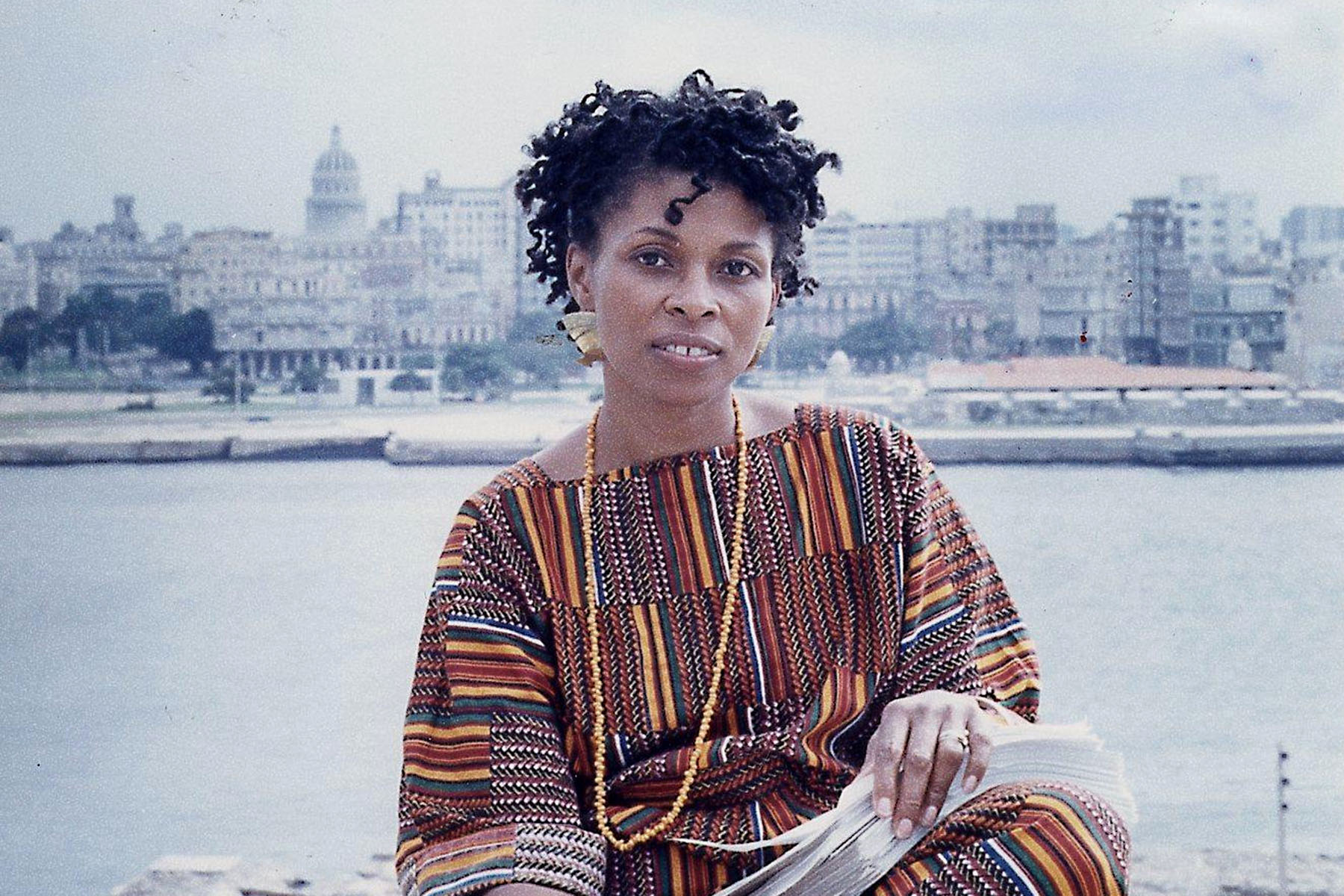
Assata Shakur holds the manuscript of her autobiography in Havana, Cuba.
Assata Shakur holds the manuscript of her autobiography in Havana, Cuba, on October 7, 1987. (Ozier Muhammad/Newsday RM/Getty Images)

Kate Sosin

LGBTQ+ Reporter

Published

2025-09-26 15:31
3:31
September 26, 2025
pm
America/Chicago

Share

  • Bluesky
  • Facebook
  • Reddit
  • Email

Assata Shakur, one of the most consequential Black political revolutionaries and writers of her time and enemy of the U.S. government until her last breath, died September 25. 

Shakur was 78 and living in exile in Havana, Cuba. She died of “health conditions and advanced age,” according to a statement from Cuba’s Ministry of Foreign Affairs. Shakur had the distinction of being the first woman to ever make the FBI’s most wanted list. She was also rap legend Tupac Shakur’s godmother.

While the FBI offered up to $1 million for her capture, her supporters celebrated her as a feminist and anti-racist visionary. 

The 19th thanks our sponsors. Become one.

Shakur was born Joanne Deborah Byron in 1947 in Flushing, Queens. She was a member of the Black Liberation Army, a Marxist organization that advocated for “armed struggle” to achieve liberation for Black Americans in the 1970s. She escaped a New Jersey Prison in 1979, where she had been serving a life sentence for the murder of state trooper Werner Foerster. Shakur maintained her innocence throughout her life. She fled to Cuba, where she gained asylum and evaded extradition to the United States for over four decades. 

Shakur chronicled her arrest and the injustices facing Black Americans in the 1970s in her memoir “Assata: An Autobiography.” 

In it, she wrote:

“It is our duty to fight for our freedom.

It is our duty to win.

We must love each other and support each other.

We have nothing to lose but our chains.”

Correction: An earlier version of this article misstated Shakur's name at birth.

Share

  • Bluesky
  • Facebook
  • Reddit
  • Email

Recommended for you

  • A closeup on Dolly Parton singing with a mic in her hand.
    Dolly Parton told us who she was, one song at a time
  • Parton ringed by lights on stage singing and playing guitar.
    Dolly Parton never called herself a feminist. Her life made the case anyway.
  • A diptych of two women with their mothers, both smiling at the camera.
    Feeling invisible, many disabled caregivers also need support
  • Kimberlé Crenshaw smiles at the camera while standing against a wall.
    ‘Intersectionality’ scholar Kimberlé Crenshaw thinks it’s time for everyone to talk back

Daily Newsletter

Your trusted source for contextualizing the latest election news.

Look for a confirmation sent to

Did you mean

The email didn't go through.

or Contact us for support

Become a member

Explore more coverage from The 19th

  • Politics
  • LGBTQ+
  • Health
  • Justice
  • Caregiving
View all topics

Site Footer

Support representative journalism today.

Learn more about membership.

  • Give $19
  • Give $50
  • Give $100
  • Any amount

Transparency

  • About
  • Team
  • Contact
  • Privacy Policy
  • Community Guidelines
  • Gift Acceptance Policy
  • Financials

Newsroom

  • Latest Stories
  • Strategic Plan
  • 19th News Network
  • Events
  • Careers
  • Fellowships

Newsletters

  • Daily
  • The Amendment
  • Menopause
  • The Mom Guilt Economy
  • View all

Support

  • Ways to Give
  • Sponsorship
  • Republishing
  • Volunteer
  • Merch

The 19th is a reader-supported nonprofit news organization. Our stories are free to republish with these guidelines.