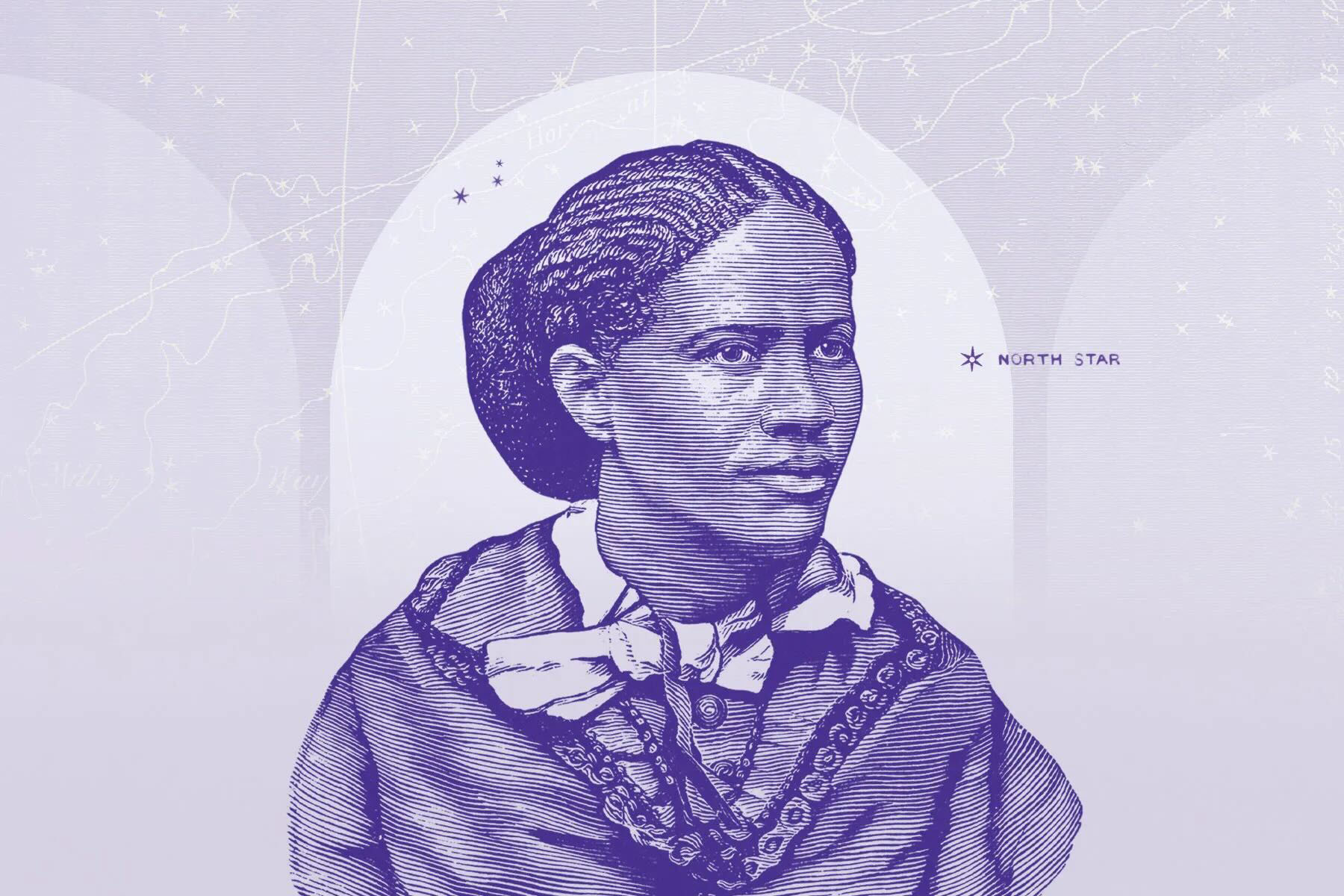

From a corner house in West Philadelphia, Frances Ellen Watkins Harper’s great-niece Queen Mother Falaka Fattah has brokered peace among warring gangs, offered at-risk youth a safe haven and won awards for her stories in the local Black press.
Fattah’s work — her fierce activism, mentorship and community upliftment — carries forward the legacy of Harper, who lived in the 19th and early 20th centuries just six miles from Fattah’s neighborhood refuge.
The 19th named its fellowship program after Harper, who is known as “the mother of African-American journalism” and who fought for rights she never lived to see.
Born 200 years ago today, Harper was a writer, orator and mother. She traveled the country for decades, harnessing her creative gifts to advance freedom, education and women’s rights. Her fight was never abstract. It was lived, relentless and radical, insisting that survival and dignity depended on community and on claiming the tools of literacy and voice.
Her fight is as urgent today as it was then.
The playbook being carried out now in the highest reaches of the federal government is one previous generations have already fought against and survived, foremost Harper scholar Frances Smith Foster said during a conversation on Penn State University’s campus, at a symposium celebrating Harper’s bicentennial.
Foster — emeritus professor of African-American studies and women’s history, and editor of “A Brighter Coming Day: A Frances Ellen Watkins Harper Reader” — was the honored guest at Penn State’s event, hosted by Penn State’s Center for Black Digital Research and Africana Research Center. It is part of a yearlong commemoration that includes a read-a-thon, digital exhibit with curricula, touring performance and a Mural Arts Philadelphia mural.
As P. Gabrielle Foreman, Ph.D., MacArthur fellow and co-director of the Center for Black Digital Research, put it: “We didn’t know how necessary (Harper’s) voice and example were going to be in this particular moment as an example of fearlessness in the face of both political possibility and political repression. She shows us the courage, talent, skill, boldness, and individual and collective action that’s necessary when those moments intersect.”
If Harper’s voice feels urgently needed now, it’s because the work she began — as The 19th’s asterisk underscores — is far from finished. That’s the work The 19th takes up through its journalism and Frances Ellen Watkins Harper Fellowships.
Each year, early- and mid-career journalists from historically Black colleges and universities, or HBCUs, join our newsroom and tell stories with the same fearlessness and clarity that Harper demanded — stories that illuminate injustice, center marginalized communities and allow 19th readers to imagine a brighter coming day.
The fellows carrying Harper’s legacy forward
“At her core, Frances Ellen Watkins Harper loved to read,” wrote 2024-25 reporting fellow Sabreen Dawud in a February reflection to mark the anniversary of Harper’s death.
Dawud traced Harper’s deep passion for literature and her remarkable journey as a writer and activist back to stories. It’s how Dawud sees her own journey — her “amusement with books,” the power imbued in words to tell hard truths, her fire to write — in Harper’s.
“The strength in her words and the pathways she has opened feel like a testimony for those who were once little Black girls who loved to read,” Dawud wrote. (Read more 2023 and 2024 fellows’ reflections on Harper.)
As a newspaper correspondent, prolific poet and the first Black woman in the United States to publish a short story (one of Foster’s favorites: “The Two Offers”) and a novel (“Iola Leroy”), Harper was a mentor and friend to Black writers, including Ida B. Wells and Mary Ann Shadd Cary.
The 19th created the Frances Ellen Watkins Harper Fellowships in 2021 and launched them the following year to build a meaningful pipeline for those historically excluded from U.S. newsrooms.
Since then, 15 fellows have participated in the yearlong fellowship, working full-time in reporting, audience engagement and news product. They’ve received wraparound support, including mentorship, workshops, professional development and personalized job search guidance.
They’ve covered Black environmental justice, disability and voting access, diversifying democracy, Black kids’ summer joy, toxicity in synthetic braids and threats to gender-affirming care, among many other topics. They were at Howard University when the 2024 election results came in and in Memphis when Tyre Nicols was laid to rest in February 2023.
They’ve launched social-first series demystifying voting and supporting well-being, and made site visitors’ and partners’ experience with our content better. They’ve been part of the teams that won a national Edward R. Murrow Award and the Society for News Design’s Award of Excellence in Social Story Design.
They’ve attended a dozen HBCUs, from Clark Atlanta, Howard, North Carolina A&T, North Carolina Central, Savannah State and Xavier universities to Bennett College. After their fellowship year, they’ve gone on to work at publications like The Marshall Project, The Baltimore Banner, The Nashville Banner and The Trace.
Last month, The 19th welcomed its fourth cohort. They’re proof that Harper’s vision endures — not as history alone, but alive in communities, in journalism and in the unfinished work still ahead.


