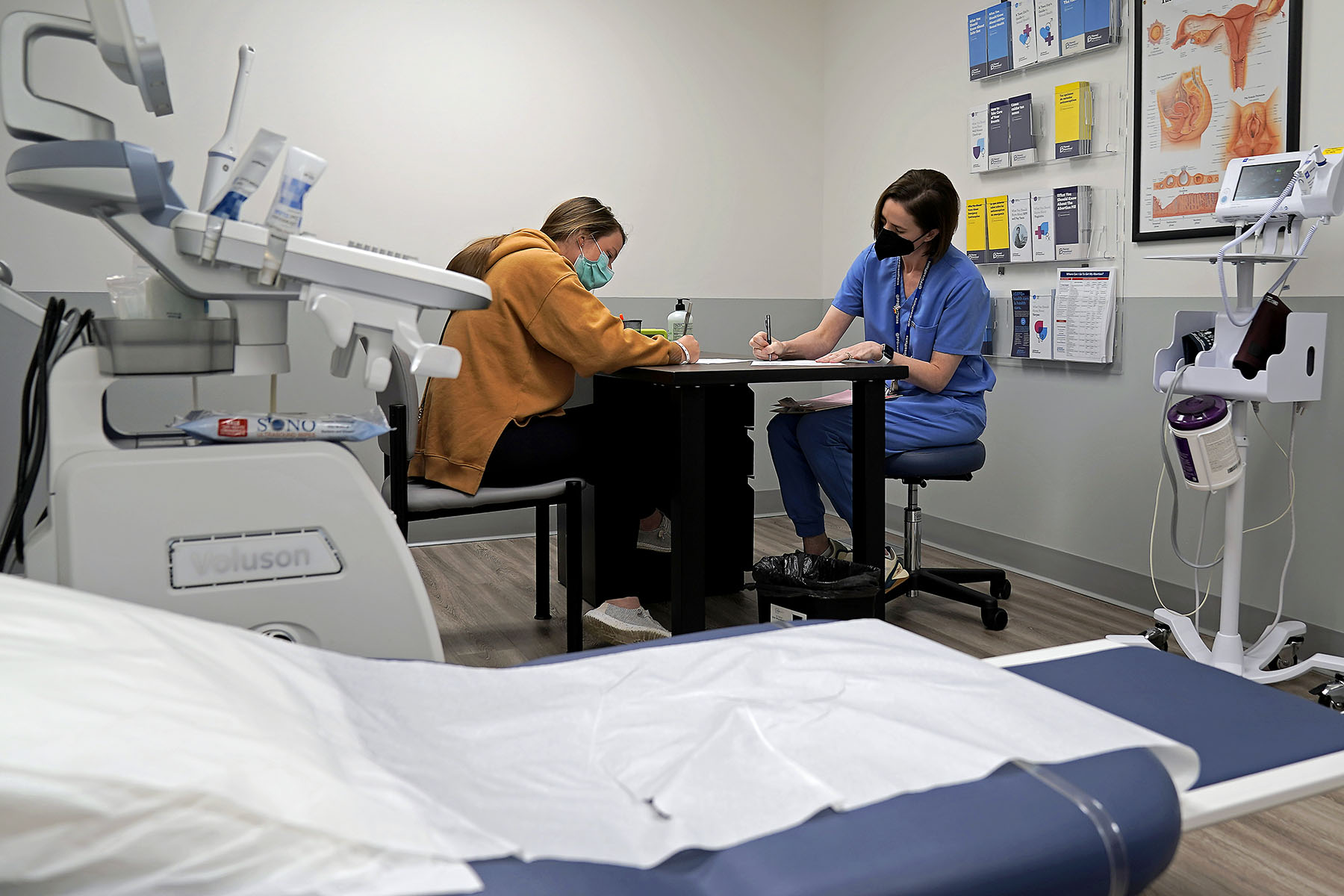

Planned Parenthood clinics across the country are scrambling to secure funding and determine next steps for patients after a move to block them from accepting Medicaid was allowed to go into effect. This win for the Trump administration represents a major step toward the longtime Republican goal of “defunding” Planned Parenthood and puts the future of clinics and the patients they treat in question.
“I am not in a place right now where I can definitively predict what the future holds for Planned Parenthood and for our footprint across the nation, but what I am committed to right now is doing everything possible to keep our doors open,” said Rebecca Gibron, CEO of the Planned Parenthood affiliates serving Alaska, Hawaii, Idaho, Indiana, Kentucky and parts of Washington state.
A federal appeals court last week allowed the federal government to kick the nation’s largest reproductive health care provider out of Medicaid, the public health insurance program for low-income people. The policy was enacted in July but had been held up in the courts. Last week’s ruling means that it can now take effect.
The federal “defunding” lasts a year. It has been touted by its defenders as a mechanism to punish the organization for offering abortion services by cutting off a key source of revenue: About one-third of all of Planned Parenthood’s income comes from public funds, and Medicaid is the biggest source.
Clinics are still assessing how the loss of federal funds could affect what services they can afford to provide, and whether some will eventually be forced to close their doors. Already, a number of health centers in Ohio, California, Indiana and Vermont have shuttered, citing financial pressures that include the loss of Medicaid funding.
The organization has said the policy could result in the closure of close to 200 clinics — about one-third of all of its health centers — mostly in states where abortion is legal, and that it could cut off 1.1 million patients from using their health insurance at the health provider.

Clinic closures would put new strains on the already thin safety net of brick-and-mortar abortion clinics, said Brittany Fonteno, who runs the National Abortion Federation. Most abortions are provided by independent clinics that are not affiliated with Planned Parenthood. But the health provider is still a major source of abortions — and in several states, it’s the only option for care.
But the health implications could also be much broader. Planned Parenthood is a major source of other reproductive health care, including contraception, cancer screenings, and treatment and testing for sexually transmitted infections — services all typically covered by Medicaid. Planned Parenthood closures could potentially leave people with fewer affordable options to get contraception or cancer screenings, or eliminate a source of care for chlamydia, syphilis and gonorrhea — all infections that have become more prevalent in recent years.
Planned Parenthood is continuing to challenge this “defunding” policy in court, even while it stays in effect. But the policy is unlikely to be lifted soon. Briefings in the case will not take place until November, and oral arguments won’t occur until after that.
Medicaid, which is jointly funded by federal and state governments, is already not allowed to pay for abortion unless states specifically put forth funding to do so.
Some clinics are continuing to treat patients for free, hoping they will be able to absorb the cost of providing basic reproductive health services. Others are setting deadlines after which patients covered by Medicaid will have to pay cash if they want to continue getting care, and working with patients to connect them with new health care providers.
“If the patient is already going through a treatment plan with us — for example getting treatment for an infection — we’re not abruptly stopping their care,” said Dr. Robyn Schickler, the chief medical officer for Planned Parenthood of Florida.
Schickler said she doesn’t anticipate her organization closing any of its 17 clinics. But thousands of the affiliate’s patients are insured through Medicaid. People covered through the program often struggle to find a doctor, in part because Medicaid reimburses health providers at a lower rate than private insurance plans do.
“Untreated gonorrhea or chlamydia can result in a larger pelvic infection and can result in infertility down the line. People who can’t get pap smears — they’re not getting screened for cervical cancer,” she said. “That’s going to affect a large amount of people and have really dire public health consequences.”
In a few states with Democratic leadership — including Colorado, Massachusetts, and Washington — the organization has secured commitments from state governments to come up with replacement funding. But if Congress renews the provision next year, affiliate leaders said, that could create a financial gap that state governments cannot be counted on to fill.
Nicole Clegg, who runs the Planned Parenthood affiliate serving Maine, New Hampshire and Vermont, said she’s had productive conversations with lawmakers in Maine and Vermont. But she expressed less optimism regarding New Hampshire, whose Republican-led Executive Council, part of the state’s executive branch with final say over major contracts, has consistently voted against renewing state contracts with Planned Parenthood.
Massachusetts’ Planned Parenthood clinics are hoping not to change who they can serve. The state government has committed $2 million to support the organization, half of the federal money the state organization expects to lose. About 40 percent of Planned Parenthood patients in the state are insured through Medicaid.
“The system can’t really absorb the loss. There’s no other provider here in Massachusetts that has the capacity to take these displaced patients,” said Dominique Lee, the CEO of Planned Parenthood League of Massachusetts, which oversees the state’s clinics and is one of the plaintiff organizations challenging the federal defunding law.
Right now, Massachusetts Planned Parenthood affiliates are continuing to care for patients with Medicaid, without charging them anything out-of-pocket. But since the court’s ruling, Lee said, patients have expressed concern over how long that will last, and if treatment regimens they start at a clinic will remain available or be interrupted midway. Those worries are particularly acute for patients receiving gender-affirming care, which can be difficult to find, and often comes with long wait times for appointments.
But her staff can’t make any guarantees.
“We try our best to make sure they might be aware of the next steps — you might have to find a new provider,” she said. “There’s a new sense of confusion.”


