

On a sunny afternoon on the shores of Trout Lake in northern Wisconsin, a Catholic sister and a Tribal president sat together at a table and made history.
Two years ago, the Franciscan Sisters of Perpetual Adoration, a Catholic congregation, had approached the Lac Du Flambeau Band of Lake Superior Chippewa, a part of the Ojibwe Nation, and the original caretakers of the land, with an unheard of proposition: Would they like a piece of their land back?
The question took the tribe by surprise, said Araia Breedlove, their public relations director. They had never had a private property owner offer up a piece of land, much less Catholic sisters. But after ironing out the details, the two parties were able to close the deal last Friday.
With a flick of a pen, Sister Sue Ernster signed a document to formalize the land transfer with Tribal President John D. Johnson Sr. for a two-acre lakefront property that the sisters had owned since 1966. The appraised value for the land known as Marywood, which includes a retreat center and cabins, was $2.6 million. It was sold back to the tribe for just $30,000, the price the sisters paid to buy it.
“This return represents more than the restoration of land — it is the restoration of balance, dignity, and our sacred connection to the places our ancestors once walked,” Johnson said in a news release. “The Franciscan Sisters’ act of generosity and courage stands as an example of what true healing and partnership can look like. We are proud to welcome Marywood home, to ensure it continues to serve future generations of the Lac du Flambeau people.”
It is believed to be the first such transfer of land from Catholic sisters to a tribe in the country.
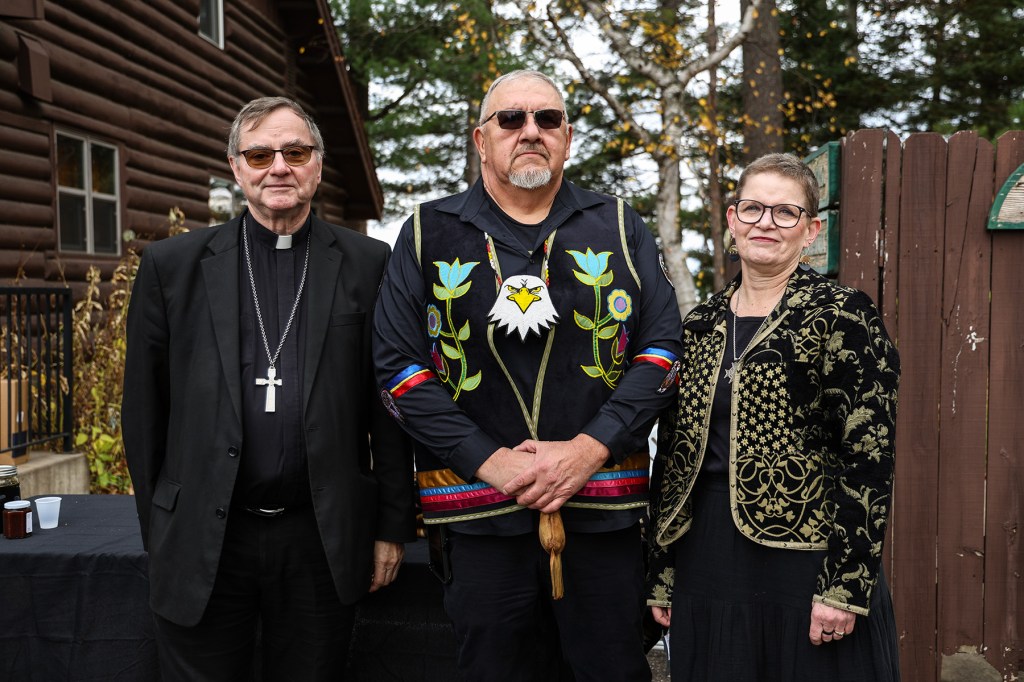
“It’s a huge step forward for our Land Back Movement and reclaiming what was once ours,” said Breedlove. “The land is in a predominantly White area, and so to have a piece of our culture back where it belongs is extremely important for us.”
The two parties’ histories are intertwined in more ways than just the land. Between 1883 and 1969, the sisters operated the St. Mary’s Catholic Indian Boarding School, part of a larger project by the federal government and the Roman Catholic Church to forcefully assimilate Indigenous children and strip them of their culture. Ojibwe children were sent there, mostly from the Bad River Band of Lake Superior Chippewa, but also from the Lac Du Flambeau Band of Lake Superior Chippewa, according to the La Crosse County Historical Society. The Lac Du Flambeau Band also had a government boarding school on its reservation. In the United States around 500 boarding schools were built for the purpose of anglicizing over 60,000 Native children.
Over the last five years, the sisters have been on a journey to understand their history, educating themselves about the role their boarding school played in the cultural genocide that occured throughout the boarding school system. They’ve joined the National Native American Boarding School Healing Coalition and hosted events with tribal members during the National Day of Remembrance of Indian Boarding School Survivors on the land where the boarding school once existed.

Ernster, who is president of the Franciscan Sisters of Perpetual Adoration, said that while they know there is nothing they could ever do to “fully repair the damage that has happened and the trauma that has happened,” they saw the returning of land as one way they could atone for the past. “This is what we can do to really live our values,” she said. “One of the Franciscan hallmarks is to be in right relationship with all of creation, all people. And so this is another opportunity to live into that.”
Breedlove hopes this is just the beginning of a reparations movement. “My hope is that it’s a ripple effect, not just for other Catholic institutions, but for other tribal communities to look at what they see as reconciliation,” she said. “No matter how hard and how hurtful some of the actions of the Franciscan Sisters or the Catholic Church were, it’s important that forgiveness is how we move forward.”
The tribe has a couple of ideas for how to utilize the property, including as a way to recruit medical professionals like doctors and nurses. “We have a really big housing crisis here in the North, and we can’t get providers up here,” Breedlove said. “So we’re really struggling to provide basic health care to our tribal members.” They would also like to use the land to host cultural camps. “Whether it’s teaching kids how to spear [fish] or language, or drumming, all that stuff. Those are important things that we’re really hoping to incorporate there as well,” she added.
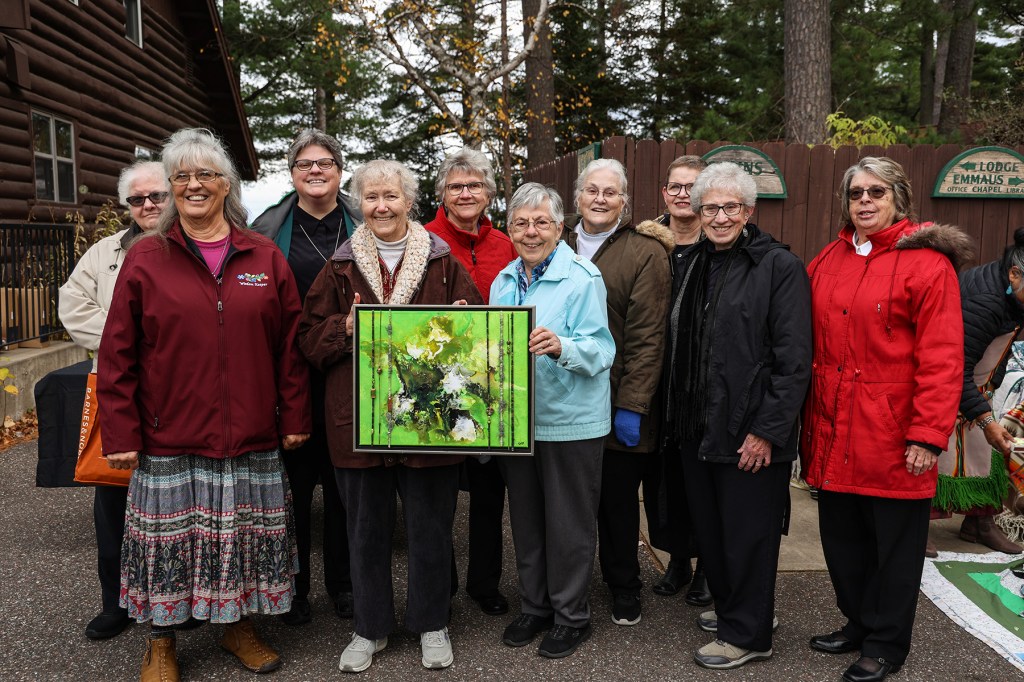
Prior to giving the land back, the sisters had been part of a two-year program given by Land Justice Futures that focused on issues like political education and community organizing. The organization started out as an offshoot from another movement called Nones and Nuns, which started in 2016 and brought together community activists and artists with Catholic sisters to promote an exchange of learning and sharing around how to lead an ethical life at a time of so much injustice in the world. Many of the participants were working in activist spaces on issues like the climate crisis, and the Land Back Movement and were seeking an alternative to the hyper-individualist and capitalistic lifestyle of Americans.
Meanwhile Catholic sisters had already been examining their own environmental ethics and were working on following the leadership of Pope Francis, who had pushed for a new economic model that could benefit all people, as well as urging care for the planet as a whole. And, they could teach young activists a thing or two about living in a collective and in a system not focused on hoarding wealth; sisters typically live together and vow to relinquish their own property when they join a community.
Land Justice Futures was born as a way to bridge the two movements more intentionally around land stewardship. The Catholic Church, after all, was the root of the colonialism and capitalism that has fueled the dispossession of land and the climate crisis, said Sarah Jane Bradley, one of the cofounders of the organization. With its vast land holdings, there was an opportunity to help Catholic sisters make decisions about the future of their properties as their communities shrink and age.
“[There was] a gap and a need to organize landowners around climate justice and around redistribution of land toward the people who are restoring balance and thriving life to our ecosystems,” said Bradley. That could look like giving back land, like the Franciscan Sisters of Perpetual Adoration did, or through other agreements like a cultural use easement, which could allow a tribe to access land for their own ceremonies and traditions, transitioning land to a community trust or donating the sales of a property to an organization that could use it to buy their own land. The groups that have benefitted from these partnerships so far have included Black farmers, Indigenous collectives and housing justice organizations.
And it’s women who are predominantly leading the movement, Bradley said. That includes the real estate agents, lawyers and advocates that specialize in land back, and the leaders in the movement space that work on issues like food sovereignty. “There’s something really special about that,” she said.
Now, with Catholic sisters participating in this work and relationship building, the movement takes on even more significance. “Catholic sisters are the progressive edge of the Catholic Church, and the Catholic Church is the largest private landowner in the world. So what sisters choose to do carries weight,” Bradley said.
“Them choosing to move towards right relationship in a traumatized and hurting world, is cultural acupuncture.”


