
One of the earliest signs of trouble for Kamala Harris’ Democratic presidential campaign on election night 2024 was in a state she went on to win: Virginia. Specifically, in Northern Virginia, in places like Loudoun County, a wealthy, bucolic community outside Washington, D.C.
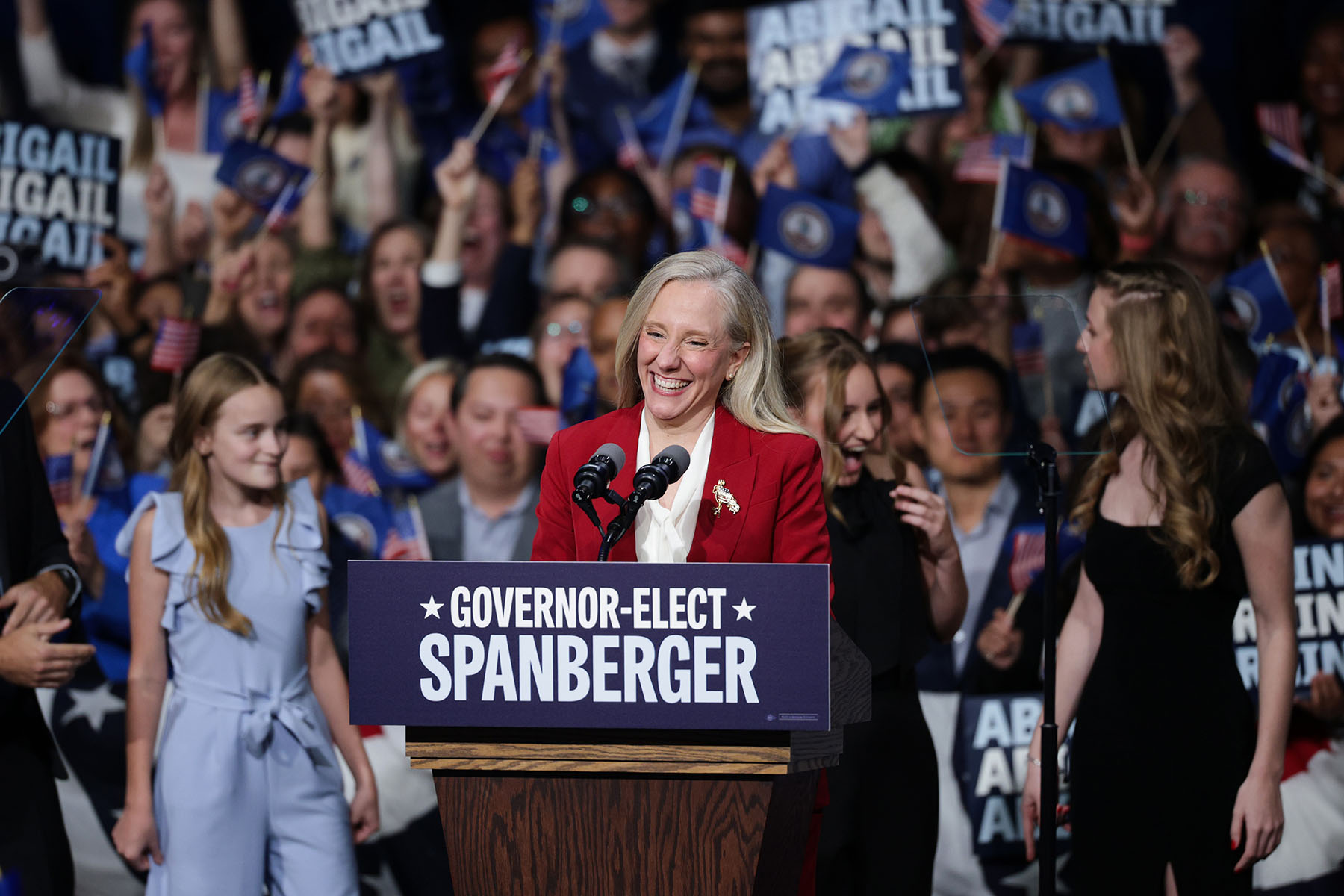
In last week’s elections, though, as families were still finishing late dinners and returns from Virginia’s gubernatorial contest started to come in, Loudoun was an early sign that Democrat Abigail Spanberger was on the cusp of having a really good night: She ended up beating Republican Winsome Earle-Sears by 29 points in Loudoun and did 12 points better there than Harris did just a year ago. Northern Virginia accounted for nearly 90 percent of Spanberger’s victory margin in the race.
A conclusion arrived at quickly was that Spanberger deftly figured out how to respond to anti-trans attacks from her opponent and Republican interest groups in a way that Harris’ campaign never did — and she did so without throwing the vulnerable population, which has seen their protections eroded by the Trump administration, under the bus.
Earle-Sears spent between $7 million and $9 million attacking Spanberger’s record on trans rights, according to analyses of Virginia media markets. Spanberger addressed her GOP opponent’s claims in multiple interviews, as well as running a response ad of her own.
Democrats are desperate to regain the White House in 2028 and are looking for actionable strategies as they attempt to take back one or both chambers of Congress next year. So immediately after Spanberger’s victory, along with Democrat Mikie Sherrill’s 13-point win over Republican Jack Ciattarelli in New Jersey’s gubernatorial race, political strategists and progressive groups started dissecting the women’s successes for clues about how to prevail in competitive statewide contests next year.
“Abigail Spanberger made history defeating Winsome Earle-Sears — and more than $9 million of anti-trans attack ads. She did not flinch. She didn’t hide from her values. She led with them, and Virginians rewarded that courage,” Human Rights Campaign President Kelley Robinson said on a Wednesday call with reporters.
Human Rights Campaign, an LGBTQ+ rights organization, will be releasing a “playbook” for 2026 candidates about how to effectively respond to anti-trans attacks, based in part upon lessons drawn from the Virginia and New Jersey gubernatorial contests.

Northern Virginia, for a variety of reasons — and for better or worse — is a place where national political strategy is tested and tea leaves are read. It’s commuting distance to Washington, where much of the country’s political apparatus is based. It has off-year state elections that can function as a reaction to or harbinger of federal contests the years prior and next. And it has suburbs and exurbs like Loudoun that determine the fate of statewide races.
For a long time, Virginia was a reliably Republican state. In 2008, former President Barack Obama was the first Democrat to win Virginia since a single election in the 1960s, and his victory was driven by the state’s northern suburbs. Virginia has stayed blue in White House races since, and Loudoun County became a sort-of Virginia-specific bellwether, turning even bluer than the state overall. It’s the type of place parents move for good public schools and travel sports leagues for their teens. There are vineyards and horse farms. In recent years, Loudoun households reported one of the highest median incomes in the country.
But last year, after the polls closed, Harris was trailing the margins by which then-President Joe Biden had won four years before in much of Northern Virginia, including Loudoun. Pundits wondered what it meant for suburban and exurban areas in states like Pennsylvania, Michigan and Wisconsin, which had historically leaned Democratic but where President Donald Trump had shown in 2016 that he could win.
Harris still won Loudoun, along with Virginia. But the county’s swing in Trump’s favor portended trouble for the former vice president in swing-state suburbs. Harris lost Pennsylvania, Michigan and Wisconsin by less than two percentage points. In each of these states, suburban voters were determinative. Suburbs are a politically powerful place: Since 1980, the White House contender who won the suburbs has usually won the presidency. Suburban voters cast more than half of the votes last year — and Trump carried the suburbs nationally by several points.
After Harris’ defeat, analysts pointed to a dynamic in the closing weeks of the race, when Trump’s campaign and allied political groups blanketed key suburbs, including Loudoun, with tens of millions worth of anti-trans ads. Known as the they/them ads, they often ran during high-visibility events like NFL games and highlighted Harris’ past support for transgender rights. Radio show host Charlamagne Tha God’s response became another Trump ad. The ads ended with the line: “Kamala is for they/them; President Trump is for you.”

Harris struggled to figure out how to respond. Her campaign tested ads but none did particularly well so they never aired. Research from the top super PAC supporting Harris showed that the they/them ads, on average, moved viewers 2.7 points in Trump’s favor, and they were particularly effective with Black and Latino men and White, suburban women. The post-election takeaway by many high-profile Democrats was that the party should focus less on supporting transgender people’s rights.
California Gov. Gavin Newsom, who was and is eyeing a 2028 White House bid, said on his podcast with since-slain conservative provocateur Charlie Kirk that it was “deeply unfair” for trans women to compete in women’s sports. Biden Transportation Secretary Pete Buttigieg, who competed in the 2020 Democratic presidential primary and is thought to be weighing another attempt at the White House in 2028, told NPR that there were “serious fairness issues” when trans athletes compete in women’s sports. Massachusetts Rep. Seth Moulton told the New York Times: “I have two little girls, I don’t want them getting run over on a playing field by a male or formerly male athlete, but as a Democrat, I’m supposed to be afraid to say that.” Moulton, now running for Senate, has since softened his rhetoric.
But Spanberger and Sherrill took a different tack than Harris, engaging when their opponents launched a barrage of attacks concerning their support for trans and LGBTQ+ rights more broadly. Particularly in Virginia, where Earle-Sears put millions behind her own they/them ads, which focused on the issue of trans athletes in women’s and girls’ sports and bathrooms. Spanberger swiftly responded, highlighting that she has three daughters in public schools, so the issue is a personal one.
“Nothing matters more to me than the safety of all our kids. And as a law enforcement officer I went after child predators. So it really angers me to hear these lies about who I am. I believe we need to get politics out of our schools and trust parents and local communities,” she narrates in one.
Spanberger won 95 percent of voters who said support for trans rights in society had not gone far enough and 89 percent who said it has been about right, according to CNN exit polls — but she also won nearly a quarter of the half of Virginia voters who said support for trans rights has “gone too far.”
Forty-eight percent of Virginia voters chose the economy as the most pressing issue facing the state, followed by health care (21 percent) and education (11 percent) — Spanberger won all three groups of voters, by 63 percent, 81 percent and 55 percent, respectively, the CNN exit polls showed.
Only 7 percent of Virginians picked transgender issues as a top concern, according to a post-election analysis conducted by The Global Strategy Group, a Democratic polling firm.
Narissa Rahaman, the executive director of Equality Virginia, said on the Human Rights Campaign call that Spanberger’s response was effective in neutralizing Earle-Sears’ attacks in part because she kept the issue local. Spanberger’s response pointed to a state policy that had been in place for roughly 12 years, under which trans athletes in school sports were decided on a case-by-case basis at the local level. Virginia Republicans are attempting to rewrite the policy.
“We have 18,000 trans youth who live in Virginia and over the decade of that high school policy, we had less than 50, I think, kids trying out for sports. So it was done on a case-by-case basis, and it was working,” Rahaman said.
Rep. Sarah McBride, a Democrat from Delaware who is the first openly transgender member of Congress, added: “We can maintain two truths: One is that every single person, including LGBTQ+ people, deserve and need protections from discrimination across their lives and across sectors of society in every corner of this country. And, that government doesn’t need to micromanage third grade soccer. … That is a reasonable position.”
McBride said that Spanberger’s victory showed the efficacy of keeping the conversation specific to the community and showed how the GOP’s anti-trans attacks are an attempt at division as well as a diversion from issues that voters rank more important like the economy.
“The other lesson that we can take from the wins yesterday is that when candidates hold true to their values and meet voters where they are when they respond to these attacks, voters listen and they come to their side,” McBride said. “We saw her meet voters with respect and grace, and we saw them engage in an effective campaign that had a conversation with voters that serves to open hearts and change minds. That is the future of our politics. That is how we win.”


