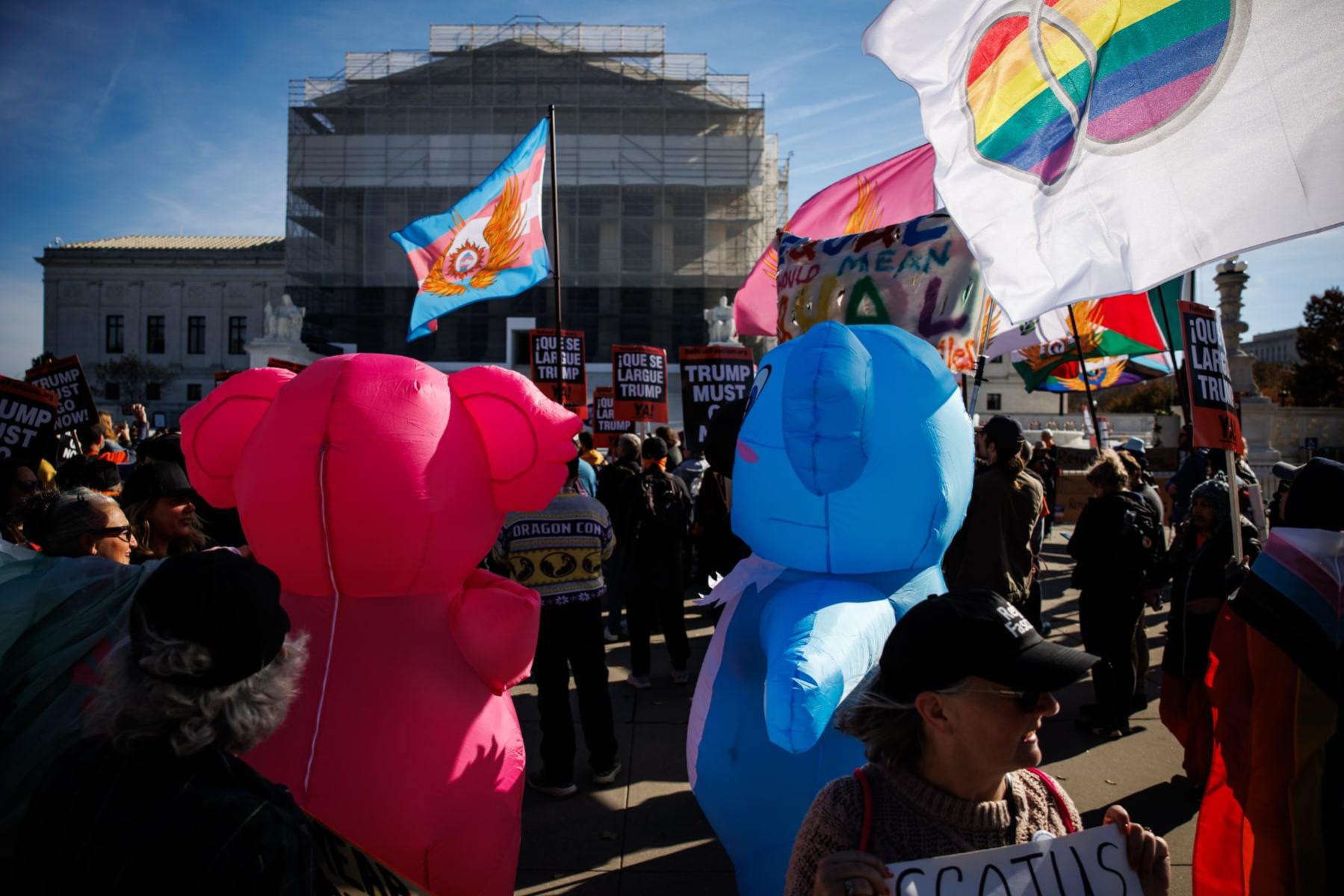

The Supreme Court will not hear a case to overturn marriage equality, it announced on Monday. The justices have rejected a petition from Kim Davis, the Kentucky county clerk who refused to issue licenses in the state a decade ago.
Davis’ petition has been closely watched, but was seen as a long shot.
For the past decade, Davis has been battling against giving marriage licenses to same-sex couples. She was jailed for six days and fined $100,000 plus attorney’s fees for refusing to do so.
It is the second time Davis petitioned the court to hear her case. She made similar arguments five years ago, and the court also declined to take up the case then.
“Davis possesses a sincerely held religious belief that marriage is a union between one man and one woman,” her petition to the high court stated.
-
Read Next:

She was largely viewed as one of few Americans with legal standing to challenge the 2015 ruling in Obergefell v. Hodges that made marriage equality the law of the land. But LGBTQ+ legal scholars have stated that her legal standing was still shaky and that the foundation for marriage equality remains strong.
Still, Kevin Jennings, CEO of Lambda Legal, the nation’s largest LGBTQ+ legal organization said in a statement that now is not a time for LGBTQ+ advocates to let their guard down.
“This frivolous case now belongs in the trash bin of history,” Jennings said. “But let’s not be naïve: our opponents are well-resourced and determined.”
A majority of Americans would lose access to marriage equality if Obergefell was overturned; 35 states have either a constitutional ban on marriage equality or a statute prohibiting LGBTQ+ couples from marrying. Some have both.
However, in 2022, Congress passed the Respect for Marriage Act, a law that forces states to recognize out-of-state marriages and that grandfathers pre-existing same-sex marriages into law. As a result, married LGBTQ+ couples would remain married and couples wanting to get married could do so by traveling to other states that allow marriage equality.


