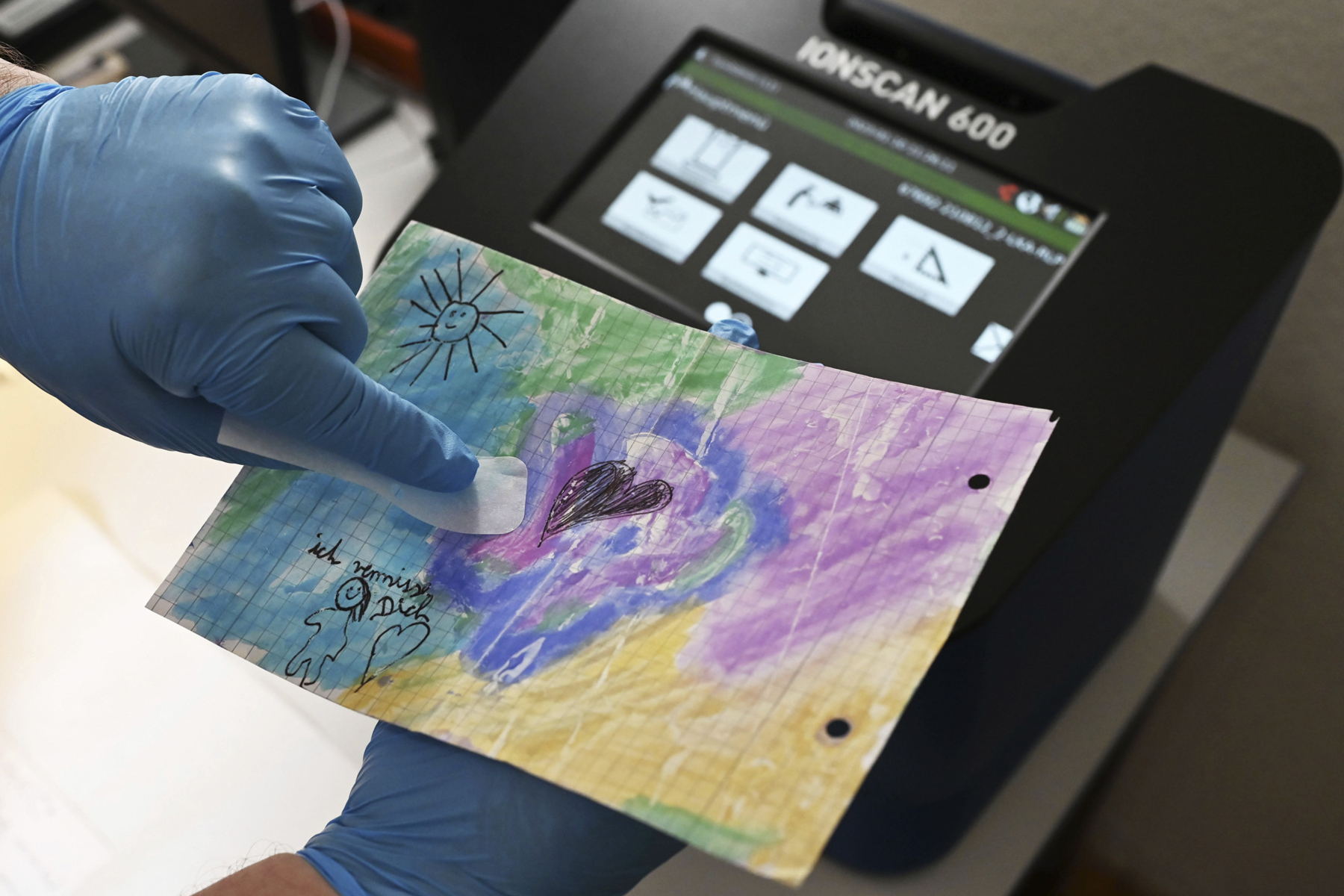

Regina Russell’s son, Tamon Russell, has been incarcerated in Illinois for over 20 years. Since he first went to prison, handwritten letters have been one of the few consistent ways the family has stayed connected. After Tamon’s grandmother died over a decade ago, he held on to all the cards from her.
“My son still looks at the letters and the cards that his grandmother sent him,” Regina Russell said. “It makes him feel good, because he can remember the good times.”
But her son, like thousands of others incarcerated in Illinois, has not been able to receive physical letters and cards since August. The Illinois Department of Corrections wants to permanently replace physical mail with digital scans. Russell is one of several mothers trying to prevent that.
She is part of a group named MAMAS, short for Mothers Activating Movements for Abolition and Solidarity. These mothers argue that the policy strips incarcerated people of dignity and creates new questions around privacy. The state’s Department of Corrections adopted the change through an emergency rule this fall and is now seeking to make it permanent following a public comment period and legislative review.

Under the new policy, personal mail sent to people incarcerated in Illinois prisons is intercepted, scanned by a third party, and delivered digitally through tablets. Original letters are placed into personal property storage and kept for at least six months. The Illinois Department of Corrections says the policy is necessary to reduce the flow of drugs and other contraband into facilities. Prison staff members — along with the Illinois chapter of the American Federation of State, County and Municipal Employees, the labor union that represents them — also claim that officers have gotten sick from physical interaction with tainted mail. The emergency rule went into effect in August and expanded statewide in September.
MAMAS began organizing as soon as families learned about the change, though they were given little warning before it took effect. “When I first heard about it, I started reaching out to people I know who are incarcerated at different facilities, and people inside had not heard anything about it,” said Erica Bentley, associate director of the organization.
April Ward, whose son Mikael Ward is serving an 84-year sentence, said the shift has been devastating. “You’re taking away their human rights, and you’re actually torturing them from not being able to communicate with their loved ones,” she said. She described the confusion surrounding what happens to original letters after the six-month period. “You mean to tell me he can get his mail scanned and it’ll last for six months, but his letter is going to go into his property. That’s no good. How do we know it’s going to his property? They lose property, every time he gets moved, he loses property.”
Bentley said the policy also raises unresolved questions about privacy. “What’s happening with all this mail that’s being scanned? Who has access to the personal information of people sending the mail in? Because in order to register for anything, you have to just agree to the Terms of Service, or you don’t have access. That’s all very unclear,” Bentley said.
Russell said that incarcerated people like her son rely on physical mail to feel connected and keep their spirits up. “They are excited to open up a letter or open up a card, or somebody sends them a book.” It matters, she said, “that somebody is thinking about them on the outside of that wall.”
Organizers across the state argue that scanning mail does not address the real source of drugs inside prison, a view supported by researchers. Sarah Staudt, director of policy and advocacy for the Prison Policy Initiative, said 25 states had implemented mail scanning as of May; not including Illinois. “What nobody seems to be able to present, beyond the occasional anecdote, is real data about how contraband is coming in,” she said. “We know, for example, that staff smuggling of contraband is a major source of contraband. I think you’d be hard pressed to find an honest director of corrections who would disagree with that.”
Staudt pointed to Pennsylvania as a key case study, noting that even after they implemented mail scanning in the state, overdose rates have continued to rise. “That means that drugs are not entering the facility primarily through mail,” she said.

Support The 19th
Women and LGBTQ+ people have long been sidelined in mainstream news. At The 19th, we center their experiences with the depth and nuance they deserve — and your donation helps ensure they have a more equal role in shaping America’s future.
Activists have also raised concerns about how mail scanning is bundled with profit-driven technology contracts that may also include phone calls, which are often paid for by the person on the other end of the call, and tablets for email or other forms of communication with the outside world. “Tablets are a money-making device. Mail scanning is a part of all of that,” Staudt said.
Families already feel the financial strain of digital systems. “It costs money on credits to email people in prison,” Bentley said. “We don’t know what the long-term cost will look like.”
The emergency rule is set to expire soon. To make mail scanning permanent, the Department of Corrections must submit a final rule by early December and receive approval through the legislative review process. A new state law requiring data collection on contraband passed earlier this year, but its first findings are not expected until at least 2027.
“That research is going to be incredibly important in terms of showing where the real problems lie,” Staudt said. “Any rational system that cared about getting the right answer here would wait until this information was fully analyzed before moving forward on something like mail scanning.”
MAMAS members say they feel ignored. “They hear you, but they don’t care,” Russell said. “They’re pretty much going to do whatever they want to do.”
Still, the group pushed community members to submit public comments and contact lawmakers before November 28, the last day for public comment before lawmakers make a final decision.
Families of those incarcerated are already dreading the impact. “They’re still human beings, and they still deserve the same respect,” Russell said. “I love getting cards and letters. They do too.”


