
Skip to content Skip to search

Republish This Story

* Please read before republishing *

We’re happy to make this story available to republish for free under an Attribution-NonCommercial-NoDerivatives Creative Commons license as long as you follow our republishing guidelines, which require that you credit The 19th and retain our pixel. See our full guidelines for more information.

To republish, simply copy the HTML at right, which includes our tracking pixel, all paragraph styles and hyperlinks, the author byline and credit to The 19th. Have questions? Please email partnerships@19thnews.org.

— The Editors

Loading...

Modal Gallery

/
Sign up for our newsletter

Menu

Topics

  • Abortion
  • Politics
  • Education
  • LGBTQ+
  • Caregiving
  • Environment & Climate
  • Business & Economy
View all topics

Daily Newsletter

A smart, relatable digest of our latest stories and top news affecting women and LGBTQ+ people.

Look for a confirmation sent to

Did you mean

The email didn't go through.

or Contact us for support
  • Latest Stories
  • Our Mission
  • Our Team
  • Strategic Plan
  • Ways to Give
  • Search
  • Contact
Donate
Home

We’re an independent, nonprofit newsroom reporting on gender, politics, policy and power. Read our story.

Topics

  • Abortion
  • Politics
  • Education
  • LGBTQ+
  • Caregiving
  • Environment & Climate
  • Business & Economy
View all topics

Daily Newsletter

A smart, relatable digest of our latest stories and top news affecting women and LGBTQ+ people.

Look for a confirmation sent to

Did you mean

The email didn't go through.

or Contact us for support
  • Latest Stories
  • Our Mission
  • Our Team
  • Strategic Plan
  • Ways to Give
  • Search
  • Contact

We’re an independent, nonprofit newsroom reporting on gender, politics, policy and power. Read our story.

Daily Newsletter

A smart, relatable digest of our latest stories and top news affecting women and LGBTQ+ people.

Look for a confirmation sent to

Did you mean

The email didn't go through.

or Contact us for support

Become a member

The 19th thanks our sponsors. Become one.

Rest and resistance are intertwined. Rosa Parks understood that.

In her later years, Parks practiced yoga as a way to support her body and mind — reflecting a broader lineage of Black women grounding their organizing in rest.

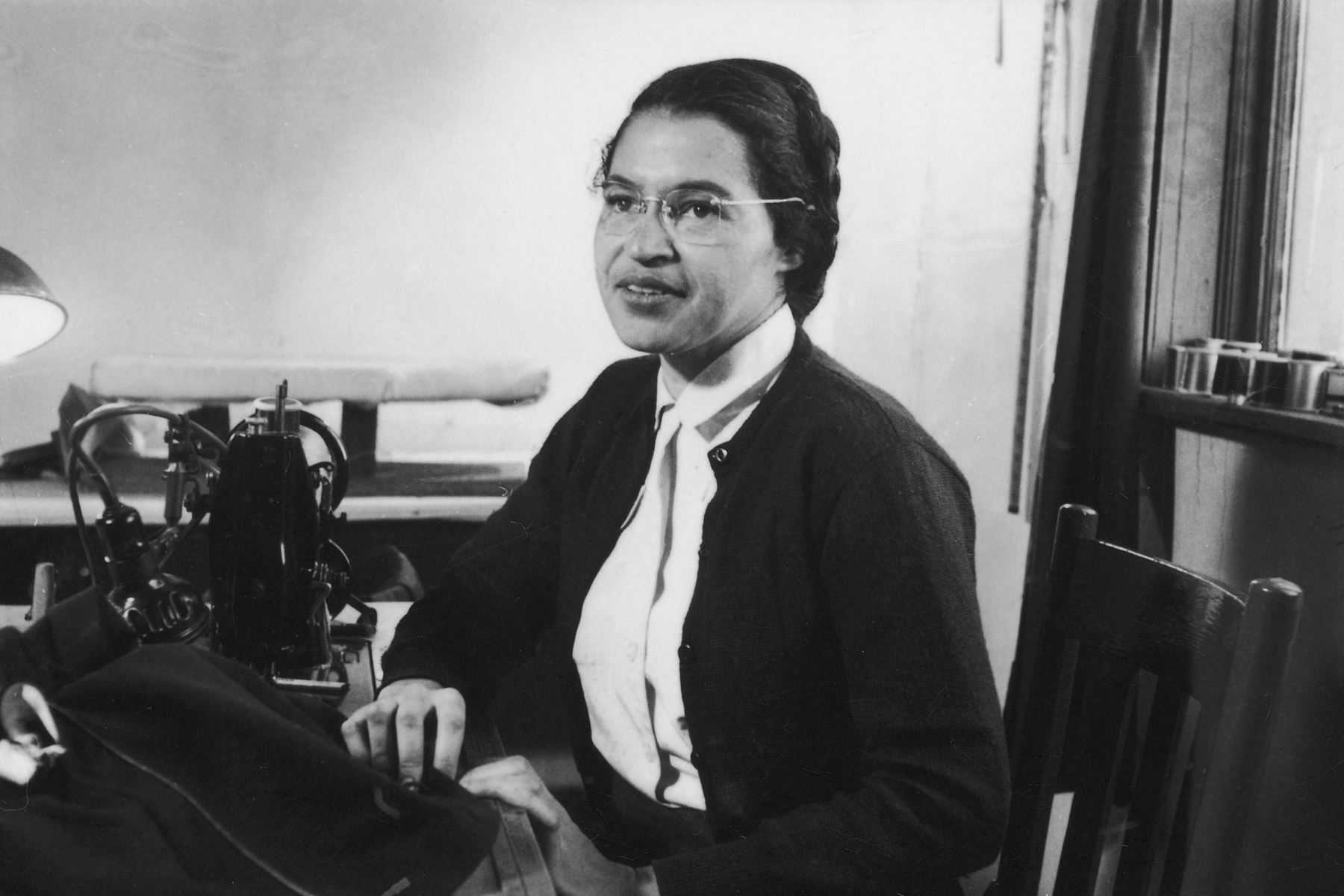
Rosa Parks sits at a table sewing.
American Civil Rights activist Rosa Parks learned self-care practices like yoga, after years working as a seamstress and activist. (Don Cravens/Getty Images)

Gabriella Gladney

Reporting fellow

Published

2025-12-01 08:04
8:04
December 1, 2025
am
America/Chicago

Republish this story

Share

  • Bluesky
  • Facebook
  • Email

Republish this story

Self-care is a bit of a buzzword these days. But for Rosa Parks, it was a deliberate practice and a means of survival in her later years. Long after she refused to give up her bus seat in Montgomery, Parks practiced yoga as a way to support her body and mind. This little-known part of her history is a piece of a bigger picture: Black activists have used self-care as a tool for decades.

After the bus arrest, Parks’ life was changed forever. She became a public figure and “the mother of the civil rights movement,” a title that she never got used to, according to her autobiography, “Rosa Parks: My Story.” She also faced several personal challenges that are often left out of her narrative. Harassment and threats after the bus arrest caused her and husband, Raymond Parks, to leave Alabama for Detroit. They both struggled to find steady work and even had to live separately for a time while Rosa worked in Virginia as a hostess at The Holly Tree Inn, the campus guest house at Hampton University. In 1977, she lost her husband and brother within three months of each other while her mother was also battling cancer. 

All the while, Parks was battling health issues of her own. Still, she continued to organize and speak around the country until late into her senior years. For that, she needed to take care of her body.

The 19th thanks our sponsors. Become one.

Dr. Stephanie Y. Evans, a scholar of what she describes as Black women’s historical wellness, suggests that Parks’ relationship with yoga was a key factor in how she was able to continue forward. Evans has documented Parks’ reflections on yoga and wellness in her book, “Black Women’s Yoga History: Memoirs of Inner Peace.” Her archival research found that Parks’ interest in yoga grew in her later years while recovering from decades of physical and emotional strain. 

  • More like this
    Two women smile and talk seated on a bus alongside a man looking out the window.
  • How Rosa Parks’ legacy inspired a new fight over who could ride the bus
  • Rosa Parks’ story didn’t end in Montgomery. These students are proof of that.

“She learned community care at home and carried that forward late into her life. She was a part of the 1970s Black yoga revival and used that trend in service of her community in Detroit and her leadership across the country,” Evans said. 

Parks’s niece and nephew also noted its importance to her. In their memoir, “Our Auntie Rosa: The Family of Rosa Parks Remembers Her Life and Lessons,” they describe how, despite often being the oldest woman in the class, yoga brought her joy and peace. 

Parks’ turn toward wellness was not in isolation, but part of a long history of Black women grounding their political work in practices of self-care. Figures like Audre Lorde, Fannie Lou Hamer and Angela Davis all wrote about the physical toll of their activism. Many turned to what people might now call self-care long before the term was popularized, whether through journaling, prayer, or, in Parks’ case, yoga. For these women, caring for their bodies was not indulgence, it was strategy.

“Mrs. Parks was one part of a large effort to build communities of social justice workers,” Evans said. “Her self care practices were intimately connected to justice work as a practice of communal care. Yoga was personal for her, but also a way to sow health into her communities.” 
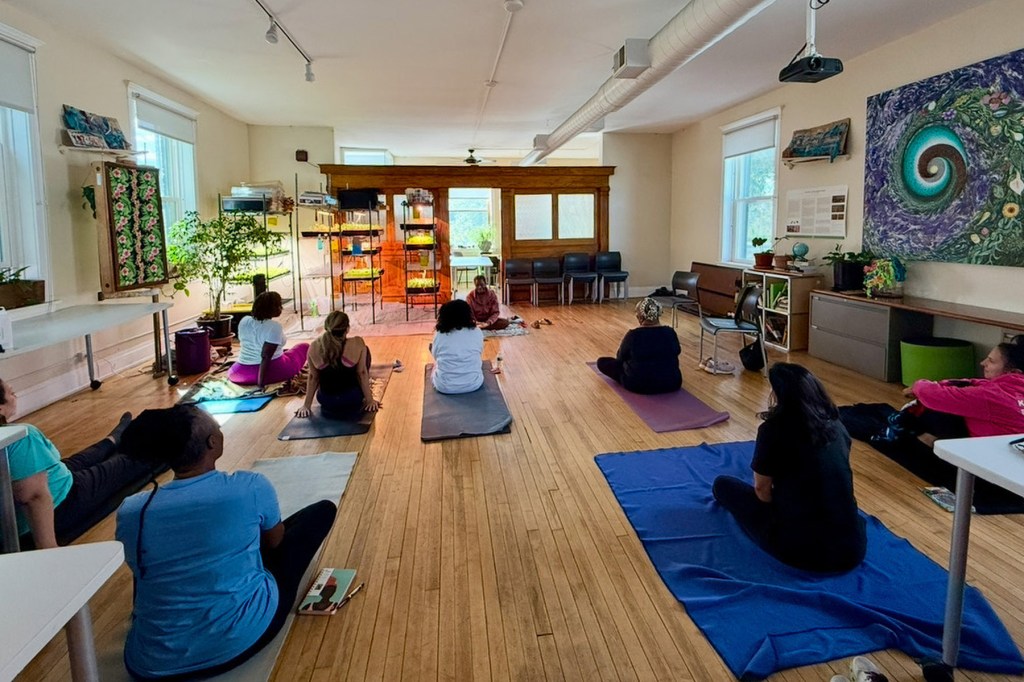
A group of people sit on the floor doing yoga.
Tameka Walton’s work with Restored Hope supports Black women navigating trauma and violence and reflects a broader shift toward recognizing healing as integral to justice movements. (Courtesy Tameka Walton)

Today, that lineage is visible in the work of organizers who center wellness as part of their liberation efforts. In Chicago, organizer and yoga practitioner Tameka Walton founded Restored Hope to support Black women navigating trauma and violence. Walton’s work reflects a broader shift toward recognizing healing as integral to justice movements.

“I think for Black women, especially, we automatically feel like we’re being selfish if we’re taking any moment to just be. But what I’ve come to realize is that if my cup isn’t filled, especially in the line of work that I do, then I cannot pour into anybody else. It’s almost reckless to continue pouring into others when I have nothing,” Walton said. “I’m tied to my own freedom, my own liberation.”

Support The 19th

Women and LGBTQ+ people have long been sidelined in mainstream news. At The 19th, we center their experiences with the depth and nuance they deserve — and your donation helps ensure they have a more equal role in shaping America’s future.

Donate Today

As more modern organizers reclaim practices like yoga, Parks’ story offers a reminder that wellness has long existed alongside activism, even if it didn’t always have a name. Her commitment to caring for herself, in the midst of grief and ongoing struggle, complicates the one-dimensional image often attached to her. It reveals the depth of the endurance required of Black women activists and the ways they have found to restore themselves in order to continue the work.

“To know that Rosa Parks utilized something that allowed her to go inward first before she went out for the world, it completely makes sense,” Walton said. “You disconnect from the world when you practice yoga. Why wouldn’t she need that?”

Republish this story

Share

  • Bluesky
  • Facebook
  • Email

Recommended for you

Two women smile and talk seated on a bus alongside a man looking out the window.
How Rosa Parks’ legacy inspired a new fight over who could ride the bus
Black-and-white portrait of Claudette Colvin in April 1998, seated near a window and looking off to the side.
Civil rights activist Claudette Colvin dies at 86
A young person is silhouetted by a lit-up exhibit of Rosa Parks in the Library of Congress.
Rosa Parks’ story didn’t end in Montgomery. These students are proof of that.
A pregnant person holds their head in their hands.
This isn’t the first time moms have been blamed for their kids’ autism

Daily Newsletter

A smart, relatable digest of our latest stories and top news affecting women and LGBTQ+ people.

Look for a confirmation sent to

Did you mean

The email didn't go through.

or Contact us for support

Become a member

Explore more coverage from The 19th
Abortion Politics Education LGBTQ+ Caregiving
View all topics

Support representative journalism today.

Learn more about membership.

  • Give $19
  • Give $50
  • Give $100
  • Any amount
  • Transparency
    • About
    • Team
    • Contact
    • Privacy Policy
    • Community Guidelines
    • Gift Acceptance Policy
    • Financials
  • Newsroom
    • Latest Stories
    • Strategic Plan
    • 19th News Network
    • Events
    • Careers
    • Fellowships
  • Newsletters
    • Daily
    • The Amendment
    • Menopause
  • Support
    • Ways to Give
    • Sponsorship
    • Republishing
    • Volunteer

The 19th is a reader-supported nonprofit news organization. Our stories are free to republish with these guidelines.