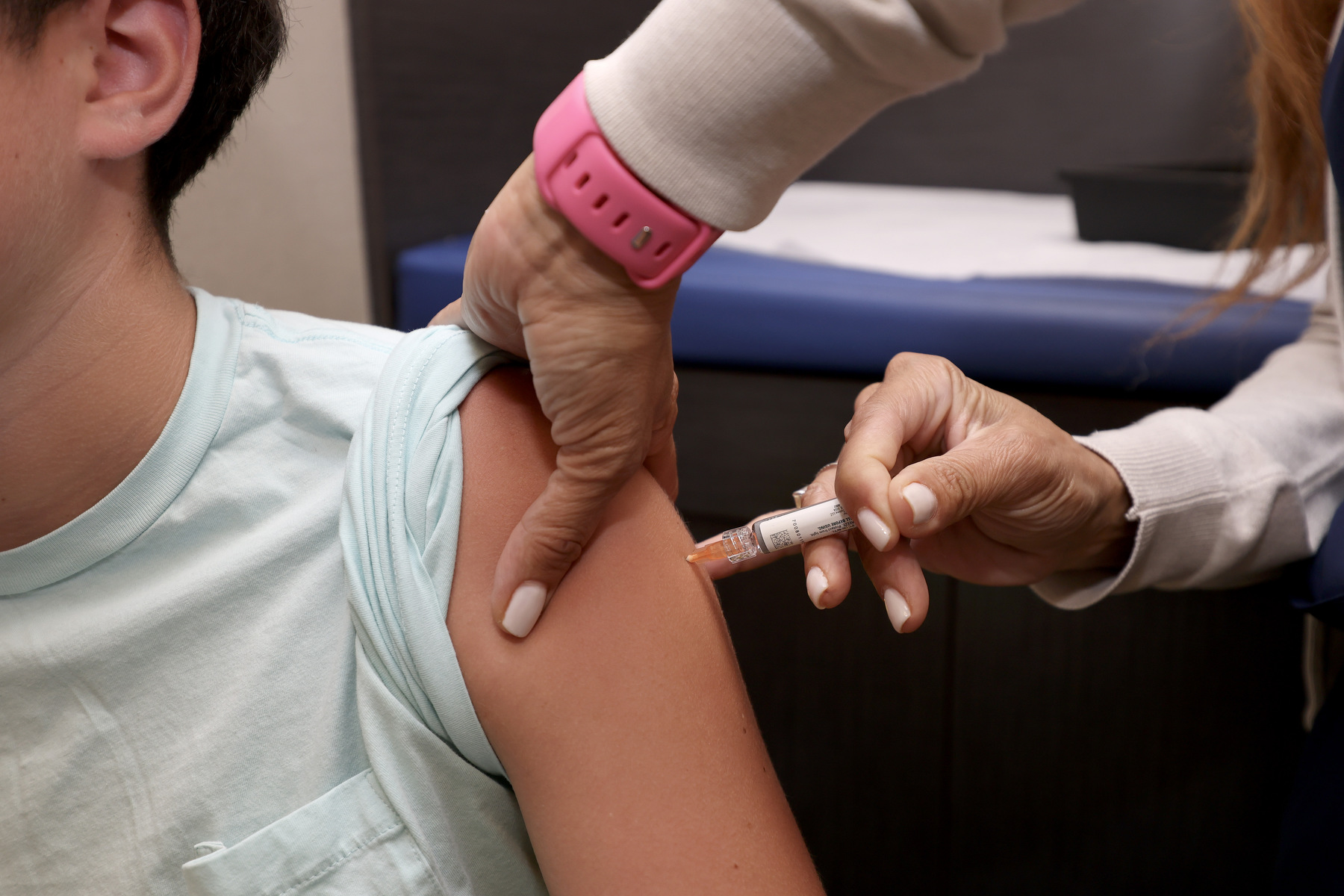

President Donald Trump is showing increasing interest in reducing the number of routine childhood vaccines in the United States. As part of that justification, he and anti-vaccine activists are pointing to what’s recommended in other countries — an idea that medical and public health experts say ignores key differences about the United States’ health care system.
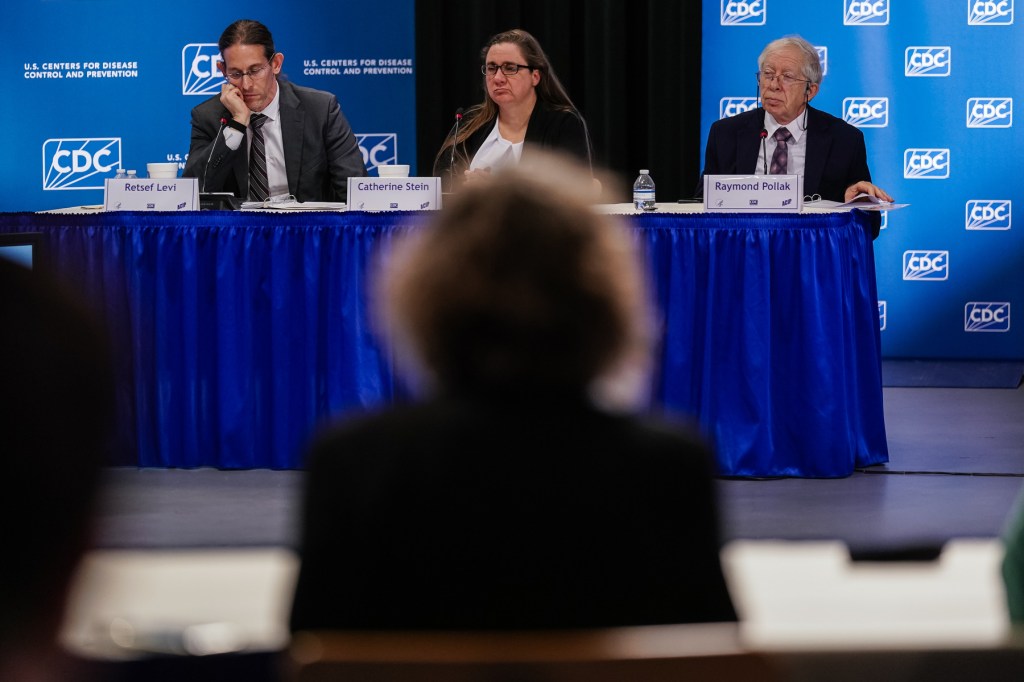
The topic was on display this month when speakers at a meeting held by a now-politicized vaccine advisory panel noted that countries like Denmark recommend fewer vaccines to children, including not recommending a universal birth dose for the hepatitis B vaccine. The panel ultimately agreed to end such a recommendation in the United States.
Trump later announced a presidential memorandum asking Health and Human Services Secretary Robert F. Kennedy Jr. and the director of the Centers for Disease Control and Prevention to review best practices from “peer, developed countries” on their “core” childhood vaccination recommendations and consider whether the United States should follow those schedules instead.
Dr. Jason M. Goldman, president of the American College of Physicians, said during a press briefing this week that the United States trying to replicate Denmark is like comparing apples to oranges.

“You’re looking at a population smaller than New York. You’re looking at a universal health care system where everyone has access to care. You’re looking at a different homogeneity versus [the] United States: We have more people, more diversity. We do not have universal health care. We do not have the same level of access.”
Elizabeth Jacobs, a professor emerita from the Department of Epidemiology and Biostatistics at the University of Arizona, echoed Goldman.
“Without nationalized health care immediately, you cannot compare these two countries with regard to public health policy,” she told The 19th. “That’s just not feasible.”
The United States, which has more than 73 million children under 18, currently recommends children get vaccinated against about 17 diseases (though the exact figure can vary). Some of those vaccines are combined or require several doses to ensure effectiveness, which means a child can get about 30 vaccine doses by the time they turn 18. That does not include annual immunization for the flu or COVID-19.
Anti-vaccine activists have long expressed support for fewer routine shots by comparing the number of vaccines given in places like not just Denmark but Germany, Japan and the United Kingdom. Those countries do recommend fewer vaccines, and mostly do not include seasonal respiratory vaccines, which are prevalent in the United States; Denmark, a country with a population of 6 million people, recommends vaccinations against 10 diseases; Germany recommends vaccines against 15 diseases to its 84 million residents; Japan recommends vaccines against 14 diseases to its population of 123 million people; the United Kingdom recommends vaccines against 15 diseases to its 69 million residents.
The exact comparison in terms of shots is difficult to gauge since some governments rely on different manufacturers to vaccinate children against the same diseases. That might change the number of combination shots or doses administered.
Universal health care access, which all developed nations in the world have barring the United States, could help support more limited vaccination recommendations for children, in part because it encourages preventative care upfront and reactive and consistent treatments in the case of widespread illness down the road. The American health care system, which relies on a mix of private and unequal subsidized care, has a history of confusing patients. Millions of Americans have no health insurance, and millions of Americans also face thousands of dollars in medical debt.
Other developed countries also offer paid parental leave for new parents, which encourages families with very young babies to stay home more. That limits potential exposures to illness in infants who are still building up their immune systems. The United States has no such program, and some birthing parents are back to work within weeks. The ripple effect is very young children in more public spaces, including day cares.
This context has not stopped anti-vaccine activists from fixating on Europe, and Denmark in particular.
Tracy Beth Høeg, the acting director of the Center for Drug Evaluation and Research at the Food and Drug Administration — and a vaccine skeptic who has also challenged the safety of COVID-19 vaccines — noted during the two-day meeting of the Advisory Committee on Immunization Practices, or ACIP, that Denmark only recommends a birth dose of the hep B vaccine to high-risk populations. Høeg, who says her children were born in Denmark, expressed support for ending the universal hep B vaccine shot in America.
Adam Langer, a longtime official at the CDC who helps oversee hepatitis prevention, offered expert feedback during the same meeting. Langer cautioned against holding a mirror to the small European nation, which does more screening of pregnant people for hepatitis B, offers free prenatal care for all and does more extensive postpartum follow-up to ensure families are vaccinated against hep B if they need to be.
“Denmark, and for that matter, virtually all other high-income countries, are not really peer nations,” he said.

Support The 19th
Women and LGBTQ+ people have long been sidelined in mainstream news. At The 19th, we center their experiences with the depth and nuance they deserve — and your donation helps ensure they have a more equal role in shaping America’s future.
Some vaccine experts have noted that in theory, if the United States tries to more closely match its schedule to other countries, on the chopping block could be vaccines for preventable diseases like hepatitis A and varicella, also known as chickenpox. Those diseases cause liver disease, pneumonia and death in some cases.
But Michael T. Osterholm, director of the Center for Infectious Disease Research and Policy, said at the news briefing this week that the comparison to other countries is a distraction by an administration that has repeatedly questioned the safety of routine childhood vaccines. The same administration has recently indicated an interest in reexamining the antibody shots for the respiratory syncytial virus known as RSV, which can be severe in young children.
“All of these data that we’re talking about has to be adjusted for the country for which the vaccines were delivered, because the health care systems are so different. What is a safety net in one country does not even exist in another country … I think our issue today is don’t be distracted,” Osterholm said.
Trump’s memo to review other countries’ childhood vaccine schedules has no legal power, and most formal changes to vaccination mandates in places like schools will still mostly require state-level laws being changed in legislatures. But it signals a public endorsement of Kennedy’s actions so far on vaccine policy, which has included offering mixed messaging about a measles outbreak, halting a recommendation that pregnant people get a COVID-19 vaccine despite the heightened risks of infection, and warning pregnant people that taking over-the-counter pain relief medication could cause autism despite a lack of medical consensus. Kennedy also ordered the CDC to update its website to falsely claim that vaccines cause autism.
Trump’s public support could spur the secretary to accelerate his vision for limiting childhood vaccines. Some ACIP members during its last meeting spread misinformation about the safety of a key ingredient in vaccines that ensures their effectiveness.
After Trump touted his memorandum on social media, Kennedy thanked the president on X and added: “We’re on it.”
Jacobs, a member of Defend Public Health, an advocacy organization that has challenged Kennedy’s handling of health policy as secretary, said she worries that the administration is sowing vaccine mistrust and children’s health continues to be on the line. While trust in the effectiveness of vaccines remains high, the rate of vaccination among kindergarteners is declining. Fewer vaccinated kids increases the chance of serious illness among children who are too young to be vaccinated.
“I think what RFK Jr. and the rest of them are gambling on is it takes a while to build up an outbreak like that when it’s not a novel pathogen, right?” she said. “So as vaccination rates slowly, slowly erode, it could be three, four or five years before we see something horrific.”


