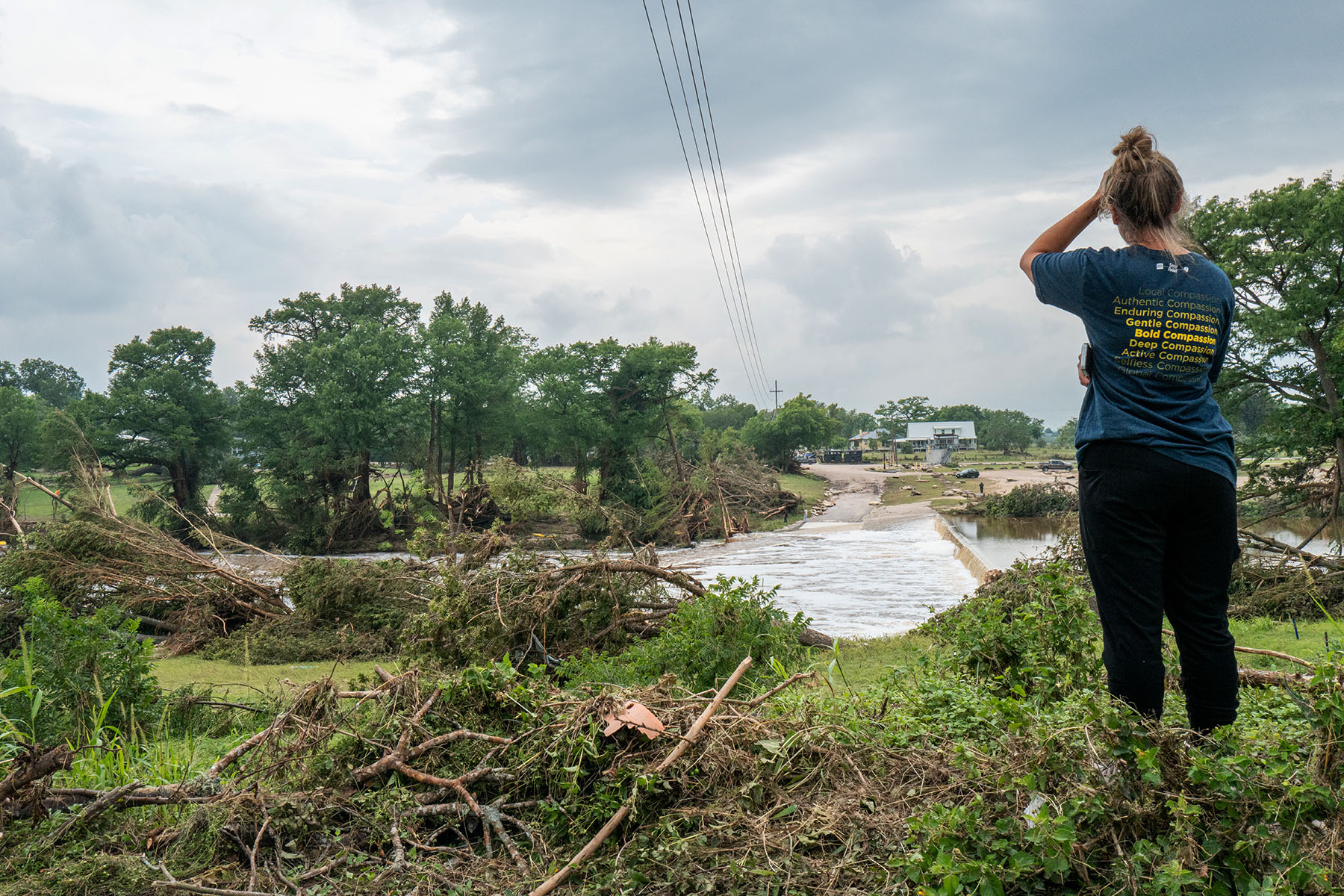

When a flood, wildfire or other natural disaster hits, evacuating residents are much more likely to grab important documents, family photos, water and clothes than birth control, condoms or menstrual products.
Worse, if they are stranded, it may be impossible to get the supplies they need during the weeks of recovery that follow a major disaster.
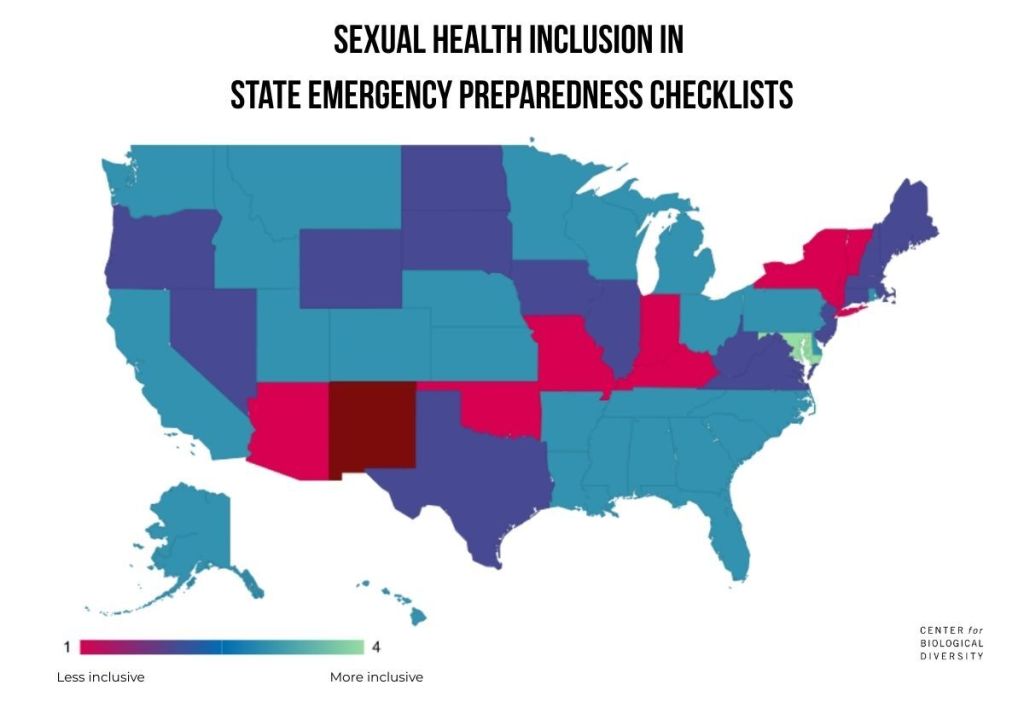
States typically have a list of items that residents should have on hand in case of an emergency. But according to a new 50-state scorecard released on Thursday, only one state — Maryland — does a good job of including sexual and reproductive health supplies into its preparedness checklist.
Researchers from the Center for Biological Diversity, an environmental nonprofit, named four categories of supplies that should be included on states’ checklists: menstrual products; sexual and reproductive health items, such as emergency contraception and birthing supplies; medications and personal hygiene products. Then, they analyzed the checklists to see which ones included supplies from each of these buckets.
Maryland was the only state to get a perfect score; its list includes both condoms and menstrual products. Rhode Island was the only state to include birthing supplies which could include gloves, a sheet and surgical scissors. Forty-eight states had medication on their checklists, which could encompass birth control. A little over half of the states included menstrual products. (Seven states used the federal government’s generic checklist, which includes “feminine supplies,” but leaves out contraceptives and condoms.)
“I think as a suite of products [states] could be providing more information to people around their sexual and reproductive health needs during those times,” said Kelley Dennings, senior campaigner with the population and sustainability program at the organization.
As climate change worsens, leading to more frequent and destructive disasters, it will more significantly impact access to reproductive and sexual health care, a topic that hasn’t been heavily researched in the United States. One study after Hurricane Katrina found that out of 55 women who had been attending a family planning clinic prior to the storm, 40 percent were no longer on birth control and two had unintended pregnancies. Another, after Hurricane Ike, found that 13 percent of 975 women surveyed had difficulty obtaining contraception, with lack of access more pronounced among Black women.
Some studies have also found an increase in sexual assault after disasters, including reports of women being raped or assaulted in evacuation shelters after Hurricane Katrina and Hurricane Rita.
Just last year, Hurricane Helene shuttered the Planned Parenthood in Asheville, which made obtaining an abortion and other sexual and reproductive health services more difficult for people across the region.
One group that stepped into action after Helene was State Line Abortion Access Partners, a Virginia-based collective of activists who connect people with reproductive health care and supplies. They distributed period products after noticing that many of the emergency supply lists circulating didn’t include those items. They also offered condoms and emergency contraception while navigating taboos around sexual health in more conservative areas impacted by the disaster. Kimberley Smith, co-founder of the organization, recalled that while most people were receptive to the items, others questioned why they were necessary at all. “[At] one of the bigger drop off locations, a man [accepting supplies] said, ‘We don’t need that. You should take that stuff to the health department,” she said.
Another person told her, “nobody’s thinking about sex at a time like this.” But the initial recovery effort lasted weeks, Smith said. “People handle stress in a lot of different ways. That’s really short sighted to think that people won’t want to have sex.”
Smith sees the Center for Biological Diversity’s scorecard as one way to increase awareness of why these items are needed after emergencies. “Sexual health has gotten very siloed,” she said. “I think they’re doing really innovative and important work in the context of centering reproductive health care.”

The scorecard report builds on previous work the center has done, focused on gender and climate. In 2022, it analyzed climate plans from 21 cities across the United States for the inclusion of gender and other key terms like reproductive health and family planning. Only one Boston — referenced gender in its climate plan; none included reproductive health or family planning.
The center has worked with mutual aid groups and reproductive health organizations in Florida to distribute sexual health emergency preparedness kits that include items like condoms, emergency contraception, period products, pregnancy tests and lubricant. They distributed 250 kits during Hurricanes Milton and Helene. The center has since created a how-to guide to empower other organizations to do similar work in their states.
The United Nations’ International Conference on Population and Development in Cairo in 1994 was a turning point for recognizing the need for sexual and reproductive health care worldwide, said Lorelei Goodyear, a consultant who works on sexual and reproductive health and emergency preparedness globally. That recognition helped steer how these needs are met during humanitarian crises globally, whether caused by conflict or natural disasters.
For that reason, she said the scorecard is a step in the right direction for starting the conversation here in the United States on what preparedness could look like. “So much of what I’ve seen domestically is really focused on maternal, and maybe infant child health,” Goodyear said. “[It’s kind] of missing the bigger picture in terms of sexual and reproductive health and the all hazards approach that I think, is really embraced internationally.”
Still, there are important questions to ask of states — and the federal government — that are already being considered elsewhere, she said: Is there money to provide these kinds of supplies in times of disaster? Is it clear who might be responsible for distributing these products? What policies are in place to address these needs during disasters?
To help bridge these gaps and address the lack of awareness around sexual and reproductive health, the center recommends that states update their emergency preparedness checklists to incorporate these supplies — and that they make these checklists easier to find online and available in multiple languages. The center also hopes to see stakeholders from sexual and reproductive health organizations play a more regular role into emergency planning.
“We’d love to see more people advocating for the rights of women and gender diverse people, or birthing mothers,” Dennings said. “These folks aren’t always at the table, so then their voices aren’t heard in these plans.”


