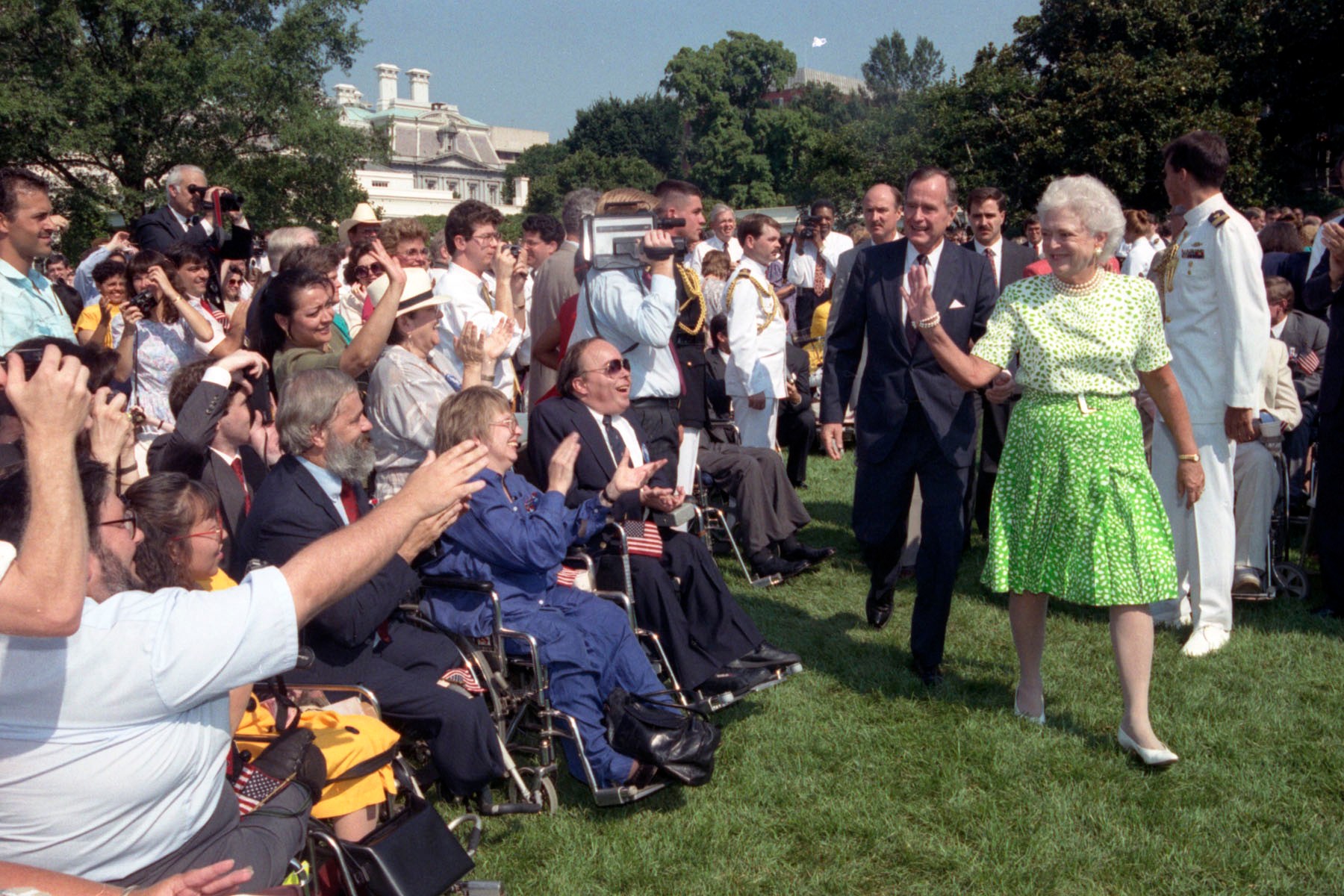

Nearly 40 years ago, disability advocates struck a deal with Republican lawmakers, who agreed to give their votes in exchange for excluding trans people from landmark federal disability protections.
Over the past few years, and bolstered by the Biden administration, federal courts have determined that many trans people are entitled to protection from discrimination by the same laws protecting Americans with disabilities. But a new rule proposed by the Trump administration aims to reverse that.
This time, though, disability rights advocates are standing shoulder-to-shoulder with the LGBTQ+ community to extend civil rights protections to people who were historically left out. It’s a major change from how disability advocates approached trans issues in the past — and particularly notable at a time when the Trump administration has been undermining protections for LGBTQ+ and disabled people.
“It’s important for the disability community to work together to make sure that our civil rights laws are construed broadly. That has been a principle of the disability rights movement for decades,” Claudia Center, legal director of the Disability Rights Education and Defense Fund, told The 19th. “We don’t exclude people from protections based on disability. … We don’t agree with disabilities that are unpopular not being covered by our laws. We try to work together and stick together.”
Chai Feldblum was in a side room off the U.S. Senate floor in 1989 as one of the disability advocates negotiating to get enough support to pass what would become the Americans with Disabilities Act. She explains how a flash decision had reverberations for the trans community.
At first, a Republican senator circulated a proposed amendment, which listed a set of conditions that he and other conservative lawmakers wanted excluded from protection in exchange for their support. These included about 50 psychiatric conditions and also homosexuality, recalled Feldblum, who at the time worked for the ACLU and described her role as “a conduit between disability rights litigators and the political folks.”
Some disability advocates saw no issue with explicitly listing homosexuality as one of the exclusions from the act’s protections because it was no longer considered a mental disorder by the medical establishment anyway. Feldblum, a lesbian, pushed to remove it from the list because she felt it shouldn’t have been there in the first place – that including it wrongfully framed homosexuality as a disability.
She and other disability advocates tried to negotiate with the Republican senators whose support they needed. The GOP holdouts came back with a demand for more restrictions. Feldblum said it made her “sick to her stomach,” but in the end, she and the other advocates put together a list of eight exceptions, including “transexualism,” transvestitism” and “gender identity disorder not resulting from physical impairments,” terms that are no longer in use and that some consider offensive today. The process took a handful of minutes and the exclusions were not deeply considered, according to Feldblum.
“It was an alternative to having 50 conditions excluded,” she said. “The only way to counter it was to take some people out… That was the political reality at the time.”
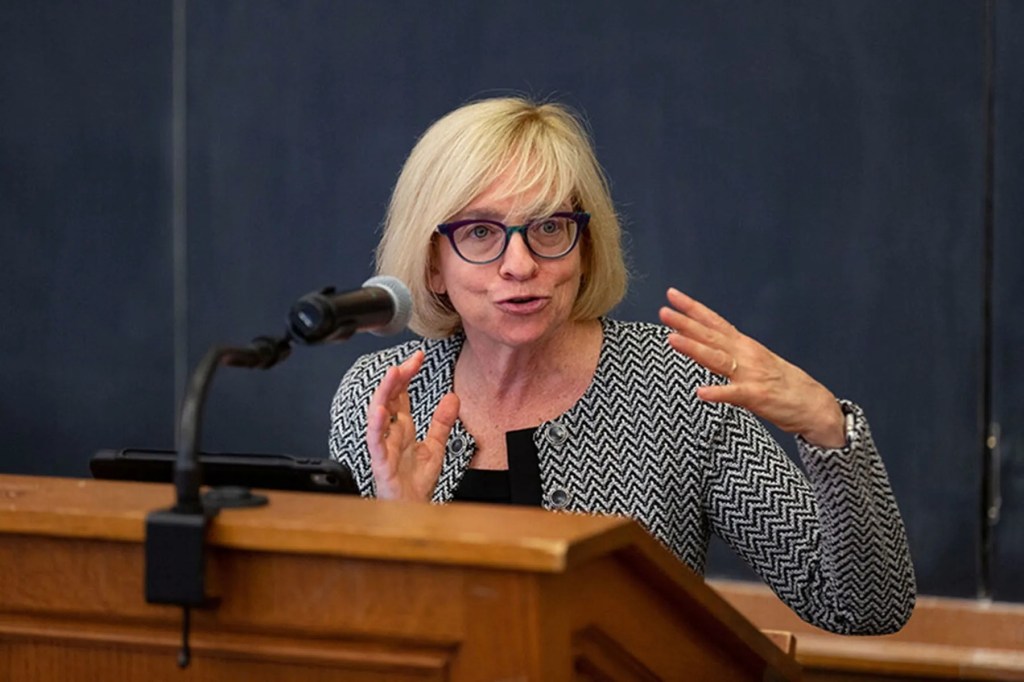
After the amendment was added and the ADA took effect, Feldblum remembers people in the LGBTQ+ community being “disappointed and angry.” She said she feels what she and other advocates did was necessary.
Health and Human Services Secretary Robert F. Kennedy Jr. announced the change at an agency event last month alongside several other rules meant to “protect children” from so-called “transgender ideology.”
Secretary Kennedy said that designating gender dysphoria as a disability serves “the commercial interest of a predatory, multibillion dollar industry that betrayed the original intention of those laws.” In doing so, he invoked his uncle, Sen. Ted Kennedy, a Democrat who represented Massachusetts in the U.S. Senate until his death in 2009 and played a pivotal role in co-authoring and passing the ADA.
But Feldblum, who was in the room where it happened, said the “original intention” was no such thing. In fact, what Sen. Kennedy said at the time was that excluding “transexualism” and “gender identity disorder” was “certainly not one that I would have wanted in the legislation,” but it was one “which we can live with.”
According to Ma’ayan Anafi, senior counsel at the National Women’s Law Center, “when the exclusion was introduced, there is no evidence that the disability community was pushing for it.”
Legislation that followed the ADA passage emphasized a more expansive definition of disability, and Feldblum said she was both surprised and pleased when later court cases clarified that “gender dysphoria” is not excluded from ADA protection.
The Trump administration has used executive orders and regulatory rollbacks through the rule-making process to advance its agenda, including its extremely broad interpretation of “gender identity disorder” and similar terms In this case, the administration is citing the original text of the ADA, according to Kevin Barry, a professor of law at Quinnipiac University. However, the terms used are no longer in use and are, to some, offensive. He noted that Congress clarified the intention of the original law through the ADA Amendments Act of 2008, which he helped negotiate. That law clearly establishes that disability should be expanded broadly, and exceptions should be interpreted narrowly, he said.
“What, in essence, [Trump administration officials] are saying is that in 1990 Congress excluded every possible condition associated with gender identity in perpetuity, forever,” Barry said. This is not something written into existing law, and it is something the courts have repeatedly rejected, he explained.
“I can’t speak to what the U.S. Supreme Court would say, but I think that is where the logic of the Trump administration goes,” he said. “If they truly believe that that’s what Congress did in 1990 excludes every condition under the sun associated with trans people, then Congress in 1990 did something unconstitutional.”
What do disability rights protections for transgender people look like in practice? Ezra Young, a legal scholar, has litigated a few cases involving gender dysphoria as a disability. To Young, it is squarely a disability like any other disability. He also notes that trans people are in no way obligated to identify or see themselves as disabled. Not all trans people even experience gender dysphoria.
“If they choose to not deem it a disability and choose to not invoke their rights as a person with such a disability, that’s fine, and American law does not force them to do otherwise. It’s a set of opt-in protections,” he said.
Young cited a case of a trans woman whose office instituted a policy where workers would wear sports jerseys on Fridays. The sports jerseys in question triggered the woman’s gender dysphoria. She got a doctor’s note, but it wasn’t enough. Young pointed out that this is a common experience for many people with disabilities seeking accommodations in their workplaces.
“Does she ask for accommodation? ‘Can I please have a women’s cut jersey? I will pay for it myself. It’s just this other jersey.’ I think that’s something that lots of people with disabilities can relate to,” he said. “It’s something weird that comes up at work, at school, in public that you might not even have anticipated as needing, but you want accommodations so you can go about doing your job.”
What do trans people stand to lose if the Trump administration’s rule is finalized as expected, and what comes next?
“What the Trump administration is trying to do through this proposed regulation is to slice trans people with gender dysphoria out of protection of disability laws on the pretense that Congress wanted to do so,” Young said. “But guess what? If Congress wants to do that, Congress would have to pass a law. That’s the way our Constitution protects everyone.”
The Trump administration cannot make laws through regulation, and attempting to do so leaves the administration open to litigation, experts, including Anafi and Center, told The 19th.
“We want to make sure that people know even if this rule is finalized, that’s not the end of the fight in court,” Center said.