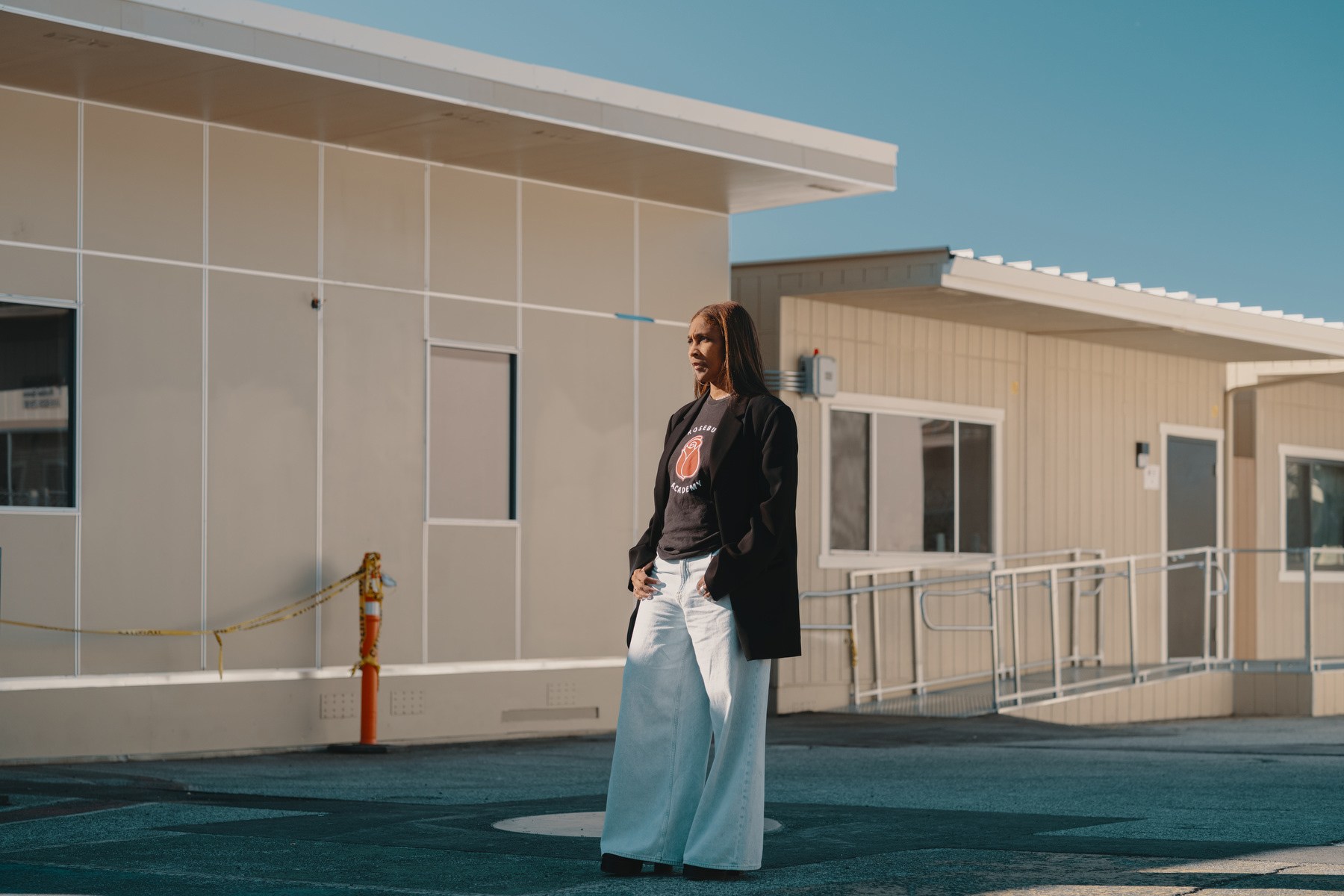

The night of January 7, 2025, ushered in one horror after another for Shawn Brown. As a wildfire whipped through Altadena, California, Brown evacuated her home with her daughter and father — only to see footage of flames engulfing the charter school she founded to educate and uplift students of color. In a flash, Pasadena Rosebud Academy was gone.
The next morning, Brown drove to her house, confirming with her own eyes that the blaze had leveled it as well. But she did not unravel. As the executive director of Rosebud Academy, the career educator started making plans for her students and their families, many of whom were also left homeless after the conflagration. “I knew that people were kind of looking to us to help them,” she said.
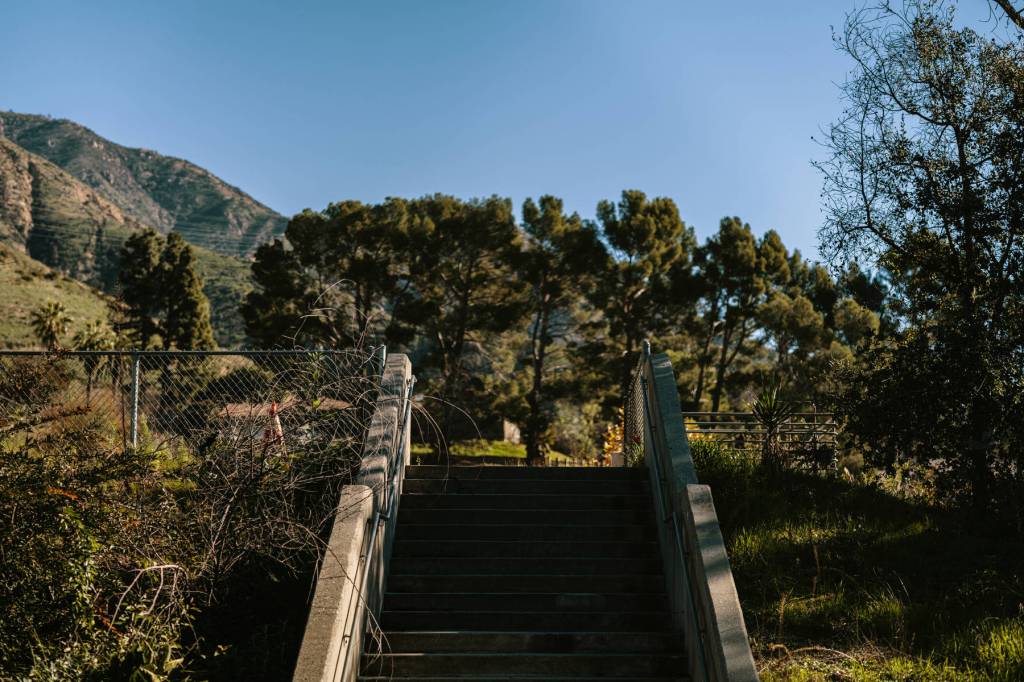
A year after the Eaton Fire killed 19 people and destroyed over 9,000 structures, Rosebud Academy still lacks a permanent home. But with Brown’s leadership and inventiveness to serve a school in transition, the Rosebud community has remained united and even thrived after the catastrophe. Confronted with an uncertain future during the early days of recovery, the academy achieved resilience by leaning on its support network, adapting to changing circumstances and pressing ahead day by day.
A former teacher for the Pasadena Unified School District, Brown founded Rosebud in 2007 to close the racial achievement gap and provide an environment in which marginalized students in transitional kindergarten through eighth grade could excel. She reiterated her commitment in a “Good Morning America” interview days after the fire started, emphasizing her intention to meet student needs and set aside her personal grief.
(BETHANY MOLLENKOF FOR THE 19th)
“I think I was just in ‘go’ mode,” she recalled of the first weeks of recovery. “It was really about problem-solving, figuring out how we can get our students back together and bring our community back together.”
She and her team organized a gathering for the Rosebud community at a local church, providing activities, food and a therapist for traumatized families. They planned a week of field trips to destinations such as the aquarium, the zoo and a science center to give parents time to figure out their next steps. Meanwhile, Rosebud leaders brainstormed about temporary sites.
“What are we going to do with our students?” Brown recalled them all wondering. “We needed a place.”
Finding somewhere to resume classes for a few weeks in the middle of a school term and at the start of a new calendar year wasn’t easy. Some venues were simply too expensive, and others didn’t meet code guidelines for a school. With no clue where classes would be held the next week, Brown began to panic. “It was Thursday night, and I was like, ‘Oh, my God, I just don’t know what we’re going to do,’” she said. “‘We have to have a plan.’” Desperate, she sent an email to the leaders of The Beehive, a South Los Angeles event space with a 13,000-square-foot technology and entrepreneurship center.
“They called at eight o’clock the next morning and said, ‘We would love to have you,’” Brown said. “They worked all weekend to put that place together. They were like God-sent for us.”
For three weeks, Rosebud’s 189 students were bused daily from a Pasadena church to South Los Angeles, roughly 20 miles away and up to an hour’s drive depending on traffic. Afterward, the Pasadena Unified School District, the school’s charter authorizer, arranged for them to share a campus with a local public school. Rosebud has held classes in a group of bungalows on that site since February. While operating in a compact space where they initially combined classes wasn’t ideal, Brown appreciated even that opportunity.
“It’s a space where we’re able to continue the work that we’ve been doing,” she said. “But the goal is, we need to get our own facility because we can’t really unfold our program the way we want to in this shared, small space that we have.”
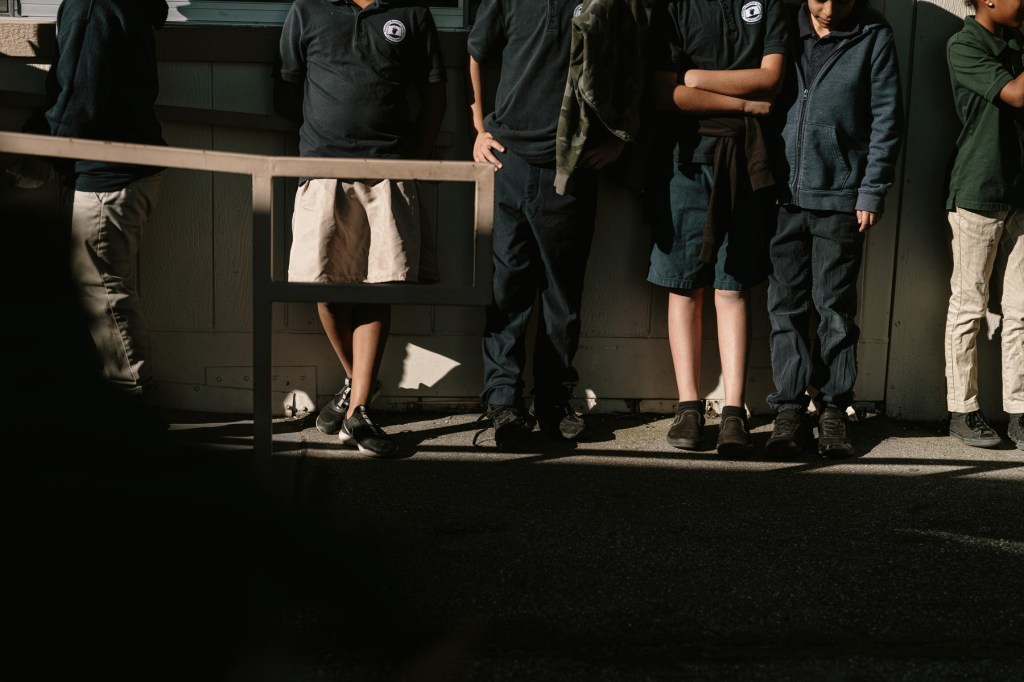
Through it all, Rosebud has retained nearly all of its students, Brown said. The few who stopped attending simply relocated too far away to keep coming. But even families who moved a considerable distance from Altadena continue to enroll their children. This school year, enrollment actually increased, Brown said.
“Going through this whole ordeal really kind of solidified what we have and how tight and resilient our community is,” she continued. “We are really more like a close-knit family, and everybody just wanted to stay. They really appreciate the work that we were doing and just how we engage with them after the fire.”
(BETHANY MOLLENKOF FOR THE 19th)
Rosebud’s growth after the Eaton Fire may also be due to the school’s academic reputation.
“It’s like, you’re going to a private school and you’re not paying for a private school,” said Mary Mendoza, a parent of three enrolled students.
The fact that Rosebud holds its students — more than half of whom are socioeconomically disadvantaged — to high academic and social standards has contributed to its success, Brown said. School leaders also emphasize accountability, which means they measure student progress through empirical evidence such as test scores and other data points.
“If you have high standards and there’s no accountability to it, then those standards are really just suggestions,” Brown said.
In recent years, Rosebud has outperformed other schools in its district in English and math, though the wildfire slowed that momentum in 2025, according to state test results.
Rosebud’s pillars around academics, behavior and accountability, along with its small class sizes and culturally responsive teaching, have proven beneficial for students of color, many of whom are marginalized in traditional schools. Just before the wildfire, the academy won a seven-year charter renewal from Pasadena Unified — a contract reserved for high-performing schools.
Brown’s leadership is both personal and professional. She belongs to a select group as a Black woman charter school founder.
Nationally, fewer than 10 percent of charter schools are founded by Black Americans, though within that group, nearly three-quarters are Black women. Brown’s efforts have received statewide recognition as she represents schools focused on Black student achievement on the California Charter Schools Association’s (CCSA) Member Council.
“The achievement over there at Rosebud is incredible,” said Casey Taylor, chair of the CCSA Member Council. “She’s got incredible test scores, very high expectations for academics, tons of support for kids, and she knows what they need to be successful. She’s just doing such an incredible job at it.”

(BETHANY MOLLENKOF FOR THE 19th)
Rosebud’s focus on students of color, under the leadership of a Black women charter school founder, makes its full recovery from the Eaton Fire all the more important, its supporters contend.
Taylor knows what it’s like to rebuild after a wildfire. She is the superintendent of Achieve Charter Schools in Butte County, where the 17-day Camp Fire burned over 153,000 acres — killing 85 people and decimating almost 19,000 structures in November 2018.
The charter school Taylor started in Paradise, California — the town at the center of that blaze — was not unscathed.
“I lost a building, and my students, my board, my staff — everybody lost homes,” Taylor said.
The wildfire forced the school to move 12 miles away to Chico, where so many students and staff fled during the recovery period that Taylor continued operating a campus there after finally reopening in Paradise. But it wouldn’t be the last wildfire the Achieve Charter Schools community endured. Just six months before the Eaton Fire, the 64-day Park Fire began, burning nearly 430,000 acres in Butte and Tehama Counties from July to September 2024.
Aware of the blaze 470 miles north of Altadena, Brown sent Taylor a collection of gift cards and funds to pass out to Achieve’s families in Chico who had been affected by the Park Fire. She had no idea that she herself would be on the receiving end of such a gesture shortly afterward. Taylor did not immediately distribute all of the cards, so when the Eaton Fire struck, she re-gifted the remainder to Brown.
“I was like ‘Here, these are for you,” Taylor said. “You need these.”
When Brown lost her school and her home to the Eaton Fire, Taylor and Mary Cox of Core Butte Charter School traveled to Southern California to support her and three other fire-impacted Altadena charter school officials.
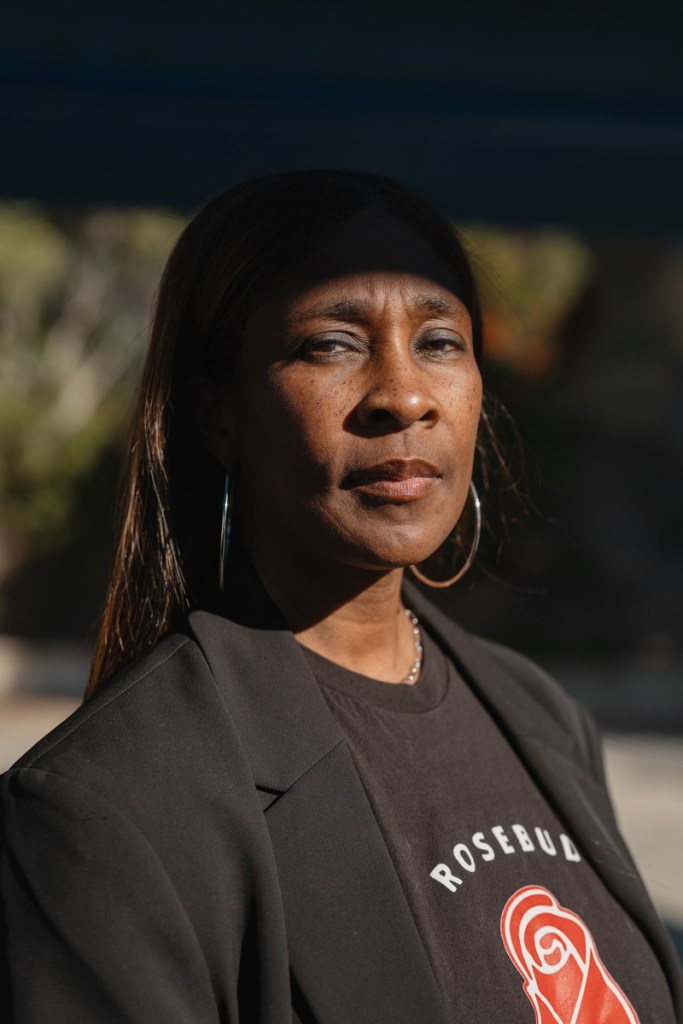
“I didn’t realize how important it is for leaders to see other leaders that have gone through the same thing and come out on the other side,” Taylor said. “You need to see that picture because it just offers you hope.”
CCSA provided funding and logistical support to the Altadena charter heads. But Taylor said during a disaster, leaders also depend on the guidance needed to help them make critical decisions in the throes of trauma. Taylor urged them to communicate regularly with staff, students and families and to assemble them in one place as quickly as possible.
“Shawn heard what we said right away: ‘Get your people together,’” Taylor recalled. “She nailed that.”
Taylor works with a national nonprofit called After the Fire USA, which uses advocacy, education and networking to help wildfire-ravaged communities. These disasters, she said, create a “worst club with the best people.” That description, she added, particularly applies to Brown.
“She is a badass,” Taylor said. “Shawn started her school for her community, for kids like her growing up in situations like she did and wanting to give them more opportunity.” So when the wildfire broke out, Brown was not about to give up. “It wasn’t like, ‘Oh, this is going to be hard. I’m walking away,’” Taylor explained. “It was like, ‘This is what my life’s purpose is about. I’m digging in, and we’re going to fight for these kids in the school and my staff and my school community.’”
Brown is fighting for Rosebud families like the Mendozas. They, too, lost their home to the Eaton Fire. Mary Mendoza, mother of sixth-grader Faye, said that her family of eight was in shock right after the disaster. They spent weeks crammed into a relative’s apartment before her spouse’s employer eventually offered them discounted rent on a two-bedroom loft in Downtown Los Angeles.
It takes Mendoza, who is expecting her seventh child any day, 40 minutes each way to drive to Rosebud’s temporary campus from traffic-logged downtown. But the commute, she said, is worth it.
“It’s a safe space,” she said. “I love Rosebud. I love the community.”
For Faye, the past year has been “crazy and chaotic, and kind of scary at the same time,” she said. She misses her old room, her backyard and the close-knit community in Altadena. She’s unnerved that Downtown LA is “never quiet.”
Rosebud is a refuge for her. “I used to hate school, not gonna lie,” Faye said. But the 12-year-old has come to appreciate it after the fire destroyed her former campus. School is now a chance to connect with the classmates the catastrophe scattered across the region. “I get to talk to all my friends, like every day now, and hang out with them,” she said.
Mendoza, who also has a first and fourth grader at Rosebud, said the fire has changed the school for the better. “When you go through something like this, you kind of see who’s there for you. And it was really beautiful.”
But a year later, the work is far from over for its leader personally or professionally. Brown lives in a Pasadena apartment as high construction costs, a complicated insurance system and strict new fire codes have made it difficult to quickly rebuild her house. “Just the fireplace was standing” after the wildfire, she said. “And we have a gate that was brick too, so that was still there, but everything else was gone.”

(BETHANY MOLLENKOF FOR THE 19th)
Meanwhile, Rosebud’s temporary location is functional but confining. Her goal is to obtain land to build a permanent campus for the school, so students can fully enjoy its performing arts and athletic programs. The California Charter School Association has provided funding to help the school rebuild, and Rosebud is trying to raise an additional $150,000 toward this effort.
As the wildfire’s first anniversary approached, fresh waves of grief bubbled up — an experience Taylor knows all too well.
“This holiday situation where you don’t have your decorations, you don’t have the things that you used to have to celebrate with your family — that sense of loss comes back and just bites hard,” she said.
But, for Brown, the anniversary is also a time to reflect on the Rosebud community’s resilience and the fact that the school is still in operation despite losing its former home.
Just as she did when the fire left much of Altadena in ruins, Brown continues to move forward in the face of uncertainty. “I’m just hopeful that things will work out,” she said. “There’s so many unknowns.”
How to help
Pasadena Rosebud Academy is accepting donations to support its recovery and rebuilding via the school’s website and GoFundMe page. The California Charter Schools Association and After the Fire USA lend support to communities rebounding from wildfire disasters.


