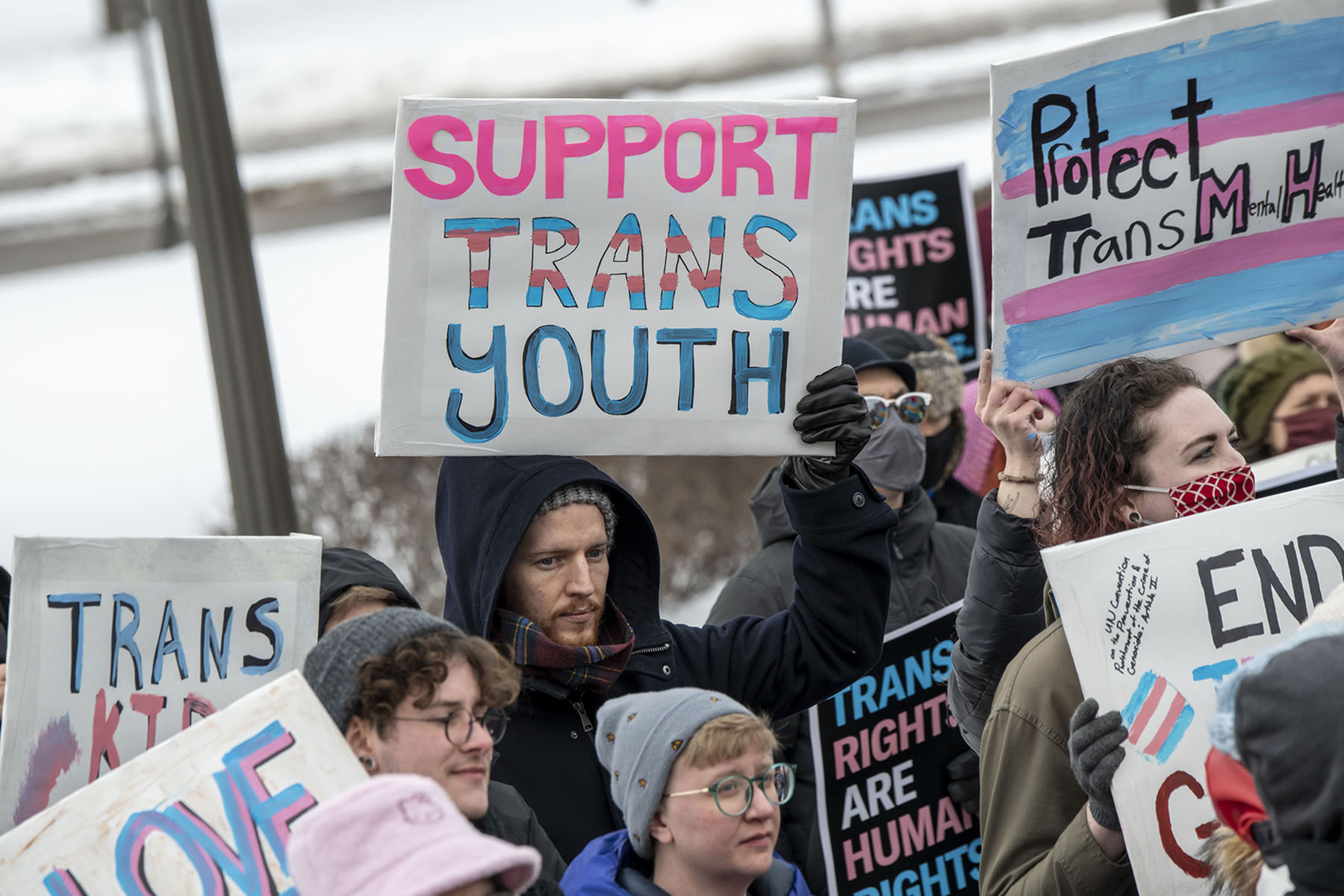

Editor’s note: This article has been updated to reflect more states joining the lawsuit against the Department and Health and Human Services, and to add comments from Kellan Baker and Katie Keith.
Three children’s hospitals are under federal investigation for providing gender-affirming care to transgender youth, as the Trump administration continues to use all the levers it can to block such care.
Health and Human Services (HHS) General Counsel Mike Stuart has referred three children’s hospitals to the agency’s inspector general’s office: Seattle Children’s Hospital, Children’s Hospital Colorado, and Children’s Minnesota. Gender-affirming care for trans youth is legal in all three states. But HHS Secretary Robert F. Kennedy Jr. last month announced that medical practitioners who provide gender-affirming care to minors are out of compliance with federal health care standards. Now, the agency is enforcing that declaration, though its options are temporarily limited because of an ongoing lawsuit.
In the meantime, Children’s Hospital Colorado has reportedly paused gender-affirming care for trans youth. Children’s Minnesota did not respond to a request for comment, and its website states that “at this time, our gender health services remain unchanged.” Seattle Children’s hospital also did not respond.
Another hospital, Denver Health, has also paused gender-affirming care for trans youth since Kennedy’s declaration, although the hospital does not appear to be under investigation.
In earlier efforts by Trump administration officials to investigate and halt gender-affirming care, both Children’s Hospital Colorado and Seattle Children’s Hospital successfully fought back against Justice Department subpoenas seeking trans patients’ medical information.
The administration previously pressured hospitals to halt gender-affirming care by threatening to revoke federal funding, which worked in many cases, but these HHS investigations mark a new escalation. They stem from Kennedy saying that, under his authority as health secretary, he can unilaterally decide that gender-affirming care — which he calls “sex-rejecting procedures” — is not a safe and effective treatment for trans youth.

The response from states has been swift. Just before Christmas, 21 states — including Washington state, Colorado, and Minnesota — and Washington, D.C., sued Kennedy and the federal health agency over the announcement. The states’ lawsuit says the declaration harms their ability to administer state Medicaid plans in accordance with local laws protecting gender-affirming care.
As part of the lawsuit, HHS has agreed to pause potential punitive action against the hospitals under investigation. Specifically, the agency will not exclude them from federal health care programs, at least until a court decision comes or 30 days after a hearing scheduled for this spring.
“This lawsuit is a major challenge to the administration’s agenda of forcing doctors to follow political ideology rather than scientific evidence in medical practice,” said Kellan Baker, senior adviser for health policy at the Movement Advancement Project, which tracks LGBTQ+ policy. “And this agreement is an important win that will allow the court to review the agency’s ability to seek to regulate the practice of medicine.”
This stipulation from the Trump administration is incredibly important, said Katie Keith, director of the center for health policy and the law at the O’Neill Institute at Georgetown Law. It means that providers can continue to offer care, for now, without the threat of losing their federal funding. Still, she sees the investigations as the latest move in a federal pressure campaign to shut down trans health care.
“To me, the declaration is the extremely clear way they are trying to just shut down this care all across the country,” Keith said. “They are trying to ban it nationwide for minors.”
On X, Stuart said that all three hospitals were referred to the agency’s inspector general’s office for failing to meet “recognized standards of health care,” citing Kennedy’s declaration.
The HHS has also proposed two new rules to restrict gender-affirming care for trans youth — both of which must still go through an approval process before they can be enforced. One rule would block hospitals from receiving Medicare and Medicaid funds if they provide gender-affirming care to trans youth. That care includes hormone replacement therapy for adolescents and puberty blockers for young kids who are experiencing dysphoria — intense discomfort or anxiety felt when someone’s physical gender is out of sync with their identity. It also includes surgery, which is very rarely performed on minors.
Another proposed rule would bar Medicaid from covering gender-affirming care for youth under 18 and the Children’s Health Insurance Program (CHIP) from covering such care for youth under 19. This would disproportionately impact low-income trans youth. Technically, states could still use their own funds for coverage — but experts say that would be extremely burdensome and ultimately cause gaps in care.
The American Academy of Pediatrics, an organization of 67,000 primary care pediatricians and other specialists, strongly condemned these proposals, saying that they misrepresent current medical consensus and create uncertainty for patients.
“These rules are a baseless intrusion into the patient-physician relationship,” the group said in a statement. “Patients, their families, and their physicians — not politicians or government officials — should be the ones to make decisions together about what care is best for them.”The American Civil Liberties Union has said it will challenge these two restrictions in court if they are finalized.


