This story was originally published by Rewire News Group, a national, nonprofit media organization exclusively dedicated to reporting on reproductive and sexual health, rights and justice.
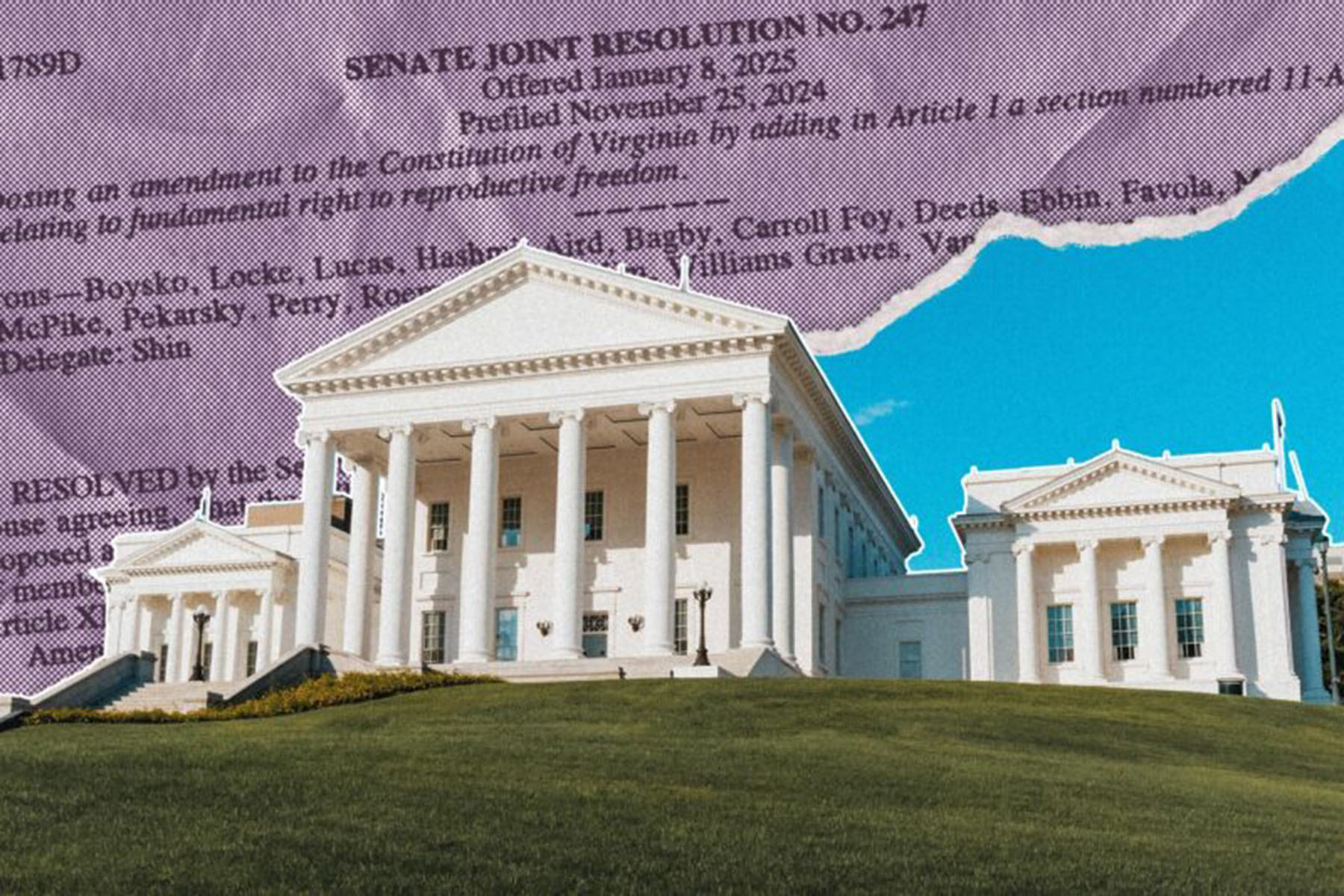
Virginia lawmakers have approved a constitutional amendment that would protect reproductive rights in the Commonwealth. The proposed amendment—which passed 64-34 in the House of Delegates on Wednesday and 21-18 in the state Senate two days later—will be presented to voters later this year.
“Residents of the Commonwealth of Virginia can no longer allow politicians to dominate their bodies and their personal decisions,” said House of Delegates Majority Leader Charniele Herring, the resolution’s sponsor, during a committee debate before the final vote.
The Democrat-led state Senate first passed the measure in January 2025. The House of Delegates followed a few weeks later. Virginia law requires an identical proposal to pass in two consecutive legislative sessions before a constitutional amendment can be put to voters.
Virginia currently allows abortion through the second trimester of pregnancy, or until about 27 weeks. Later abortions are allowed if the pregnancy is life-threatening. It is the only Southern state that has not passed any new abortion restrictions since the Supreme Court overturned Roe v. Wade in 2022.
Abigail Spanberger, the state’s Democratic governor-elect, made protecting reproductive rights a centerpiece of her 2025 campaign. In an October 9 gubernatorial debate, Spanberger accused her anti-abortion opponent Republican Winsome Earle-Sears, of wanting to “inflict upon Virginia” the kind of extreme abortion restrictions passed in nearby states.
“Women have died,” she said of those laws.
Dems prioritize civil rights
Virginia, a onetime Republican stronghold that swung Democratic in 2008’s election of Barack Obama, is often called a “purple” state. The governor’s mansion has swapped party hands regularly in the past 30 years, and in 2017, the House of Delegates became evenly split at 50-50.
In the 2025 election, Democrats won a historic 64 seats, all but ensuring voters the opportunity to enshrine reproductive rights into their state constitution. In addition to codifying the state’s current abortion access laws, the legislature is expected to pass proposals to permanently enshrine same-sex marriage and restore voting rights to formerly incarcerated people who completed their sentences for felony convictions into the state constitution.
A fourth proposed constitutional amendment would allow Democrats to redraw the state’s congressional districts to add up to four blue seats in Virginia, potentially in time for the 2026 midterm elections.
If voters ultimately approve these measures at the polls, they would all become constitutional law in Virginia.
With a Democratic governor and Democrat-majority legislature, Virginia could also join the growing ranks of blue states passing “shield” laws. These laws protect providers from prosecution or civil penalties for prescribing medication abortion to patients in states with restrictions or bans.
Regional destination
“Virginians have been loud and clear about their support for reproductive freedom,” said Autumn Celeste, Blue Ridge Abortion Fund’s communications director, in a statement to Rewire News Group.
Abortion funds help patients find clinics and pay for their abortion care. They also sometimes arrange child care and support patients’ care following the procedure. The Blue Ridge Abortion Fund serves both Virginians seeking abortions and a growing number of out-of-state patients traveling to Virginia for care.
After Roe fell, Celeste said, most other Southern states soon enacted restrictive abortion laws.
Neighboring North Carolina now bans abortion at 12 weeks. Florida and Georgia both outlaw it after six weeks, with a few exceptions. Tennessee has a total abortion ban with limited exceptions.
In 2024, people traveling from other states made up a quarter of all Blue Ridge Abortion Fund callers, up from 13 percent just before Roe was overturned in Dobbs v. Jackson Women’s Health Organization. North Carolina, Florida, and Georgia topped the group’s patient list, Celeste told Rewire News Group in late 2025.
Other research backs this observation. Virginia clinics performed 6,600 more abortions in 2024 than in 2023, according to the Guttmacher Institute, a research organization aiming to improve reproductive rights. The number of out-of-state patients increased by about 4,400. A Guttmacher policy advisor attributed that spike mainly to Florida’s May 2024 six-week abortion ban.
“Enshrining the right to abortion care within our state is a necessary—and popular—step in the ongoing effort to protect reproductive freedom in Virginia, not just for today, but for generations to come,” Celeste said.