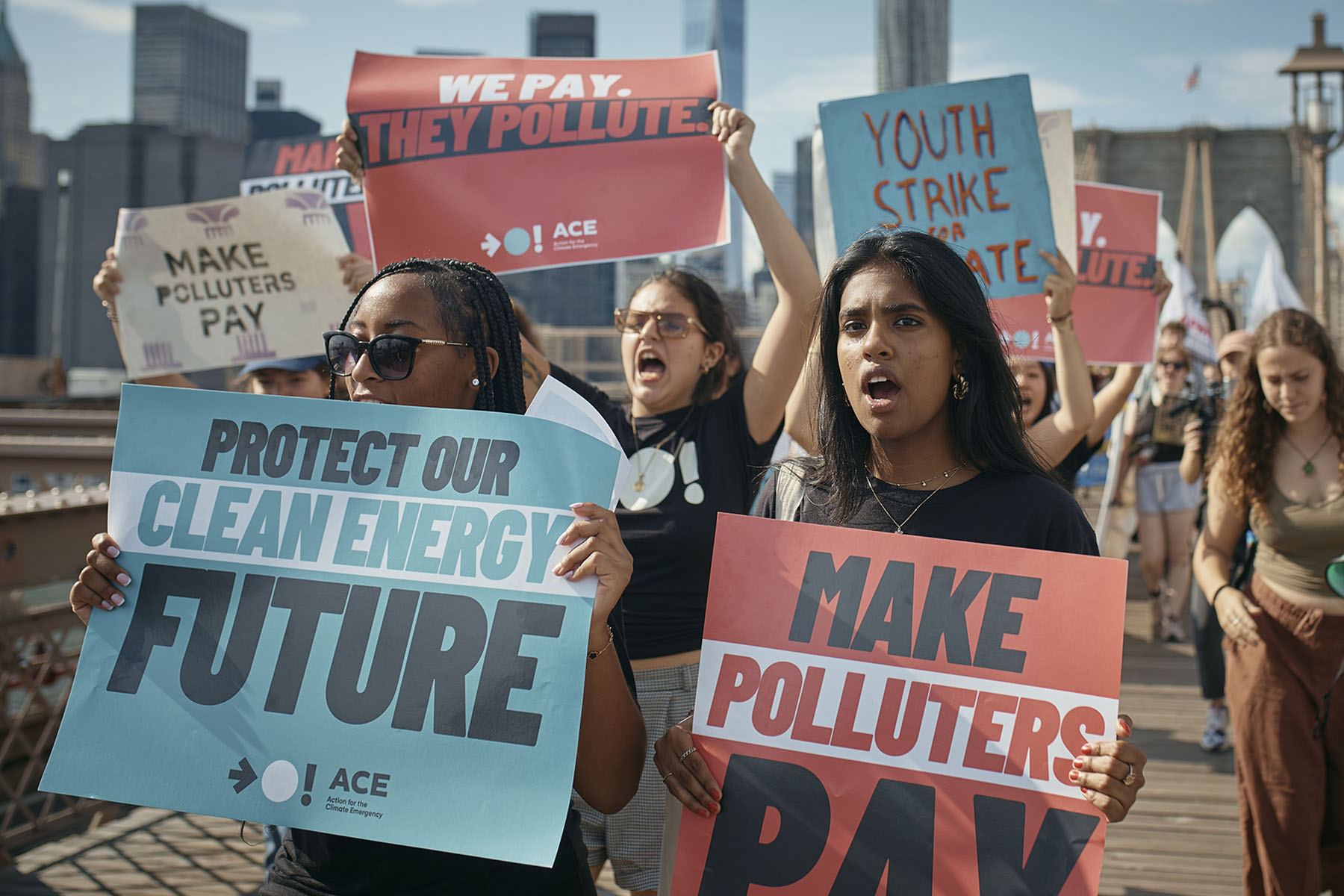

Rhonda Anderson has spent nearly three decades fighting for clean air and water in Detroit. As an environmental justice organizer with the Sierra Club, she led campaigns to raise awareness about lead poisoning of babies and children in the vicinity of steel mills and is part of a Clean Air Act lawsuit against the EES Coke Battery, a local industrial facility.
So watching the U.S. Environmental Protection Agency (EPA) taking one step after another to weaken air pollution regulations over the last year has felt “really, pretty much devastating,” she said.
“Just looking at my little world, we’ve worked so hard to get a lot of these things recognized,” Anderson said. Most of her work has been in southwest Detroit, which has over 150 industrial facilities and some of the worst air quality in Michigan. Just a year ago, “we had a fifth grader who passed from an asthma attack,” she said.
In addition to overturning dozens of regulations aimed at reducing air pollution to save lives, the EPA has also exempted over 100 industrial facilities, including the Coke Battery plant Anderson has been fighting, from more rigorous rules to reduce pollution, created under the Biden administration.
Experts say all these moves combined favor industry while sacrificing public health — and it is Black women like Anderson, as well as their families, who stand to be harmed the most.
Black women already have the highest death rates due to asthma, a condition caused and exacerbated by air pollution. They are four times as likely to die of an asthma-related death as White men, according to a report from the Asthma and Allergy Foundation. Black children are also eight times more likely to die from an asthma attack than White children.
One of the reasons is that these women and their children also disproportionately live in medical deserts with limited health care infrastructure and insurance. Cuts to Medicaid stand to make the risks of asthma even worse. “We know that half of the children with asthma in the U.S. are covered by Medicaid or CHIP,” said Lynne Bosma, health equity director with the Asthma and Allergy Foundation. “If individuals that need that access lose it, they are going to struggle to get medication, specialty care access, and then emergency care as well.”
Due to their physiology, women are more likely to develop asthma in adulthood compared to men — and their asthma is also more likely to be severe. Some studies show a connection between the estrogen hormone and asthma, with girls after puberty experiencing higher rates of asthma diagnosis compared to boys. A study from 2025 found that asthma risk is also linked to pregnancy, menopause and even the menstrual cycle.
Because women typically take on caregiving responsibilities, they are also more likely to be tasked with taking care of sick kids when their asthma flares up. This leads to more days of lost work compared to men, and a greater financial burden for women-led households.
Most recently, the EPA made headlines after the New York Times reported it would no longer calculate the cost to human health when making new regulations on particle and ozone pollution, and instead would only calculate the benefits to industry, further burdening women and their households.
An agency spokesperson told The 19th the EPA is not stopping the calculation, but simply pausing it “until our models can better reflect the smaller, more complex changes seen as these pollutants continue to decline nationwide.” The spokesperson did not respond to a follow-up question asking when the agency would release a new calculation, nor what steps it was taking to monetize the health costs.
Sarah Vogel, a senior vice president of healthy communities with the Environmental Defense Fund, doesn’t buy the explanation. “The reason they eliminated it is because air pollution has a huge impact on our health,” she said. Industries don’t like that because it shows the benefit of stricter regulations, which are more costly for polluters, she said.
The country had been slowly moving toward cleaning up the air that both causes and exacerbates this life-threatening diagnosis since the passage of the Clean Air Act in 1970, which resulted in an 80 percent drop in air pollution. “That legislation saved more lives than any doctor could,” said Dr. Panagis Galiatsatos, a spokesperson for the American Lung Association. “It allowed people to enjoy capitalism without feeling like their lives and health are being sacrificed for it.”
Since then, he said, newer regulations have been about fine-tuning that law to better reflect the science that shows the impact pollution has on health. But by overturning those newer standards, and no longer calculating the cost to human health, “American lives will be the cost,” he said bluntly.
While the air is no longer as toxic as it once was, air pollution is still heavily concentrated in communities of color, like Anderson’s. Across the country, majority Black and low-income communities have a disproportionately high concentration of industries and freeways that result in poor air quality, which has been linked to a higher risk for their residents of asthma and other diseases.
Anderson said that in her community, “I see Black women dying at a rate that I would only describe as shameful.” She believes the pollution she grew up with may be the reason she was diagnosed with breast cancer and had to have a mastectomy. Others in her family have also been diagnosed with breast cancer.
Her observation aligns with research showing that higher rates of particle pollution have been associated with higher rates of certain kinds of breast cancer in Black women living in the Midwest. Air pollution has also been associated with a higher risk of strokes, dementia and heart disease.
For Vogel, the EPA’s latest moves are all about putting polluters’ pocketbooks ahead of people’s health.
“You’re shifting the burden of all this pollution — and they’re doing it with toxic chemicals — literally onto our bodies,” she said. “And it’s really pretty despicable when you really get down to like, who is actually benefiting here.”