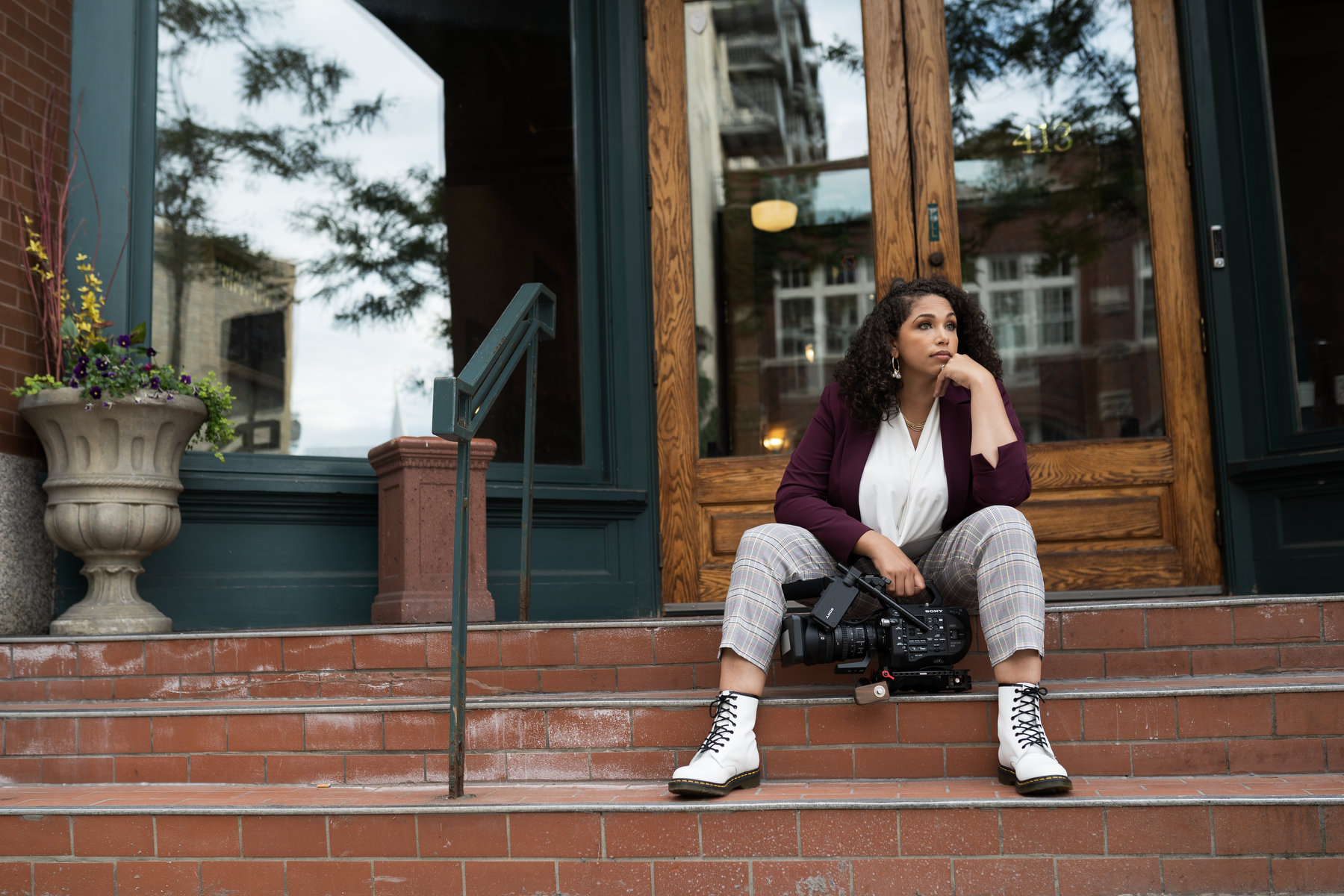

When federal agents showed up before dawn last month to arrest journalist Georgia Fort for covering an immigration protest at a Minneapolis-area church, her three daughters — ages 7, 8 and 17 — were still asleep.
“My children are here,” Fort said as she livestreamed her arrest. “They’re impacted by this.”
Nearly two dozen federal agents had surrounded her home. They had knocked loudly on the front door and spoken to Fort’s mother about a warrant. Her video captured an anguished cry in the background, and then a voice trying to comfort.
This is what was happening off-camera: Fort’s 17-year-old, awakened by the commotion, saw a flash of light through her bedroom window. She didn’t want to stand up because she thought the agents would see her, so she crawled out of her room and down to the home’s entryway, where her mother was filming. Fort ended her live video and saw her eldest daughter “kind of curled up in a fetal position, crying,” she told The 19th.
“The last thing I did was wipe the tears out of her eyes, I hugged her and told her she’s the oldest. I needed her to be strong,” Fort recalled.
Then she stepped outside and allowed herself to be arrested.
A 2014 report from the International Association of the Chiefs of Police and the Justice Department’s Bureau of Justice Assistance recommends that “where timing is not a critical concern, an arrest may be postponed so that it will not be conducted in the presence of the child.” The report states that this is most feasible “when using tactical teams to conduct arrests.”
The chain of decisions made by federal law enforcement in the lead-up to Fort’s arrest reveals how the Department of Justice ignored its own best practices related to “safeguarding children of arrested parents,” according to interviews with experts and government records like the 2014 report.
The 19th agreed to not use the names of Fort’s daughters since they are minors.
Her 8-year-old was also awoken the morning of the arrest, but she remained in bed, crying, too scared to get up. The youngest, 7, slept through the ordeal, but would have many questions later about what happened. The 17-year-old spoke at a press conference hours after her mother’s arrest: “I’m demanding that my mom gets released. The separation of families will never be right.”
After Fort’s release later that day, her 7-year-old asked her what “prison” was like. The 8-year-old had questions about her own safety and that of other family members: Would immigration agents come and get her at gymnastics practice? Would they take her dad? The 17-year-old began having “extremely terrifying nightmares,” Fort said.
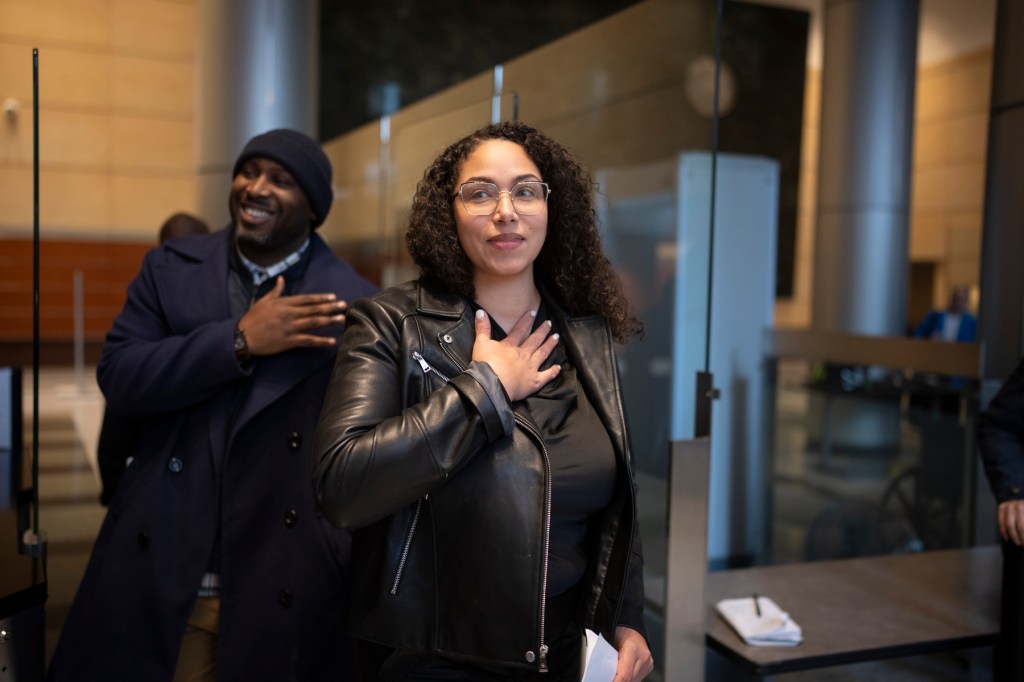
Mary Kelly Persyn, an attorney who has studied the impacts on children of parental arrest and incarceration, said the agents surveilling Fort’s house could have waited. “If you actually cared about the impact on kids, that’s what you would have done: You’d arrest her after the kids go to school, she’d appear in court, and then … she would have been released before the kids got home from school,” Persyn said.
DOJ did not respond to questions about the agents’ decision-making around Fort’s arrest, including whether or how her children’s well-being had been weighed against other factors.
Fort had tried to prepare her daughters for the possibility that the government could retaliate against her for doing her job since she knew she was listed on a then-sealed indictment. Knowing that didn’t make explaining any easier, though. “A hard thing for children to digest is, if you didn’t do anything wrong, why would you be arrested for simply doing your job? And so I think it’s hard to rationalize with children why you would be criminalized for simply telling the truth, for simply documenting something that’s happening,” Fort said.
Fort and fellow journalist Don Lemon, who covered the same protest, were indicted on federal charges that include conspiracy and violating the rights of worshippers. They have both pleaded not guilty.
As the children of a journalist, Fort’s daughters were at heightened risk of experiencing trauma related to her job — and were likely better prepared for it as a result. But as the Trump administration attempts to expand the scope of preexisting laws and norms to stop individuals from documenting ongoing immigration crackdowns, parents who aren’t journalists, activists or politicians are having to assess their own tolerance for risk — and how to mitigate exposure for their kids.
Dr. Maryam Jernigan-Noesi, a licensed psychologist whose practice and research focus on children and social identity, including what she calls “raising resistors,” said it’s important to use “simple concrete language” when talking to children about how parents’ work or activism could put them at odds with the government. “Silence is going to create more anxiety,” Jernigan-Noesi said.
“I even think about this as a psychologist who actually actively speaks out about race, racism and justice. I have a 10-year-old, and I actually have been having this conversation. For me, it’s creating the safety plan: Who are the other adults or support systems in my life that I can designate if need be?” she said.
Even preschool-aged children can understand a basic concept of fairness that can ground conversations about more complex injustices. “They have an idea of rules, right? So one example might be: Sometimes the rules get applied in different ways that aren’t fair. And part of our job as grownups is to work on making things more fair,” she said.
“In this case: Mommy was doing her job, trying to tell important stories, so that people know what’s happening … in our country, people have the right to share information and tell the truth but sometimes the government or other people make decisions that go against those rights,” she continued.
Jernigan-Noesi said the overarching goal of the conversations she has with her son is conveying that even though “systems may fail us … we still need to believe that we have the power to create change.”
Editor’s note: The charges against journalists Georgia Fort and Don Lemon have been widely criticized by press freedom groups and newsrooms, including The 19th.