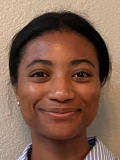
Shawnie Allen traces her choice to study public health to a moment inside a hospital room in 2023. At 20 years old, she was a junior at Nova Southeastern University when she found out she was six weeks pregnant.
Abortion was still legal until 15 weeks of pregnancy, and Allen asked her presiding nurse about options for termination. The nurse’s expression, Allen noted, shifted.
“I could just tell she obviously did not like that I was going toward abortion,” she said.
Allen carried through with the abortion, but the interaction lingered with her. It made her contend with the realities of health care for Black women like herself when people who look like them aren’t in the room.
“I did further research, and there’s a lot of racial disparities in health care,” she said. “It wasn’t like I made the decision because I didn’t want the child. I made a decision because I could not financially take care of a child, and I did not want to put myself in that position, especially still pursuing my bachelor’s degree at the time.”
Now 23, she is at the tail end of completing her master’s degree in public health at the University of South Florida with a concentration in maternal and child health, spurred by that encounter in the doctor’s office and only made possible through federal student loans.
But a proposed new classification for public health and nursing could make it harder for people like Allen to pursue advanced degrees, making these fields less diverse and leaving a noticeable gap in care.
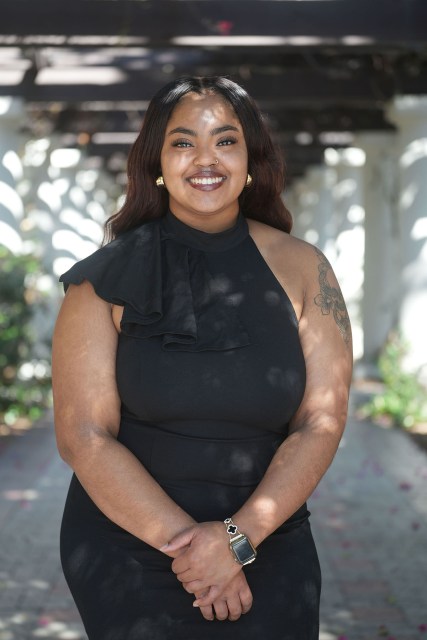
Legislation signed by President Donald Trump in July puts new limits on most federal student loans. Now, students pursuing what have been classified as “professional degrees” are granted a higher loan limit of $200,000 total. Other degrees are classified as standard graduate degrees, which means students can borrow up to only $100,000. People in public health and nursing worry that these proposed limits will disproportionately impact students of color who are seeking to go into women-dominated fields.
The administration based the decision in part on a 1965 law governing student aid, which lists examples of professional degrees but says it’s not an exhaustive list. Nursing and public health are not included in the examples.
Trump officials stated that the decision to impose the new guidelines will make universities more affordable for students. “These loan limits will help drive down the cost of graduate programs and reduce the debt students have to take out,” the Department of Education said on its website. “Graduate students received more than half of all new federal student loans originated in recent years, and graduate student loans now make up half of the outstanding $1.7 trillion federal student loan portfolio.”
The student loan cap is expected to go into effect in July 2026. Some health care-related degrees are eligible for the higher borrowing limit and are classified as “professional,” including pharmacy, dentistry and chiropractic degrees.
“The U.S. Department of Education’s consensus on a definition that excludes public health degrees, along with several other essential health professionals, is short-sighted and it carries real risks,” Laura Magaña, president of the Association of Schools and Programs of Public Health (ASPPH), said at a recent media briefing. “If we get this wrong, the impact will be immediate and far-reaching, not just for students, but for the health, safety and resilience of the nation.”
The administration’s proposal is expected to further alienate people of color, whose presence in public health professions is already scant and who only accounted for 32 percent of all healthcare practitioners in 2024, according to the Bureau of Labor Statistics. This change will particularly leave vulnerable women of color – who historically borrow more student loans and thus carry more debt.
“This will have a profound rippling effect on the nation’s health care, especially in those medically underserved communities,” said Veronica Vital, president of the National Association of Hispanic Nurses (NAHN). “It’s at risk of compounding already significant obstacles that nurses of color experience, and so I believe this policy will have profound implications and threatens to impede pathways in general for nurses of color.”
Nurses with advanced degrees have historically filled a gap in health care, particularly in rural communities, and are uniquely positioned to provide care in the absence of physicians. Their roles can include delivering babies as nurse midwives, providing primary care and anesthetizing patients when necessary.
Public health practitioners are responsible for disease prevention and treatment, as well as monitoring and improving the health of communities through policy analysis and intervention. Their work encompasses epidemiology, health care administration and implementing safety standards to protect employees in the workplace.
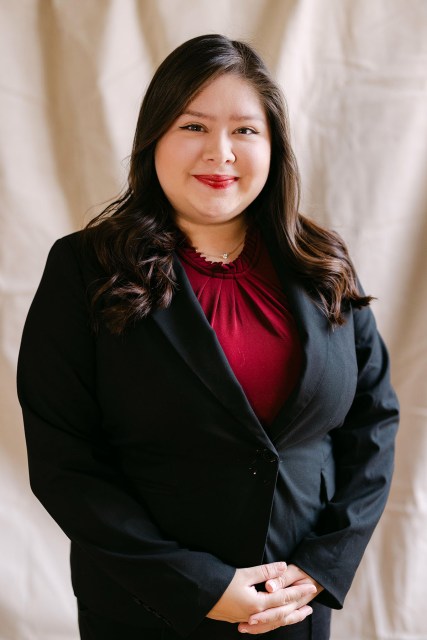
For many women of color studying public health, the uncertainty ahead has left them apprehensive.
“I keep using the same word, devastated,” said Chloe Urias, 23. “Since I was a young girl, I was always taught that education opens those doors for you. Education will allow you to pursue your dreams. And so I think for me, education is at the forefront of everything that I do because I understand that it is my only opportunity to be able to make a change in this world.”
Urias is a second-year graduate public health student at Vanderbilt School of Medicine with a focus on global health. Her perception of health equity has been shaped by her experiences as the daughter of a woman who immigrated to the United States from Mexico.
Urias said the administration’s proposal would strip away one of the few avenues that has made the health profession attainable for women like her.
“I get really sad thinking about how people behind me that really want to pursue a higher education will no longer be given that opportunity just because of this new financial decision,” she said. “I think it can be pretty obvious how important public health is, especially when the United States just went through a global pandemic that showed how our infrastructure needs to be bolstered a bit more.”
Health professionals have expressed concern that the proposed change could lead to worse care for people of color or those that don’t speak English.
“Historically, we know that when the culture and lived experiences between provider and between the patients are shared, that enhances trust and ultimately enhances outcomes,” Vital said. “So I believe this policy will threaten to weaken the pipeline of diverse health care providers and those that are serving the communities with long-standing health equity gaps, and I foresee that there’s going to be a significant impact on these communities.”
Brittany Vang, who is receiving her doctorate of public health at Mercer University, worries the change will impede care for vulnerable groups.
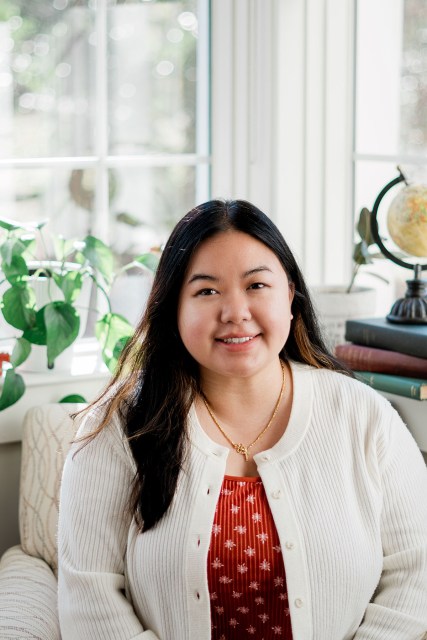
“We had so much hope of improving the health care and the preventative care within America because it is like a melting pot pretty much,” the 31-year-old said. Vang, whose parents and grandparents are refugees from Laos, has witnessed firsthand how health practitioners’ lack of cultural competence can impact the care that people receive.
“We have so many people from so many different walks of life and different backgrounds. How do you cater to everyone the best that you can? And we had hoped to improve on that. But changing this I feel like takes away that hope a little bit.”
As students brace for the effects of this newest policy, health professionals say that the administration’s decision could pose a larger issue in health academia’s future.
“They are the backbone of our prevention and preparedness infrastructure. Removing public health from the professional degree category fundamentally misunderstands how public health functions in practice,” Magaña said. “This isn’t about labels or academic titles. It’s about whether we continue to recognize, invest in the training pipeline that has protected Americans for generations, and this proposal is coming at exactly the wrong moment.”