
President Donald Trump’s approval ratings are underwater a year into his second term, amid voter frustration over the economy, immigration enforcement and foreign-policy tensions. A Quinnipiac poll released last week found that just 37 percent of registered voters approve of his job performance. The signs of discontent are clear in Democrats’ success edging out Republicans in special elections since Trump’s return to the White House — and in the progressive candidates who won school board races last November.
A recent analysis by Red Wine & Blue, a left-leaning network of over 700,000 suburban women working to influence politics at the grassroots level, found that 62 percent of candidates it labeled as “extremist” lost their elections. Meanwhile, 71 percent of the candidates it characterized as “common sense” won competitive school board races in states like Ohio, Virginia and Pennsylvania, which remains a key battleground in 2026.
Two-thirds of those winners were challengers, the analysis shows, and more than half were women, including many first-time contenders. It’s a departure from previous election cycles, when culture war themes like face masks, book bans and critical race theory propelled conservative sweeps of these boards.
“Being a culture warrior did not sell in 2025 because it was such a signal of being out of touch with people’s everyday concerns,” said Red Wine & Blue founder and CEO Katie Paris. “Folks are worried and feeling stressed from all angles, so to have these candidates come in and say the No. 1 thing we should be concerned about are transgender children and what bathroom they use or what sports they play feels incredibly out of touch with the day-to-day realities of people’s lives.”
While some experts attribute the success of liberal school board candidates to an electorate that craves local stability and has grown tired of the culture wars shaping education, others see it as a result of a lower conservative turnout at the polls.
“We know, in general, particularly in the last few years, Trump voters generally turn out in presidential years, but do so at much lower rates during off years,” said Vladimir Kogan, a political science professor at The Ohio State University who has researched school boards nationwide and their impact on communities. “So just compositionally, it could be a different set of voters that was just more aligned with Democrats. So even in those conservative areas, it’s likely that the people who turned out in 2025 were different from the people that turned out in 2024.”
Still, if the progressive shift repeats itself in the high-stakes midterms, school board policies may well move away from polarizing issues like critical race theory, gender identity and parental rights back to the fundamentals of education, such as curriculum and instruction and professional development for teachers.
Last November — across swing states, the Houston suburbs and the historically red city of Colorado Springs, Colorado — candidates associated with right-wing groups lost to their more progressive counterparts who promised to prioritize academics, support educators and reduce political meddling in schools. The parental rights group Moms for Liberty, once influential in school board politics, saw limited success in 2025, with just 17 of its candidates winning their races nationwide.
Political organizers say the results are more of a delayed backlash against a right-wing agenda than an abrupt ideological change.
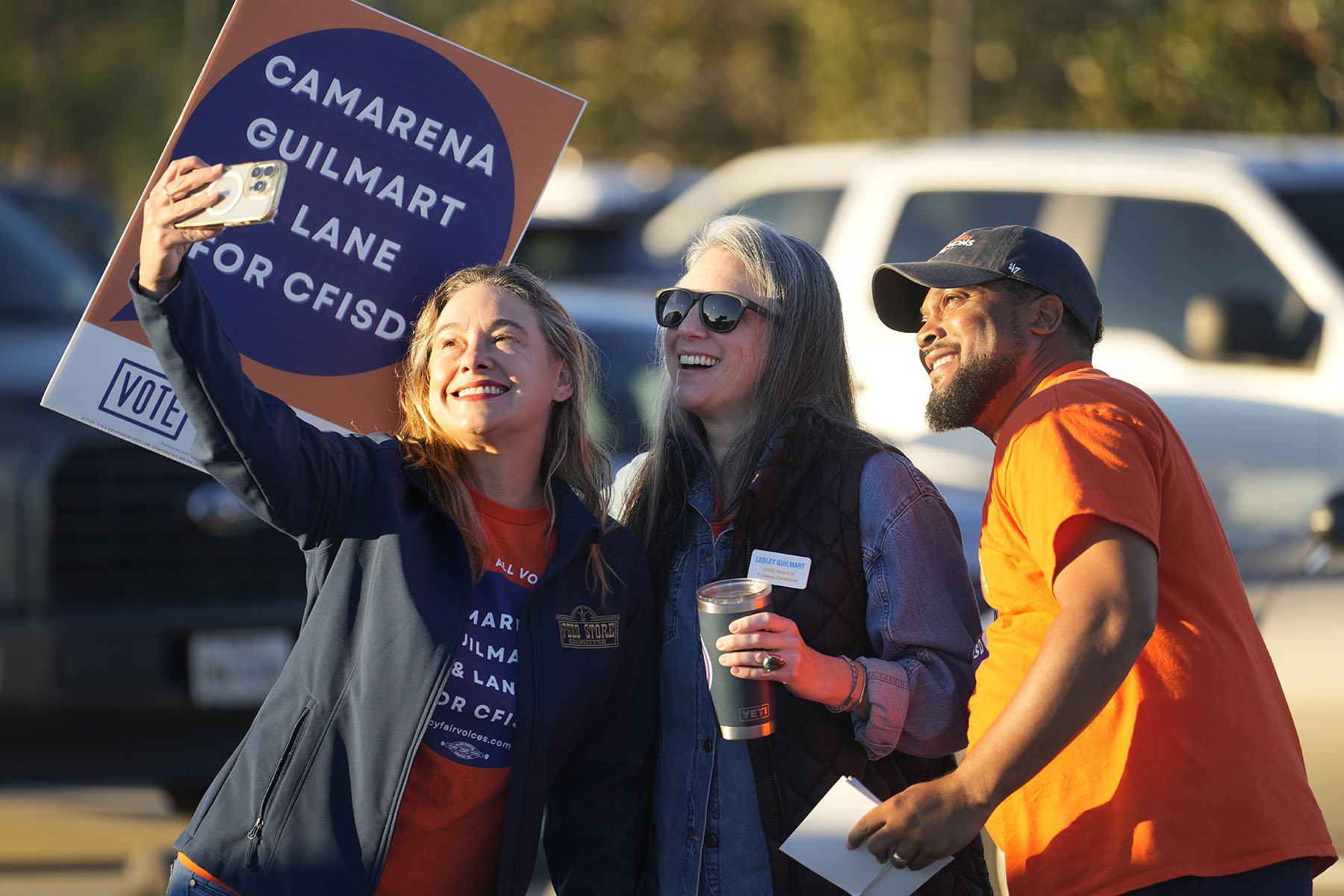
In Texas’ Cypress-Fairbanks Independent School District — one of the largest in the state, with roughly 118,000 students — organizers say policy changes fueled a backlash. Backed by national political groups, the district’s far-right board majority spent years banning books, eliminating librarian positions and implementing policies that targeted LGBTQ+ students, including those that could force schools to “out” transgender youth to their parents.
But voters flipped control of the board in November, electing three educators — Lesley Guilmart, Cleveland Lane Jr. and Kendra Camarena — endorsed by the Texas Freedom Network (TFN), a nonpartisan organization advocating for religious freedom, civil liberties and public education. During their campaigns, these candidates emphasized their desire to listen to families, support teachers and make schools safe and inclusive.
“When Texas voters actually experience these policies firsthand, they reject them,” TFN Political Director Rocío Fierro-Pérez said of right-wing school board platforms. “This is signaling that people are rejecting far-right ideology, and they’re rejecting elected officials who put politics over kids.”
The Cypress-Fairbanks results, she added, reflect a broader pattern across Texas, where communities have grown wary of outside influences interfering in local elections and distorting school boards. In the Cypress-Fairbanks district, incumbents backed by conservative groups like Patriot Mobile Action, a Christian Super PAC, lost to challengers who emphasized their backgrounds as educators and parents.
“These are parents from their community that were affected directly by these policies that the far right was implementing at the school board level,” Fierro-Pérez said. “All three of them oppose these book bans. All three of them are focusing on educational outcomes and not these culture war battles that the right is so focused on. They’re committed to serving all students.”
In previous years, right-wing candidates won with well-funded campaigns. Last year, though, Fierro-Pérez said that money couldn’t stave off a community fed up with candidates prioritizing political agendas over children’s education.
Paris agrees that it angers people when billionaires try to sway local elections and ignore the concerns of parents and educators.
“Relationships matter when it comes to organizing, and you cannot buy relationships with thousands of moms who are working together to protect their children’s schools.”
In Colorado Springs, two out of three candidates affiliated with the teachers union won their school board races despite facing well-funded opponents. The victories followed a series of board actions that inflamed the culture wars in a city that has become a magnet for conservative causes over the decades.
“We have a church on every corner of every street in this town,” said Kevin Coughlin, president of the Colorado Springs Education Association. “Focus on the Family, James Dobson. This town has been inundated with Christian right-wing agendas. And we have 90,000 active duty and retired military. So, you’ve got a lot of those folks here, and we don’t always see them fully engaged in the work of our schools because of separation of church and state, but they’re always making decisions for us that we have to follow or abide by, which is uncomfortable at times.”
In recent years, the school board ended collective bargaining, suspended a teacher over social media comments, censored pages from health textbooks and removed curriculum related to Frederick Douglass. The board also scheduled discussions of new book bans immediately after Election Day.
“People are nervous and worried, and rightfully so,” Coughlin said. “They’ve attacked our free speech, they’ve attacked our voice, they’ve attacked our leaders, and we’re nervous because we don’t know exactly what’s going to happen next.”
The wins by the union-backed candidates undid previous defeats that allowed Moms for Liberty-backed candidates to assume control of the board. While not a complete transformation — there are still conservative members on the school board — Coughlin called the recent victories “a step in the right direction.”
Whether other cities will see similar results in 2026 depends on midterm turnout. Kogan suspects that Democrats will show up at higher rates than Republicans across the country, just as they did in 2018 and 2022.
“Some of the Trump voters do also sit out the midterm elections, so I think in general, it’s probably the case that it’s going to be a more hospitable electorate for more center-left candidates,” he said.
Outrage over immigration enforcement could have an impact, since school attendance is down in areas with large populations of students without legal status. While those families aren’t eligible to vote, Kogan said, their treatment by the federal government could “change the types of issues that are salient in those communities.”
If there is a nationwide backlash to Trump, it will likely follow candidates down the ballot, Kogan said. “So, really, anybody with an R next to their name or anybody perceived to be affiliated with the Republican Party is probably going to pay a price to the extent that public opinion in November is where it is now. That would be my prediction, and that’s what historical data shows us.”
Paris credits something other than voter turnout for the progressive gains on school boards: organizing to effect change.
“There are thousands of people, primarily women, on the ground, who know how to do this,” she said. “They know how to create change in their communities, and I think that we’re going to see the impact of that filter up.”