
Want more stories like this? Subscribe to our new menopause newsletter.
If it was a Tuesday night in the early aughts, I always had plans. Because that’s when “America’s Next Top Model” was on.
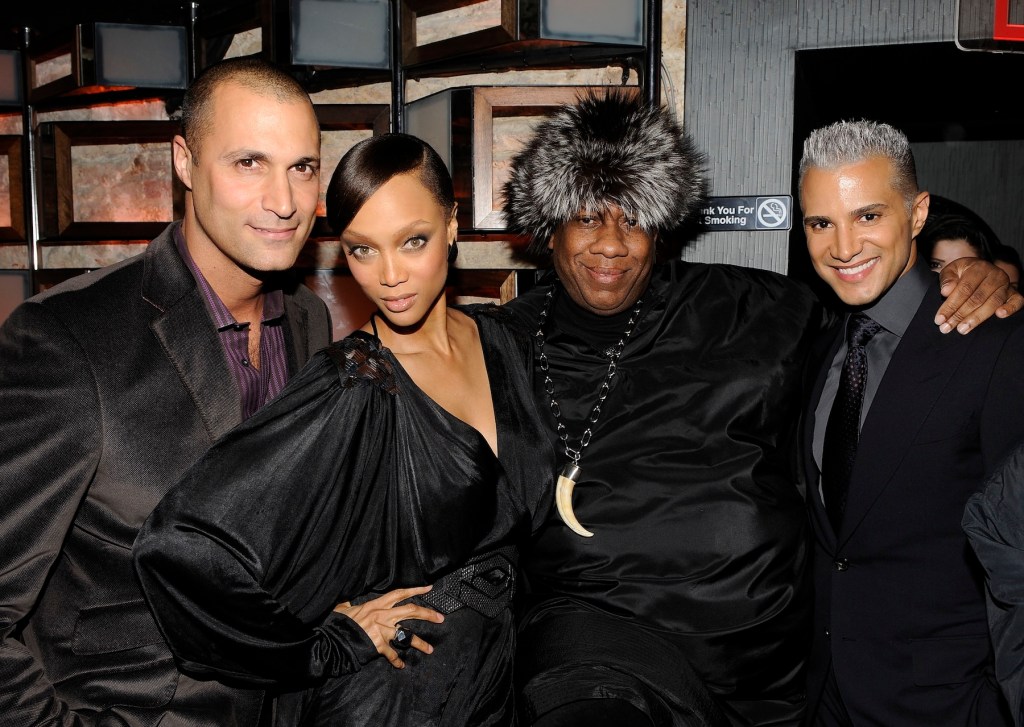
Some nights I curled up on the couch with a peanut butter and jelly sandwich and a glass of red wine and watched on my own. But just as often, I tuned in with whatever peer group was most central to my life at the time: dorm hallmates, castmates from a college theater project, work friends. We would squeeze into a small apartment to see just what Tyra Banks, Ms. Jay, Jay Manuel and Nigel Barker had in store for the young women desperately trying to make it in the modeling industry.
But since those days, there’s been a broad cultural reconsideration of Banks and “ANTM” — and the version of beauty that was put forward. Which makes the new Netflix documentary “Reality Check: Inside America’s Next Top Model” — in which all the aforementioned judges participated — so interesting.
Banks has been asked to assume the vast majority of the blame for the discussion of bodies and beauty, now seen as harmful. She’s apologized for some parts, including a challenge in which contestants’ skin color was changed and darkened. But she’s also stood by much of what made the show so fascinating for so many of us.
“Did we get it right? Hell no. I said some dumb shit,” Banks said at the ESSENCE Black Women in Hollywood Awards last year. “But I refuse to have my legacy be about some stuff linked together on the Internet when there were 24 cycles of changing the world. And I am so excited that I, and so many of us, have opened that door for others to follow.”

Today, it feels like that appeal remains largely unheard. But why are we so mad at Tyra Banks when it doesn’t feel like we’ve progressed on women and their bodies, whether in their 20s or squarely middle aged?
I needed to unpack what it all means, so I did what I do best in these moments. I called some experts to weigh in on what we’re really talking about when we talk about “America’s Next Top Model.”
Cue expert #1
First I spoke to Victoria Pitts-Taylor, the chair of the department of feminist, gender and sexuality studies at Wesleyan University and the author of the books “Surgery Junkies: Wellness and Pathology in Cosmetic Culture” and “In the Flesh: The Cultural Politics of Body Modification.”
After all, the foundation of any season of “ANTM” was the makeover episode, with dramatic haircuts and lots of tears.
These transformations were meant to shock, sure, but they also put a point on something constantly underscored by the show: Wanna be on top? Then get ready to modify your face and your body in the process.
But the idea that your body had to look a certain way wasn’t confined to “ANTM.” And it still isn’t.
Pitts-Taylor said the proliferation of cosmetic procedures — especially non-surgical procedures like fillers and neurotoxins and the use of GLP-1 medications by those without clinical obesity — are all evidence of the ways that society certainly hasn’t moved past demanding a certain look. If anything, it’s more intense than when “ANTM” premiered over 20 years ago.
You look good for your age
And this expectation is aging right alongside us.
With the advancement and increased availability of cosmetic procedures, the way women are expected to age has also changed. (Perhaps your group chat was also left reeling by seeing the gaggle of elite 90s celebrities in the Dunkin’ commercial that aired during the Super Bowl.)
“70 is the new 50,” Pitts-Taylor said. “As women are aging, what’s happening is that the celebrities we grew up with don’t seem to be aging along with us, and we’re also immersed in a social media culture that still privileges youth and still privileges the highly curated image, so we’re pressured to filter ourselves — whether it be through sort of careful curating of our photos or literally using filters on our phones and our apps or getting fillers and Botox.”
But just as problematic is that questioning women for choices about their appearance is deeply gendered, designed to vilify women for existing in the world.
“We place a lot of blame on individual women — whether they’re making good choices, whether they’re good cosmetic surgery patients or they’re turning into surgery junkies. We obsess over individual choices,” she said.
Instead of asking what larger systems — cultural, economic, political — are forcing people to feel they need to look a certain way, the problem (shocker) often is assigned to women themselves.
Society is telling women what Banks told Tiffany Richardson: “When you go to bed at night, you lay there and you take responsibility for yourself.”
In other words, no matter how you slice it, women are to blame — and that certainly hasn’t changed since “America’s Next Top Model” premiered. But it also isn’t because of “America’s Next Top Model,” either.
Cue expert #2
Racquel Gates, an associate professor of film and media studies at Columbia University who studies Blackness and popular culture, was also a hardcore “ANTM” fan.
“It lives rent-free in my brain, forever,” she said.
Seeing her Gen Z students discover the show through clips on social media has really put a point on another aspect of our current cultural moment: nostalgia for appointment television. Viewing parties for shows such as “ANTM” and “Sex and the City” brought us into constant conversation with our peers in meaningful, IRL ways.
What do we want our TV to do for us?
And that’s just one layer behind what Gates says makes her “uncomfortable” about how “ANTM” is being revisited.
“It feels like the show is being turned into a scapegoat for body issues and representations of women that are problematic,” Gates said. “This is not new. Body image stuff is not new. There’s something for me that is troubling about displacing the sins of our society onto this show, and specifically onto Tyra Banks, and thinking that if we can exorcize that demon, that we will be OK as a society. But it really just feels dishonest to me.”
The focus on Banks — and her legacy — feels especially sticky, Gates said.
“If Tyra were not a world famous supermodel, if Tyra Banks had not been able to cross over into television and film, if she had not already been a household name, there would be no show, or the show would have no credibility,” Gates said.
And while Banks was the face and the creator, plenty of other people were involved in making decisions about the show, Gates said.
Gates said she recently asked her students what they wanted from “ANTM” — an authentic look at the modeling industry or something that totally disrupts the industry? The second, she said, may be an unfair ask of a TV show.
We are all rooting for you
Which brings us back to the anger being directed at Tyra Banks.
“Our society still does not want to ever actually confront issues of racism or sexism head-on,” Gates said. “It’s easy for us to talk about body issues with ‘America’s Next Top Model’ because the show isn’t on anymore. It’s harder to talk about your favorite influencer, your favorite podcaster.”
Gates said she would ask those aiming criticism at Banks to interrogate why.
“I would never say that because Tyra Banks is a Black woman in America that she is excused from a criticism of the role she has played in promoting healthy body images, but what I would say is that I really think we need to question why we have made her responsible for all of society’s issues around body images. Why are we placing this onto her? What does that do for us?”
And she hopes that in the midst of all of this, Banks also gets her flowers. Banks was a pioneering TV executive who created content with a broad appeal.
“I am legitimately rooting for her.”
Correction: An earlier version of this article misspelled Racquel Gates' name.