
Content warning: This story contains depictions of eating disorders.
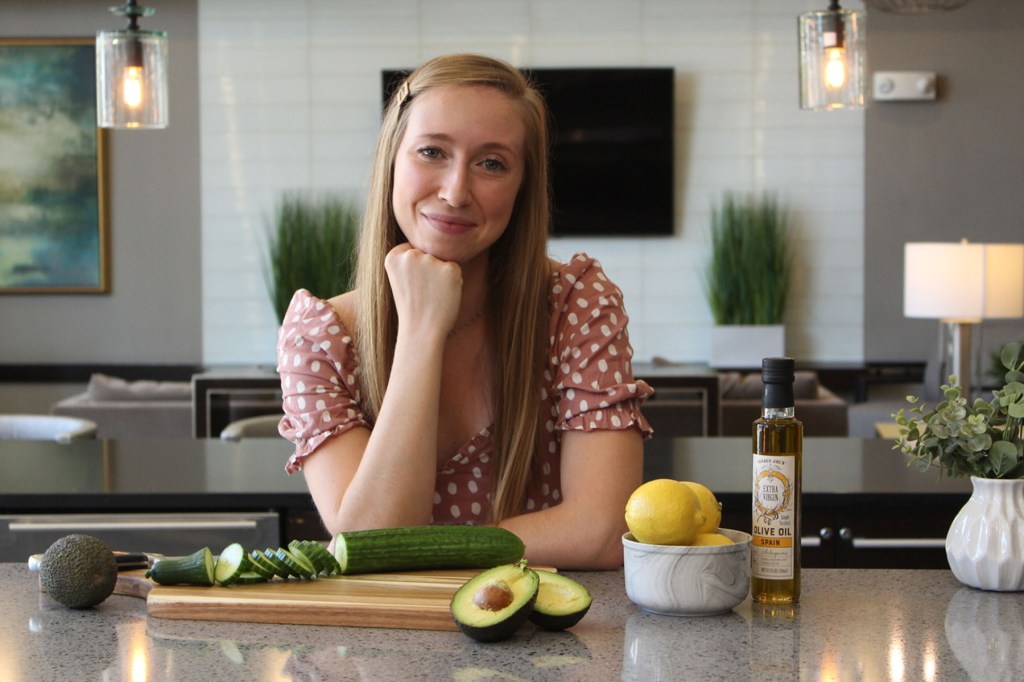
In 2013, when Kate Regan was a senior in high school, she became fixated on health and nutrition. She found content from online creators who made “what I eat in a day” videos inspiring. What she didn’t realize at the time was that this curiosity was masking a developing eating disorder.
Soon, the algorithm made that kind of content pervasive on her social media feeds.
“Every single time I was getting online to scroll and maybe see what my friends were up to, or look for new recipes, I was still getting these micro exposures to diet culture, weight loss and dieting content,” Regan said.
Regan’s struggles with disordered eating peaked in her early college years at the University of Delaware, where she studied fashion merchandising. In her junior year of college, she changed her major to nutrition and dietetics, which helped shift her personal relationship with food. Professors and mentors talked about food and health in ways she hadn’t considered before, allowing her to start making positive changes.
In 2019, the year after she graduated, Regan had recovered from her eating disorder and was motivated to help people like herself. That year, she officially became a registered dietician and, during the COVID-19 pandemic, founded her private practice, Wholesome Chick Nutrition, in Philadelphia. At Wholesome Chick Nutrition, she and other dietitian nutritionists encourage a non-diet, intuitive eating approach. Intuitive eating, sometimes referred to as an anti-diet, doesn’t involve restricting calories or particular foods, instead allowing people to be guided by their natural hunger cues.
“[Intuitive eating] helps you to utilize nutrition in your life according to your preferences, lifestyle and medical needs, without going to the point of obsession or rigidity, and allows you to be much more in tune with your body’s hunger and fullness cues, versus following a meal plan that might not fit your needs,” Regan said.
Regan has also reentered some of the same online spaces where she once found content that bolstered her disordered eating. Wholesome Chick Nutrition has a combined following of nearly 350,000 on TikTok and Instagram, where Regan offers tips on intuitive eating and meal ideas. A lot of her content focuses on debunking the latest trends and misinformation on health and nutrition. She recently posted that “cheat days” suggest a daily regimen that is too limited. She said that eating too rigidly the majority of the week and then essentially pre-planning a day or weekend to binge isn’t healthier than incorporating a daily, balanced approach that allows foods you enjoy and doesn’t assign morality to certain food groups.
“The content that we’re exposed to on a regular basis really is shaping our beliefs and behaviors, and it’s important that you’re able to also access the truth,” she told The 19th. “That’s why I speak to a lot of really popular trends that I see and try to clear up confusion for people around what they should be eating, what they shouldn’t be eating, and how they should be thinking about food for themselves on an individual basis, versus taking generalized statements from an influencer with no credentials as the ultimate truth.”
Her expert voice stands out in a digital ecosystem that normalizes eating disorders, one that has been complicated by the rise of creators.
Nine percent of the U.S. population will have an eating disorder in their lifetime. The risk is exacerbated even further for women, who are twice as likely as men to have an eating disorder, and LGBTQ+ people experience eating disorders at a higher rate than heterosexual and cisgender people.
For many, disordered eating begins in the way Regan’s did: seemingly innocuous social media posts.
Amanda Raffoul is a professor of nutritional sciences at the University of Toronto, whose research emphasizes eating disorder prevention. She says most people are unaware of how easy it is to fall down the rabbit hole of this content.
“There have been widely read and shared media stories about trends where young women are in the hospital with anorexia nervosa, or engaging in extreme body checking. But most of the content that’s out there is not extreme,” she said. “It’s this gray area content like what I eat in a day videos, where somebody is consuming a really low-calorie diet, or exercise videos where somebody is showing a very intensive and excessive exercise routine, or the types of videos that focus on celebrity inspiration. I think that sort of gray area content is maybe more dangerous because more people see it.”
In the decade since Regan first got swept into food videos, social media platforms and algorithms have undergone significant shifts. Platforms like Instagram have changed feeds to be engagement-driven rather than in chronological order. Many platforms have prioritized short-form video content over static content and integrated artificial intelligence in their app features. These changes have made it easier for users to become addicted and can negatively impact mental health, particularly for younger users. For people struggling with eating disorders, the endless scrolling can increase their risk of being exposed to harmful content.
Recommendations from the early days of social media like muting certain keywords or blocking accounts to curate feeds have become futile on some platforms. On X, formerly known as Twitter, there is currently no feature to block “communities” — groups where users can discuss specific topics — on the app. Even without joining a community, posts from these groups can appear on anyone’s general timeline.
Although platforms have cracked down on some overt eating disorder forums and accounts over the years, content has still been able to thrive by making accounts private, using special hashtags and purposely misspelling words.
In September 2024, X suspended one of the largest eating disorder communities on the app, stating the group violated rules on promoting self-harm content, according to NBC News. Still, several eating disorder groups persist on X where users swap low-calorie diets, evaluate each other’s weight and sternly criticize their own eating choices. X did not respond to a request for comment.
But one of the biggest changes across platforms has been the rise of the social media influencer. Online content creators have emerged as leading voices in our cultural zeitgeist and have supplanted traditional media for many users.
So when creators spread misinformation, like the kind that Regan sees on health, the impacts are swift. Creators are often rewarded by the algorithm for sharing misinformation and disinformation on topics like high-profile court cases, politics and health. The full impact of this is hard to measure, but a decades-long study from the Massachusetts Institute of Technology in 2018 found that fake news stories travel six times faster than factual news online. For experts like Regan working to combat false information, this makes their job all the more difficult.
Regan says that conversations about social media come up frequently with her in-person clients. She encourages them to ask themselves key questions when consuming media.
“Does that person have the training, education and the credentials to back up the claims that they’re making? Are they citing research articles? Are they talking in a very reasonable tone, and are they including nuance in their discussion? I think that’s a huge lesson to learn on social media. Most of it is very black and white, and most of it is very all or nothing, because that is what gets views.”
Creators’ relatability can also be a powerful influence. For decades, people with disordered eating have used the internet to find each other. A key part of those communities have been providing “thinspiration,” typically photos of celebrities meant to motivate people with disordered eating. Still, Kathryn Coduto, an assistant professor of media science at Boston University, said a celebrity’s body is generally understood to be unattainable. Influencers and content creators are a different story.
“[Creators] feel much more accessible,” Coduto said. “They feel like, ‘Oh, I could really become just like them.’ I think that’s a different kind of danger, where maybe you are seeing what they eat in a day, but that is also still very curated. But I think it’s easier to forget that because an influencer is showing up in your feed.”
She warns that the development of parasocial relationships can happen more easily between social media users and influencers who make nutrition content or promote unrealistic body standards.
“It’s easy to comment on their content. You might even hear back from them. And so I think that is unhealthy in a different way, where it feels like something that you could accomplish,” Coduto said.
Coduto especially worries about Generations Z and Alpha, whose formative years for socialization were interrupted by COVID-19. She cautions that, even unintentionally, parasocial relationships between young users and influencers who make health and diet content can be formed. Those relationships, she says, can especially be formed on video-centered apps like TikTok, where there are more cues like seeing someone’s face and hearing their voice.
“If you are someone in an eating disorder community, it’s so easy to find yourself in an echo chamber,” Coduto said. You’re looking for other people who’ve had that experience. So instead of maintaining those connections to people that you know in real life who are going to be looking out for you, instead you’re opting into people who reinforce that.”
Raffoul and Regan are wary of online health trends like protein-maxxing — that focuses on consuming high amounts of protein, particularly meat, to maximize fitness — and its direct target to young men. Despite trusted health organizations like the Mayo Clinic Health System finding that most Americans already meet or surpass the daily protein recommendation, many influencers are suggesting people consume double or triple the daily recommendation.
As the internet and social media continue to be two of the main sources where individuals get information on nutrition, Regan encourages social media users to scrutinize the content they encounter.
“If a person is able to communicate nuance to you and confirm that they’re sharing information that might not be applicable to every single person, then that is likely someone who you can trust more so than people who are using extreme or alarmist language,” she said.
For support with eating disorders or mental health challenges, visit the National Eating Disorders Association website.