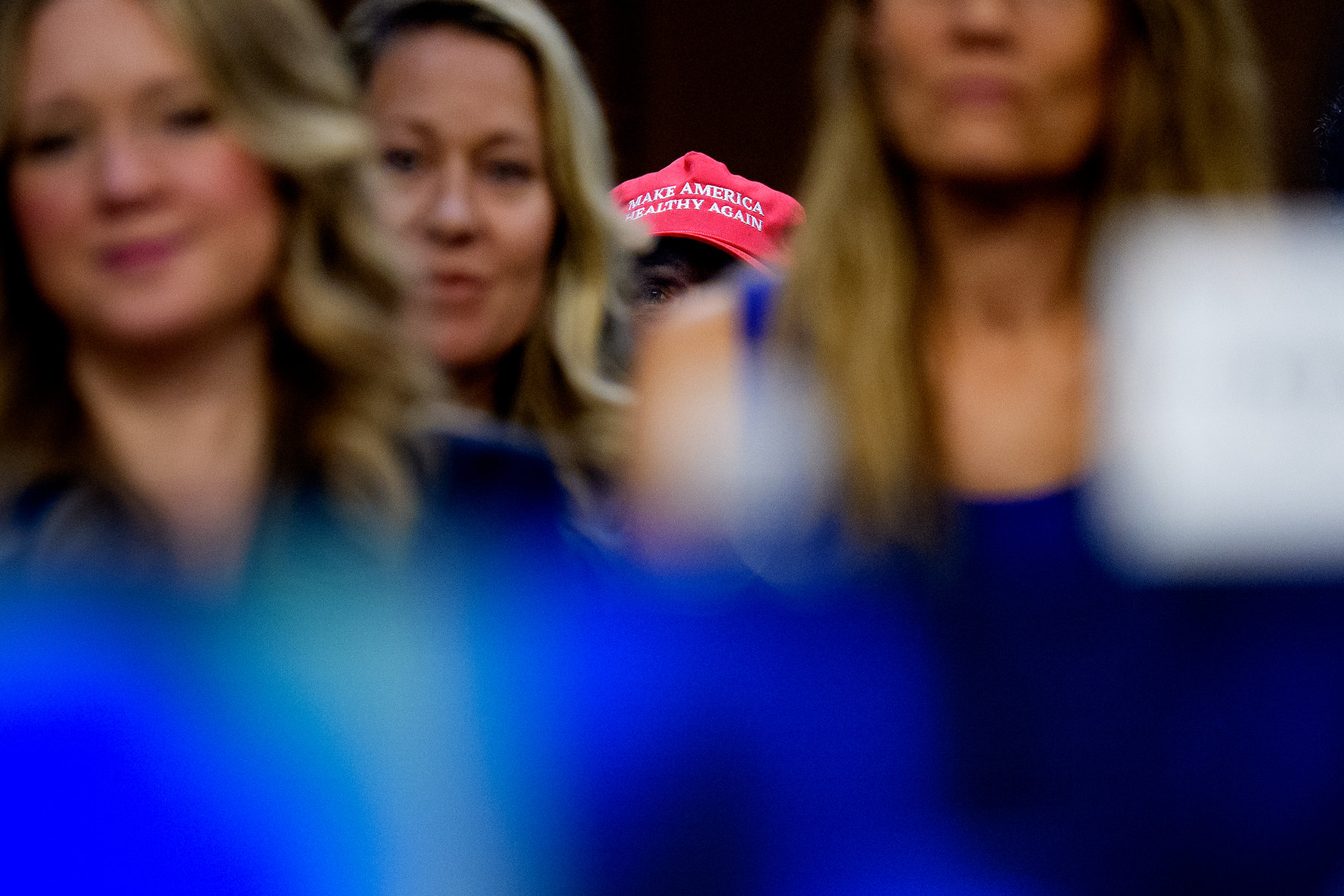

Self-described “MAHA moms” — who embrace the Make America Healthy Again movement — spoke about unsubstantiated treatments for autism and discredited theories this week as part of a key government advisory committee. It’s a shift for the panel, which used to represent a broader mix of experiences, say mothers who used to be a part of it.
“When I looked at the committee that I was a part of, I saw the United States that we live in,” said Morénike Giwa Onaiwu, a former member who served on the Interagency Autism Coordinating Committee, or IACC, from 2023 to 2025. “I saw people with intellectual disabilities and I saw people who had been born in other countries, and also people with Brown skin and Black skin and White skin. And now when I look at the committee, I just see a sea of Whiteness.”
The changes to the committee’s makeup, which include 21 public members and 21 representatives from across government agencies, have been controversial. Normally, public members serve for three-year terms, and many do consecutive terms. No one from Onaiwu’s entire cohort was welcomed back, nor were any public members from previous years. The appointment process for new members from the general public was also significantly different than in previous years. Many new members announced their appointments on social media ahead of the official Department of Health and Human Services announcement, in some cases before the deadline for nominations had even passed.
The public members themselves no longer represent the largest and most mainstream autism organizations like Autism Speaks or the Autism Society, organizations spearheaded by parents, particularly mothers, that have been representing families of autistic children for decades. Public members now represent a number of different organizations dedicated to alternative treatments for autism and causes unsupported by mainstream scientific research, brought together under Robert F. Kennedy Jr.’s Make America Healthy Again, or MAHA, banner and energized by Kennedy’s longtime support for what most experts consider to be fringe beliefs about autism and general health.
About half of the public members have been involved with anti-vaccine organizations or questioned vaccine safety, including as a cause for autism. Autism is a neurodevelopmental disability impacting how a person communicates and interacts with others. While the causes are still unclear, autism appears to primarily be genetic. There is no link between vaccination and autism.
Many committee members spoke Tuesday about the centrality of motherhood in their work around autism. Lisa Ackerman, who co-founded The Autism Community in Action, formerly known as Talk about Curing Autism, has said that she believes dietary changes, supplements and “detox,” along with more conventional behavioral and occupational therapy, helped her son, Jeff, recover from autism. There are no dietary changes, supplements or “detox” that have been proven to treat autism.
“I’m proud to say, with access to care and therapeutics, he is a bright light. He’s worked so hard to get where he is and he’s thriving, a college graduate. Employed. Driving. And an accomplished musician,” Ackerman said Tuesday.
Another of the new members, Ginger Taylor, is a self-described MAHA mom and co-author of the book “Vaccine Epidemic: How Corporate Greed Biased Science and Coercive Government Threaten Our Human Rights, Our Health and Our Children.” On Tuesday, she introduced herself on the panel as first and foremost the mother of a 24-year-old autistic son.
“I hope that I speak for the voice of the mothers who have been doing everything possible to recover their kids [from autism],” Taylor said. There are no scientifically validated treatments to “recover” people from autism. During the committee meeting, she had several heated exchanges with members representing federal government agencies, criticizing their perceived inaction over the years. She and the other public members also expressed confusion and frustration about the committee rules.
After the meeting, Taylor said that prior to her appointment, she had stopped watching or paying attention to the IACC because she felt that she and mothers like her were being ignored. She did not specify what she meant by mothers like her but said mothers now deal with “more severe cases” than in the past. It is not clear that there are more autistic people with higher support needs now than in previous years, and many experts attribute rising autism rates to changes in diagnostic criteria and screening. Taylor also praised former IACC member and anti-vaccine activist Lyn Redwood, describing Redwood’s tenure from 2007 to 2014 as the last time she felt represented on the committee.
“I did not feel that any previous moms were representing my issues. But that’s how government is supposed to work, right? Government is a bureaucracy. It’s not supposed to work,” said Taylor, who now sits on the committee that advises the government on autism research priorities. She was, however, careful to avoid criticizing previous mothers who were members.
“I don’t judge them. I’m not mad at them. It’s just time for different people,” Taylor said.
Onaiwu, a mother of six who has two teenagers on the autism spectrum and is autistic herself, told The 19th that since the beginning, mothers of autistic children have been represented on the IACC. But she said the current IACC represents only a privileged sliver of mothers, rather than the unheard voices of the most impacted.
“We addressed a lot of the issues and needs and concerns of moms — both autistic and non-autistic moms,” said Onaiwu, a board member for the Autism Women and Nonbinary Network. “We would always make sure that we would include issues that are pertinent to moms.” She also defended federal members, pointing out that many wear multiple hats and are the parents of autistic children, or in a few cases, are autistic themselves.
Another former IACC member, a Black mother of an autistic child and advocate for families of color, praised the diversity she saw during her time on the committee. She spoke on the condition of anonymity because of fear of retaliation.
“I recognize that even in a committee like this, everyone is not going to be represented. But I think that we really tried, as a committee, to take into consideration as many people as possible,” she said. She said she feels that mothers as a whole were well represented during her tenure on the committee.
“When we talk about diversity, I don’t just mean as an African American woman. There were more autistic people and more parents with more levels of need and ways of moving in the world. I was really truly proud to be a part of it because I knew that while we might not always agree on everything, we would have healthy discussion and there was mutual respect,” she said.
She believes that the current committee does not reflect the diversity of the autism community.
Sam Crane, another former public member who served from 2014 to 2021, is autistic and a mother. She feels the primary function of the IACC has historically been to represent diverse experiences and viewpoints in various autism communities. Crane said she is not optimistic about the current committee.
“The main value that the IACC provided was creating a forum where people from a very broad range of perspectives and opinions about autism and about autism research could get together, sit across the table from each other, and look each other in the eye and talk about the issues facing our community,” she said.


