
Skip to content Site Search

Republish This Story

* Please read before republishing *

We’re happy to make this story available to republish for free under an Attribution-NonCommercial-NoDerivatives Creative Commons license as long as you follow our republishing guidelines, which require that you credit The 19th and retain our pixel. See our full guidelines for more information.

To republish, simply copy the HTML at right, which includes our tracking pixel, all paragraph styles and hyperlinks, the author byline and credit to The 19th. Have questions? Please email partnerships@19thnews.org.

— The Editors

Loading...

Modal Gallery

/
Sign up for our newsletter

Menu

Home

We’re an independent, nonprofit newsroom reporting on gender, politics, policy and power. Read our story.

Topics

  • Politics
  • LGBTQ+
  • Health
  • Justice
  • Caregiving
  • Education
  • Abortion
View all topics

Daily Newsletter

A smart, relatable digest of our latest stories and top news affecting women and LGBTQ+ people.

Look for a confirmation sent to

Did you mean

The email didn't go through.

or Contact us for support
  • Latest Stories
  • Our Mission
  • Our Team
  • Strategic Plan
  • Support the 19th
  • Search
  • Contact
Donate
Home

We’re an independent, nonprofit newsroom reporting on gender, politics, policy and power. Read our story.

Daily Newsletter

A smart, relatable digest of our latest stories and top news affecting women and LGBTQ+ people.

Look for a confirmation sent to

Did you mean

The email didn't go through.

or Contact us for support

Become a member

The 19th thanks our sponsors. Become one.

Obituary

Barney Frank, first member of Congress to come out as gay, dies at 86

Frank entered Congress when being gay could end a political career, and served long enough to lead reforms after the 2008 financial crisis. 

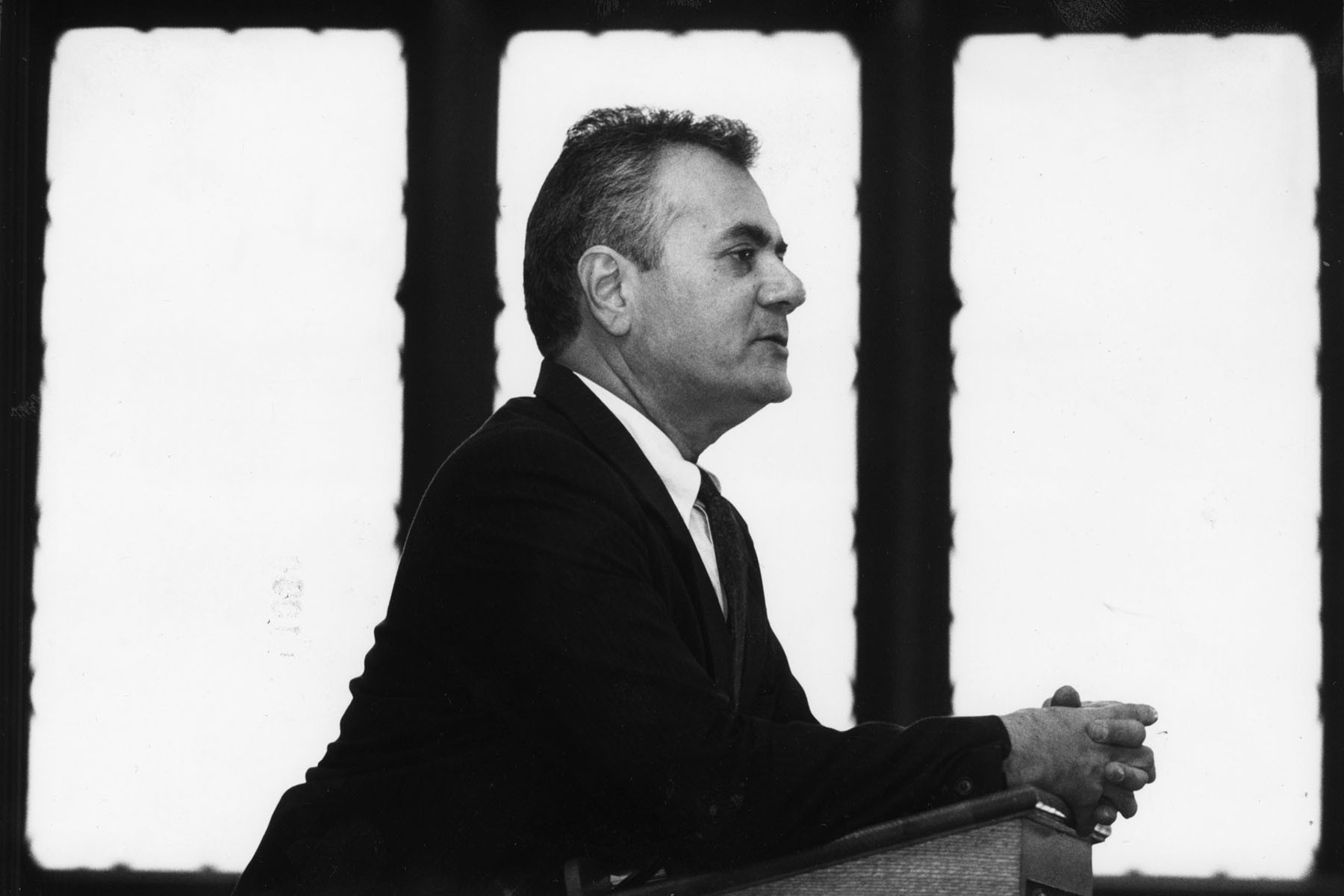
Black and white images of Congressman Barney Frank delivering remarks at a podium.
Congressman Barney Frank delivers remarks in Newton, Massachusetts in October 1990. (Wendy Maeda/The Boston Globe/Getty Images)

Orion Rummler

LGBTQ+ Reporter

Published

2026-05-20 09:21
9:21
May 20, 2026
am
America/Chicago

Share

  • Bluesky
  • Facebook
  • Email

Former Rep. Barney Frank, the most prominent out gay politician in the United States for over a decade, died Wednesday after entering home hospice care for congestive heart failure. At 86, the Massachusetts Democrat continued going on cable news and speaking with reporters, friends and former colleagues to espouse his beliefs on the future of his party.

Frank’s life in politics was marked by staunch liberalism, a passion for debate and a sharp wit. In Congress, he spearheaded major legislation to protect consumers and regulate banks after the global economic crisis of 2008, through what’s known as the Dodd-Frank Act. In his view, he brought progressive concerns about inequality into the mainstream. 

He also made history as the first member of Congress to voluntarily come out as gay in 1987. He retired from the U.S. House of Representatives after spending 32 years in Washington, and most of those as an out politician, during a time when being gay could end a political career. 

The 19th thanks our sponsors. Become one.

Although he advocated for gay rights, Frank staunchly believed in working within the political system to do so. He criticized public activism, like marches, as ineffective. He was deeply opposed to California’s “Winter of Love” in 2004, when the San Francisco mayor at the time, Gavin Newsom, flouted state law by issuing marriage licenses to same-sex couples. At the time, he blamed the tide of constitutional amendments against gay marriage on what he dubbed “spectacle weddings.” (Newsom is now the governor of California.) 
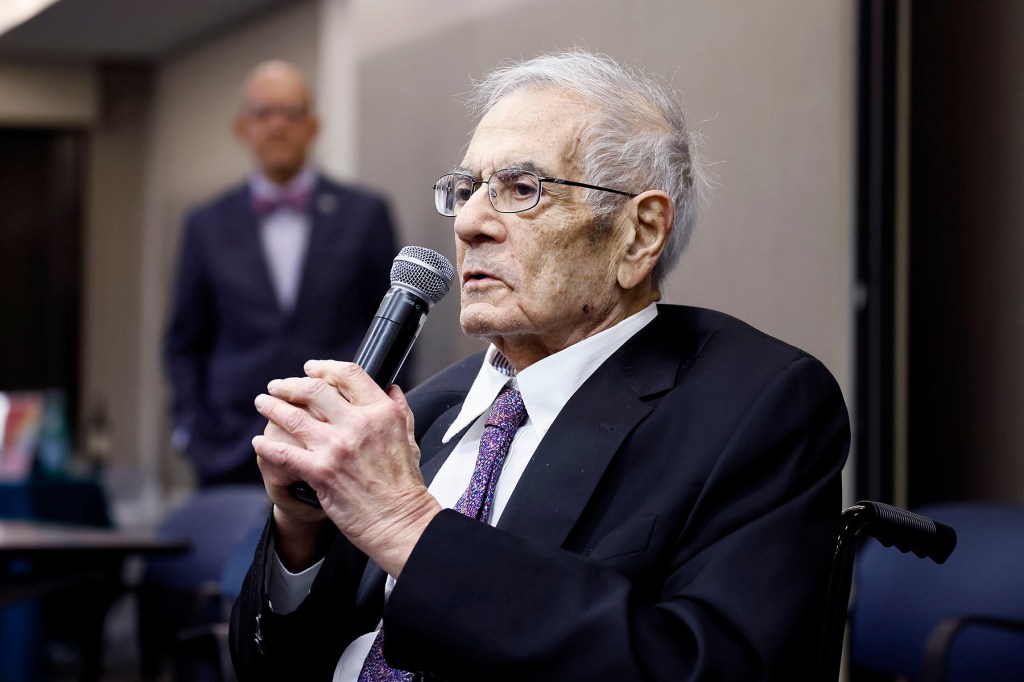
Barney Frank, sitting in a wheelchair and holding a microphone, speaks during an event.
Barney Frank speaks during PFLAG National’s Love Takes Justice event on November 18, 2025 in Washington, D.C. (Paul Morigi/Getty Images for PFLAG)

In the end, Frank seemed to spend more time thinking about politics than his own mortality. While in home hospice care, his criticism of the LGBTQ+ rights movement continued. In interviews with The New York Times and CNN, he argued that the public isn’t ready for certain social changes — like allowing transgender women to play in women’s sports. 

“I think in the interest of the transgender community, as well as others, it would be better to go at that in a more granular way and not simply announce that if you don’t support it, you’re a homophobe,” he told CNN anchor Jake Tapper, shortly after entering hospice care. He compared the issue to how same-sex marriage fit into the strategy to advance gay rights; since marriage was a more controversial topic, it came after other efforts for economic and social equality, he said. 

An illustrative image of people speaking to one another.

Support The 19th

Your donation helps our newsroom address the unfulfilled promises of our democracy. We are committed to being truly representative of our American story and our American electorate.

Donate Today

Plenty of advocates would disagree with that view. Efforts to fight workplace and housing discrimination did predate the push for marriage equality, but controversy surrounding same-sex marriage was always in play. Just as LGBTQ+ advocacy groups invested in campaigns to shape public opinion on gay marriage, the same work is taking place now to garner support for trans rights. 

Frank’s newest — and last — book promises to delve further into this topic and to expand on his critiques of the Democratic Party. “The Hard Path to Unity: Why We Must Reform the Left to Rescue Democracy” is scheduled to come out in September. He is survived by his husband of 14 years, Jim Ready. The pair met at a political fundraiser in 2005. 

Share

  • Bluesky
  • Facebook
  • Email

Recommended for you

A close up of part of a denim jacket with a Pride pin on the pocket and a Pride flag
Support for LGBTQ+ rights has dipped. What changed?
A young girl wearing a veil and a white dress stands against a dark purple background.
What would it take to end child marriage? There’s a new federal push to limit it.
An illustrative image of young women in wedding dresses.
Child marriage comes with a price tag: $175 billion
A person looks at their phone with a light behind their head silhouetting them.
One year later, 988 still doesn’t have a hotline for LGBTQ+ youth

Daily Newsletter

What matters today in gender and politics (we checked).

Look for a confirmation sent to

Did you mean

The email didn't go through.

or Contact us for support

Become a member

Explore more coverage from The 19th

  • Politics
  • LGBTQ+
  • Health
  • Justice
  • Caregiving
View all topics

Support representative journalism today.

Learn more about membership.

  • Give $19
  • Give $50
  • Give $100
  • Any amount
  • Transparency
    • About
    • Team
    • Contact
    • Privacy Policy
    • Community Guidelines
    • Gift Acceptance Policy
    • Financials
  • Newsroom
    • Latest Stories
    • Strategic Plan
    • 19th News Network
    • Events
    • Careers
    • Fellowships
  • Newsletters
    • Daily
    • The Amendment
    • Menopause
  • Support
    • Ways to Give
    • Sponsorship
    • Republishing
    • Volunteer

The 19th is a reader-supported nonprofit news organization. Our stories are free to republish with these guidelines.