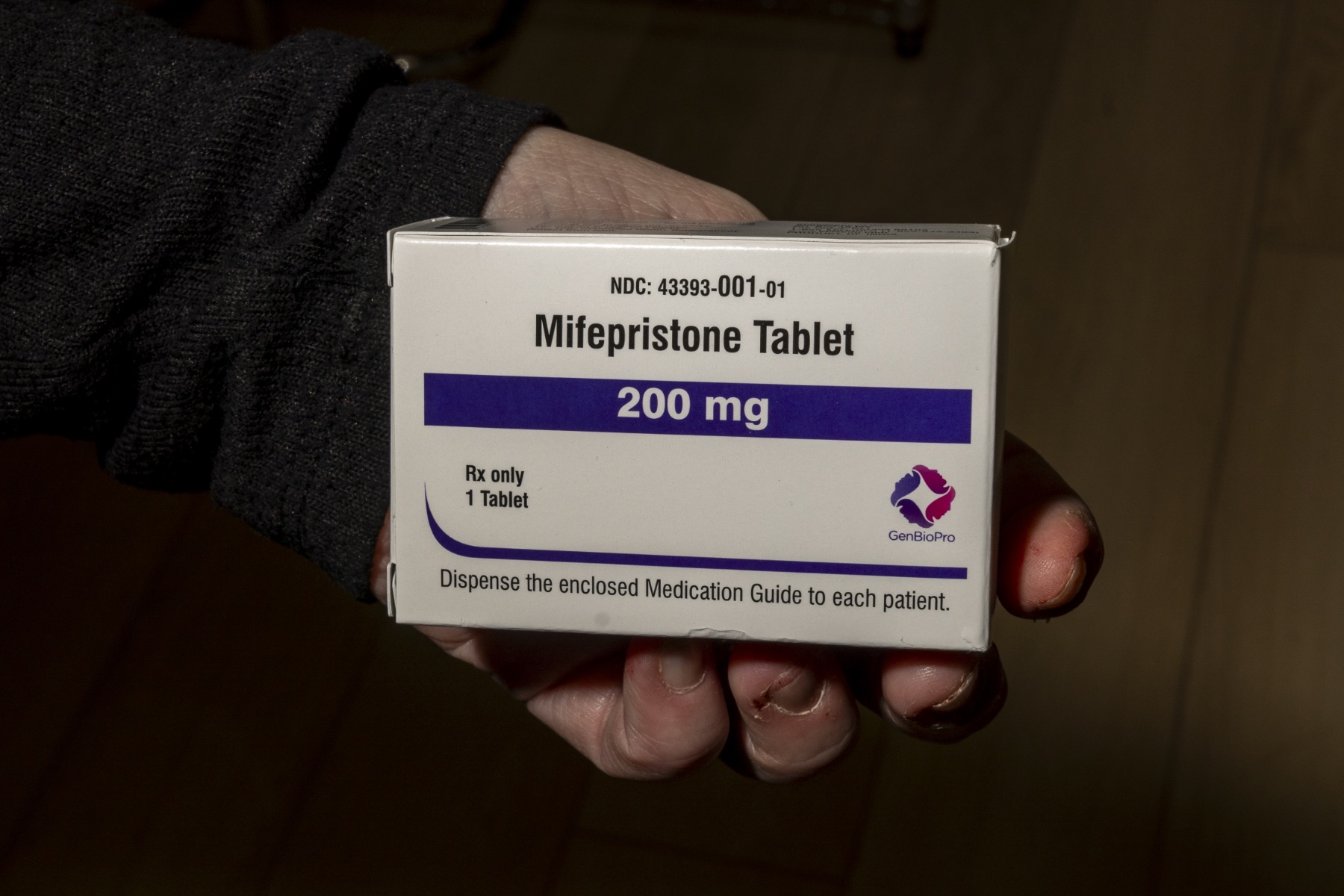

Editor's note: The Supreme Court temporarily blocked the appeals court’s ruling on May 4, restoring medical professionals’ ability to prescribe the drug through telehealth.. The decision, made in response to appeals submitted by mifepristone manufacturers Danco and GenBioPro, gives the Supreme Court time to weigh in.
A federal appeals court has temporarily blocked a policy allowing medical professionals to prescribe abortion pills through telehealth. If upheld, the injunction could upend how abortions are provided in the United States, ending access to abortion for people in states with bans and making it much trickier even in states where the procedure is legal.
The ruling comes from a lawsuit filed in October by Louisiana Attorney General Liz Murrill, who challenged the Food and Drug Administration over its 2023 policy allowing mifepristone, one of the two medications used in most abortions, to be prescribed through telehealth. The case is still ongoing, and this ruling would prohibit this form of telehealth abortion for its duration.
Telehealth has become a key option for people living in states with abortion bans. Data from the Society of Family Planning, which has tracked abortion trends since Roe v. Wade was overturned, found that close to a quarter of all abortions are done through telehealth, with half of those being for people living in states with bans. Medications are typically prescribed and mailed by doctors and nurses living in states with legal protections.
Abortion opponents have prioritized efforts to block telehealth prescriptions, arguing that the policy undercuts their states’ abortion bans. Friday’s ruling from the U.S. Court of Appeals for the Fifth Circuit — one of the nation’s most conservative appellate courts — is their first meaningful success.
The case reached the Fifth Circuit because Murrill appealed a decision by a Louisiana federal judge, who in April blocked the case while the federal government conducts its own review of mifepristone’s approval. Mainstream scientists and medical providers have called such a review unnecessary, noting that decades of research suggest mifepristone is safe and effective to use in abortions.
Though abortion opponents have supported a federal review of mifepristone, many have criticized the FDA’s process, arguing that the agency is taking too long, and leaving telehealth abortions readily available in the interim.
The Fifth Circuit’s decision offers them a victory, at least for now.
Many telehealth providers have said they only intend to provide medication legally — relying on FDA approval and their individual state laws that protect their ability to offer abortion pills across state lines. Now, with telehealth approval blocked, offering pills by mail is more legally dubious.
Abortion providers using telehealth from states with shield laws — which protect providers from out-of-state prosecutions — said it was not immediately clear how they would respond.
“We are working closely with legal experts to understand the full implications of the Fifth Circuit’s ruling, and we will do everything in our power to continue providing care to people in all 50 states,” said Dr. Angel Foster, a Massachusetts based provider who runs the Massachusetts Medication Abortion Project, a telehealth practice that offers shield law protected care.
And even people in states with legal abortion are likely to see access to care contract. Telehealth is often a major source of health care for people living in rural areas. The removal of an in-person requirement has allowed some clinics to see more patients, reducing wait times for some people seeking care, particularly in places that have seen a large influx in out-of-state abortion patients.
The decision is only in effect while Louisiana’s case is being litigated, and it could be appealed to the U.S. Supreme Court.
In the case, Murrill argued on behalf of Rosalie Markezich, a woman who says her ex-partner coerced her into taking abortion medication against her will. It’s part of a larger strategy by abortion opponents to suggest that telehealth has enabled a pattern of reproductive coercion. Research shows that the opposite is true — pregnant people’s partners are more likely to deny them access to abortion, rather than forcing it upon them.
The Trump administration opposed court intervention, arguing that a decision by a judge could interfere with their own scientific review of mifepristone. But anti-abortion activists have accused the administration of slow-walking that review, with many concerned that the White House is avoiding the issue of abortion at least until after the November elections.