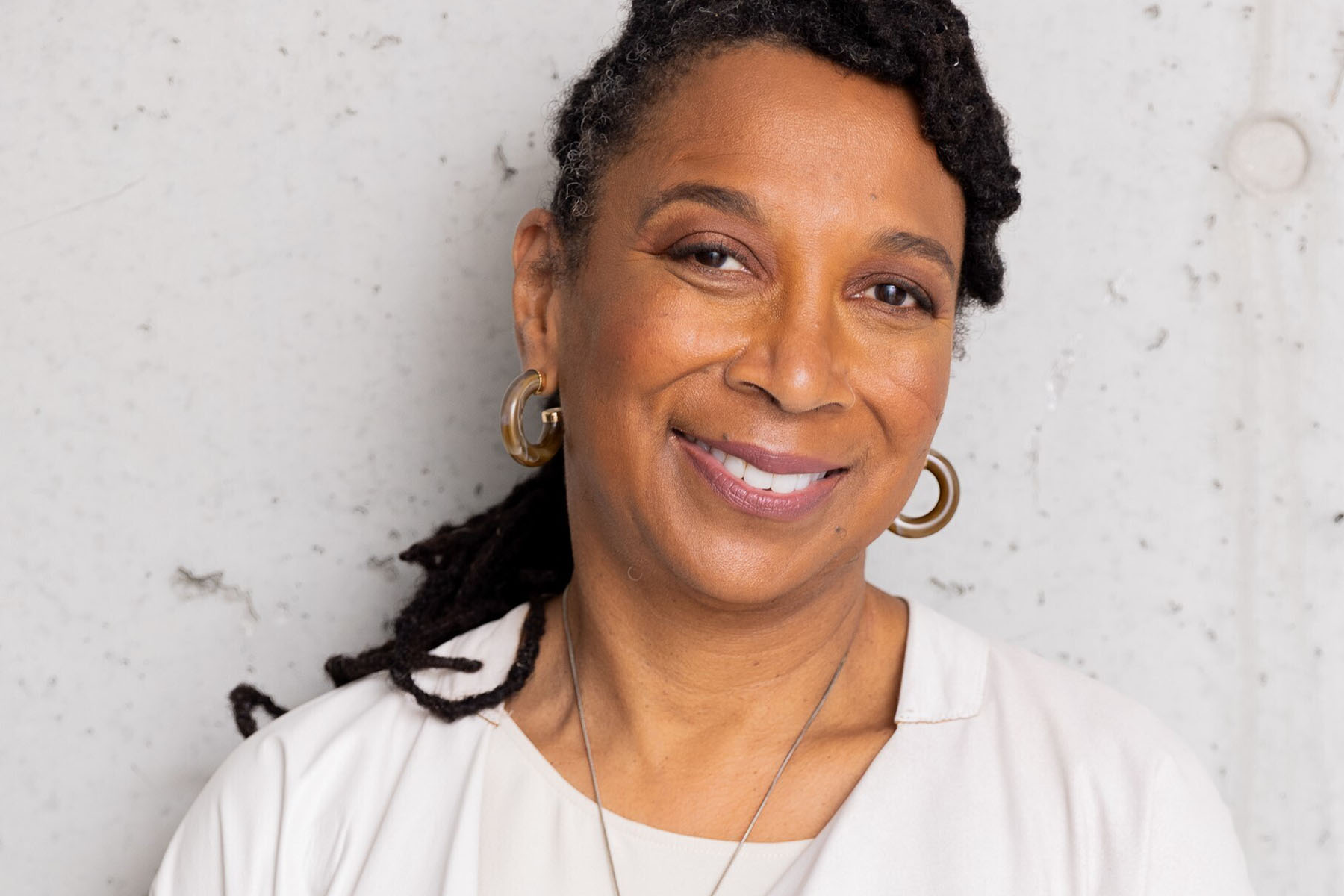
A teacher who wouldn’t cast her as a princess in a kindergarten skit shaped Kimberlé Crenshaw’s views. So did her efforts to diversify the hiring process and courses at Harvard Law School while she was a student. So, too, did the appointment of Clarence Thomas as the second Black Supreme Court justice in 1991, and the erasure of Black girls and women in the 2010s who were victims of police brutality.
Crenshaw’s successes as one of the leading voices on law and equity have come against a backdrop of interpersonal and systemic racism and sexism. In the foreground have been resolute Black women who have molded, guided and inspired her work.
All of this, said Crenshaw, a legal scholar and professor who just released a memoir, “Backtalker: An American Memoir,” shaped her analysis on race, class and gender in the United States. And together, they show how ignoring the injustices of Black women contributes to the erosion of our democracy altogether.
“I can’t say I know for sure whether the stakeholders in a real democracy have actually recognized fully the consequences of this assault on Black women for them,” Crenshaw said in an interview with The 19th.
Critical race theory
Crenshaw’s work has been instrumental in shaping how scholars see inequities in the United States. In 1988, she coined the term critical race theory, or CRT, a legal framework created by Derrick Bell, a Black legal scholar, that examines how racism is ingrained into societal and institutional structures like the law and education. She expanded the framework of CRT by also coining the term intersectionality, a concept that suggests a person’s overlapping identities, such as their race, class and gender, create a unique social experience that can result in either privilege or discrimination.
Crenshaw hopes that her memoir negates false claims once and for all that intersectionality was created from abstract ideas on race and gender, as many of her detractors have suggested, or that it’s un-American or a foreign import. She also hopes it inspires people to talk back. The key to resisting authoritarianism, she told The 19th, is to argue against its logic and expectations.
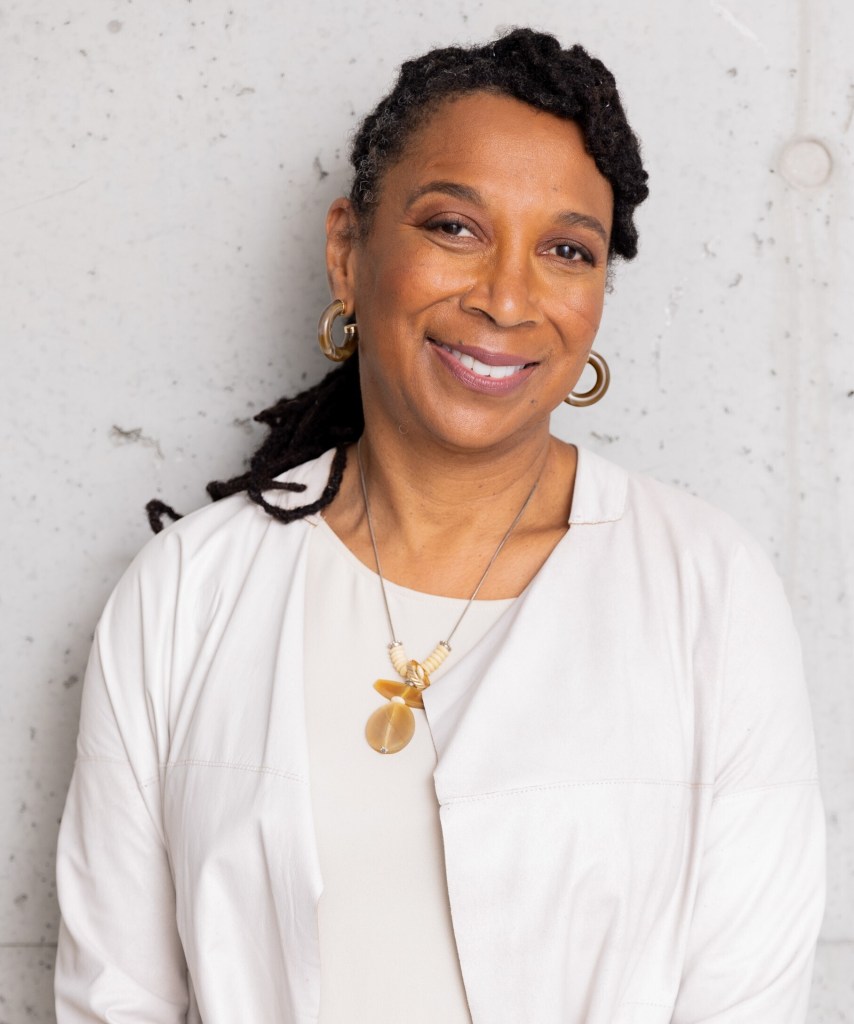
“I hope that they are able to understand that the knowledge that comes out of our lived experiences, being born in a country that once defined us as property that subsequently defined us as second-class citizens, a status that extended to the time I was born and beyond, is the foundation for critical thinking about race,” she said.
In recent years, far-right pundits like Christopher Rufo have co-opted the language she built to generate a divisive culture war replete with disinformation. It has led to the dismantling of programs aimed at helping people from historically marginalized backgrounds, such as the change in hiring and college admission practices. President Donald Trump called CRT “ideological poison” in 2020. Politicians have introduced 870 anti-CRT bills since September 2020 and passed more than 20 state laws, making it public enemy number one for education throughout the United States, despite it never being a part of K-12 public school curricula.
Intersectionality
As Crenshaw studied the 1976 federal court case DeGraffenreid v. General Motors, in which a Black woman sued the company for discrimination and a judge ruled that she could either sue as a woman or a Black person, but not both, her idea of intersectionality was born.
In 1991, a few years after Crenshaw coined the term, Thomas was nominated to the Supreme Court to replace Thurgood Marshall, who was the first Black justice. When sexual harassment allegations against Thomas by Anita Hill, a Black woman, came to light, Crenshaw found herself watching what she called an intersectional failure unfold. Hill and Crenshaw had met about a year earlier and, as a fellow Black woman lawyer, Crenshaw felt it was imperative that she support Hill. That’s how Crenshaw ended up seated behind her as Hill testified before the U.S. Senate. Crenshaw said Hill’s allegations not being taken seriously has had consequences, pointing to Thomas’ key votes on money in politics, in Citizens United v. Federal Elections Commission in 2010, and on Section Five of the Voting Rights Act, in Shelby County v. Holder in 2013.
“Those two alone account for a distressing amount of our diminished ability to fight against plutocrats who are taking over our democracy,” she said “There were other decisions that were made, and it all forces us to ask, why wasn’t Anita Hill believed, and what are the consequences, not just to Black women, not just to communities of color, but to the entire nation?”
Crenshaw and the Obama White House
Crenshaw’s work took on new challenges when Barack Obama was elected as the first Black president in 2008. His win supported the idea that the country was moving past race, and many hoped that he would be a “color-blind” president. Crenshaw, however, often felt as though Obama’s responses fell short of addressing these issues from a broader, systemic perspective.
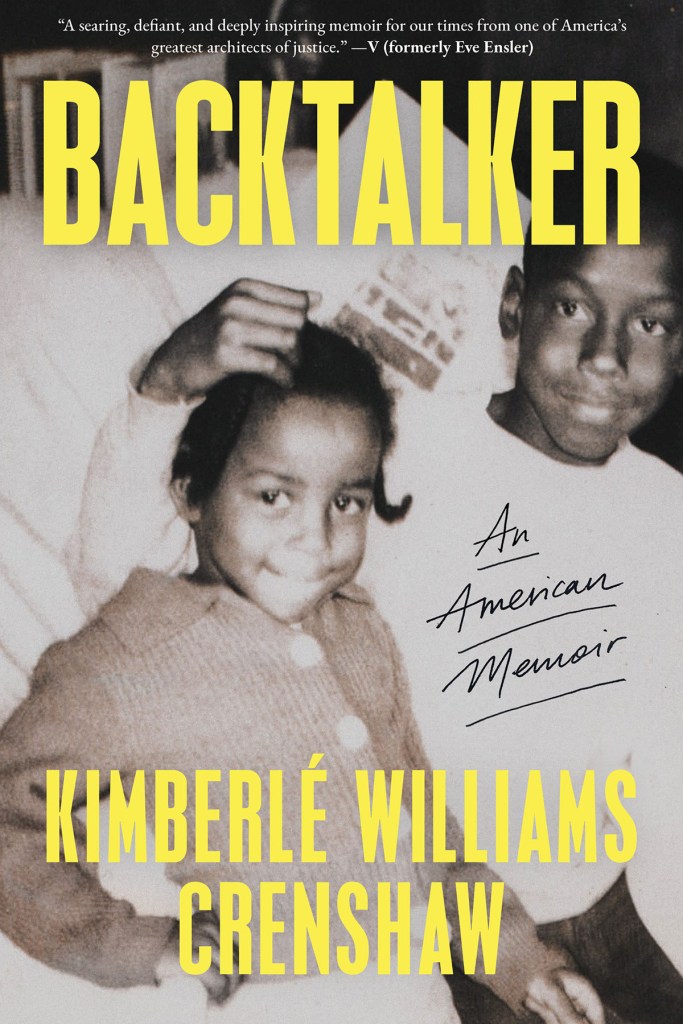
“The president did address racial inequality from time to time, but his comments typically emphasized the deficits in Black attitudes rather than opportunity gaps in white structures,” Crenshaw wrote in her book.
Then, in 2013, George Zimmerman was acquitted in the killing of Florida teenager Trayvon Martin, who was Black. The nation reached a tipping point in regards to race. Martin’s death and Zimmerman’s not-guilty verdict were watershed moments that sparked a new wave of protests and racial justice efforts, including the birth of the Black Lives Matter movement. In the aftermath, the Obama administration started a program called My Brother’s Keeper, which aimed to close opportunity gaps for Black boys and other young men of color.
In 2014, Crenshaw and other Black women advocates had a tense meeting at the White House as they pushed the administration to expand the program to include girls of color.
After the meeting proved unsuccessful, Crenshaw penned an op-ed in The New York Times titled “The Girls Obama Forgot.” She launched a campaign, #SayHerName, aimed at raising awareness about the fact that Black girls and women are also disproportionately brutalized by law enforcement and that their mothers needed support as well.
Crenshaw and the Trump era
Her work of spotlighting and including Black women in cultural, legal and political conversations continues under the current presidency. She sees Trump’s ability to return to the White House in 2024 as a sign of our society worsening from telling Black women to “wait their turn” to “we don’t want to see your face at all.”
“We as Black women are fully aware, perhaps even more so than we were before the election, that there are consequences to being silent about misogynoir. There are consequences of not being able to identify and contest with everything we have, the disparagement and disregard of Black women,” Crenshaw told The 19th. “The disparagement comes from the right. The disregard sometimes comes from our own leaders. Neither of those things can be tolerated in a society that is sliding toward authoritarianism, with Black women being targeted as one of the first points of erasure.”
The loss of then-Vice President Kamala Harris in 2024 — Trump’s defeat of the first Black woman to be a major party’s presidential nominee — led many Black women to take a strategic posture of pausing or purposeful quietness. But Crenshaw believes there was some misunderstanding of what Black women were actually doing in the aftermath of the race. Harris’ loss after an election cycle littered with misogynoir, Crenshaw believes, required a period of lamenting. But that didn’t mean Black women threw in the towel in fighting for democracy.

Support The 19th
Your donation helps our newsroom address the unfulfilled promises of our democracy. We are committed to being truly representative of our American story and our American electorate.
“There was this computer-generated image of Black women sitting on top of a high-rise apartment building watching the chaos unfold below. I’m not sure how much that framework addresses the reality that Black women aren’t below where there is chaos,” Crenshaw said. “We are often positioned to receive the brunt of that first, and so the idea that we are not going to fight on our own behalf, and that we’re going to simply allow us to be written out of the American story, written out of the economy, written out of authority, written out of universities, written out of government, that’s not my sense about what a lot of Black women’s sensibilities are at this moment.”
Since the Trump administration gutted the federal workforce and dissolved diversity, equity and inclusion initiatives beginning in 2025, Black women’s unemployment rate has skyrocketed in comparison to other race and gender demographics. That is a canary in the coal mine regarding the nation’s economy, Crenshaw said. She said that now that the assault on Black women has metastasized into the assault on pretty much everybody who’s not a straight White man, she hopes that more people will realize we are in a dogfight for democracy.
The power of the collective
Crenshaw said other stakeholders in racial justice and democracy give her the momentum she needs to continue to talk back to those who would like her to be permanently silenced.
In the final chapter of Crenshaw’s memoir, she recalls a retreat her organization, The African American Policy Forum, organized for the Black mothers who had lost their daughters to police brutality. She talks about Cassandra Johnson, the mother of Tanisha Anderson, who was killed by Cleveland police outside her home in 2014, breaking down in her grief after finding out that the officers would face no charges. The other mothers formed a tight circle around her and embraced her as she cried out to God. Their embrace eventually soothed her.
“I share that story because it reveals the power of the collective to heal, to protect, to fortify each other. There is no way I would be able to stand this ground without the fact that I have people surrounding me and I am surrounding them in that process,” Crenshaw told The 19th. “Whenever I’m tempted not to make the call, or not to show up, or to just pull the covers over my head, I remember the strength that those sisters gave their sister, and it reminds me of the need to seek it out and to luxuriate in it when I can get it.”