Skip to content Site Search

Republish This Story

* Please read before republishing *

We’re happy to make this story available to republish for free under an Attribution-NonCommercial-NoDerivatives Creative Commons license as long as you follow our republishing guidelines, which require that you credit The 19th and retain our pixel. See our full guidelines for more information.

To republish, simply copy the HTML at right, which includes our tracking pixel, all paragraph styles and hyperlinks, the author byline and credit to The 19th. Have questions? Please email partnerships@19thnews.org.

— The Editors

Loading...

Modal Gallery

/
Sign up for our newsletter

Menu

Home

We’re an independent, nonprofit newsroom reporting on gender, politics, policy and power. Read our story.

Topics

  • Politics
  • LGBTQ+
  • Health
  • Justice
  • Caregiving
  • Education
  • Abortion
View all topics

Daily Newsletter

What matters today in gender and politics (we checked).

Look for a confirmation sent to

Did you mean

The email didn't go through.

or Contact us for support
  • Latest Stories
  • Our Mission
  • Our Team
  • Strategic Plan
  • Support the 19th
  • Search
  • Contact
Donate
Home

We’re an independent, nonprofit newsroom reporting on gender, politics, policy and power. Read our story.

Daily Newsletter

What matters today in gender and politics (we checked).

Look for a confirmation sent to

Did you mean

The email didn't go through.

or Contact us for support

Become a member

The 19th thanks our sponsors. Become one.

Health

Polycystic ovary syndrome, also known as PCOS, has a new name

Polyendocrine metabolic ovarian syndrome, formerly known as polycystic ovary syndrome, impacts about 1 in 8 people assigned female at birth.

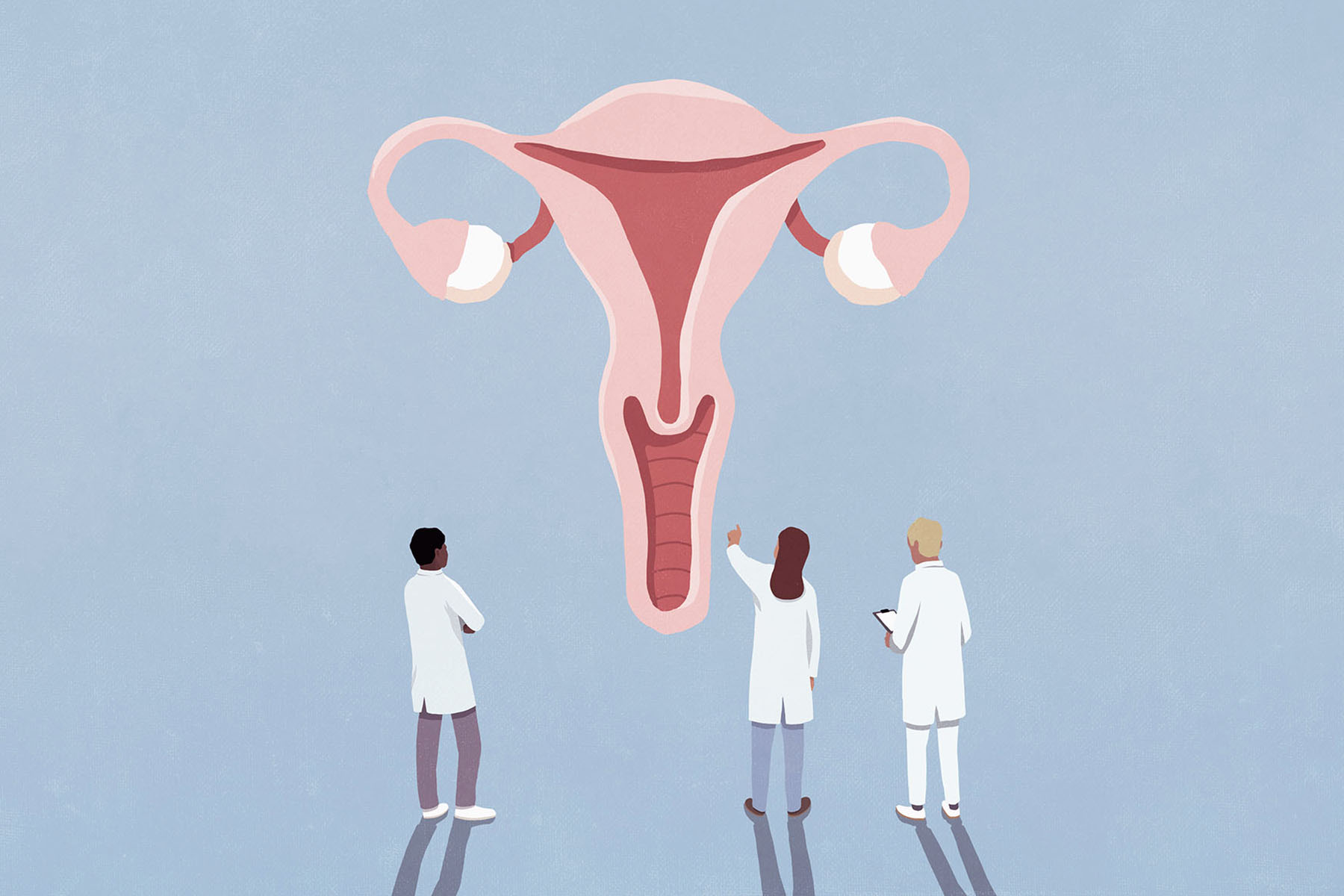
Illustration of three doctors in white coats standing in front of a large anatomical illustration of a uterus and ovaries on a blue background.
(Getty Images)

Sara Luterman

Disability and Aging Reporter

Published

2026-05-13 09:04
9:04
May 13, 2026
am
America/Chicago

Share

  • Bluesky
  • Facebook
  • Email

Polycystic ovary syndrome, also known as PCOS, has been renamed polyendocrine metabolic ovarian syndrome, or PMOS. 

PMOS impacts an estimated 170 million people worldwide and is one of the most common hormonal disorders experienced by women, trans men and nonbinary people assigned female at birth. Black people are more likely to have PMOS and are more likely to have severe forms. 

Endocrinologist Helena Teede spearheaded the effort. “It was very clear that the name was inaccurate,” Teede told Live Science, a popular science news website. 

The 19th thanks our sponsors. Become one.

The original name referenced small fluid-filled sacs on the ovaries observed when researchers first identified the condition in the 1930s. The sacs are not cysts. Instead, they are unerupted follicles — structures containing eggs. Not everyone with the condition has these sacs.

“Renaming this condition is more than semantics; it’s about finally recognizing the full reality of what patients experience,” Melanie Cree, one of two pediatric endocrinologists involved in the renaming effort, said in a news release.  

  • Read Next:
    A digital collage showing an ultrasound image, a gold cross, a sign reading “Vitae Clinic Obstetrics & Gynecology,” a hand holding a pregnancy test, a clinic waiting room, and a gynecology exam room.
  • Read Next: As abortion opponents target IVF, they’re promoting fertility clinics like this one

PMOS can cause irregular periods, no periods, infertility, weight gain, acne, extra facial and body hair, and hair loss. The new name is meant to emphasize the way the condition impacts everything from hormones to heart health. 

Researchers and medical professionals, including Cree, hope that the new name will help promote earlier and more accurate diagnosis, as well as encourage a more holistic view of patient health. 

“For too long, the narrow definition of PCOS has overlooked its metabolic and hormonal complexity, leaving many patients undiagnosed or misunderstood,” she said.


Share

  • Bluesky
  • Facebook
  • Email

Recommended for you

illustration showing Robert F. Kennedy Jr. standing against a purple rectangle. To the left, a cropped image of the White House is layered beneath a microscope image of sperm cells. Dr. Mehmet Oz stands at a podium in front of the White House, with abstract shapes layered around him.
Why is RFK Jr. so worried about sperm count?
Pregnant patients in Minnesota have postponed abortion appointments to avoid ICE
A woman holds a pack of birth control pills over the sink.
The birth control pill and cancer: What are the risks?
A pregnant woman sits on a padded bench, looking down at her belly, while another woman holds a baby nearby in a room with religious imagery, including a statue and portrait of Jesus, and posters on the wall.
Detained pregnant people are entitled to full medical care. They say it’s not happening.

Daily Newsletter

A smart, relatable digest of our latest stories and top news affecting women and LGBTQ+ people.

Look for a confirmation sent to

Did you mean

The email didn't go through.

or Contact us for support

Become a member

Explore more coverage from The 19th

  • Politics
  • LGBTQ+
  • Health
  • Justice
  • Caregiving
View all topics

Support representative journalism today.

Learn more about membership.

  • Give $19
  • Give $50
  • Give $100
  • Any amount
  • Transparency
    • About
    • Team
    • Contact
    • Privacy Policy
    • Community Guidelines
    • Gift Acceptance Policy
    • Financials
  • Newsroom
    • Latest Stories
    • Strategic Plan
    • 19th News Network
    • Events
    • Careers
    • Fellowships
  • Newsletters
    • Daily
    • The Amendment
    • Menopause
  • Support
    • Ways to Give
    • Sponsorship
    • Republishing
    • Volunteer

The 19th is a reader-supported nonprofit news organization. Our stories are free to republish with these guidelines.