
Erika Nyhus thought she was done having children. The mother of two had required medical intervention to become pregnant in the past, and she’d been told that the breast cancer treatment she’d completed would further diminish her fertility.
Then two-and-a-half years ago, feeling rundown after returning home from a family trip, she took a pregnancy test out of an abundance of caution. She assumed it would be negative.
Her husband was outside their home in Maine, playing in the snow with the kids. She called him inside to show him the test: positive.
“We were in total disbelief,” she recalled. She was 43 at the time.
Nyhus knew that when the baby came, she wouldn’t be able to breastfeed the way she had with her first two — treating her cancer had required a lumpectomy on her right side, a procedure in which doctors had removed part of her right breast. She would be able to produce some breastmilk, but not enough to feed a growing child.
So early in her pregnancy, Nyhus met with lactation consultants and began searching online for information. The latter led her to a Facebook group, where, at the end of her second trimester, she posted looking for someone who might be able to help. A woman, due within three weeks of her and living about 45 minutes away, responded. She’d produced more milk than she needed with her first child, and offered to donate any extra breastmilk she produced to Nyhus.
Federal health regulators don’t advise using milk from unscreened donors, especially those new parents might meet online. There are risks of milk contamination if it’s not stored properly, or of infection based on a donor’s medical history.
But for people like Nyhus, who cannot produce enough breastmilk because of their medical histories, the options can be expensive.
She looked into purchasing donor milk from a milk bank — the recommended source by the Food and Drug Administration — but she was quoted a price of $150 per 100 ounces. When she ran her back-of-the-envelope math, she estimated that purchasing donor milk or extra formula to make up for the milk she couldn’t produce would cost her family thousands of dollars a year. If she hadn’t found a donor, she said, she would have combined infant formula with what milk she was able to produce.
Health insurance is legally required to cover breast pumps and breastfeeding counseling, a provision of the Affordable Care Act based on the understanding that breastfeeding can benefit the health of both an infant and a new parent. Insurance plans will sometimes cover donor milk or infant formula in limited situations: both if a doctor finds that a new parent cannot produce sufficient milk and a newborn’s health is suffering because of it.
Patients like Nyhus are often left out. If an infant is healthy, there is no requirement that insurance cover either donor milk or infant formula if a parent’s medical history prevents them from producing sufficient milk for breastfeeding.
“I could have gotten a brand new breast pump. But what if I had a double mastectomy?” Nyhus said. “A breast pump is useless to me. I can’t pump.”
Some lawmakers and advocates are hoping to change that. Reps. Debbie Wasserman Schultz, a Florida Democrat, and Ashley Hinson, an Iowa Republican, introduced legislation last month that would establish a three-year pilot program to help cover the cost of formula or donor milk for people whose medical history prevents them from breastfeeding — including because of cancer or mental health conditions that make it harder to produce milk — or cases in which a newborn cannot take breastmilk because of issues such as difficulty latching, allergies or intolerances. The pilot would not cover people who are already eligible to receive infant formula through other preexisting federal aid programs.
The bill is backed by Bobbie for Change, the advocacy arm of the infant formula company Bobbie, which also pushes for social policies including paid family leave, and which provides a year of free formula to about 120 families per year who cannot breastfeed because of breast or gynecological cancer, cancers that can make it difficult or even impossible to breastfeed.
“It is so extraordinarily expensive to be someone who has gone through treatment,” said Michele Lampach, the director of impact and policy for Bobbie. “And then to add to that this infant feeding component — not to mention the emotional and physical tolls that continue?”
It’s not clear what the pilot would cost, or how many people might ultimately qualify for benefits. Lampach said lawmakers in both parties have expressed interest in advancing coverage for formula and donor milk. But the bill has not moved from its committee in the House of Representatives, and it’s not clear whether it has a path to law.
The share of possible beneficiaries appears to be growing. Data from the Centers for Disease Control and Prevention suggests that, though most people with breast cancer are in their 60s, the share of younger patients is steadily climbing. Reporting suggests that a growing number of young women who don’t have cancer but who carry a genetic mutation that elevates their risk are now opting for preventive mastectomies.
“It’s such a gap,” said Robin Vande Werken, a breast cancer survivor and mother who participated in the Bobbie program for free formula, who has lobbied for the bill. “It has always felt like a misstep — something someone forgot rather than a specific exclusionary act.”
Researchers estimate that families who exclusively feed a newborn with formula can spend close to $3,000 in a year.
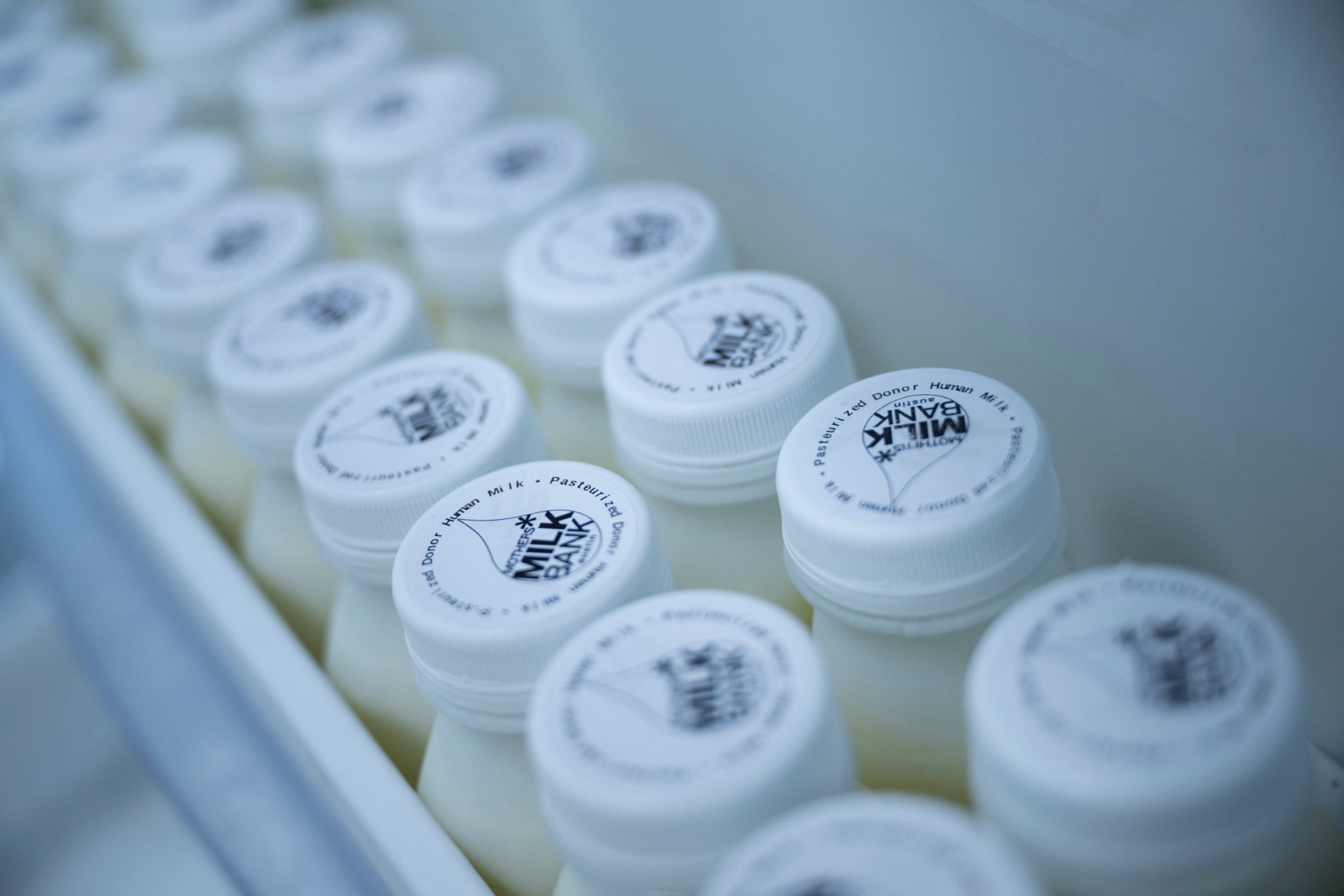
Donor milk is pricier. Milk banks, which provide pasteurized and regulated donor milk, can charge on average between $3 and $5 per ounce of milk, according to the American Academy of Pediatrics. That can cost a family close to $100 per day. And the supply is limited, since many banks prioritize providing milk to infants in neonatal intensive care, who require extra breastmilk.
After giving birth, Nyhus would meet up with the donor whenever she came into town, dropping plans if it meant she might be able to pick up a stash of breastmilk. One time, she recalled, a friend had come over to meet the new baby — but the visit was cut short when Nyhus saw a text message saying her donor was coming into town that day and could drop off a bag of milk.
“A lot of people are kind of doing these back-alley connections with other moms,” Nyhus said.
Especially after her own experience, she said she would support efforts to expand insurance so that other parents can have things a bit easier than she did.
“They should absolutely cover it if they think there’s any benefit for the baby,” she said. “It should be covered for the baby or the mother.”