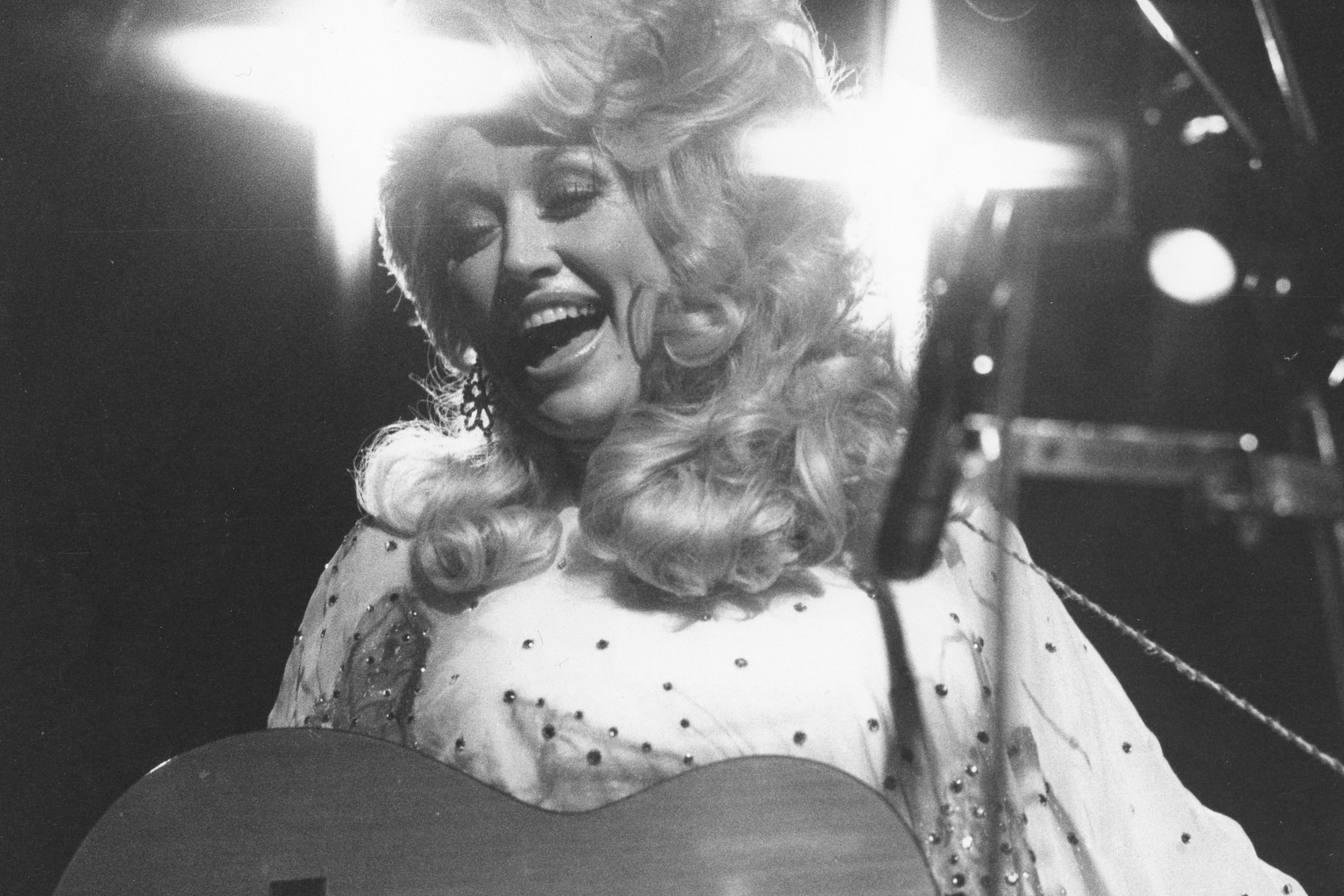

Dolly Parton, who used her stardom to not only embrace all listeners but also nurture marginalized communities through literacy and financial development, died peacefully in Nashville, Tennessee, on Tuesday, according to her family. She was 80.
One of the best-selling musical artists of all time, Parton had 25 singles top the Billboard country music charts. She starred in blockbuster movies and beloved Christmas specials. Her theme park, Dollywood, is one of the most popular in the United States.
Parton has been seen by many as a feminist icon, though she historically declined to use the word to describe herself. When podcaster Jad Abumrad asked the songwriter in 2019 if she thinks of herself as a feminist, she responded, “No, I do not. I think of myself as a woman in business.”
Parton presented herself as a woman from a humble Appalachian beginning who pulled herself out of poverty through talent and hard work. She was one of 12 children and lived in a home that did not have electricity when she was young.
“We barely made it, but we did make it,” she told NPR in a 2002 interview. “We had a lot of stuff that money can’t buy anyhow, as I often talk about, things like love and kindness and understanding.”
Parton became a celebrated musician but was also a canny businesswoman who famously refused to let Elvis Presley to record her country chart-topping song, “I Will Always Love You,” when his manager demanded half of her publishing rights. Whitney Houston’s recording of the song in 1992, with Parton’s blessing, became one of the bestselling singles in music history. Parton used some of the royalties from Houston’s version to invest in an office complex in a predominantly Black neighborhood in Nashville.
“It was mostly just Black families and people that lived around there,” Parton told Bravo host Andy Cohen. “It was a whole strip mall. And I thought, ‘This is the perfect place for me to be, considering it was Whitney.'”
She added: “I just thought, ‘This was great. I’m going to be down here with her people, who are my people as well.’ And so I just love the fact that I spent that money on a complex. And I think, ‘This is the house that Whitney built.'”
“9 to 5,” Parton’s title track and the movie of the same name, which she starred in, inspired the women’s activist group 9to5, which advocated for better and more equal working conditions for women. The group later became the National Association for Working Women.
The song is also beloved by many successful and powerful women. Sen. Elizabeth Warren, a Democrat from Massachusetts, played it as her walk-up music during her presidential campaign in 2019.
“I love the song. I love the movie. It’s every part of it,” she told the Des Moines Register that same year.
Parton was a longtime supporter of LGBTQ+ rights. In the ‘90s, her song “Family” expressed how everyone should be welcome, regardless of religion or sexual orientation.
She wrote the song for “Travelin’ Thru” for “Transamerica,” a film about a trans woman traveling across the United States after discovering she has a teenage son. The song was nominated for an Academy Award. While some aspects of the movie haven’t aged well, it was considered groundbreaking for the time.
“God made me for a reason and nothing is in vain,” she sang. In her book, “Dolly Parton, Songteller: My Life in Lyrics,” she said “Travelin’ Thru” had been inspired, at least in part, by a friend and a family member who are transgender.
Parton supported legalization of gay marriage years before it became legal across the United States.
“Sure, why can’t they get married? They should suffer like the rest of us do,” she joked to Joy Behar in 2009.
Parton was vocal about her love of drag, particularly performers who imitated her iconic aesthetic. She said that she once entered a Dolly Parton look-alike contest in Los Angeles for fun and lost to a drag queen.
“All these beautiful drag queens had worked for weeks and months getting their clothes. So I just got in the line and I just walked across, and they just thought I was some little short gay guy… I got the least applause,” she told ABC News in 2012.
Parton was also a champion for reading.
Founded in 1995, Imagination Library sent free books every month to children from birth through age 5. She said the program was in honor of her father, who never learned to read or write. What started as a small initiative in Sevier County, Tennessee, grew to distribute over 3 million books every month to children in five countries, including the United States.
Children from all backgrounds and walks of life, who may not know Dolly Parton for her music, know Dolly Parton for her books. She is affectionately known to many as “the book lady,” a title she embraced and that became the title of a 2008 documentary about the expansion of Imagination Library into Canada.
“If I’m remembered 100 years from now, I hope it will be not for looks but for books,” Parton once said, according to Imagination Library.