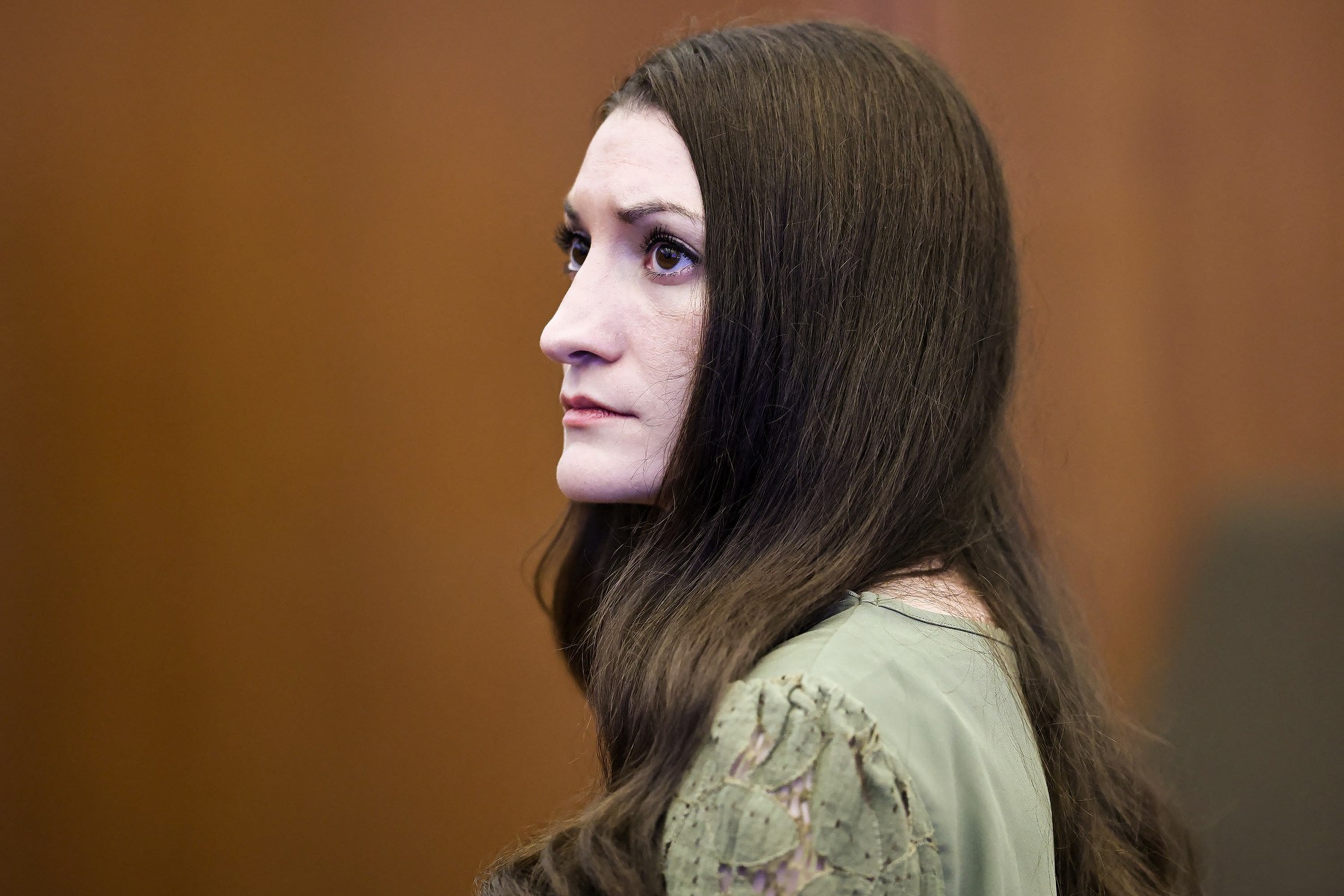

The high-profile murder trial of Lindsay Clancy — which ended in a mistrial last week after a jury was unable to convict or acquit the Massachusetts mother in the 2023 strangling deaths of her three young children — put a renewed spotlight on postpartum psychosis, the severe psychiatric condition her lawyers say she was suffering from at the time. As attention moves on from the trial, some researchers want more concrete changes that could improve how postpartum psychosis is researched, treated and prevented.
How that happens — and how quickly — is unclear. While some in the mental health community applaud the improvements in how postpartum psychosis is recognized, others think the condition needs a more formal diagnosis for better long-term research.
But the overall medical consensus, researchers say, is that postpartum psychosis is treatable when diagnosed early, and that outcomes as severe as Clancy’s are incredibly rare. They hope the trial, which has spurred frank conversations online among mothers about the complexities of postpartum mood and anxiety disorders, can also lead to productive conversations between patients and doctors — instead of panic.
Here are the risk factors and next steps that researchers hope the public took away from the trial.
The likelihood of a diagnosis has ties to other conditions
Postpartum psychosis, which alters a person’s perception of reality after childbirth, affects roughly 1 or 2 out of every 1,000 women. While that risk is generally described as rare, its prevalence jumps to 1 in 6 for people diagnosed with bipolar disorder. It is 1 in 3 for women who have a history of postpartum psychosis.
Dr. Veerle Bergink, the director of Mount Sinai’s Women’s Mental Health Center and a top researcher of postpartum psychosis, emphasized that it is a highly treatable condition. She said that for someone who is considered high risk for postpartum psychosis, a medication treatment plan immediately after childbirth can help prevent the onset of symptoms. Her research has looked into the benefits of lithium, a mood stabilizing drug, and electric convulsion therapy, a treatment that involves small electrical currents. Bergink noted that Clancy, who was never formally diagnosed with postpartum psychosis before the killings, was given antidepressants and sleep medications that may have worsened her symptoms.
Bergink said that while some mental health disorders can be tricky to understand because symptoms can range between people, postpartum psychosis patients display general symptoms of mania, psychosis or depression with psychotic features. Symptoms are most pronounced during a specific period, usually right after delivery.
“Honestly, this disease in particular is not so messy at all because there is a very clear onset,” she said. “After delivery, this could be a high risk period for psychosis or mania.”
Sidra Goldman-Mellor is a psychiatric epidemiologist and associate professor of public health at the University of California, Merced. While she has not focused her research on postpartum psychosis, she has studied mental health and substance use problems and suicidal behavior in pregnant and postpartum women. One of the most serious outcomes of postpartum psychosis is suicide of the parent, though cases like Clancy’s, involving infanticide — which are incredibly rare, impacting a small percentage of untreated cases — capture the most headlines.
Goldman-Mellor said that while she has not thoroughly reviewed Clancy’s treatment — she was prescribed multiple psychiatric medications over several months in the lead-up to her children’s deaths and a suicide attempt — her case highlights potential gaps in the system. Even if someone is receiving treatment, it can be unclear how closely they’re being monitored and given follow-up care.
There is an ongoing effort to better recognize the illness
Postpartum psychosis is not currently recognized as a distinct illness under the Diagnostic and Statistical Manual of Mental Disorders (DSM), the primary manual that’s used by clinicians and researchers to understand mental health conditions. Instead, the DSM recognizes postpartum psychosis as an onset of other conditions like bipolar disorder.
Bergink is among a group of researchers who issued a consensus statement this year before the trial, seeking that postpartum psychosis get a distinct classification within DSM’s bipolar disorders chapter.
“Why is this disease not recognized? Why don’t we classify it? Why are people not working on treatment guidelines?” she said.
Dr. Kimberly Yonkers, a professor of psychiatry at the UMass Chan Medical School, chairs the steering committee that reviews proposals to add diagnoses to the DSM. She said the review process includes thoroughly examining how a new diagnosis would fit into existing ones and examining available data on the condition. It has a public review period and additional screenings by expert panels.
“What we like to say is it’s a process that may be conservative and slow, but engages multiple stakeholders at multiple different levels,” Yonkers said.

Yonkers noted that diagnoses in the book include bipolar disorder with a postpartum onset and major depressive disorder with a peripartum onset.
“There’s a lot of real estate already invested in conditions that can occur during the postpartum period,” she said. “And the stated prevalence of postpartum psychosis is putatively one in 1,000. Well, that’s one in 1,000, but that also includes anybody who had a severe postpartum episode of a mood or psychotic disorder. So some of those individuals would probably fall into other categories in DSM.”
Yonkers said there can be complexity to an individual with a set of symptoms needing multiple primary diagnoses.
“You don’t want them meeting a diagnosis of bipolar disorder as a primary, and a primary of postpartum psychosis. You can have a primary and a secondary, but it’s just very confusing,” she said. “There are established treatments, for example, of bipolar disorder. There aren’t established treatments for postpartum psychosis per se, so we have to take into consideration all of these factors.”
Postpartum psychosis is really under-researched
While postpartum psychosis is generally described as rare, it is also a condition that is underreported and underinvestigated, Bergink said. That’s where a formal classification could help. Clinicians could use that standalone diagnosis to better manage the condition and make longer-term plans for treatment and prevention.
“People do not do research on it because there is no funding — and there is no funding because the disease does not even exist,” she said.
Yonkers, who noted that the steering committee is still reviewing the latest proposal to categorize postpartum psychosis as a standalone illness, said research into a condition is not contingent on it being in the DSM.
“There is nothing in the world to stop someone from writing a grant proposal and obtaining research dollars to research something,” she said.
Goldman-Mellor said there are benefits to public health and clinical research for illnesses with a distinct diagnostic category. That includes more complete tracking of cases through variables like race, socioeconomic status and region.
“If we can’t easily track it, then we can’t easily do research on it,” she said. “Research is how we change things.”
Bergink said a formal diagnosis of the disease could lead to guidelines and a postpartum psychosis prevention plan for women with bipolar disorder or those who had a postpartum psychosis after a previous pregnancy.
“There should be more research on how to treat it, because I’ve published some studies that 98 percent of patients get completely better. Those studies need to be replicated. Other people should do it. We said that lithium works very well. We know that electric convulsion therapy works well, so we should have databases,” she said.