
President Donald Trump has revived a policy change from his first term that gives immigration agents broad authority to deny green cards and visas to applicants who have received public benefits — or whose families have. The change to what’s known as the public charge rule took effect on September 18.
The Republican president’s first-term attempt to change the public charge rule was blocked by federal courts. President Joe Biden entirely reversed the change. Trump’s efforts this time serve two of his administration’s top priorities: significantly restricting immigration, even if it’s legal, and reducing enrollment in government assistance programs.
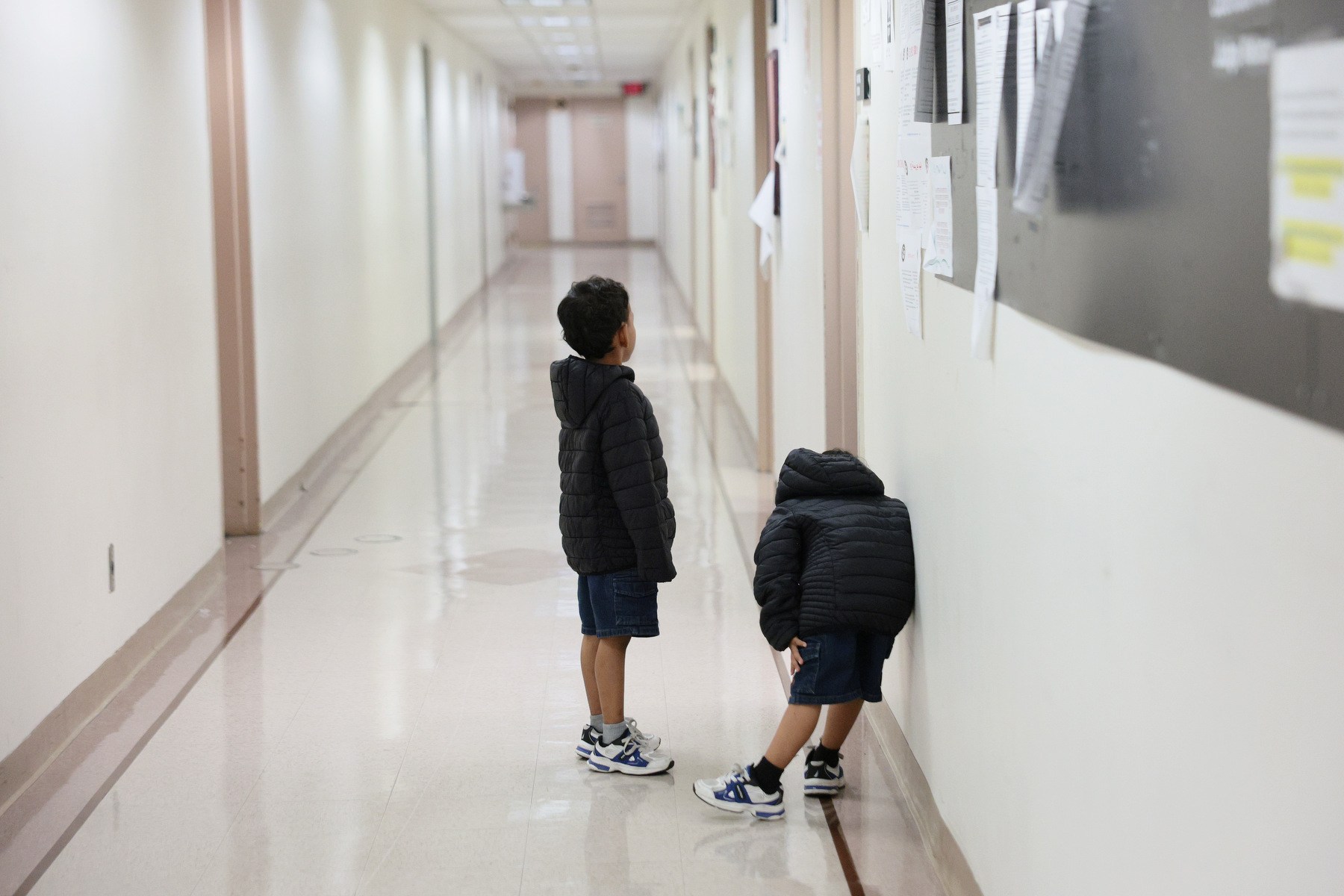
Some of the people facing the most harm when these priorities intersect are children.
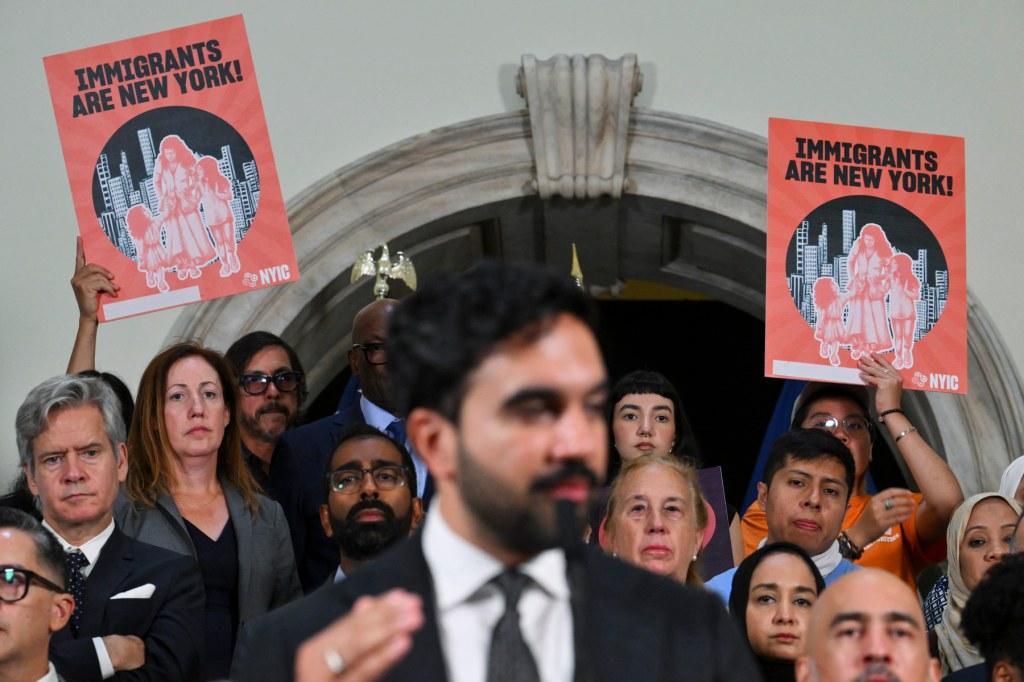
Twenty-one states and the District of Columbia — all led by Democrats — have sued to stop the policy change, saying the Trump administration’s own estimates show it will have “catastrophic” impacts on immigrant families. “Congress never intended for the public charge ground to be weaponized against immigrants and their family members who merely use supplemental or temporary amounts of public assistance to which they are lawfully entitled,” their lawsuit states.
Leaders of some of the largest U.S. cities and counties have also filed suit, helmed by New York City’s Democratic mayor, Zohran Mamdani.
Only certain groups of legal immigrants, like lawful permanent residents and some humanitarian parolees, can enroll in government assistance programs. These include Medicaid, which provides health insurance for lower-income Americans, and the Supplemental Nutrition Assistance Program (SNAP), commonly known as food stamps.
Unless the courts intervene, immigration officers can now reject applications for green cards or certain visas if applicants or their families have enrolled in federal safety net programs.
Since the vast majority of even legal immigrants do not qualify for these programs, advocates widely expect the public charge rule to result in fewer immigrant parents enrolling their eligible children, many of them U.S. citizens.
“We’ll primarily see disenrollment from these programs out of fear from individuals who are eligible, like U.S.-citizen children in immigrant families who have immigrant parents,” said Maddie Geschu, director of policy and advocacy at the nonprofit advocacy coalition Protecting Immigrant Families.
The public charge rule change is one in a host of immigration policy shifts pursued by the Trump administration that have harmful impacts on children. The Guardian reported this month that White House aide Stephen Miller, the architect of many of the president’s most draconian immigration policies, is pursuing a “whole-of-government approach” targeting immigrant children. The advocacy organization Mobile Pathways told the newspaper that almost 200,000 children have been ordered removed from the country since Trump took office.
Here are some of the Trump administration’s immigration policy changes and how they could disproportionately impact children — immigrants, as well as U.S. citizens.
The public charge rule
The Trump administration’s changes to the public charge rule could impact any immigrant applicant whose children participate in safety net programs after September 18.
The United States has had some version of a public charge rule since before it was a country, as do many other countries including Canada, Australia and the United Kingdom. The idea behind the public charge rule is that immigrants need to demonstrate that they will not be dependent on public assistance programs — or become a de facto “charge” of the government.
The federal government did not define what rendered someone a “public charge” until after President Bill Clinton, a Democrat, overhauled the country’s core social-safety programs in 1996 to fulfill a pledge to “end welfare as we know it.” The Clinton-era definition included anyone participating in the Supplemental Security Income (SSI) program for disabled and elderly people; receiving support from the Temporary Assistance for Needy Families (TANF) program; or using Medicaid benefits for long-term care in places like nursing homes and mental health facilities.
In 2019, Trump’s Department of Homeland Security (DHS) expanded the number of government benefits that could render someone a public charge in the eyes of immigration agents. The expansion brought in SNAP, federal housing assistance and non-emergency Medicaid benefits, and it included past use and anticipated future reliance on these programs. Benefits received by family members were not included in the first iteration of this rule change, and there were also some exceptions made for children, disabled people, pregnant people and postpartum mothers.
These changes were blocked by the courts and reversed by the Biden administration. Still, a 2021 analysis by Protecting Immigrant Families showed that nearly 80 percent of immigrant families were unaware that Trump’s policy change had been reversed — and the chilling effect lingered longer than the changes were in place.
Colleen Putzel-Kavanaugh, an analyst with the nonpartisan Migration Policy Institute, said that in the past, immigration officials looked at an applicant’s overall reliance on public benefits programs. Now, participating in a single program could jeopardize an immigrant’s application.
“The level of dependency doesn’t necessarily matter as much, and there’s a lot more discretion given to the officer who’s deciding if someone’s a public charge, and that’s what raises a lot of concerns,” she said.
The nonpartisan health research organization KFF estimated last year that between 10 and 30 percent of those participating in Medicaid and the Children’s Health Insurance Program (CHIP) — roughly 1.4 to 4.1 million people — could disenroll as a result of the current public charge change. This includes between 560,000 and 1.7 million children who are U.S. citizens.
“Beyond Medicaid and CHIP, fear and confusion would likely have similar effects on participation in other programs, especially since DHS suggests it will give officers broad discretion to consider use of all sources of public resources in public charge determinations,” KFF researchers wrote.
The change is expected to have a similar impact on nutrition programs. Immigrant parents might choose to disenroll their children from SNAP and the Women, Infants and Children program (WIC) for fear that participating could negatively impact their ability to obtain a visa or green card.
Dr. Sural Shah, the chair of the American Academy of Pediatrics’ Council on Immigrant Child and Family Health, said during a recent news conference that withdrawing children from these programs could have lifelong health impacts.
“When a child is hungry, it can affect every aspect of their development and lead to chronic conditions like heart disease and diabetes, even into adulthood,” Shah said.
Family separations
During Trump’s first term, his administration’s “zero tolerance” policy at the U.S.-Mexico border resulted in at least 5,000 children being separated from their families as they tried to enter the country. Trump ended the practice in June 2018 following sustained public outcry — nearly 600 women were arrested during a single Senate protest that month. A federal judge then ordered the administration to reunite the children with their families within 30 days. As of March 2024, as many as 1,360 children still had not been reunited, according to government data.
Though attempted border crossings have been at their lowest point in decades since Trump returned to office, family separations are still happening. They are now more common among families with mixed-immigration statuses. They’re also more difficult to track because DHS does not keep or release data on them.
The Brookings Institution, a nonpartisan think tank, estimates that approximately 205,000 children — including 145,000 U.S. citizens — have likely experienced the detention of at least one immigrant parent since the beginning of Trump’s second term.
In Springfield, Ohio, fears of mass family separations among Haitians have prompted a large-scale community effort to ensure their citizen children have the required travel documentation to leave the United States in case their parents are deported or leave for a third country.
Being separated from their families — or fearing that it will happen — is known to have lasting negative impacts on children’s mental health.
Children’s legal representation
Late last year, the Trump administration stopped paying a network of more than 100 legal groups that had contracted with the Office of Refugee Resettlement (ORR) to represent unaccompanied migrant children after the groups declined to provide the government confidential information about the children’s circumstances. Lawyers estimated that some 26,000 children were left without legal representation, according to news reports.
Then, in August, the Department of Health and Human Services, which houses ORR, announced it had awarded a $244-million no-bid contract to an anti-human trafficking organization that had no track record of representing unaccompanied minors in immigration proceedings. The organization is headed by a former Immigrations and Customs Enforcement (ICE) official. Its previous chief executive resigned in 2023 amid allegations that he sexually abused and trafficked women.
Sensitive locations
For decades under both Republican and Democratic administrations, DHS had a policy prohibiting immigration enforcement at “sensitive locations,” like schools, churches, hospitals and courthouses. Biden, a Democrat, expanded the list in 2021 to include places where children gather, like playgrounds and bus stops, as well as domestic violence shelters.
On the day of Trump’s second inauguration, his administration rescinded the Biden-era guidance and said it would begin taking enforcement action at schools, churches and hospitals.
Public school districts are not required to assist ICE with immigration enforcement efforts. They also are not required to allow ICE agents to enter non-public areas without a judicial warrant. Hundreds of schools have adopted what’s known as a Safe Zones policy that describes what teachers and school staff should do if ICE shows up. Still, heightened enforcement and the fear that accompanies it has prompted many immigrant parents to keep their children away from school.
One Big Beautiful Bill Act
Under the massive spending law that Republicans enacted in July 2025, certain categories of legal immigrants were newly prohibited from accessing federal programs like Medicaid and SNAP.
That included victims of sexual assault and trafficking on U and T visas; refugees; migrants who have or are seeking asylum and those on Temporary Protected Status; and recipients of Special Immigrant Juvenile Status, which offers a legal pathway for those who suffered abuse, neglect or abandonment by a parent.
There were limited exceptions for pregnant people, children and emergency medical care. Some states still provide health insurance to some of these categories of legal immigrants.
Head Start
In July 2025, the Trump administration said it was reclassifying the federal Head Start early education program as a public benefit, barring immigrant children without legal status from participating. The program currently serves about 700,000 children. The Democratic attorneys general of 20 states and the District of Columbia sued; federal courts blocked the policy from taking effect while the lawsuits proceeded. Last week, a federal judge in Rhode Island issued a permanent injunction.


