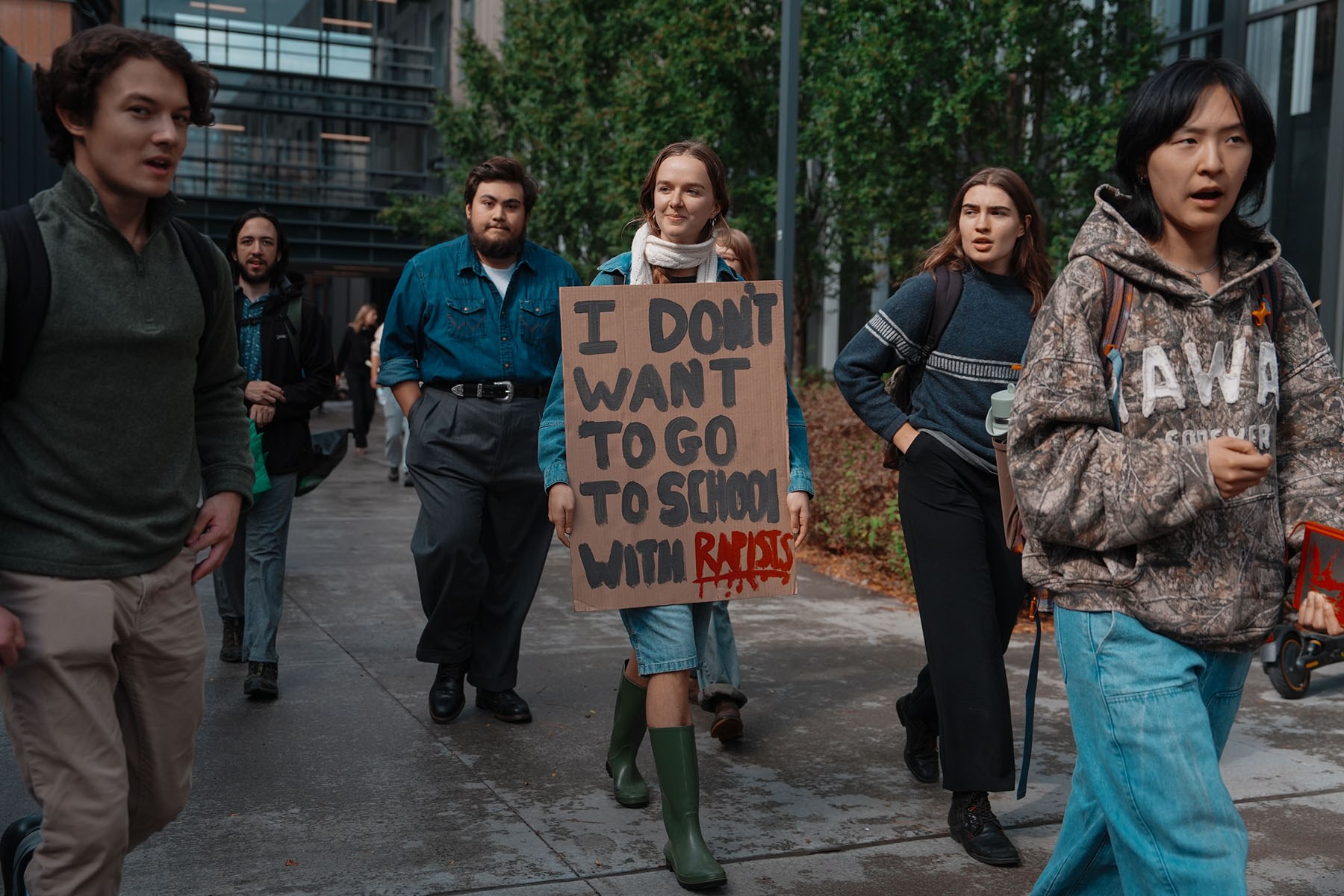

Two things have reverberated after a young woman filed a civil lawsuit last month alleging that seven members of a Cornell University fraternity took part in an hours-long gang rape in October 2024.
One is the noise: Many women’s distrust of the institutions and officials meant to protect them runs deep, and they’re making that known in protests from coast to coast.
Another is the silence: Many men’s voices have been notably muted — and, in some cases, completely absent — from a reckoning that could very well be Gen Z’s #MeToo moment.
The gender split in how people might have perceived this case tells its own story. And according to a new survey of 1,155 likely voters conducted earlier this month by the progressive-leaning group Data for Progress, what this moment means for women could have ramifications for the midterm elections on November 3.
The survey, which was first shared exclusively with The 19th, found that women are 14 percentage points more likely than men to say they think elected officials have done too little to prevent sexual assault. Women are also 13 percentage points more likely than men to say they think college sororities and fraternities hurt campus culture, and 10 percentage points more likely to say they don’t trust sororities or frats to respond appropriately to claims of sexual assault.
Young women tend to vote at higher rates than young men, and the #MeToo movement, which peaked nine years ago, proved to be politically formative for young women coming of age during that time. That means the fervor — and the fury — that has accompanied the news of the “Cornell seven” case could spill over into the election.
Cheyenne Hunt, founder and executive director of Reckoning Action, a nonprofit combating gender bias, said she and her team put together a rally in Washington, D.C., in response to the Cornell lawsuit. With just four days’ notice, hundreds of people turned out.
“The energy was palpable,” Hunt said.
Standing in front of the Washington Monument, she called the names of women who said they’d been victims of sexual assault, including Bernadette Greene-Placentia, an Arizona congressional candidate who came forward this month alleging that she believes she was raped by two men while repairing campaign signs, and Kendall Francis, a student at Louisiana State University who alleged last month that an LSU football player raped her in October 2025.
“Far too many of us have been betrayed by institutions that say that they were here to protect us,” Hunt said at the rally on October 8.
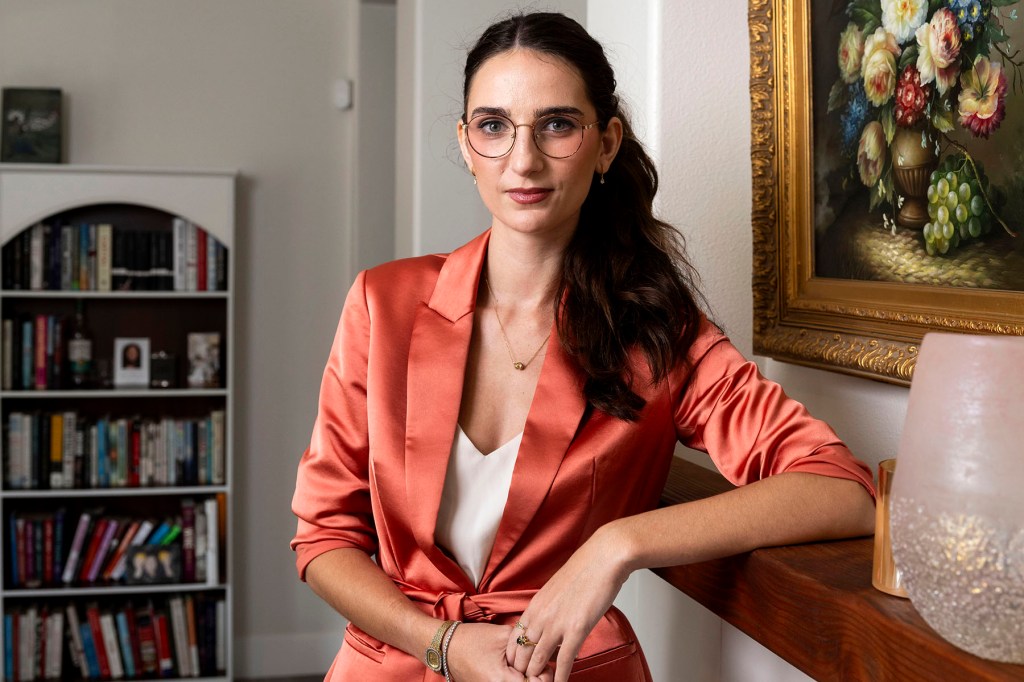
Women like Hunt have been leading demonstrations from New York to California where they’re also calling on men, politicians and institutions to do more to address the pervasiveness of sexual violence against women.
At the University of California, Davis, students at an October rally issued public demands on tackling sexual assault, including that university Chancellor Gary May denounce the actions of the “Cornell seven” (the university is reviewing the demands). In Boston, about 800 people — most of them women — attended a rally at the Boston Common that called on participants to pressure elected officials to improve sexual violence prevention measures. In Seattle, a march organized after Jane Doe filed her lawsuit ended next to the county prosecutor’s office, which organizers felt had not done enough to press charges in sexual assault cases in the area.
Hunt said all of it is in response to what she believes is under the surface: “Misogyny is having a full-scale cultural resurgence in America,” she said.
Days after nationwide protests around the “Cornell seven” case, comedian Shane Gillis performed a monologue on “Saturday Night Live” where he joked that he “didn’t know women just dress like whores now” at the gym.
The backlash was swift — from women, mostly.
Feminist author Jessica Valenti said in a video on Instagram that the timing of Gillis’ monologue wasn’t accidental.
“Shane Gillis knows that there is a major national conversation happening right now about sexual assault,” and he’s aware that thousands of women are talking about “ how painful it was when the good men in their life didn’t do anything or blamed them,” Valenti said.
“He knows what the national conversation is. This is his contribution to that conversation. This is him telling us what he thinks of the discourse on sexual assault, and we would do very well to listen to him and take that seriously,” Valenti said. “What do you think rape culture is? That is rape culture.”
Neither Gillis nor SNL has responded to the criticism. A spokesperson for Gillis declined to comment.
Actor Dan Levy, creator of the comedy “Schitt’s Creek,” was one of the few men who spoke up after Gillis’ monologue, urging more men to do the same. He called out complacency among men as key to understanding the “Cornell seven” case. In her lawsuit, Jane Doe alleged that numerous men who were part of a fraternity Snapchat received messages about “free pussy upstairs,” inviting other men to participate in the assault.
“It’s complacency that has created the environment with which women are sexually assaulted, and it’s a ‘conversation’ as opposed to a crime,” Levy said.
Hunt said she is also frustrated by the silence from men.
“It should not be women’s job to tell you that you have to be pissed,” Hunt said. “You need to hold each other accountable. You need to call out your friends. And when a story like this comes out, you should be some of the first to speak up and say, ‘This is not alright.’ It’s not on your mother, your wife, your girlfriend or your daughter to bring it to your attention.”
“I challenge every man to do that.”
Hunt was involved in the ousting of former Maine Senate candidate Graham Platner, who was accused of sexual assault, and former Rep. Eric Swalwell of California, who resigned from Congress after he was accused of rape and sexual misconduct. Both men are Democrats.
Women are not likely to go silent on this issue soon. Social media and in-person protests on campuses and near seats of power continue to be peppered with women proclaiming that they, too, were assaulted. They, too, are Jane Doe.
“Women are done accepting predators in power, and we are fighting back with every lever available to us,” Hunt said. “We are making sure that violence against women is not just a liability but a dealbreaker for those looking to hold elected office, and this will be a motivating issue in the November midterms.”