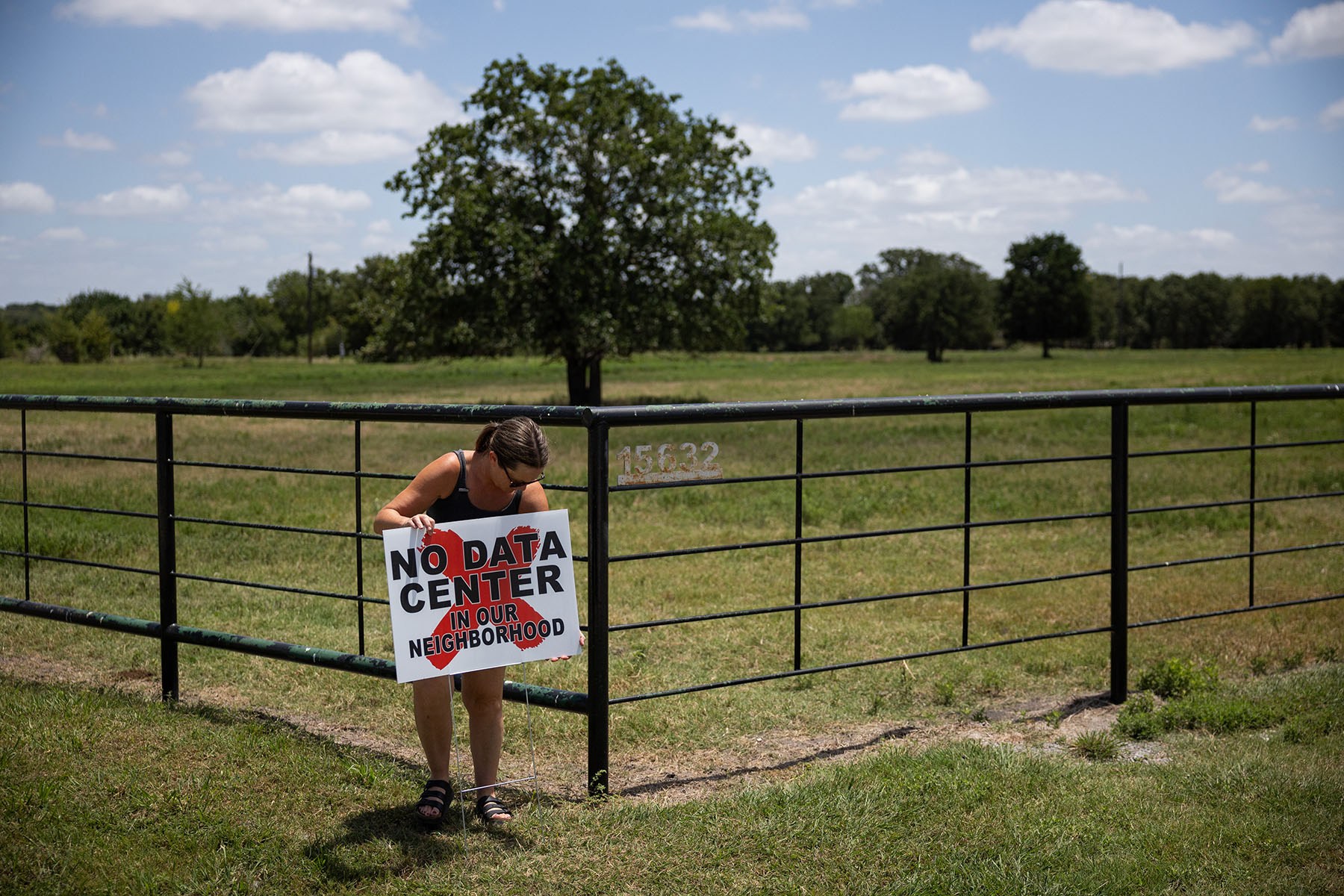

Women have been at the forefront of a fast-growing, bipartisan backlash to data centers, packing local meetings, organizing protests and even running for office. Now, less than a week from Election Day, some are saying it’s reshaping how they plan to vote.
Half of Americans think data centers are affecting home energy costs, a perception that is adding to voters’ concerns around affordability ahead of the elections, according to a September survey by the nonpartisan Pew Research Center. In addition, more than half think data centers are bad for the environment, up from 39 percent in January.
It’s one of the few issues that has bypassed partisan polarization, and broken down by gender, the opposition is strongest among women. According to a Gallup poll from May, 55 percent of women said they strongly opposed data centers compared with 43 percent of men.
The 19th spoke with five women — both Republicans and Democrats — about what has driven their opposition and how that has informed their vote.
Cheryl Shadden | Texas
In 2023, when a data center that hosts a bitcoin mining operation set up shop across the street from her home, Cheryl Shadden became involved in a battle to find peace again in the rural community she’s lived in for 41 years.
The operation, which runs 24 hours a day and houses 60,000 computers, has inundated residents like Shadden with nonstop noise, leading to health issues — such as vertigo, hearing loss and migraines — and negatively impacted property values. “This is akin to being tortured,” she said. Residents are blasted with bright lights and incessant noise, and they can’t sleep, she said. “That is an absolute assault.”
She spends all of her free time fighting the bitcoin operation and is now worried about a proposal for two other hyperscale data centers that could go up near her home.
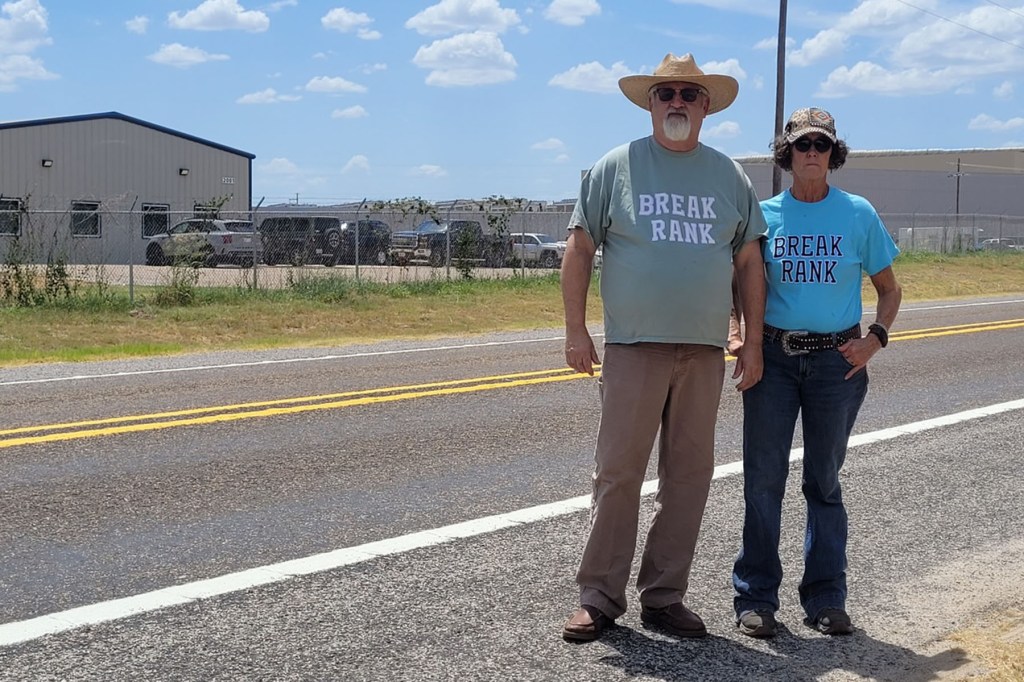
The rural rebellion is in full swing, and if you aren’t going to protect your constituents, then it’s time to give somebody else a shot.”
Cheryl Shadden
“It’s so unpleasant riding horses on my property right now because of this horrific noise; it’s no longer a hobby of peace that you can enjoy quietly,” she said. “It’s like trying to ride a horse on an airport runway because literally that’s how bad the noise is.”
As a result of how she feels her community has been treated, she says her politics “have absolutely changed.”
“I’ve been a conservative Republican my entire life,” she said. But when she asked her congressman, Rep. Roger Williams, for help, she said his staff responded that he supports the data center industry. “He’s pushing that in Washington, D.C., not decreasing the impact on the community,” she said. “That sent a clear message to me.”
On the other hand, when she reached out to Williams’ challenger, Democrat Dione Sims, her campaign manager put Shadden in touch with the candidate.
After Shadden connected with Sims, Democratic gubernatorial hopeful Gina Hinojosa reached out and arranged to visit the community to hear from residents. Shadden has since appeared in a campaign commercial for Hinojosa.
“Why would I vote for any of the Republicans that haven’t done anything to decrease the harm to my community? Why would I give them another shot at raking my community over the coals and harming my neighbors?” she said.
She said her decision to vote for Democrats this election is far from an anomaly in her county: “The rural rebellion is in full swing, and if you aren’t going to protect your constituents, then it’s time to give somebody else a shot.”
Maranda Edwards | Southwest Virginia
Over the summer, Maranda Edwards was devastated to learn that one of the largest data centers planned in Virginia would be built in Wythe County where she lives. It was the second data center announced in a year in the county and would span 1,000 acres. To visualize how big that is, an acre is a little smaller than a football field.
“We’re losing farmland, and that’s really devastating. The piece of land is absolutely beautiful,” she said. She also worries about the wildlife. “It has deer. It has birds. It has endangered species.”
Edwards has been involved in the local fight to stop the planned data centers, organizing with others in the community through a Facebook page with 1,500 members and by attending public meetings.
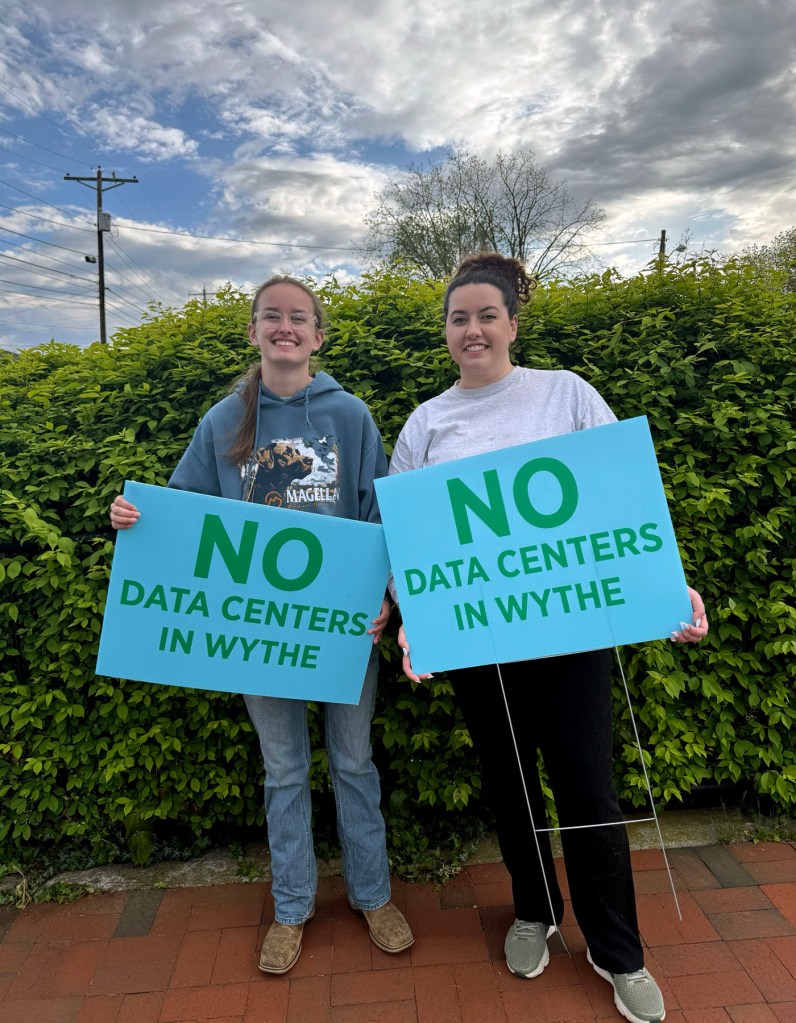
I’m voting for whatever candidate is against data centers.”
Maranda Edwards
While Edwards grew up in a Republican household and voted for President Donald Trump in the last election, the 25-year-old said that in the past two years her views have shifted. As someone with a master’s in public health, she’s found herself more aligned with Democrats on some issues, including access to healthcare.
“I wouldn’t say that I identify with a specific political group,” she said. “I think it just makes more sense to be more open-minded, be a good person.”
But this year, she said, “I’m voting for whatever candidate is against data centers.”
Before the data center issue, she said she wasn’t that involved in politics and doesn’t think she would have voted in the midterms. But now she’s invested and has been researching the candidates. “It boils down to politics, and who you elect, because they make a lot of those final decisions,” she said. As a result, she said she’s voting for Joy Powers, a Democrat and fourth-generation cattle farmer who is running to represent the 9th Congressional District, which Cook Political Report rates as solidly Republican.
Rachel St. James | Wisconsin
Rachel St. James was aware of the data center issue long before it became national news. She remembers reading a Greenpeace report about a decade ago describing the energy that data centers needed to power our increasingly online lives back during the initial uptick in television streaming.
Now, with artificial intelligence requiring vast amounts of both energy and water, St. James fears the environmental and human repercussions from a new wave of data center construction.
“I really do not want to see something happen where the costs of AI are borne by the public … and all profits go to the companies and the data centers,” she said. “I’m not OK with that.
She’s worried about what data centers in the state could do to the water and the amount of electricity they need to run, but she’s also worried about what they are being used for.
I really do not want to see something happen where the costs of AI are borne by the public.”
Rachel St. James
“You hear about these like deep fakes, and that’s really scary to me,” she said. “You hear about AI robocalls scamming the elderly. We don’t have enough regulation. It’s happening, and it’s changing so fast, and we’re not regulating it fast enough.”
She does think there can be positive uses, but she described it like this: “You can use nuclear power to power a town, or you can use nuclear power to do tremendous harm. It’s a tool. We need to make sure it’s used for the right purposes.”
She plans to vote for Democrat David Crowley in the governor’s race because she thinks he has a good approach to AI. “I support his policy on not letting children under the age of 13 use chatbots. I think it’s too risky for them.”
St. James, who said she would describe herself as “pretty progressive,” said this would be her first time voting in the midterms. Fresh out of grad school, she said moving around a lot in her twenties has been a barrier to registering, but she is voting this year. “But this is an issue I do care about,” she said. “I do care about what’s happening in the country and the race, and I will be voting in midterms.”
Alisha Lange | Ohio
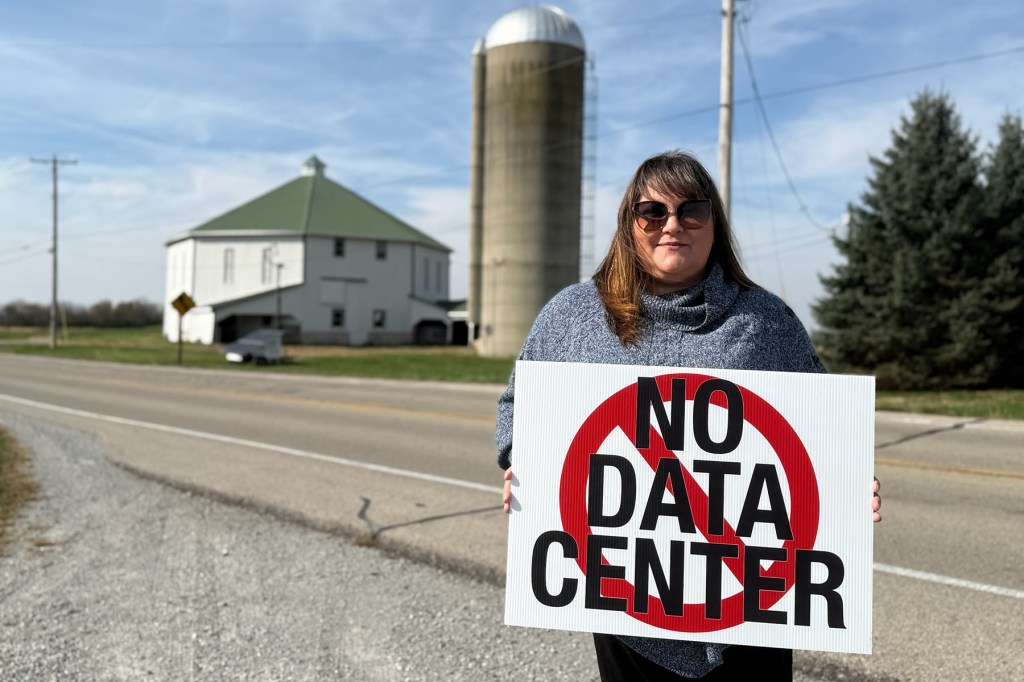
Alisha Lange is the fourth generation to live on her family farm in Piqua, Ohio. The single mother, who moved back to her hometown to be closer to family, said it’s a legacy she hopes to leave for her children and grandchildren someday.
“The sunsets here are beautiful. You can see the sky at night. You can hear all kinds of beautiful insects and living creatures, all times of day, enjoying the environment. I would like to keep it that way,” she said. “I don’t want to hear a data center.”
Lange is referring to a plan by Meta to build a 1,400-gigawatt data center on 600 acres of land in her small town. She found out about the data center through a public records request when she was fighting county commissioners over a battery burning operation in the county. “By the time we found out, it was kind of too late. They already made up their mind. NDAs had already been signed. They had already changed the zoning,” she said.
“We would much rather have a cornfield than this hideous monstrosity,” she said. “I think the thing that’s the most frustrating is that we just believe that if this was a good business deal that could stand on its own merit, they would have been proud to present it to the community,” she said.
You can hear all kinds of beautiful insects and living creatures, all times of day, enjoying the environment. I would like to keep it that way. I don’t want to hear a data center.”
Alisha Lange
Lange is the leader of a local Facebook group dedicated to the cause and has held community meetings, protested with other residents and put up lawn signs. More recently, she’s helped organize petitions that have resulted in three recall elections on the upcoming ballot for two county commissioners and the mayor. There is also a charter amendment to limit the size of data centers to under 25 megawatts on the ballot.
She’s also been involved in petitions that will show up in a special election in February that would retroactively ban the construction of data centers and void a city agreement to power the planned data center.
Before this fight, Lange had lost faith in democracy. “I didn’t feel like voting mattered. It felt like it was rigged. I felt like the people didn’t stand a chance, and it was not the United States anymore,” she said, adding: “I thought it was like the United Corporations of America.”
She feels differently now. “From typing up a petition to printing it out and having it filed and obtaining signatures and watching that same thing being put on a ballot, it’s changed me for the better,” she said.
While she is a registered Republican, Lange has never considered herself a political person and, on a national level, is dismayed by both parties. But this year she is voting for Don Leonard, the Democratic nominee for her congressional district, after previously supporting the incumbent, Republican Rep. Mike Carey.
“Don actually came to that very first community meeting,” she said. “He didn’t show up to run a political campaign. He said nothing about running. He showed up and just said that he was from Columbus or he lived in Columbus, and that there were similar issues there.”
Jennifer Clemons | California
Data centers drew Jennifer Clemons, a mother of three, to become more involved with the group Moms Across America, founded by Zen Honeycutt, a prominent voice in the Make America Healthy Movement, known as MAHA.
As a naturopathic doctor, the California-based Clemons said she’s worried about the potential health effects of data center buildouts. Whether it’s the noise pollution, which she called “extremely disruptive to people’s health,” or the reports of alleged water contamination that have popped up in several states where data centers are running, she wants to see the industry pump the brakes until the real human and environmental costs are clear.
“The environmental impacts can be so huge, and they’re often in more economically challenged areas, places people can’t afford to move away from,” she said. “I’m just feeling an urgency to slow down.”
She is suspicious of the use of non-disclosure agreements that have allowed many of these data centers to fly under the radar before it’s too late for the public to react, and worries about Trump’s announcement that coal could be used to power this energy-hungry industry.
The environment is really us; it’s really our health and our children’s health. So that’s where it gets me upset.”
Jennifer Clemons
“The environment is really us; it’s really our health and our children’s health. So that’s where it gets me upset,” she said.
Though she’s a registered Democrat, she says she’d describe her political leanings as purple.
“I might be in favor of making America healthy; this is nonpartisan,” she said. “I’m not just voting one way or the other. I’m looking at the environment. I’m looking at children’s health. I’m looking at protections for water.”

In the upcoming elections, she has already cast her vote for Democrat Jackie Elward, who is running for the state assembly, because of her opposition to data centers. “She’s very much environmentally minded, so she got my vote,” she said.
To check your voter registration status or to get more information about how to vote and what’s on your ballot, visit vote.org.