
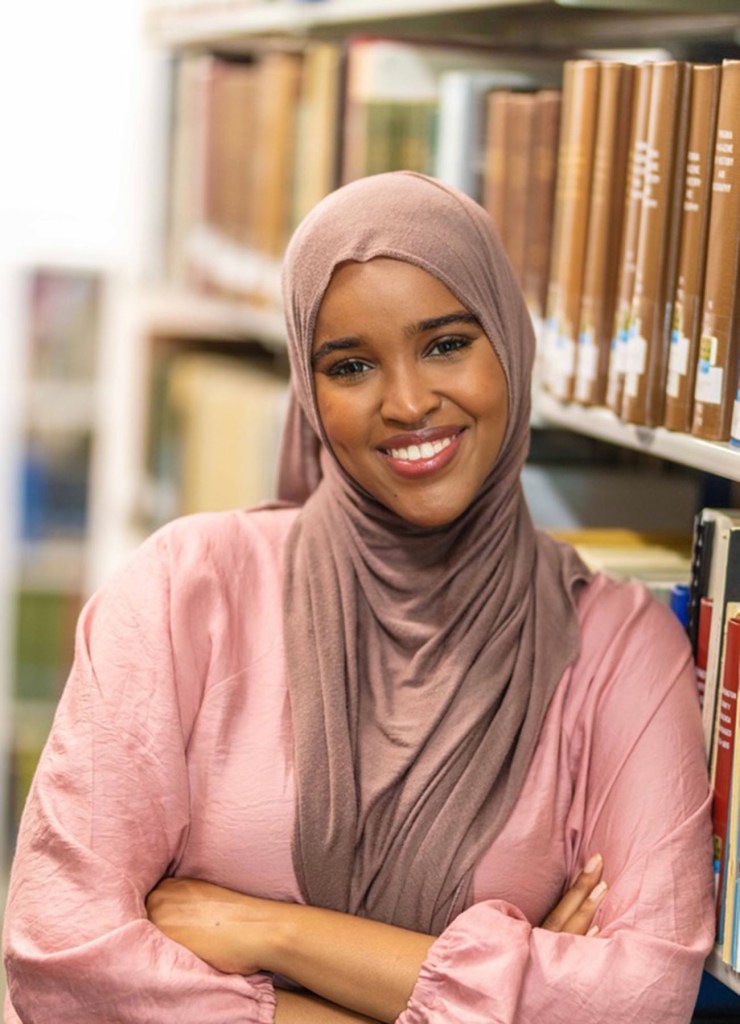
Munira Abdullahi was having a particularly terrible week. It was one week before the midterm elections, and her phone kept pinging: another Islamophobic post falsely claiming she was a terrorist, an enemy to America and a communist. As the first Muslim woman and first Somali American to serve in Ohio’s state legislature, Abdullahi is no stranger to anti-Muslim hate, particularly online.
“I’ve been doing this since 2022, and this is definitely the worst period of Islamophobia I’ve experienced. This week has been extra intense because Laura Loomer has been tweeting me nonstop,” Abdullahi said, referring to the far-right activist and President Donald Trump’s self-described chief loyalty enforcer. “She’s been AI editing my photos to look scarier.”
Abdullahi said it feels like there are “very serious, coordinated” online attacks being waged against her and other Muslim officials. Historically, when a political party is losing power, they scapegoat a minority group to unite their base — and American Muslims are currently the target, she said.
“You get people to focus on one group and tell them they’re the issue, they’re the problem, and anyone connected to them is bad,” Abdullahi said. “This is all they can do because they don’t want people to focus on the realities that they can’t afford gas, they can’t afford rent, they can’t afford healthcare.”
She also sees a less dramatic but still noticeable shift among Democrats. In previous years, Abdullahi said, her colleagues would defend her and denounce Islamophobia. But now, they’re quieter. Abdullahi said some campaigns are avoiding taking photos with her at official events and aren’t asking her to make social media content for them as they had in the past.
“I’m not shocked, but I am disappointed in how many people have accepted it,” Abdullahi said. “It just feels like it’s normalized and there’s not nearly enough outrage.”
She doesn’t let the noise distract her from her job. Abdullahi spent an hour responding to some of the hateful posts, then she closed her phone and went back to serving the more than 123,000 Ohioans in her district.
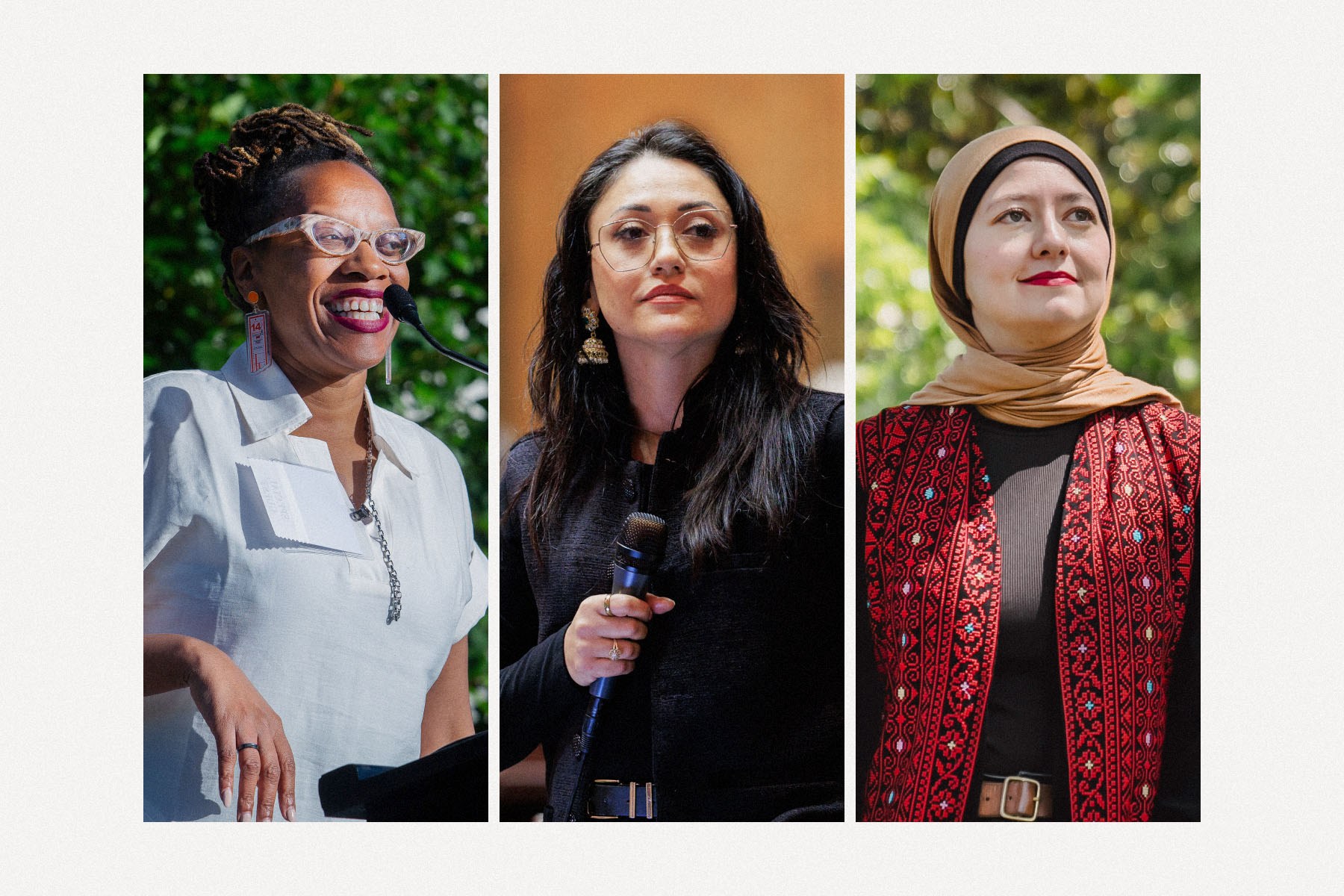
More than 250 Muslims, 43 percent of them women, the vast majority Democrats, hold elected positions across 26 states and at nearly every level of government, according to the 2026 directory published by the Council on American-Islamic Relations (CAIR), the nation’s largest Muslim civil rights and advocacy organization. CAIR has also found a notable surge in Islamophobia. It’s been particularly visible in the waning days of the 2026 midterms, as the right has embraced language that characterizes Muslims as violent, dangerous and inherently un-American.
In Michigan, Democratic Senate nominee Abdul El-Sayed has faced months of attack ads targeting his religion. Trump has repeatedly referred to El-Sayed — who was born and raised in Michigan, played high school football and has worked in public health — as “a violent vicious jihadist.” In Alabama, a GOP candidate for attorney general said that anybody who supports radical Islam can “Allahu Akbar your butt all the way back to the Middle East.” In Texas, the state Republican platform calls for passing “Don’t Sharia My Texas” legislation, referring to the teachings of Islam.
Islamophobia commonly shows up as conspiracy theories about Sharia, political violence, presumptions of antisemitism and misogynistic smear campaigns targeting Muslim women for wearing hijabs or other common religious attire, according to a new report from the Center for Security, Race and Rights at Rutgers University School of Law.
“Muslim Americans are facing an alarming backlash for their participation in one of the most patriotic American acts — running for elected office in democratic elections,” said Sahar Aziz, the founding director of the center and a professor at Rutgers University. “The rise of Islamophobic rhetoric against Muslim American candidates, coupled with policy platforms that scapegoat Muslim communities, demonstrates the serious threat Islamophobia poses to our society.”
The 19th spoke with half a dozen Muslim state and federal elected officials, all Democrats, about their personal experiences facing Islamophobia, threats and vitriol from voters and Republican opponents — which they described as growing in intensity as the midterms approach.
‘Islamophobia is older than the flag in this country’
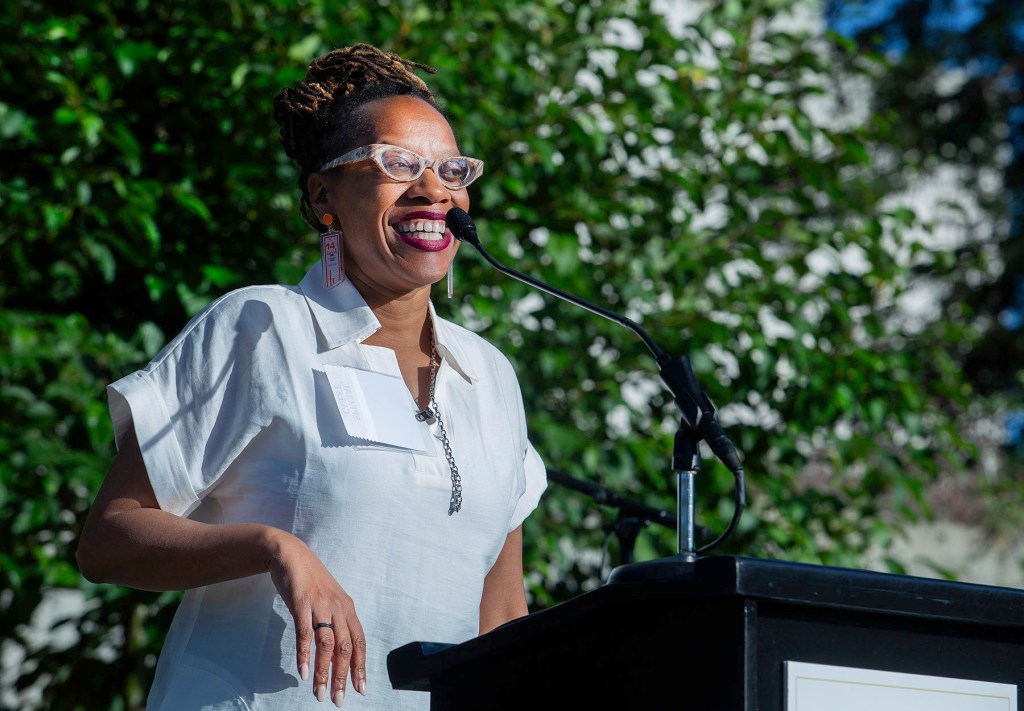
Lateefah Simon, a Black woman and the first Muslim member of Congress from California, grew up in a multi-faith family. She regularly went to the mosque with her parents and a Christian church with her grandmother.
When she ran for office in 2024, Simon said she started seeing the attacks on social media — people threatening to violently “get rid of Muslims.” Then came the threatening phone calls and the hate-filled emails. She decided not to publicly publish her office address and requires extra security measures at public events.
But what most horrifies her is the animosity she faced in the U.S. Capitol.
“What shocked me was how open and rabid the racism is from our nation’s leaders,” said Simon, who is running for reelection this year. “The idea that folks used to hide their racism, Islamophobia and their anti-immigrant animus — that they would hide it, and it would be a big deal if they were caught saying or writing something against a group of people here on American soil. Now, it’s their rule; it’s what they do. It’s the center strategy.”
Simon said Muslim Americans have been part of the country’s fabric since before its founding. Scholars estimate that 10 to 40 percent of Africans brought to the United States as enslaved people were Muslim.
“Islamophobia is older than the flag in this country, and the fact that it is so above board and unchecked now means that Democrats and Republicans both have to do better in lifting up the mantle about what is acceptable in this country and what is not acceptable — particularly around the hate for folks who may pray differently from the majority.”
Kambiz GhaneaBassiri, a religion professor at Carleton College and a scholar of Islam in America, said Islamophobia is often intended to advance some political or economic interest. In its current form, it’s meant to prevent Muslims from participating in public life, he said.
“Anti-Muslim sentiments have always existed in the United States and before that in Europe too,” said GhaneaBassiri. “It wasn’t until after 9/11 though that you saw Islamophobia being used to mobilize voters and win elections.”
Historically, GhaneaBassiri said, it’s precisely when minority communities begin to gain wealth and power that you see hatred toward them being fomented.
‘Just as obnoxiously average as everybody else’
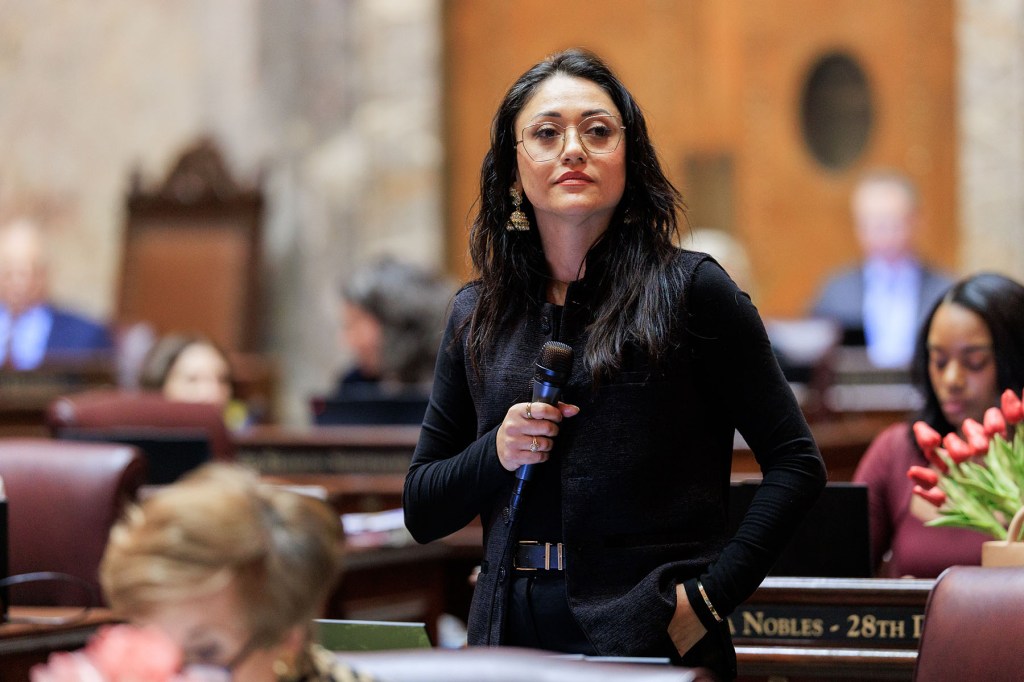
When Yasmin Trudeau introduced legislation in Washington state to recognize Eid al-Fitr and Eid al-Adha — two major annual Muslim holidays — as state holidays, she was surprised that so few people knew what Ramadan was or who Muslims were in “any meaningful way.” As the first Muslim woman to serve in the state’s legislature, the state senator found herself educating her colleagues by being her authentic self.
“One of the things that I said repeatedly in my testimony is that my biggest hope is that people just realize that Muslims are just as obnoxiously average as everybody else,” Trudeau said. “Honestly, I just wanted to desensitize this idea of what people had in their head — whether it’s the model minority or the terrorist myth.”
Then the angry emails, phone calls and voicemails rolled in: Trudeau was accused of wanting terrorism, trying to bring Sharia, or Islamic law, and wanting to force Muslim prayer on the whole state. She made sure to respond in the hopes of having edifying conversations. Colleagues who voted in favor of the bill faced similar repercussions.
Before voting on the bill, Trudeau said she asked the ranking Republican member what gave him the most anxiety about Muslims or about voting for legislation. He responded with two concerns: He loved his pork and whiskey and he wanted to know if Muslims believed in Jesus.
“Keep your pork and whiskey,” Trudeau said in response. “We don’t tell other people what to do. And we do believe in Jesus — we just have some disagreements on the details.”
Trudeau said Christians are often surprised to learn how much commonality there is between Islam and Christianity, which are both monotheistic faith traditions that trace their heritage to the historical figure Abraham.
The bill ultimately passed, making Washington the first state to recognize the Islamic holidays and provide a framework to support employee and student accommodations.
“Muslims in this country have the right to live and breathe and practice their faith and take their kids to school the same as everybody else,” Trudeau said.
‘Not interested in forcing my faith on anybody’
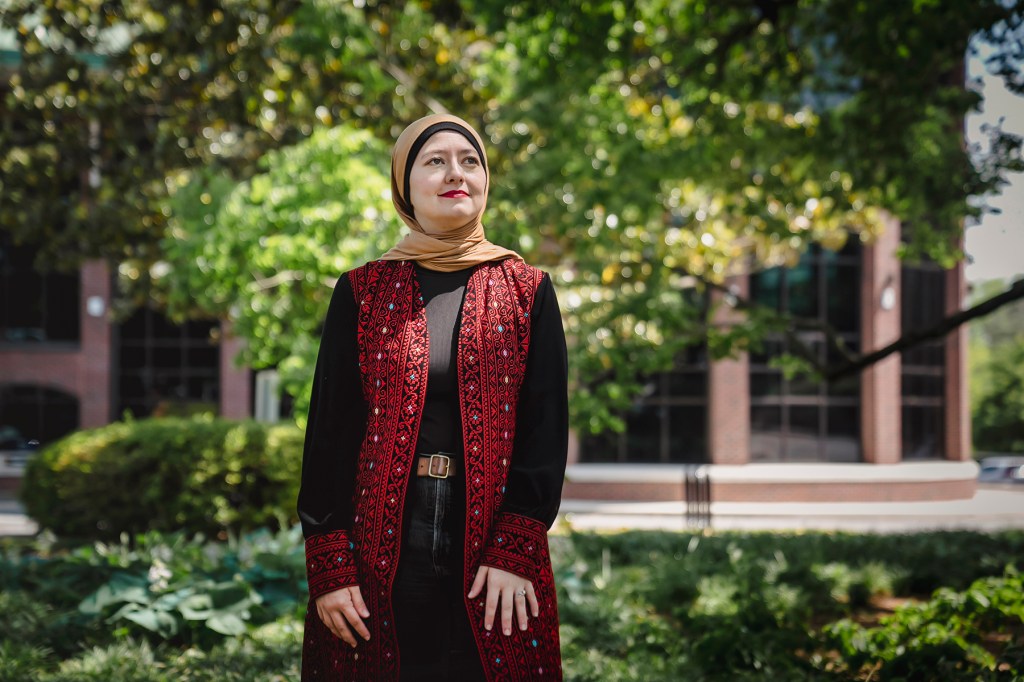
Ruwa Romman, the first Muslim woman elected to the Georgia House of Representatives and the first Palestinian American elected to any public office in the state, said she’s noticed a “significant ramp-up of anti-Muslim commentary” since 2025, particularly from two sources.
“It’s not when knocking on doors because my district now knows me,” said Romman, who is running for election to the Georgia state Senate. “It’s specifically online — both from real people and the bots that amplify — and actual ads from people in office.”
Romman pointed to a Republican candidate for Georgia’s lieutenant governor, who posted an AI-generated ad of Muslims invading a suburban neighborhood. The ad ended with the message: “Keep Georgia Sharia free.”
Romman is flabbergasted by the fearmongering around Sharia, or Muslim law.
“It’s the thing that tells people not to lie, not to steal, not to cheat, to care for their neighbors,” she said. “It’s like Halakha law in Judaism and canon law in Christianity. It is not meant to be established upon a country — Sharia says to abide by the laws of the country you’re in.”
Romman said the anti-Muslim strategy is working. Polling shows that people assume there’s actually way more Muslims in America than there are and that they have more power than they actually do.
“I’m an elected official who is not interested in forcing my faith on anybody else,” Romman said. “In fact, I work really hard to prevent the forcing of anyone’s faith on anybody else.”
‘I’m here because no one looks like me’
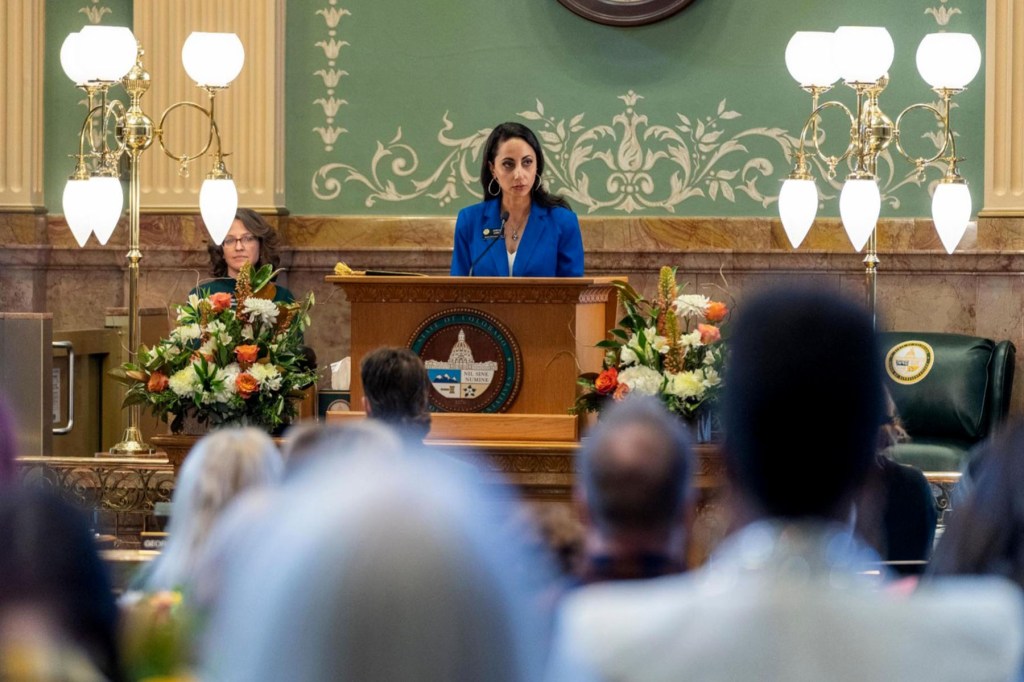
Iman Jodeh is a Colorado state senator and the first Muslim, first Arab woman and first Palestinian American to be elected to the state’s legislature. She said she feels a sense of responsibility to use her platform to better represent her community.
“I’m here because no one looks like me, and I need to advocate for a community that traditionally has never been advocated for,” Jodeh said. “And that has brought some unsavory reactions every year, whether it’s to my policy or my identity.”
Jodeh, who is running in a special election this cycle, said when she is canvassing and knocking on doors, she hears the same things. Constituents are concerned with affordability, safety and Gaza. More specifically, voters want to know whether Jodeh believes Israel’s war against Hamas in Gaza could be considered a genocide. She does.
“The Muslim community in Colorado is shifting,” Jodeh said. “We’re about 100,000 strong. We have the funds to back candidates who share our same values. We are not a monolith, but we are on the issue of Gaza.”
Anytime Jodeh posted about Gaza on social media, raging comments would pour in. She began receiving threatening mail as well and had to get law enforcement involved many times, she said.
“I hate to say this, but it’s become so normalized for me as an advocate, a community organizer and now as an elected official,” Jodeh said. “It’s background noise.”
Jodeh said she responds by trying to find common ground — both by talking about similarities between religions and also by discussing hobbies and interests. And inadvertently, Jodeh said she responds to hate by educating people through her actions.
“My dad used to say Islam is 10/90 — 10 percent is your personal relationship with God, which includes your supplication and prayers, and 90 percent how you carry yourself in your community,” Jodeh said. “How are you making connections? How are you treating people? And I really do think those values go hand-in-hand with democratic values.”
‘Highlight ourselves as Americans’
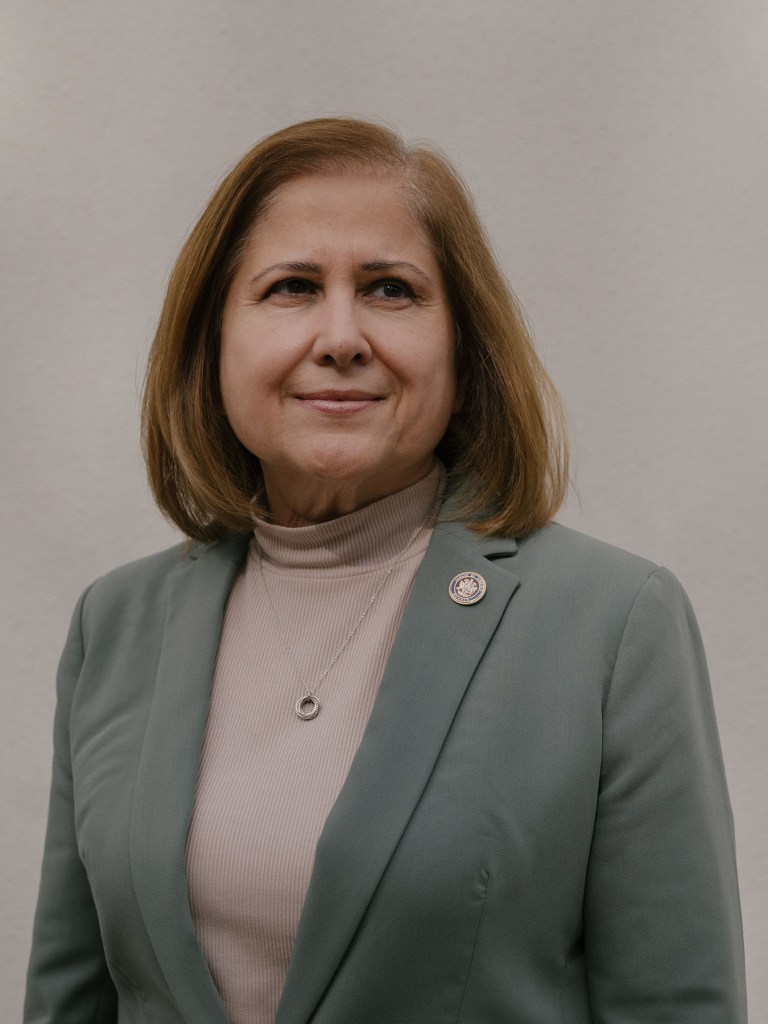
Ghazala Hashmi was a professor with no plans of running for political office. Then came Trump’s 2016 presidential campaign.
“Donald Trump ran on a platform of bigotry and targeting Muslim communities in particular,” Hashmi said. “I just felt like I needed to do something to respond to the level of Islamophobia that I was hearing and so decided to run.”
Hashmi made history in 2019 when she became the first Muslim woman to be elected to the Virginia state Senate. In 2025, she won the race for lieutenant governor, becoming the first Muslim woman ever elected to statewide office in the United States.

“When I won that Senate race, for me, it was a vindication of what I know to be true about the majority of Americans — and certainly the majority of Virginians,” Hashmi said. “The kind of bigotry and prejudice espoused by Donald Trump was not really reflective of the core values of so many people in this country, and I wanted to send that message loud and clear.”
Still, Hashmi said she thinks there’s been a rise in Islamophobia in the last 10 years. She continues to face considerable attacks on the basis of her faith.
They only harden Hashmi’s resolve to continue leading.
“I think it’s so essential that I and others continue to be publicly present, especially for the children,” Hashmi said. “When Muslim children are facing questions of bullying and attacks in their own schools and also seeing that elected officials are being demonized in this way — it’s important that we continue to respond and highlight ourselves as Americans. And it’s critical that we underscore how very un-American it is to target individuals on the basis of their faith.”
To check your voter registration status or to get more information about how to vote and what’s on your ballot, visit vote.org.