It would be hard to pin down the exact location of Peggy Flanagan, Keisha Lance Bottoms and Gina Hinojosa at any given time these days. For these criss-crossing campaigns locked in tight statewide races, the only option is onward — to a Savannah barbershop, toward a reservation in the far corners of northern Minnesota, onto a rally stage in San Antonio.
Along the way, these candidates are disrupting a system that has relegated women like them to the margins of political power for as long as the United States has been a nation. From the outside, their campaigns are a mild tremor rattling the status quo. If they win their races in November, voters will have effectively shifted the balance of power and added a crack to a foundation that sometimes feels unshakeable.
During stops in the southeast corner of Georgia, Bottoms made clear that protecting Georgians’ voting rights from attacks that could weaken representation for Black voters would be a top priority as governor. If elected, Bottoms would become the first Black woman to lead a state in the history of the country, a milestone that has twice eluded Georgia.
Campaigning along the shores of Lake Superior in Minnesota last week, Flanagan told voters she understood the pain of living in financial instability, having experienced it as a child. Born to Indigenous and Irish parents, Flanagan could become the first Native American woman ever elected to the U.S. Senate.
And in a hopscotch of events between Austin and San Antonio, Gina Hinojosa’s populist appeal — accented by her ease with Spanish — could make her the first Latina to ever hold the top job in Texas, which grew its Latino population more than any other state in the last decade.
The 19th documented some of the final days of these historic campaigns, tracing how these candidates — at once ordinary and revolutionary — are working to do something no woman like them has done before.
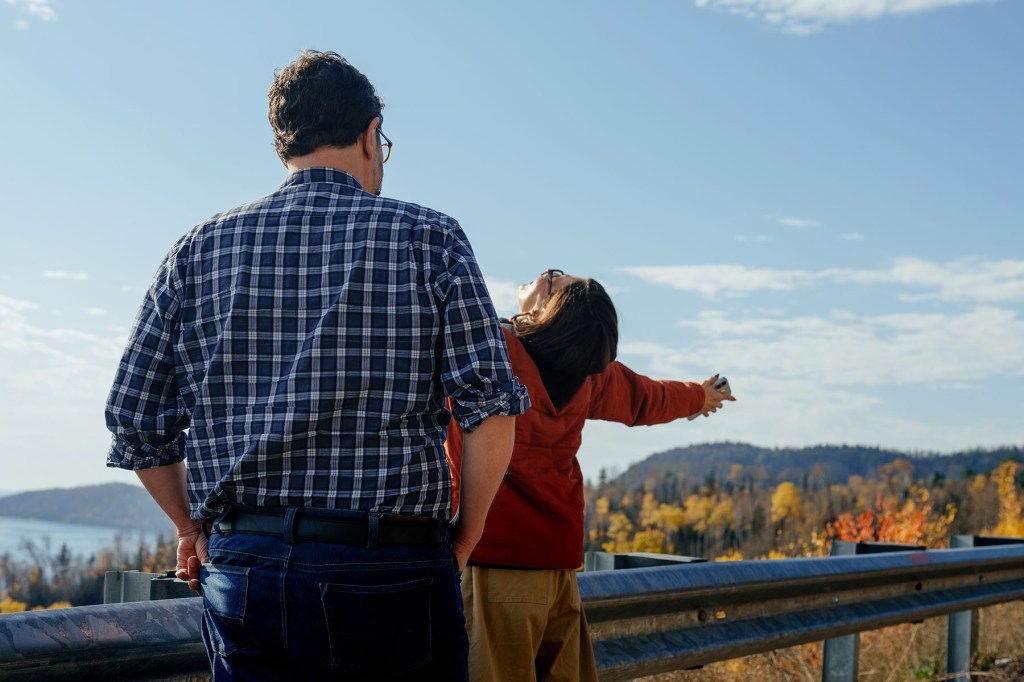
Flanagan is Ojibwe and a member of the White Earth Nation. Her Anishinaabe name means “speaks in a loud and clear voice woman,” which aptly describes her work in politics so far, standing out as a voice on issues that previously had little attention. Case in point: Flanagan pushed for the creation of the nation’s first state-level office to combat violence against Native Americans, particularly women.
But Flanagan is also warm. During a stop in Grand Marais, Minnesota, on a cool fall morning, she greeted locals with hugs, and leaned down with a big smile to pet a dog. Her sweaters nod to this or that Minnesota town, and her love for her state. When connecting with voters, sometimes these things do the talking.


- Another day, another hotel bathroom. Peggy Flanagan brushes her teeth in Silver Bay, Minnesota, on October 24, 2026, before another long day on the campaign trail. (Jamie Kelter Davis for The 19th)
- Keisha Lance Bottoms applies makeup in the back of a car in Savannah, Georgia, on October 24, 2026. (Rita Harper for The 19th)
Campaigns can be unpredictable, and in a race with an extremely narrow margin like the Georgia governor’s race, every minute on the trail counts. During the start of her campaign swing in southeast Georgia, Bottoms learned two of her staffers had been involved in a car accident. Both are now recuperating at home, but Bottoms took time off the trail to check on them before working to get her campaign back on schedule.
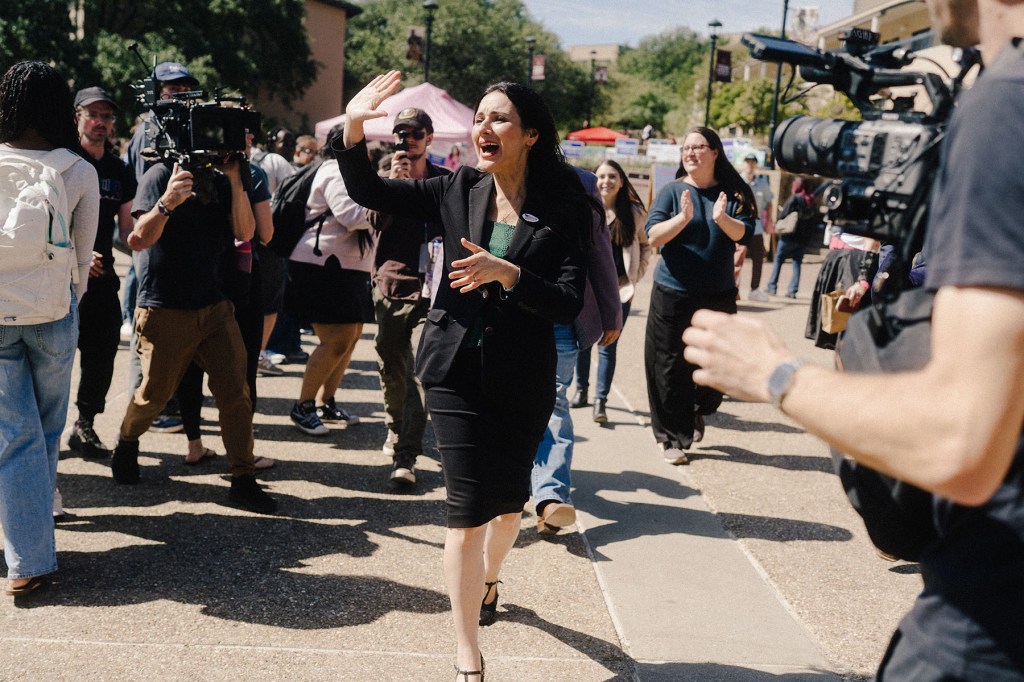
Hinojosa launched her campaign with the slogan, “No te dejes” — a bold move given that, as she says, there’s not a perfect translation for it. “Know your worth and defend it,” is how Hinojosa translated the saying in a recent interview, though she has a few different variations. She learned it from her mom, who was born in Mexico and said it with a stern tone — much like Hinojosa does.
Hinojosa’s bet could pay off. At a recent get-out-the-vote event at Texas State — where almost half of all students are Latino — people were eager to greet her and voice their support. Polling shows Hinojosa has a 24-point advantage with Latino voters in the state. Among young Latinas, her support is more than four times that of her opponent, Gov. Greg Abbott.


- A supporter smiles during a campaign rally for Peggy Flanagan with Sen. Bernie Sanders in Duluth, Minnesota, on October 24, 2026. Flanagan is running for the Senate seat once held by Sanders’ fellow progressive Paul Wellstone.
-
A young boy and a woman watch as Peggy Flanagan speaks to campaign volunteers in Grand Marais, Minnesota, on October 24, 2026. The volunteers were preparing to knock on doors and encourage their neighbors to vote.
(Jamie Kelter Davis for The 19th)
Women voters will play a decisive role in each of these candidates’ races. Women are more likely to be feeling the economic uncertainty that has made Democratic wins in Texas, Georgia and Minnesota possible. All three candidates are also parenting children under age 18, a touchpoint for many voters who, like them, are worried about the future.
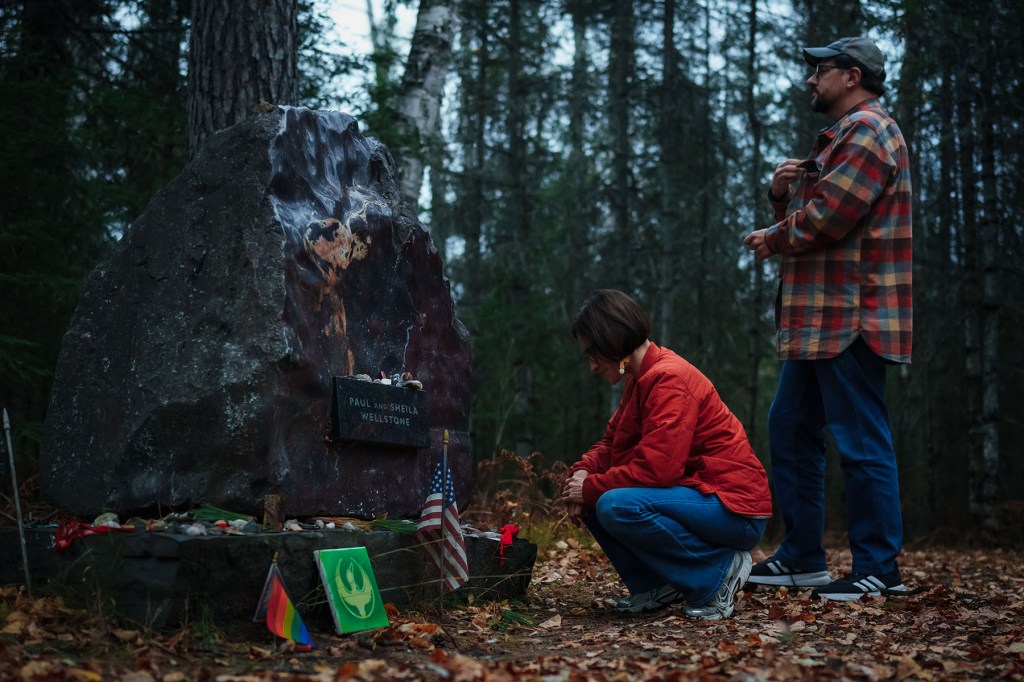
In college, Flanagan got her political start on U.S. Sen. Paul Wellstone’s campaign, doing outreach to Native American voters. Wellstone, a populist and progressive leader of the party, died 16 days before the 2002 election. In between campaign stops, Flanagan paid a quiet, emotional tribute to her mentor.
Flanagan is running to take his old seat, and if she wins in November, her election will mark a victory for the progressive wing of the Democratic Party that her mentor worked hard to nurture.


- Gina Hinojosa confers with her campaign communications director, Tommy Kubitschek, after a news conference in Austin, Texas, on October 19, 2026. (Brenda Bazán for The 19th)
- Peggy Flanagan and Sen. Bernie Sanders share a quiet conversation before a rally in Duluth, Minnesota, on October 24, 2026. (Jamie Kelter Davis for The 19th)
Hinojosa previously described herself as a progressive, but she’s running in a Republican bastion and believes that the label populist better fits the demands of the moment. On this day of campaigning, Hinojosa took a break from voter outreach to formally file a lawsuit demanding the release of emails between Abbott and Elon Musk. The lawsuit is part of Hinojosa’s disciplined focus on corruption, wealth and power.
“Is this going to be a Texas that is by and for the people, or is it just the billionaires’ world, and we just live here? This is in-your-face corruption,” Hinojosa said, speaking to reporters after filing the lawsuit.
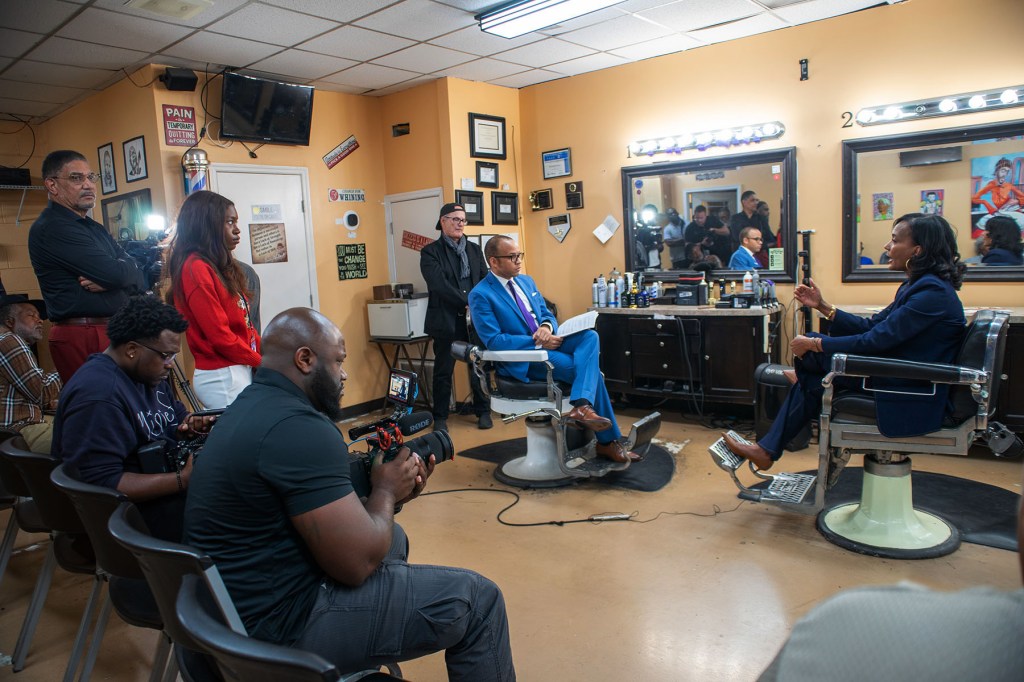
(Rita Harper for The 19th)
“I spent a lot of time in the hair salon. My mom owned a hair salon for decades, actually,” Bottoms told a group gathered at a Savannah barbershop. In a state that Trump won in 2024 on his path to reelection, Bottoms is telling voters she’ll work for the working and middle classes, for small business.
“If you want somebody who’s going to stand up for Georgia and be forward-thinking, be willing to work with people who may not align politically, but have the best interest of Georgia at heart, then I’m your candidate.”


Winning is far from assured for any of the women, whose campaigns have been battered by millions of dollars in attack spending — Bottoms and Hinojosa in particular. Bottoms is facing Republican Rick Jackson, a billionaire healthcare executive who has flooded the race with his wealth; he’s projected to spend more than $200 million in his bid for governor. Hinojosa is facing one of the most powerful politicians in the Republican Party, a three-term governor.
Both have worked to make up the gap by being out in front of voters, attracting press coverage and counting on old-fashioned, community organizing: Tell your family and friends to vote.
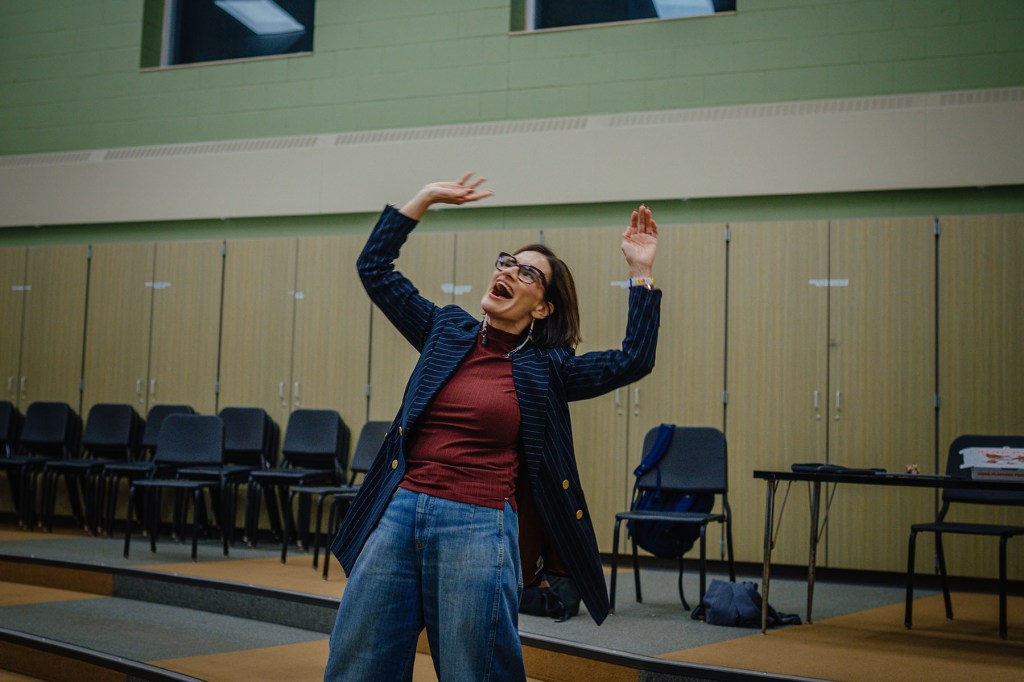
The campaign trail can be grueling, but with Election Day in sight, there’s a lot of joy at the possibilities.
In Texas, few would have anticipated the way Hinojosa’s campaign has taken off. What started as a long-shot bid by a state lawmaker little known to voters outside of Austin has turned into one of the most dynamic races in the country.
“This is so exciting,” Hinojosa said of the start of early voting in Texas before walking out to speak to voters.


- Keisha Lance Bottoms greets young attendees at the Savannah Branch NAACP’s annual banquet on October 24, 2026. Like the other two candidates, Bottoms is raising children while campaigning for an office no woman like her has held before. (Rita Harper for The 19th)
- Gina Hinojosa greets a supporter at a campaign event in San Antonio, Texas, on October 19, 2026. Long photo lines have become a familiar sight at the end of her campaign events. (Brenda Bazán for The 19th)
After the speech comes the photo line. After her keynote address at the annual banquet for the Savannah Branch NAACP, Bottoms worked the room talking to supporters, making sure everyone had made plans to vote. Enthusiasm for Hinojosa in Texas shows up in the long photo lines at the end of her events.
Flanagan and U.S. Sen. Bernie Sanders of Vermont, spent over 30 minutes taking photos and chatting with a stream of supporters at the end of their Duluth rally. Flanagan’s staffers joked that it was a very “Minnesota goodbye.”
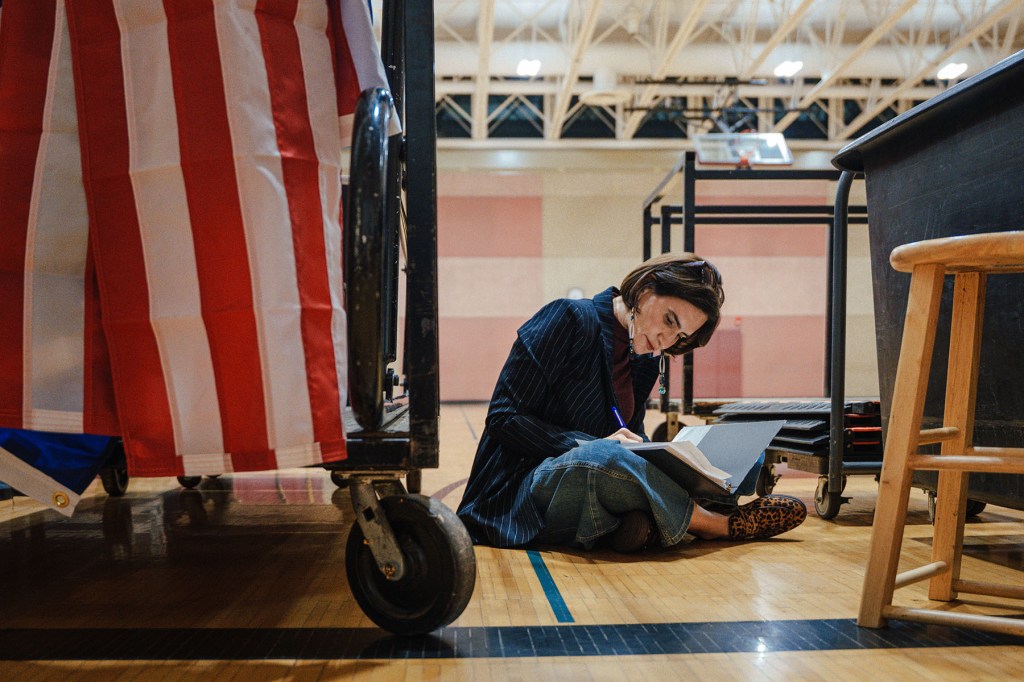
In their own words and styles, all three women are quick to say that they are not running to make history. Their identities deeply inform the work that they are doing, but that’s not why voters should support them. Bottoms says she’ll leave that aspect of her candidacy to the history books. Hinojosa much prefers to say she’ll be the first Texas governor from the Rio Grande Valley, a heavily Latino part of the state. Out campaigning in Minnesota, Flanagan says simply that it’s probably time a Native American woman had a seat in the U.S. Senate.
Making history is part of the plan, but not the point. On the campaign trail, it’s clear that as far as trailblazing goes, win or lose, they’ve done the work.


Jamie Kelter Davis and Brenda Bazan contributed reporting.
To check your voter registration status or to get more information about how to vote and what’s on your ballot, visit vote.org.