Editor’s note: This article has been updated throughout.
Lawmakers are calling for the immediate release of 24-year-old Maria Alejandra Valero Brinez, who said she is five months pregnant and having potentially dangerous complications while detained in Arizona’s Eloy Detention Center.
Three years ago, Valero Brinez experienced a stillbirth when she was eight months pregnant due to her placenta being attached to the lower part of her uterus. Now, she told lawmakers, she is suffering the same complication, known as a low-lying placenta. She isn’t receiving regular medical care and worries she could lose another pregnancy.
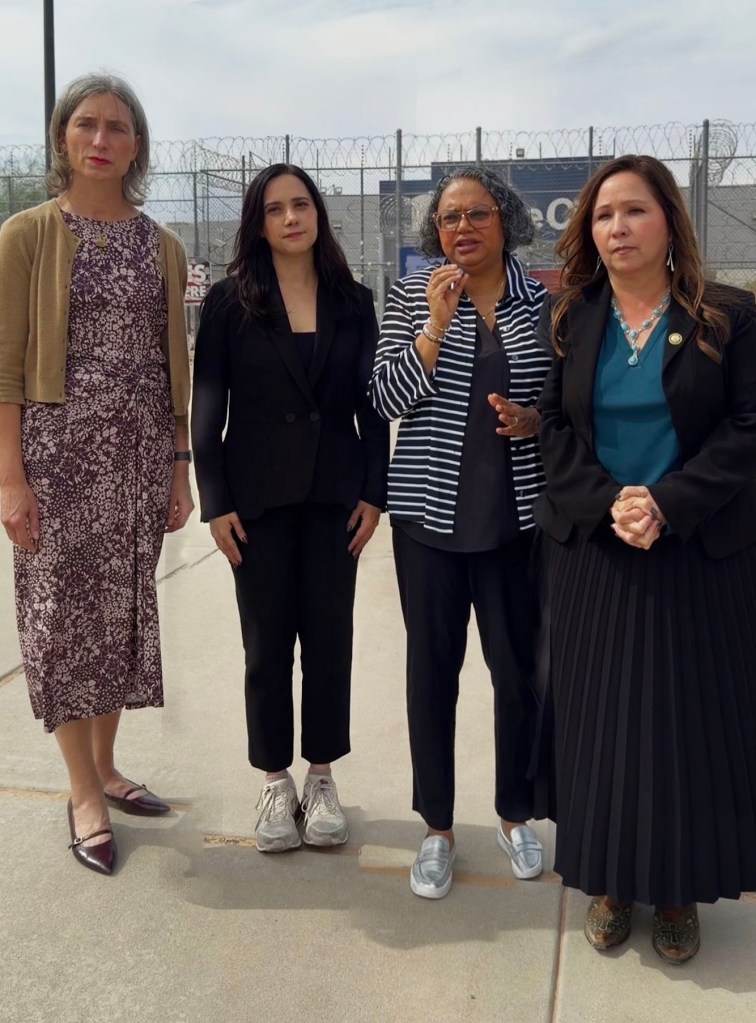
U.S. Reps. Adelita Grijalva and Yassamin Ansari of Arizona and U.S. Rep. Maxine Dexter of Oregon met Valero Brinez during a Wednesday visit to Eloy, where she has been detained since August. Valero Brinez told them that she has experienced abnormal bleeding and visited the emergency room multiple times because of her low-lying placenta.
“She needs to get out of detention immediately,” said Dexter, who is a physician. “She is not in a safe situation. It is egregious that we are keeping her in custody with a high-risk pregnancy.”
The complication is a risk not just to her fetus but to her own health; it comes with a higher likelihood of hemorrhage either during a miscarriage or delivery, Dexter said. “It’s not like you bleed and you have a miscarriage and it’s over. Like you can bleed, and bleed, and bleed, and bleed and not stop.”
The oversight visit, coordinated with the advocacy group Reproductive Freedom for All, is one of several conducted by congressional Democrats during the Trump administration’s sweeping immigration enforcement campaign. Lawmakers spoke exclusively to The 19th about the trip to Eloy.
The Department of Homeland Security has come under fire for detaining pregnant, postpartum and nursing people, a practice the federal government had restricted under the previous administration.
Eloy has drawn particular scrutiny. Multiple women who were detained at the facility while pregnant said they received insufficient healthcare, including one who said she miscarried. Both Grijalva and Ansari visited the detention center in the past year and said detainees reported limited access to medical care and difficulties getting drinking water, including being provided ice chips instead of water or needing to buy bottled water.
Recent polling by The 19th and YouGov found that most Americans believe pregnant, postpartum and nursing people generally should not be held in detention facilities. They also believe that those who are detained should receive basic pregnancy-related healthcare.
At Eloy, Valero Brinez told lawmakers she is not having regular prenatal appointments and that the only time she sees a doctor is when she is experiencing a medical emergency. “She has to throw herself on the ground to get any sort of care,” Dexter said in an interview after their visit. “She needs to have access to an OB-GYN who knows her, who she has trust in.”
On these emergency visits, Valero Brinez was given ultrasounds, but was not provided the images or given any information, the lawmakers said. “They didn’t tell her the results,” Grijalva said. “It’s almost like she’s not the patient. Like CoreCivic is the patient.”
A spokesperson for CoreCivic, the contractor that operates the facility in Arizona, said in an emailed statement that people who are detained receive pregnancy-specific food and prenatal vitamins, and that medical care is provided by ICE. The spokesperson also said that the water provided in their facilities is safe and clean.
In an emailed statement, the Department of Homeland Security said that Valero Brinez had received ultrasound results and lab work that identified no abnormalities. The spokesperson also said she was scheduled for further OBGYN care. “Like all pregnant detainees, her health and nutrition will continue to be closely monitored,” the spokesperson said.
Valero Brinez is grieving the stillbirth she suffered three years ago around this time of year, fearing it could happen again, she told the lawmakers. But she’s afraid to express her emotions because she said that can come with repercussions.
“Something that really stuck out to me was she said very clearly: ‘If you cry, if you show that you’re depressed, if you talk about being depressed, they immediately ask you or insinuate that you’re suicidal, and what that means in detention is that they put you in solitary confinement,’” Ansari said.
CoreCivic said that people who are detained are not placed in solitary confinement, but can, in communication with ICE and under federal standards, be kept in “restrictive housing.”
But external watchdogs — including the nonpartisan Government Accountability Office — have found that these restrictive housing arrangements typically hold one to two people, isolating them from the general population, and causing physical and psychological harm. A 2024 report from Physicians for Human Rights echoed those concerns.
More recently, formerly detained people have also said they were held in solitary confinement while held in immigration detention, and researchers say this practice has grown more common since the onset of the second Trump administration.
Valero Brinez told the congresswomen that she sleeps on a very thin mattress at Eloy and isn’t getting enough calories for her pregnancy. Despite having a medical note specifying that she should get two meal portions, she said that one officer refuses to do that when he’s on duty.
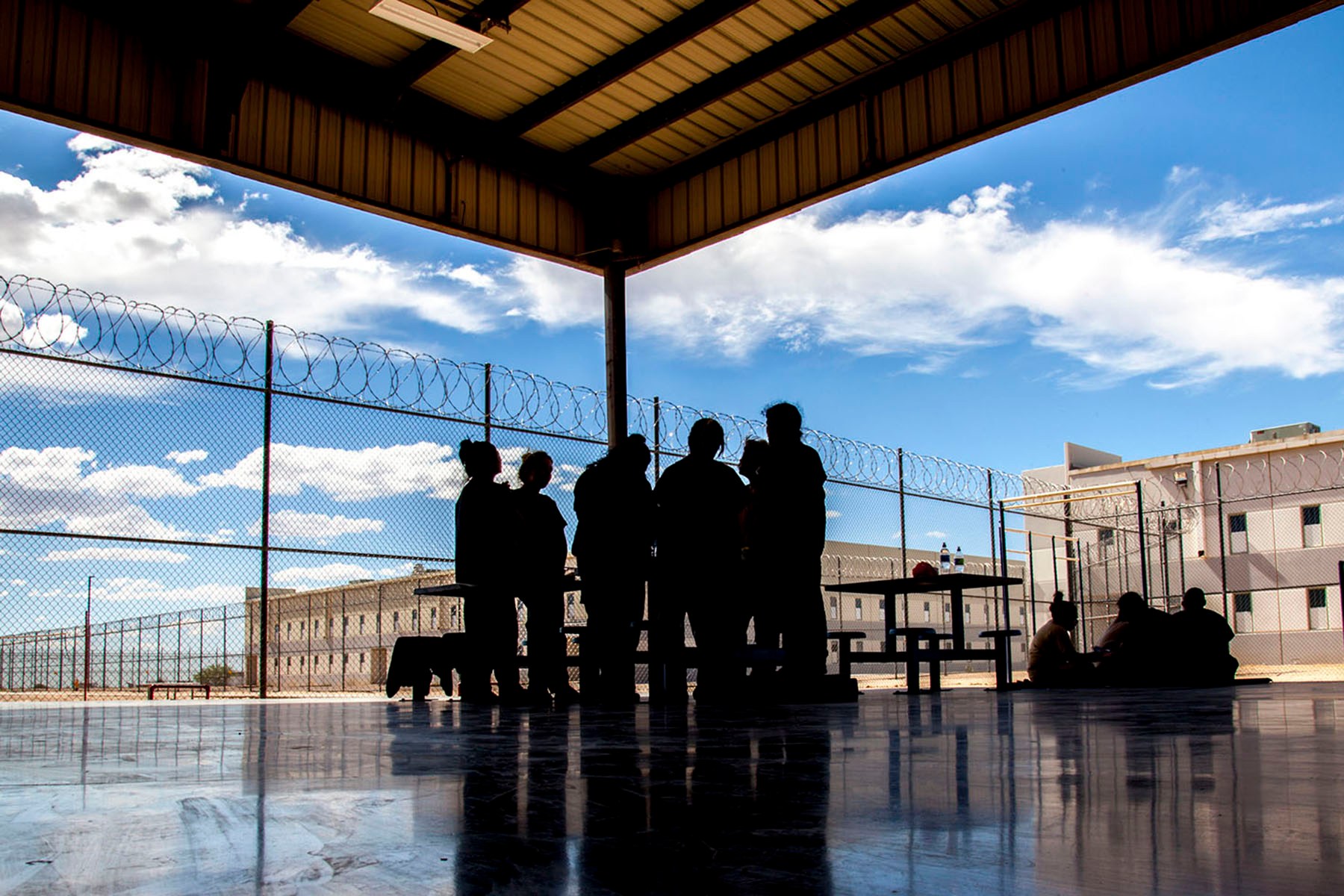
Officials fill yellow Igloo water coolers full of ice, and that serves as the main source of water, according to Valero Brinez. She and others have to wait for the ice to melt to have water to drink. She told lawmakers the water often looks dirty and has bugs or hair in it, and because there isn’t enough of it for everyone, she ends up buying clean water using wages she makes working in the laundry room.
She makes $4 a day, and a bottle of water is $1.80, she told lawmakers.
“When a doctor tells her you need to drink more water, she shouldn’t have to feel like she has to work more in order to get water,” Grijalva said. “This government, our government, is paying CoreCivic money hand over fist, contracts for millions of dollars, and they don’t have the money or resources to bring water?”
Pregnant women at facilities across the country have said that they received inconsistent healthcare and poor-quality food while detained. Some have said they struggled to get medical attention when experiencing symptoms of miscarriage. Women who have received medical care said they were unable to view records of their treatment, including test results.
Near Chicago, Nayra Guzmán said she did not have a bed to sleep on, despite being in recovery from a recent Cesarean section. Another, Amanda Isabel Fanego Cardoso, who was detained in several facilities around the country, said she was diagnosed with preeclampsia and gestational diabetes after being released but was not made aware of those conditions while in detention.
The government’s own detention standards say that when pregnant people are detained, they should receive comprehensive healthcare, which includes routine prenatal visits, specialized follow-ups if needed, prenatal vitamins and proper nutrition and exercise. DHS has said that pregnant, postpartum and nursing people are detained infrequently and receive “comprehensive” healthcare.
But reporting by The 19th has identified numerous women who were detained with no criminal record, or who only had traffic violations. Hundreds have been deported, per figures the department released in March.
Valero Brinez has no criminal convictions. She has one pending misdemeanor charge. She had temporary protected status until the Trump administration terminated protections for Venezuelans last year. She also had a valid work authorization at the time she was detained.
The DHS spokesperson told The 19th that Valero Brinez had been charged with assault and disorderly conduct and had illegally entered the United States. “All of her claims will be heard by an immigration judge, and she will receive due process,” the spokesperson said.
Eloy is located in Arizona’s 6th Congressional District, a battleground that could help decide control of the U.S. House of Representatives. Republican Rep. Juan Ciscomani is facing a tough reelection fight against Democrat JoAnna Mendoza, who has criticized the administration’s immigration crackdown while emphasizing that she supports securing the border. Mendoza grew up in Eloy.
Polling suggests that immigration is not a top issue in the midterm elections. But the issue could still play a meaningful role in states like Arizona, where President Donald Trump has a 39 percent approval rating, according to an August poll. Public opinion data also suggests the GOP has lost support among Latino voters, who have been most affected by the administration’s approach to immigration policy.
If the Democrats get the majority in Congress after the midterms, the lawmakers who visited Eloy said they will aim to pass new legislation to protect pregnant people in detention and enforce existing laws that they say are currently being disregarded by facilities.
“We should be dismantling ICE. We should be reversing any child being in detention, any pregnant woman being in detention, that should be illegal without question,” Dexter said. “We also have a president who may veto those laws, but the people of this country need to understand what’s happening and become outraged to the point that he won’t veto a law that actually holds ourselves to a humane standard.”
Mel Leonor Barclay contributed to this report.