
When Suzanne Bell saw President Donald Trump’s announcement this month about improving the future of women’s health research, she felt deep skepticism.
Bell, a demographer at Johns Hopkins University, is part of a class-action lawsuit filed in September by a group of researchers accusing the National Institutes of Health (NIH) and other federal government entities of unconstitutionally censoring their research. According to the lawsuit, the department used a list of 235 keywords to identify research that might elevate issues not approved by the Trump administration. The forbidden terms included “gender,” “advancing diversity” and “pregnant individual.”
Bell joined the lawsuit amid challenges to her research grants, including one on the impact of abortion bans on women’s health.
“We come to this work in part because we are deeply committed to the research and the topics that we study,” Bell told The 19th. “And so someone telling us we can’t do it — or if we want to do it, we have to cloak it in different language — just feels really wrong.”
Federal officials have not commented publicly on the lawsuit, but have argued in court filings that it lacks merit. An attorney representing the government in court filings did not immediately respond to a request for comment.
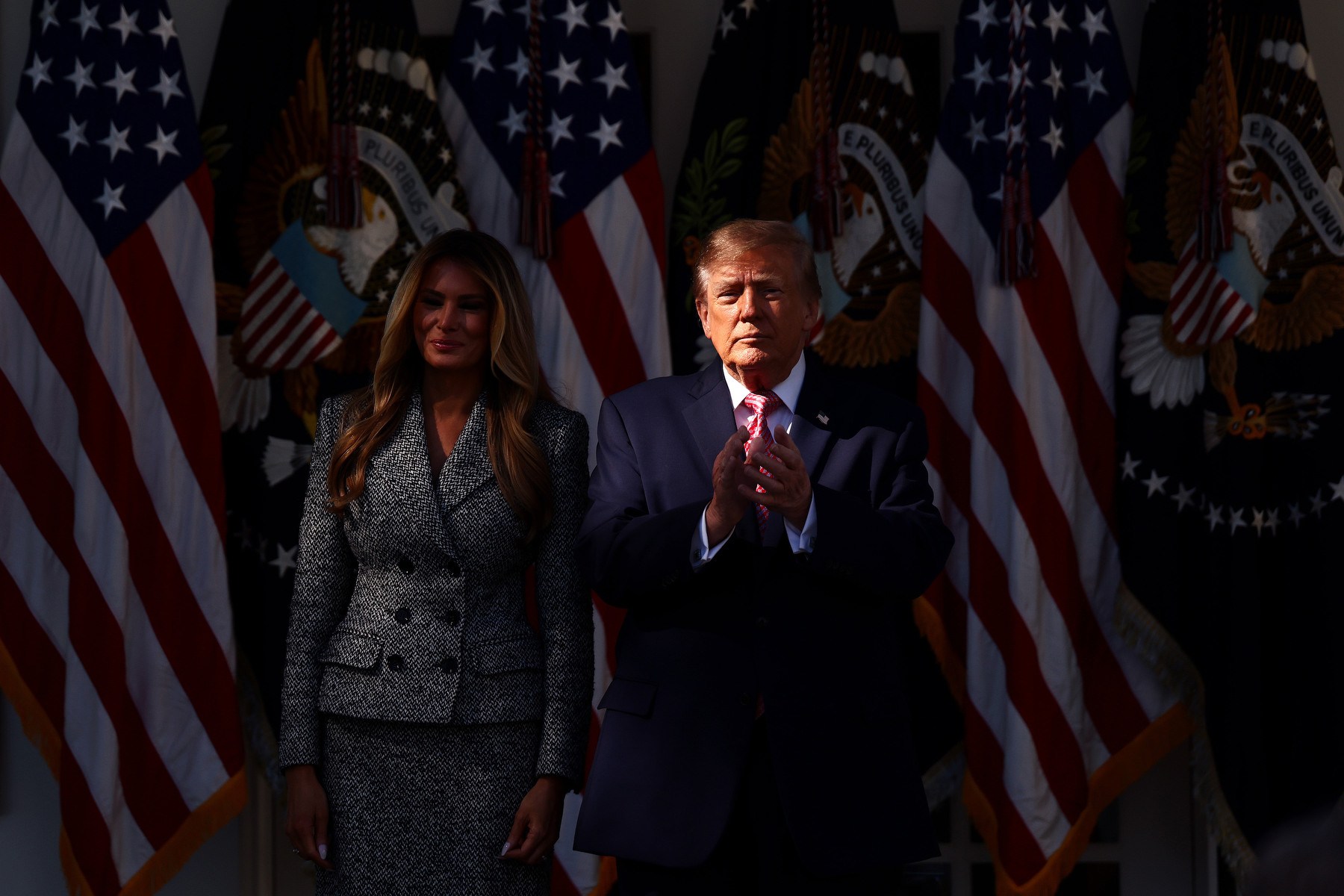
This is the legal landscape of federal health research as the president, alongside the first lady, signed an executive order last week that calls for creating a women’s health division within NIH and a new White House-backed women’s health task force.
Details are scarce. The executive order gives federal stakeholders 90 days to establish the division within one of the existing 27 NIH institutes or centers. There is already an NIH Office of Research on Women’s Health, created in the early 1990s, that primarily coordinates priorities among the institutes and centers. An NIH division could provide the infrastructure for more specific research into women’s health, but no goals or dollar figures are attached to the project for now.
Some national policy experts are incredulous about the new initiative after watching the same White House propose cuts to NIH’s nearly $48 billion budget and challenge grant topics — including in areas that impact women’s health. The Center for American Progress (CAP), a liberal think tank, estimates that through May 2025, the Department of Government Efficiency program once led by Elon Musk cut at least $3 billion in grants for research, education and other programs that help women and girls. The administration has also sought to have more political oversight over who is approved for research funding.
Others are pointing to the timing of the order, just weeks before the midterm elections in which Republicans are likely to lose at least one chamber of Congress. Affordability has been top of mind for potential voters ahead of November 3, particularly the rising cost of healthcare. People are facing a jump in employer-sponsored health insurance costs and further erosion to insurance offered through the Affordable Care Act, following inaction from the Republican-controlled Congress. Many states are also preparing to enact new Medicaid work requirements as part of $1 trillion in cuts to the federal-state health insurance program.
“With the midterms approaching, the administration definitely has an incentive to demonstrate that it cares about women’s health, so it’s my belief that that probably had something to do with the timing of this executive order,” said Kierra B. Jones, a senior policy analyst at CAP. “Knowing the backdrop of cuts and cuts to women’s health research, cuts to Medicaid, it’s really difficult to see that this order would really meaningfully change or address the harms that the administration itself has created.”
Last year, Bell was in the middle of a five-year study examining the health impacts of Dobbs v. Jackson Women’s Health Organization, the 2022 Supreme Court ruling that overturned Roe v. Wade. She was making progress.
During the first year of her NIH-funded research, Bell analyzed data that offered one of the first national analyses of post-Dobbs abortion bans on fertility and infant mortality: In 14 states with abortion bans, more than 22,100 excess live births and more than 475 excess infant deaths were recorded. The increase in live births was concentrated among racial and ethnic minorities.
But she hit a roadblock. According to Bell, an NIH program officer told her during the summer of 2025 that the grant had been flagged, alongside other research, for not being in alignment with the Trump administration’s priorities. Bell claims that the officer warned her research team that getting grant funding renewed would likely require removing any mention of abortion or the Dobbs case in the narrative and project summary.
She was conflicted.
“It made me feel like I really needed to fit my research interests within a political agenda, which is not how science is meant to work — especially on science that has already been deemed valuable, significant and has population health impact,” Bell said.
The federal government’s efforts over the years to address disparities in how women are screened, diagnosed and treated for medical conditions has had a lopsided history. A major milestone came in 1993, when a federal law required the inclusion of women in clinical trials for NIH-funded research. Around this time, several federal agencies created offices on women’s health, including at NIH. The 2010 Affordable Care Act expanded health screenings for women, and a 2016 NIH policy required researchers to consider the impact of sex as a biological variable in their research.
In late 2023, President Joe Biden announced the establishment of the Women’s Health Research Initiative within the Office of the First Lady. A few months later, Biden called on Congress to approve more designated funding and signed an executive order aimed at advancing women’s health research.
The Biden administration’s women’s health research efforts — which included a focus on research innovation and more accountability from government agencies — were rescinded as part of Trump’s latest executive order. That stood out to Joy D. Calloway, president and CEO of the Black Women’s Health Imperative (BWHI). The organization advocates for policies that improve the health of Black women, who face worse health outcomes than White women.
“That says something to us. It revokes it, not just supersedes it,” she said.
Calloway said that Trump’s new executive order lists a lot of the “right things” around data collection, clinical trials and research. But Biden’s order acknowledged disproportionate healthcare outcomes for women of color, older women and women with disabilities — something not highlighted in Trump’s. This president has instead attempted to end policies within the federal government focused on diversity, equity and inclusion.
“Black women continue to experience significant disparities in maternal health, chronic disease and access to quality care,” Calloway said. “Will this initiative address those inequities, and will it address it directly? We see what’s in the paperwork, but again, we also look at what’s happened over the last two years with this administration. So it is a concern in this environment with this administration.”
Whatever Trump aims to achieve, stakeholders say new funding will be critical. In July, a coalition of organizations committed to women’s health research released a proposal for closing the women’s health gap that called on Congress to invest $20 billion over 10 years.
“The coalition surrounding the national strategy believes that even $20 billion over 10 years is still a down payment,” said Kathryn Schubert, president & CEO of the Society for Women’s Health Research (SWHR), one of the groups behind the effort. “So I think the question for this particular executive order is: What is this division responsible for specifically? Is it gynecologic health? Maternal health? Menopause? Chronic conditions? I saw all of those things listed in the EO. That’s a lot for 51 percent of the population. It will probably require billions of dollars to address this.”
Dorianne Mason, senior director of health equity and contraceptive access at the National Women’s Law Center, which has criticized Trump’s 2025 law that cuts Medicaid funding and efforts to gut federal minority health offices, is unconvinced that any additional details about the EO would make a difference.
“What they’re proposing here in no way, shape or form makes up for all the harm that has been caused to women’s health over the past couple of years,” she said. “It’s hard to think about how I would want this to be structured, how I would want this to continue to develop — when people are suffering so greatly because of these other actions.”
Bell with Johns Hopkins ultimately removed the language from her NIH-backed abortion research, reframing the work to be more about how reproductive health policy impacts fertility, maternal health and infant health. Her funding was later renewed. But the episode has lingered with her, especially as she continues to use vague language to describe the scope of the project publicly. She worries about future funding renewals.
“We should all feel free to push back against government censorship,” she said.
Bell is also facing roadblocks with other research.
In July of this year, a separate NIH-backed grant on infertility in sub-Saharan Africa was flagged, she said, and she was told to justify why it was focused on foreign countries. She also was warned to avoid the phrases “climate change” and “pregnant people” in another pending grant application on the impact of extreme heat on human fertility.
Bell says for her next progress report on her abortion research, her program officer has signaled that she may need to remove references to policy-related research.
“It went from, we talk about abortions, and now we talk about reproductive health policy change — now I can’t even say reproductive health policy change, potentially,” she said. “It just feels like the goal post keeps moving.”


