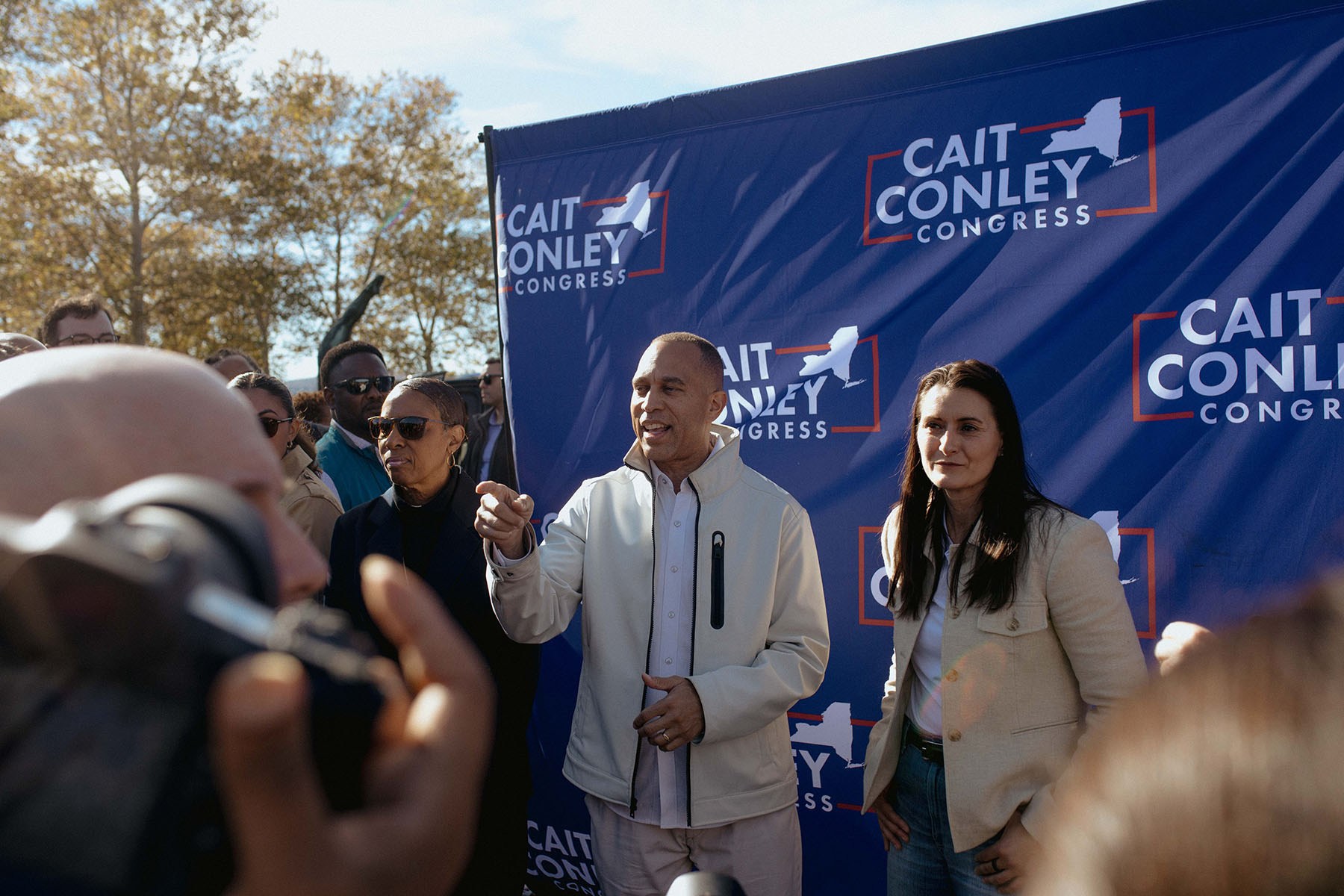
Democrats won a decisive majority in the battle for the U.S. House, a victory that was driven in part by women candidates.
More than half of all competitive House races this cycle featured women candidates from one or both parties. Women were also the Democratic nominees in 20 of the 41 most competitive seats held by Republicans.
Decision Desk HQ projected Democrats will win the chamber, which Republicans currently control by a slim margin of 218-214, on Tuesday. Democrats have so far flipped 31 House seats, with some still too close to call.
An electorate fed up with its leadership and demanding change made their voices heard in this year’s House races. After then-President Joe Biden dropped out of the 2024 presidential race amid concerns over his age and mental acuity, a wave of younger Democratic candidates stepped up to run against older incumbents they saw as having overstayed their welcome in Congress. Some were aligned with Democratic Socialists of America; others more moderate.
And in the battleground seats that decided control of the chamber, Democrats found success hammering Republican incumbents on the rising cost of living and what they said was the “corruption” and harmful policies coming out of the second Trump administration. They also overcame Republicans’ efforts to gerrymander their way to control of the House.
These races also illustrate how backlash against the Trump administration’s policies, a nationwide reckoning over sexual abuse, and Democrats’ frustration with their own party leadership changed the makeup of the House in 2026.
New York’s 17th District: Trump

Democrat Cait Conley, a military veteran and former national security official, defeated GOP Rep. Mike Lawler in this Hudson Valley-based swing seat.
The suburban district is emblematic of the blue-state areas that shifted right in 2024 — it’s one of just three Republican-held House seats in the country that voted for President Kamala Harris.
But the district swung back to Democrats this year over voters’ discontent with the second Trump administration. Conley hammered Lawler over his vote for Republicans’ party-line tax cut and spending bill, accusing him of being a “puppet” for Trump.
“People are fed up and sick of it, and this isn’t even a partisan thing,” Conley said in an October 25 interview in Nanuet, New York. “I’ve had Republicans and independents coming up to me and being like, ‘This stuff is out of control. It is wrong. This administration is out of control, and Mike Lawler has done nothing.’”
Sexual misconduct and the allegations of rape at Cornell also became an issue in the race, Conley’s supporters made T-shirts and buttons referencing a heated exchange in a debate where Conley told Lawler not to “mansplain” sexual assault and domestic violence.
Wisconsin’s 3rd District: trade

Democrat Rebecca Cooke defeated GOP Rep. Derrick Van Orden in this swing district in western Wisconsin in a rematch: She lost to Van Orden by under three points in 2024.
Cooke, a small-business owner and part-time server who grew up on a dairy farm, ran on lowering the cost of living and supporting the region’s farmers, who she says are “being squeezed at every turn” by rising diesel and fertilizer costs.
The district, largely rural and agricultural, has been hit especially hard by the Trump administration’s tariffs and rising gas and diesel prices as a result of the war in Iran.
“I’ve lived failed policies of all sorts of different administrations, and it sort of doesn’t matter whoever’s in power. It always feels like people in rural America and farm families, in particular, are very much put last,” Cooke said in a September 26 interview in La Crosse, Wisconsin.
Van Orden, first elected in 2022, also has a long history of making controversial comments about women. During this campaign, he posted AI-generated images of Cooke on social media, prompting her lawyers to send him a cease-and-desist letter. Cooke, who also ran on opposing data centers, said his online behavior “reeks of desperation.”
Florida’s 14th District: backfiring gerrymander
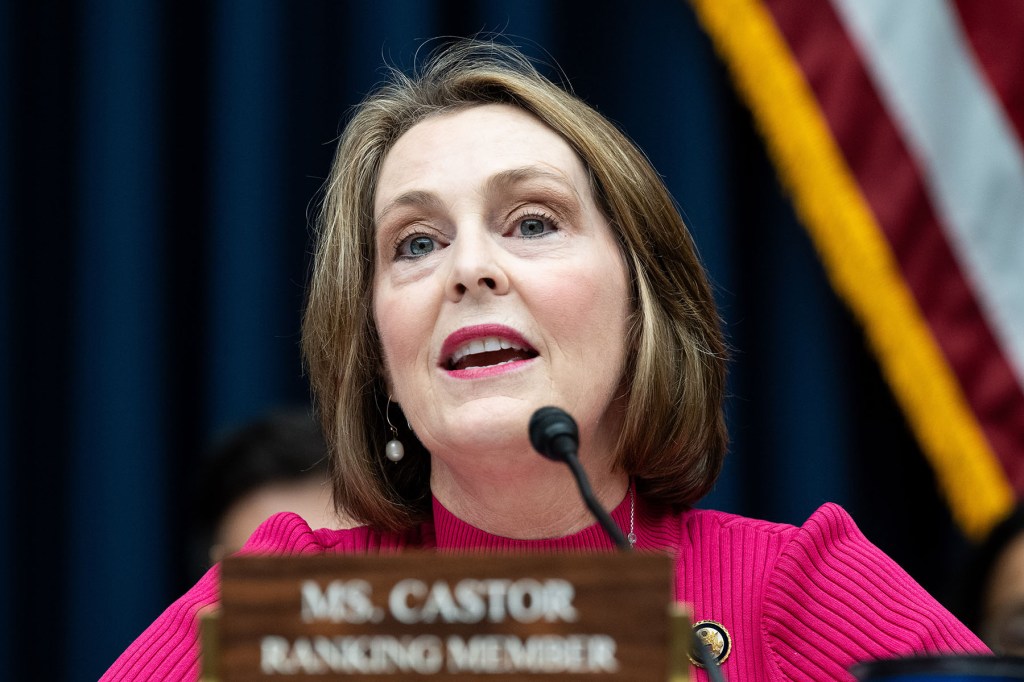
Democratic Rep. Kathy Castor, who earlier this year was redistricted into a Republican-leaning seat that voted for President Donald Trump by 11 points in 2024, is projected to win her reelection bid. Castor’s win is an example of how Republicans’ strategy to pick up seats through mid-decade redistricting failed to deliver.
In Florida’s 22nd Congressional District, Democrat Pia Dandiya, a political newcomer, is projected to win in a district that Trump won by 10 points. She’ll be Florida’s first South Asian member of Congress. Also in South Florida, Rep. Jared Moskowitz overcame Republicans’ efforts to gerrymander him out of his seat.
Castor’s win was one of the first signs of trouble for Republicans on Tuesday night. The 11-term House lawmaker ran on promises to address the rising cost of living and bring federal dollars to the Tampa Bay area. Republican Mike Beltran, a former Florida legislator and lawyer, touted work to “limit government and protect the unborn” in the Florida legislature. The 19th also reported on his legal work for a man accused in the Matt Gaetz sex trafficking scandal.
Georgia’s 13th District: representation
State Rep. Jasmine Clark decided in 2025 to challenge former longtime Democratic Rep. David Scott, who filed to run for reelection in this solidly blue suburban Atlanta House seat despite concerns over his age and medical fragility.
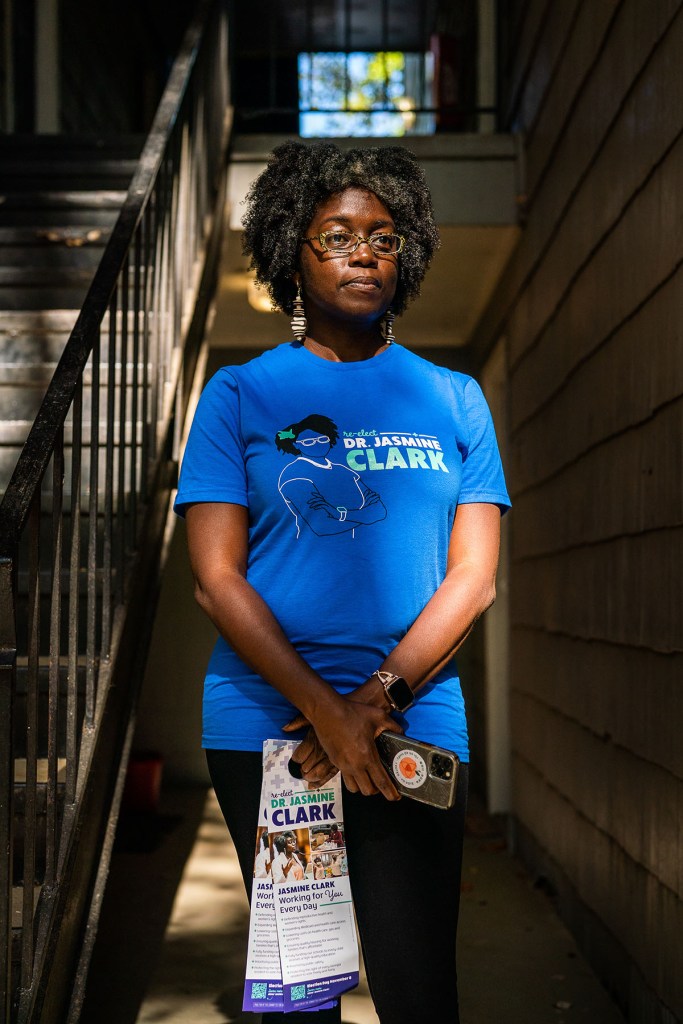
“I think the call for generational change is basically a call for lack of stagnation and making sure that we’re moving forward as a country, and making sure that we are intentionally passing the baton,” Clark said in a May interview in Lilburn, Georgia.
The 19th spoke to Clark shortly after two major developments shook up the race. On April 22, Scott died in office at 80. A week later, the Supreme Court’s decision in Callais v. Louisiana gave the green light to Republican-controlled states to eliminate majority-Black districts — which Clark predicted would mobilize Black voters in places like her majority-Black and Latino district.
Clark, who received her doctorate in microbiology from Emory University, is now set to be the first-ever Black woman Ph.D. scientist to serve in Congress. It’s a role she said she takes seriously given the health disparities in her district and Atlanta’s role as a hub for scientific research, which has faced cuts and political attacks from the Trump administration.
“Looking at our public health system, it’s a mess,” she said. “It’s a mess in a way I couldn’t have even imagined it could get.”
Virginia’s 1st District: corruption
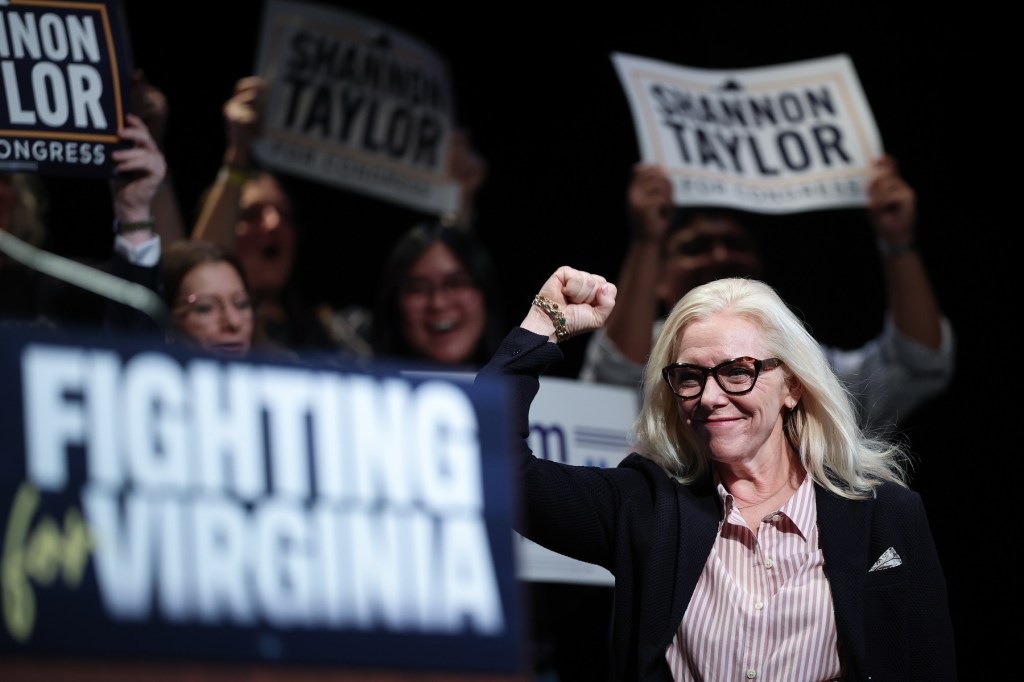
Shannon Taylor, a central Virginia prosecutor, knocked off 10-term Republican Rep. Rob Wittman in one of the most competitive races of the cycle. Taylor took a disciplined approach to her message, focusing strictly on “corruption” to talk about everything from stock trading in Congress to rising costs to the ways the justice system can fail women.
Taylor tried to connect with voters by highlighting her experience as a prosecutor focused on crimes against women and children, talking about how she reformed her office’s handling of sex trafficking and domestic violence cases. In two separate ads, Taylor cited her work seeking justice for women victims. One ad highlighted her decision to seek charges against a Democratic state lawmaker whom investigators accused of having sex with an underage clerk; another featured an advocate against domestic violence and human trafficking who credits Taylor with championing Virginia’s landmark sex trafficking law, which made it a crime to force someone into prostitution.
Taylor regularly referenced the government’s handling of the Jeffrey Epstein case. In a September interview, Taylor said voters in her district were “terrified” about the rising cost of living, but, she said, “they are equally infuriated with the corruption in D.C.,” and that includes voters who have approached her about the Epstein files.