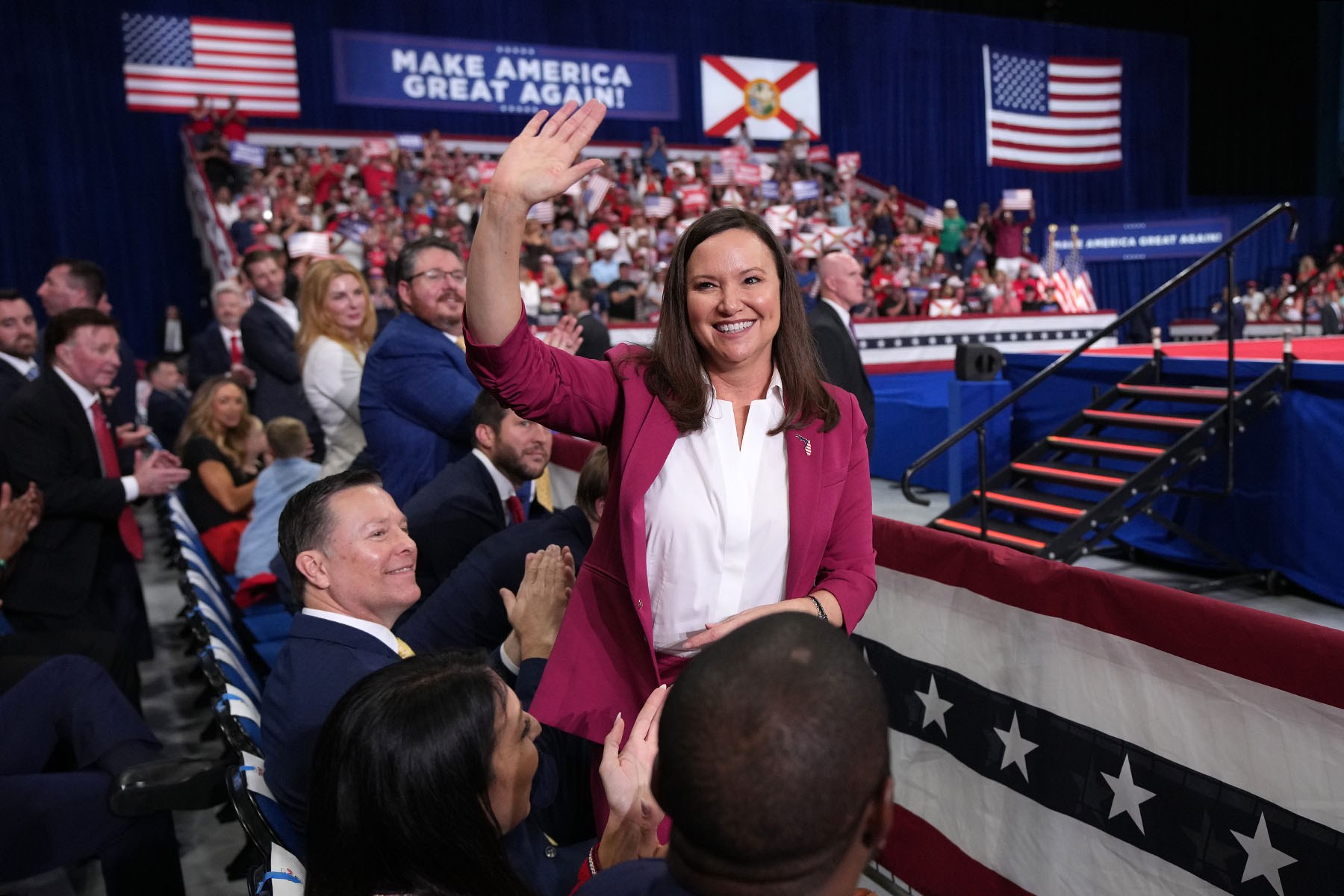

Republican Sen. Ashley Moody is projected to win reelection to the U.S. Senate, defeating Angie Nixon, a democratic socialist who animated Florida Democrats with her competitive bid in a state that has been out of reach for the party in the Trump era, according to Decision Desk HQ.
Moody’s victory will hold up representation for the Senate’s Republican women, whose ranks could diminish in the new Congress amid retirements and competitive races.
Moody, who campaigned alongside Trump in the final weeks of the campaign, took office in 2025 after she was appointed to the seat previously held by Republican Marco Rubio, whom Trump appointed to lead the State Department.
While other Republicans sought varying degrees of distance from Trump amid his unpopularity in the polls, Moody appeared to embrace the president until the end. Her campaign website promised voters that she would be a “key supporter” of Trump’s agenda.
Moody also leaned on her experience as the state’s former attorney general, running on promises to promote law and order.
Nixon, meanwhile, was one of the breakout candidates of the midterms cycle and became known for running one of the most dynamic, if not frenetic, campaigns for statewide office.
Nearly always clad in a pink blazer, Nixon criss-crossed the state seemingly nonstop to get in front of voters. In transit, Nixon logged hours of interviews with the press and was often seen bobbing from the back of her campaign van while answering questions on national television. The campaign’s online presence was as active as its on-the-ground operation, breaking new ground for how to connect with voters.
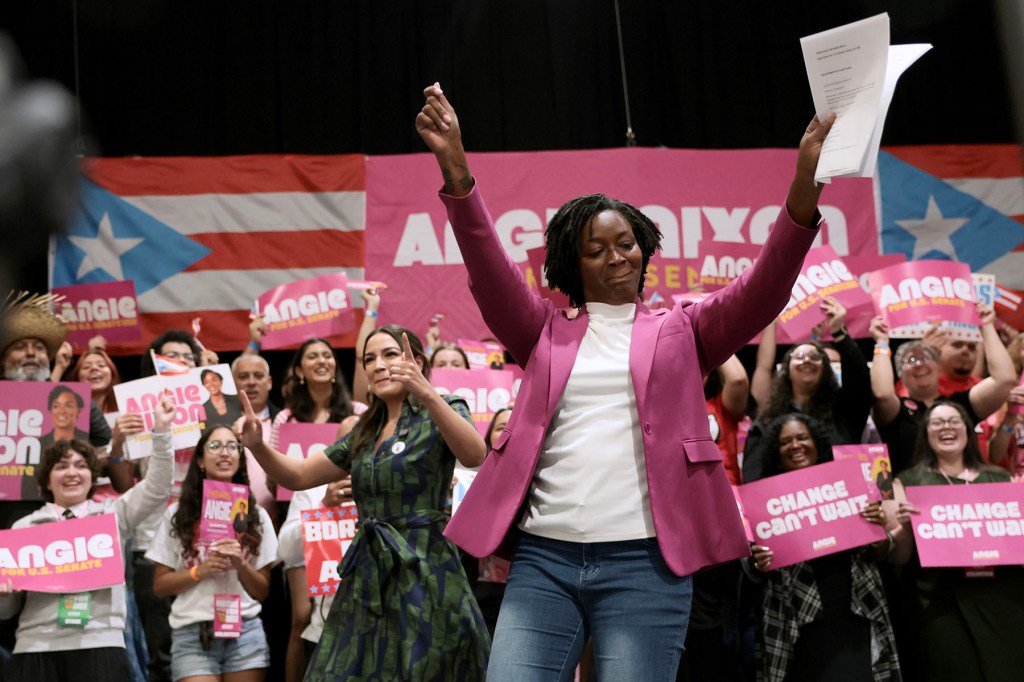
The state legislator from Jacksonville stunned the political world with her upset win in the Florida primary against a candidate who had been backed by the establishment and who was shown ahead in the polls. Nixon’s chances of winning, much less mounting a competitive statewide bid, were seen as low in part due to her embrace of the democratic socialist label.
In Florida, the word “socialism” has long been an anchor on Democrats, particularly among Latino voters who make up a sizable share of the electorate. Nixon’s decisive primary win after becoming a member of the Democratic Socialists of America was one of the signs that this cycle would shake up some of the fundamentals of the Trump era.
Nixon confronted questions about the socialist label by arguing that her actual policy stances were far from extreme and actually in line with most Florida voters.
“$25 million to lie to the state that I’m ‘an extremist,’ I’m ‘radical,’ ‘socialist.’ There is nothing radical or extreme or about wanting to ensure people don’t die because they can’t afford healthcare. There’s absolutely nothing extreme or radical about wanting to ensure people get paid a living wage,” Nixon said during a rally in Orlando in the final days of the election. Nixon has been heavily outspent in the general election, much like she was in the primary.

She also confronted questions about her views with the kind of bold style and sense of humor she is known for. When Moody accused Nixon of wanting to defund the police and abolish prisons — an attack that has dogged Democrats since 2020 — Nixon posted on X: “Now [Ashley Moody], why would I want to abolish the police when I want you arrested and in jail for stealing $10 million from sick kids? BFFR.”
Nixon was referring to findings that the administration of Republican Gov. Ron DeSantis “misappropriated” $10 million from a Medicaid settlement by diverting it to a foundation run by DeSantis’ wife. A grand jury found that Moody, as the state’s attorney general, was aware of the plan and authorized the deal. The grand jury declined to file criminal charges, saying there was not enough evidence indicating who was responsible.
Moody’s appointment made her the second woman to represent Florida in the U.S. Senate. Nixon is the second Black woman to win the Democratic nomination for a U.S. Senate seat in the Sunshine State. Both women were positioned to become the second woman ever elected to represent Florida in the U.S. Senate.