
State lawmakers are weighing bills that would treat abortion as homicide
None of the bills are likely to become law. But they illustrate a growing divide in the anti-abortion movement and could punish pregnant people.
None of the bills are likely to become law. But they illustrate a growing divide in the anti-abortion movement and could punish pregnant people.

The ruling — one of the first to explicitly address abortion-related travel — is a significant victory for abortion providers and supporters.

The case concerns a South Carolina policy that would prevent people from using Medicaid — which predominantly insures people of color — at the nation’s largest family planning provider.

This represents the first criminal charges under Texas’ near-total abortion ban.

The 43-page measure, introduced Friday, may be the most meaningful attempt this year to block the ordering and mailing of medication abortion.
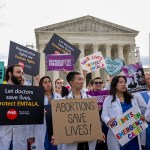
The Biden administration clarified that EMTALA requires hospitals to perform abortions when they are the necessary treatment to stabilize a patient, but the policy’s future is uncertain.

Cases from Louisiana and Texas represent the first test of a key law used to circumvent state abortion bans.

The bill, introduced by Sen. Elizabeth Warren and Rep. Suzanne Bonamici, would empower the Federal Trade Commission to regulate these often religiously affiliated centers.

It is the first criminal case of its kind in the country since the U.S. Supreme Court overturned Roe v. Wade.

It marks one of Kennedy’s clearest public statements on abortion since being nominated to lead the nation’s health department.