
This column first appeared in The Amendment, a newsletter by Errin Haines, The 19th’s editor-at-large. Subscribe today to get early access to her analysis.
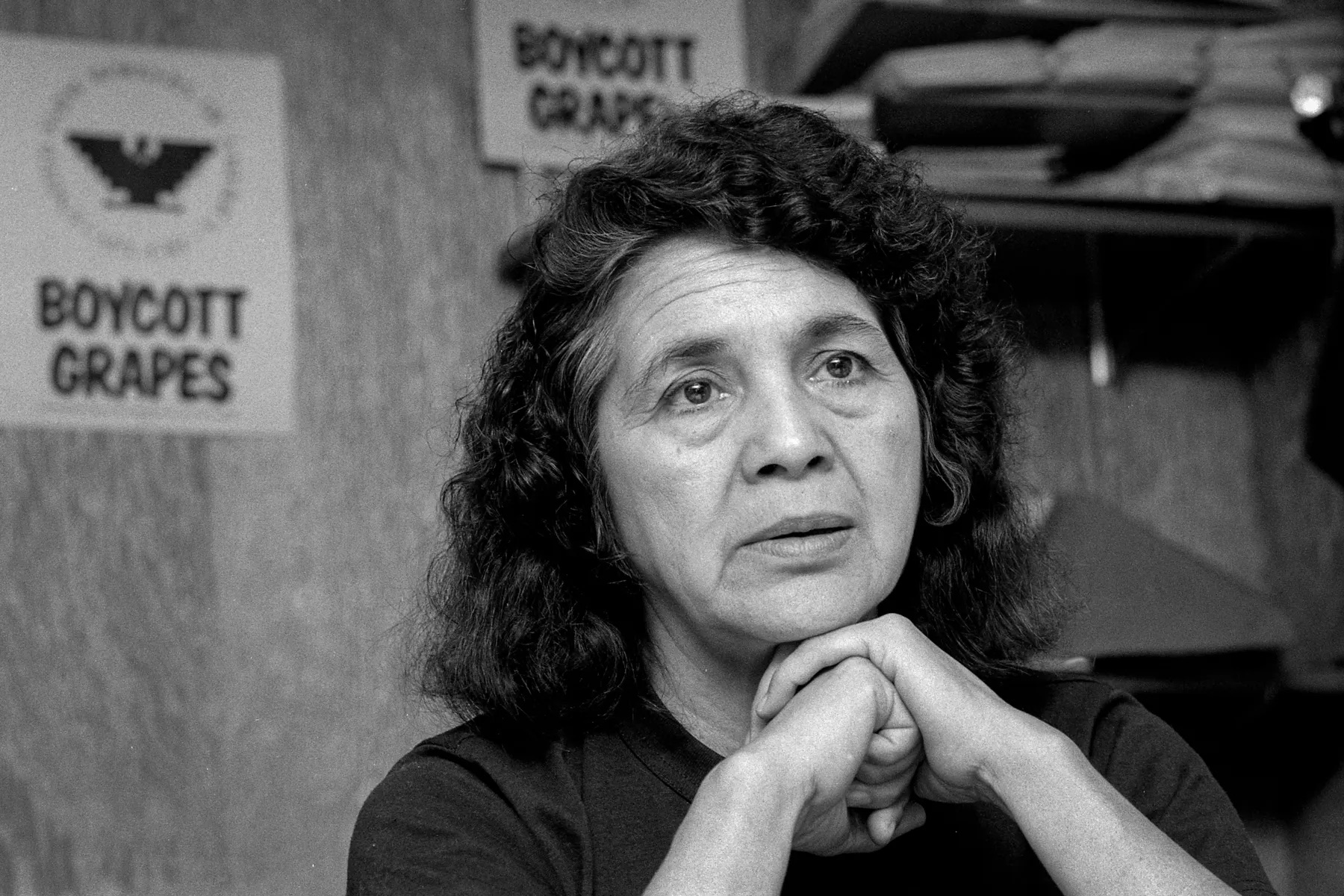
For decades, Dolores Huerta kept a secret she did not believe the movement would survive: that she had suffered sexual abuse at the hands of Cesar Chavez, a towering figure in the farmworker movement she spent much of her life helping to build.
“At the time, I believed speaking out would have ended the movement in its early stages,” Huerta told Latino USA’s Maria Hinojosa on Thursday, in her first interview since the publication of an investigation from The New York Times into accusations against Chavez. “It was my personal pain, my personal burden. And I believed it was worth it.”
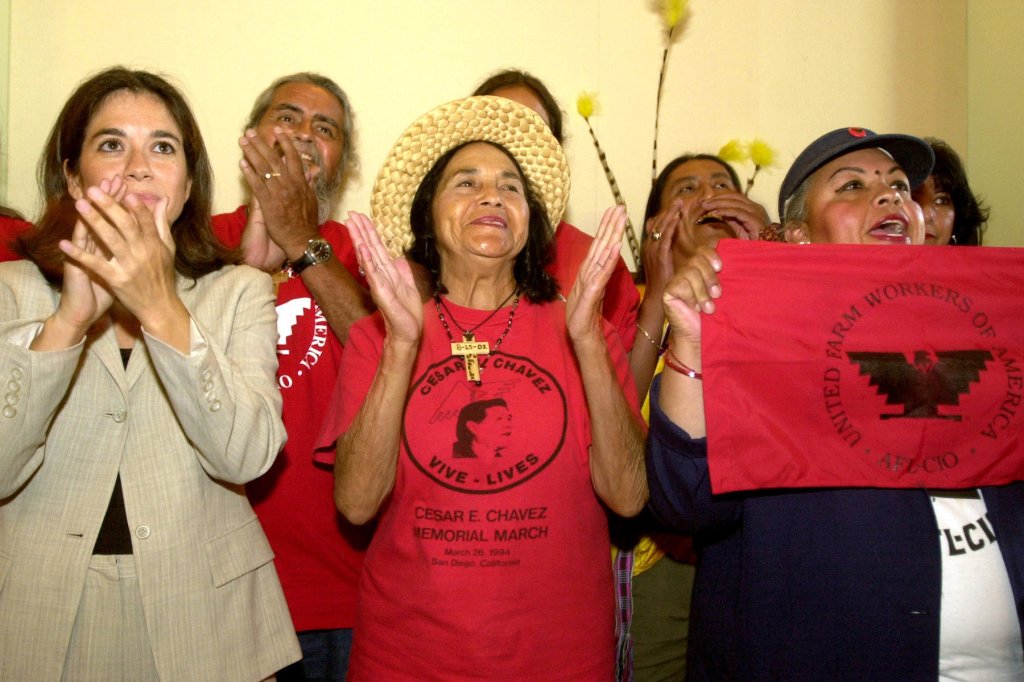
Huerta is a figure who for many — including many women — looms just as large as Chavez. That she is among the alleged victims named in the Times’ investigation into a pattern of abuse of women and girls has been devastating for many in the movement and the larger Latino and Chicano community.
Huerta has long been a champion for women using their voices to speak truth to power. But the fact that she was silent for so long about Chavez is a reminder of the stakes for women in movements — of the individual toll of progress. The fight for equality can often come at their expense.
Coming forward, as Huerta knew in the 1960s and for decades afterward, could mean derailing the movement for justice, equality and the dignity of those she fought for. It may not have mattered anyway: Until recently, sexual violence toward women was not part of the national conversation, and accountability for men accused of abuse was rare.
“To know that he had this dark side is very painful. But it also speaks to something broader — the lack of respect for women and girls in our society,” Huerta said. “This kind of behavior is more prevalent than we want to admit. Men get away with it all the time, and that’s something we have to address.”
Men get away with it all the time, and that’s something we have to address.”
Dolores Huerta
Huerta’s story comes out in the era of #MeToo, the movement that helped create a climate for survivors to tell their stories and be believed in a way that did not exist even a decade ago. Still, Huerta shared her experience reluctantly after the Times asked about the allegations as part of their investigation.
People now have a better framework to absorb stories of sexual violence — including against men seen as heroes — and to understand that sexual and gender-based violence is deeply entrenched in every part of our society, said #MeToo founder Tarana Burke.
“It has everything to do with power. That’s the one constant you see — power at work,” Burke said. “Imagine being almost 96, being this icon of courage for so many people, and having to hold something like this. It’s so heavy — but it’s also so common.”
Women activists of Huerta’s generation had a choice to make: Do you fight for justice for yourself, or do you fight for justice for your community? Huerta chose her commitment to the cause.
The New York Times’ investigation also for the first time told the stories of women who accused Chavez of grooming and abusing them as girls. Huerta acknowledged the bravery of the other women who came forward, and said, “Their courage gave me the courage to speak as well.”
“People don’t always understand — they might blame the women, or question them,” Huerta said. “He was seen as a genius, as a leader who inspired so many.”
In the Latino USA interview, Huerta revealed that she never confronted Chavez about the alleged assaults. He died in 1993 at the age of 66.
Burke wouldn’t start her movement until 2006, but the reckoning around sexual violence against women — particularly in the workplace — really began in earnest in 2017 with another New York Times investigation, this one into powerful Hollywood producer Harvey Weinstein. It quickly spread, and men from many industries faced accusations and some consequences. Many had previously been held up as respected voices in society. In 2018, actor Bill Cosby, a beloved figure to millions of Americans, was found guilty of aggravated indecent assault, though the conviction was overturned. This week, one of his accusers was awarded $19 million by a civil jury.
But even as #MeToo gained momentum and some accusers got justice, many women continued to face backlash for coming forward. There are the questions: Why now? Why take down a hero after so long? Why not say anything before? Even in surviving harm, women still have to defend their decision to speak, Burke said.
“When women come forward, instead of receiving support, they’re often attacked or not believed. We’ve seen this throughout history,” Huerta told Latino USA, adding that she would deal with the criticism if it arises.
We should consider Huerta’s decisions then and now as a survivor’s choice, Burke said.
“I’m not someone who believes people have to tell their story publicly in order to heal,” she said. “She may have gone her whole life without ever revealing this, and that would have been her right. Now that the story is out, it will benefit a lot of people. But we also have to acknowledge that this may not have been something she ever intended to share.”
The revelations have made Burke think about her own experience as a survivor. Celebrated in her own right for her power and courage, she reckons with the reality that she is known, in many ways, for the worst thing that ever happened to her.
Celebrating a woman’s ability to turn trauma into triumph can obscure what women carry as a result.
Burke continued: “More stories like this are going to come out over time. And while it’s not just about the movement, it is a call for movements to do some real self-examination. This isn’t unique to this movement — people do this everywhere.”
Throughout history, women like Huerta have held what movements could not: the harm, the silence, the cost.
This moment is an acknowledgment that stories like those revealed in the Times’ investigation are not separate from these movements, but part of how they were built and sustained.
It is part of an ongoing reckoning with power — what it preserves, and what it asks of the women who fight for us all.