
This column first appeared in The Amendment, a newsletter by Errin Haines, The 19th’s editor-at-large. Subscribe today to get early access to her analysis.
Since 1789, only one out of every 400 people who have ever walked the halls of Congress as a U.S. senator has been a Black woman.
After this year’s elections, there will likely be at least three serving simultaneously — maybe even four.
Two years ago, Angela Alsobrooks of Maryland and Lisa Blunt Rochester of Delaware became the only Black women to serve at the same time. Illinois Lt. Gov. Juliana Stratton is set to join them, and if Florida state Rep. Angie Nixon does, too, the number of Black women senators would double.
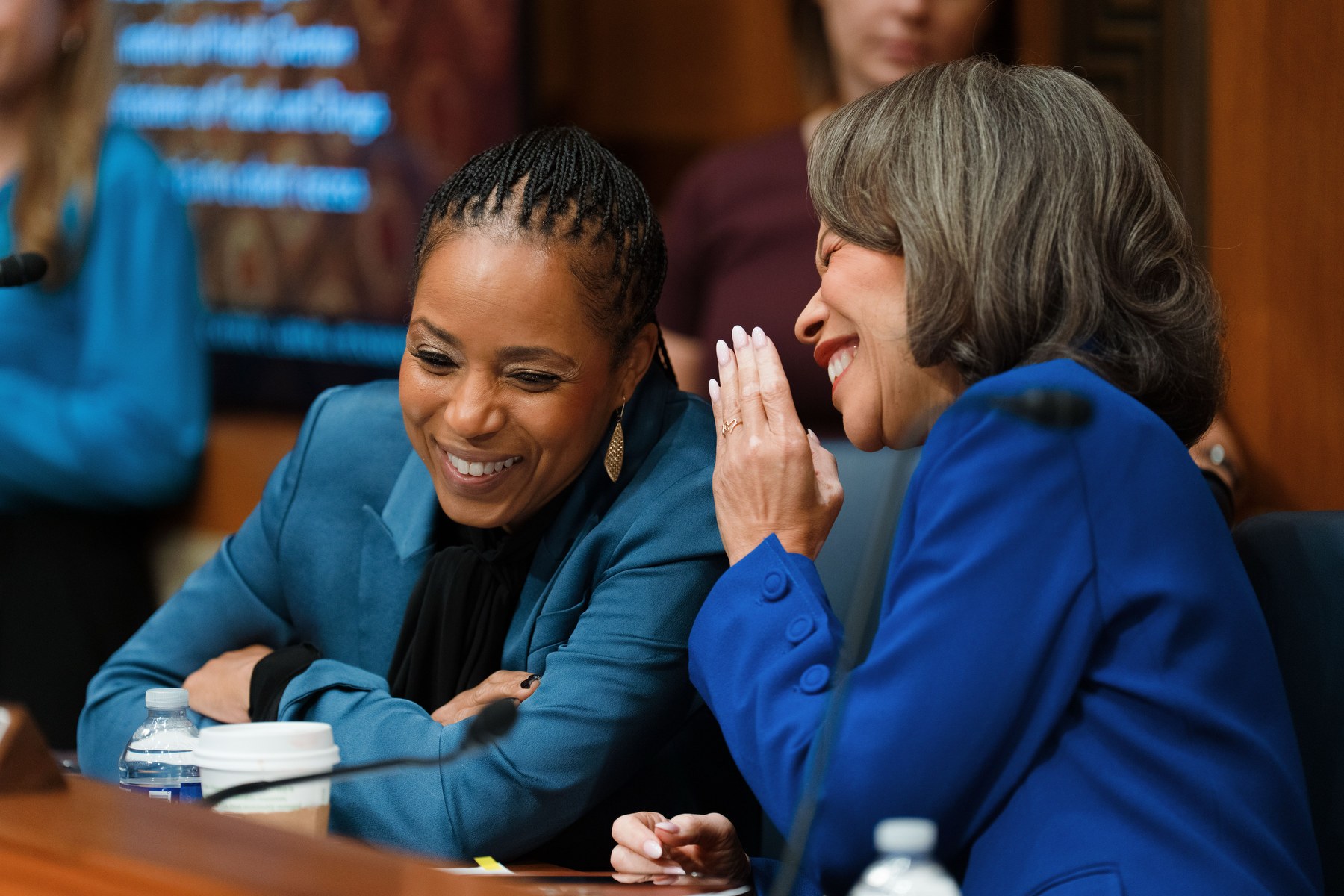
In a joint interview with these four women, all Democrats, the group talked about the importance of being seen, feeling supported and showing up for one another in a political climate that is hostile to Black women. The four of them said they have formed a bond shaped not only by their lived experiences but by a knowing that comes only from attempting to do what few who look like them ever have.
“You understand without words being exchanged, and there’s something so powerful about that,” Alsobrooks said. “Nobody knows better than us the struggle that it takes to get to the Senate. It’s not perceived or imagined. And no one understands what the path looks like except us, because we’ve been there.”
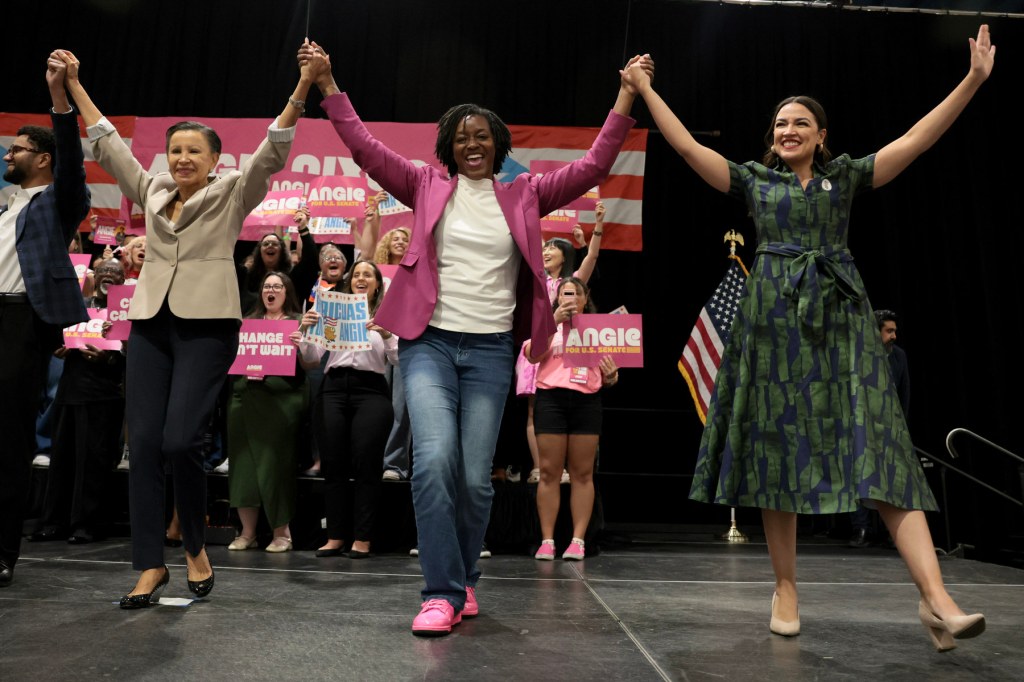
In the final weeks of the midterm election, Stratton, a house music aficionado, shot a get-out-the-vote video in Washington, D.C., surrounded by her team, all of them dancing with the U.S. Capitol in the background. Her moves weren’t missed by Alsobrooks, who has already declared her the best dancer of the group.
Nixon, who has also been known to show up on social media posts dancing, had a question for Stratton: “Did they call you ‘ghetto’ because you were dancing too?”
It was a familiar criticism to Blunt Rochester, a former ballerina who has talked about the importance of dance in her life.
“When I ran in one of my elections, my opponent used a video of me dancing and said: ‘Look at her. While inflation is going off the charts, your congresswoman is dancing.’ What he did was block out who I was dancing with. It was John Lewis, right before he died,” she said of the late Democratic congresswoman from Georgia.
They all nodded in recognition. For Black women, showing up as their full selves can attract unfair criticism rooted in racism and misogyny.
“It’s so funny how it makes people angry that we have joy through this process,” Stratton said. “Running for Senate is one of the hardest things I’ve ever done professionally. There’s lots of reasons why you wouldn’t feel joy as a Black woman on this journey. There are a lot of people out there trying to tell you why you’re not ready for it, why you’re not qualified for it, all of the forces against you.”
Running can be a lonely and daunting prospect, but Stratton said Alsobrooks is one of the people who has helped make the journey easier.
“No one thought I could win,” Stratton recalled. “She pulled me to the side and said: ‘Let me tell you my experience. You can do this.’”
Stratton and Alsobrooks talked about the importance of faith and shared their mutual love for a gospel song — “Firm Foundation” by Maverick City Music — about holding on to faith in times of anxiety or challenge.
“I’ll never forget that conversation,” Stratton said. “What I knew is that in something so hard, I could get there and there would be two other women who fully understood what it was like. I knew that when it’s hard, there was somebody I could go to and say, ‘Where are we? How do we navigate this? What do we need to do? How can you help me?’ Because a lot of times, it’s Black women doing that for other Black women.”
Nixon said having the group’s support when people have talked about her Southern drawl, her loc’d hair or her delivery has been affirming. They have helped make connections and shown up for her on the campaign. Both senators reached out to Nixon at a particularly low point this summer when far-right activist Laura Loomer called Nixon a “ghetto Black communist Bitch” on X.
“They spoke life into me,” Nixon said. “I think about the way I talk. Because I have a drawl, they question how I wear my hair. I’m automatically considered ‘ghetto’ just because I’m a Black woman. I’m loud. I’m boisterous. But if people who don’t look like me do the same thing, it’s: ‘Oh, they’re passionate. They have gumption.’ There’s something about talking to someone who’s been through that and who knows what it’s like. Some of the leadership did not think I was cookie-cutter enough to be in this U.S. Senate seat. It makes me feel seen and appreciated.”
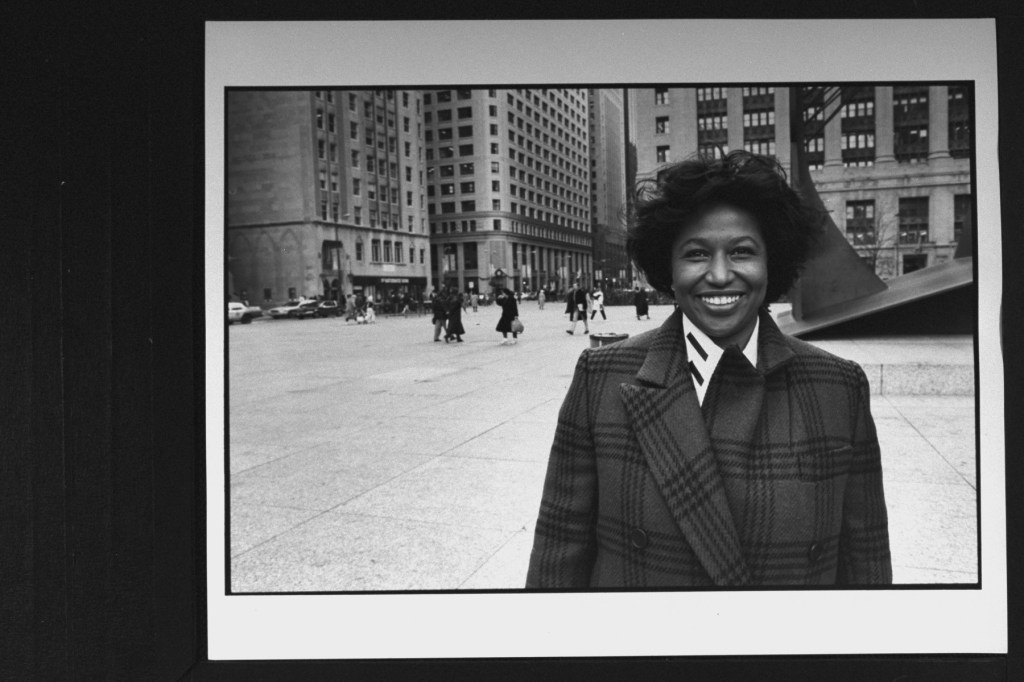
The first Black woman in the Senate was Carol Moseley Braun of Illinois, who was elected in 1992 and served one term. There would not be a second for more than two decades, when Kamala Harris was elected to represent California in 2016 and served until she became the vice president. California had a second Black woman senator when Laphonza Butler was appointed to fill a vacancy in 2023. They all served alone.
But now Alsobrooks and Blunt Rochester say they can lean on each other, as well as offer Nixon and Stratton the kind of support system they developed, first on the campaign trail and now in the Senate.
“We’ll look at each other across the caucus room, and we don’t even have to say a word,” Blunt Rochester said of Alsobrooks. “Or we can cosign each other. That’s the power of this, too. Because all of us have been in a room where we were the only one.”
There is excitement at the prospect of the four of them being able to serve together, all Black women, but all bringing different experiences and perspectives to the table. They talk about the potential to support one another on policy issues from affordable housing, to fibroids and uterine cancer, to caregiving to heart disease.
“That’s what’s going to make the Senate and the country richer,” Blunt Rochester said. “All four of us can join as a collective bloc when it’s time to vote for things. We can have the meeting before the meeting!”
It’s their way of paying it forward, the way senators like Moseley Braun and Butler did for them, telling them who they should meet, what their experiences were like — hacks that helped them show up ready to work.
The prospect of four Black women in the Senate two years after then-Vice President Harris fell short against Trump, whose administration has driven hundreds of thousands of Black women out of the workforce, is powerful.
“We stand together as the best evidence of our resilience as people and as Black women,” Alsobrooks said. “We weren’t able to be extinguished. In fact, we’re about to multiply, in spite of whatever the plan was, because we legitimately represent the people of our country and their experiences.”
Nixon agreed.
“What I see, having conversations with people out in the community, is that they begin to see themselves in all of us,” she said. “That’s why the other side is spending massive amounts of cash on us to stop us, to discredit us, to spread disinformation. They don’t want your everyday people to believe that they could become senators, that they should have a say in the direction of this country. It’s refreshing and fulfilling to know that the community is like, ‘We can do it, too.’”
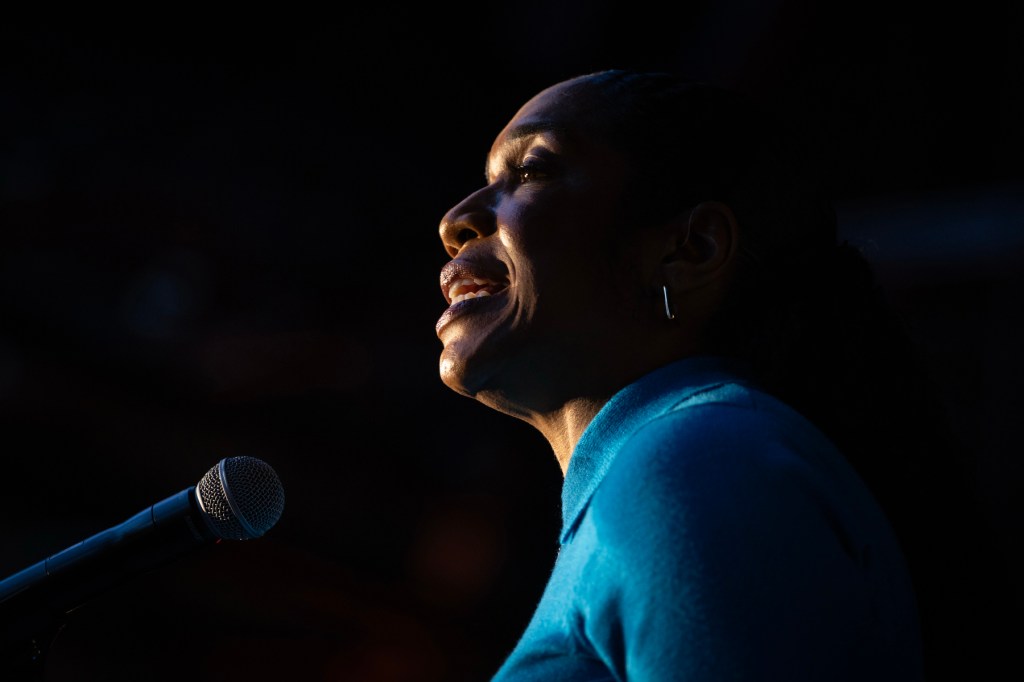
Progress in Black women’s representation is uneven. According to a new analysis shared exclusively with The 19th from the Black-women focused political action committee Higher Heights and the Center for American Women in Politics at Rutgers University, Black women’s representation in Congress is expected to match its record of 30 that was set in 2024, with expected gains in the Senate expected to offset potential losses in the House. The 403 Black women serving in state legislatures across the country is one less than the all-time high set earlier this year. Georgia’s Democratic nominee for governor, Keisha Lance Bottoms, would become the first woman from her state and the first Black woman in the country to serve in the role if elected. And in Georgia, Black women are eight of the 10 Democratic nominees for statewide office.
It isn’t lost on the current senators or those running that what they’re trying to do would be unprecedented, but that isn’t the only thing that matters.
“None of us are just trying to make history,” Stratton said. “We don’t just want to break a glass ceiling or say that we can be the first. All of us want this to be normalized.”
It’s remarkable and important at a time when progress for Black women’s political participation is uneven after a streak of increased representation.
Blunt Rochester still remembers the day she joined the Senate. On the same day Trump was sworn in, she stood before Harris and took her oath.

“I didn’t know if it was appropriate, but I was like, ‘Can I hug you after we do this?’ She said yes,” Blunt Rochester recalled.
“And when I leaned over, she whispered in my ear, ‘Enjoy this moment.’ I needed that, because we had just elected this man again, and faith and confidence in this country was shaken. She helped me to stop, focus and be present in the joy of that historic moment. And while we don’t run to make history, we understand that the history-making that we are doing creates the pathway for others to come right in our footsteps.”
To check your voter registration status or to get more information about how to vote and what’s on your ballot, visit vote.org.
Correction: An earlier version of this article misstated who was in a conversation with Stratton.