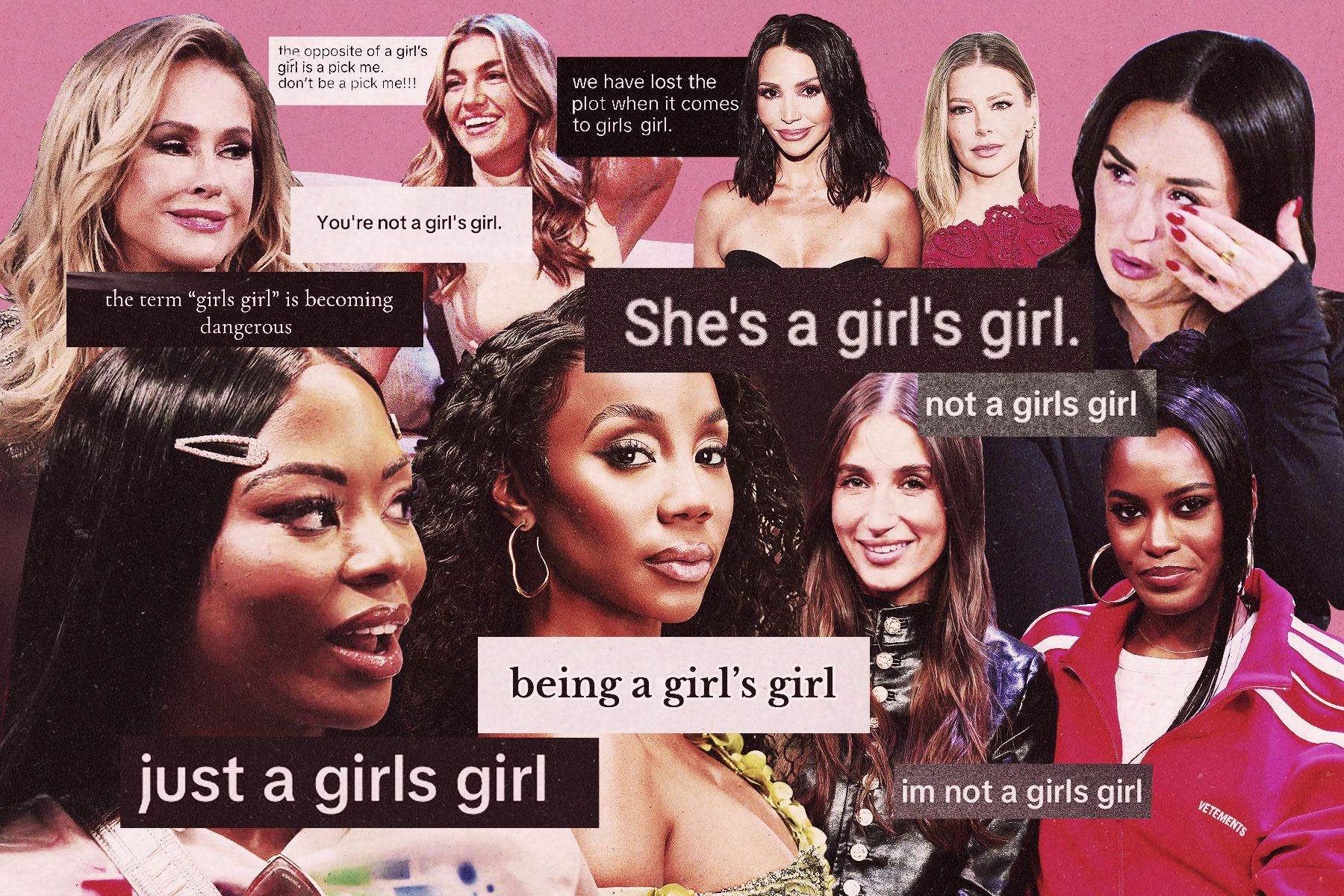

First came the rumors all over social media: Were Amanda Batula and West Wilson, like, dating?
Then, internet sleuths everywhere were served up actual validation: A joint statement posted on Instagram stories by Batula and Wilson confirmed their “connection” and asked for “understanding and respect as we navigate this.”
And finally, came the sentencing, as Bravo fans and even regular pop culture followers who have never seen a second of “Summer House,” the popular reality show that has been on air for nearly a decade, declared: Amanda Batula was not a girl’s girl.
After all, how else to describe someone who would date the ex-boyfriend of her best friend on the show, former ICU nurse Ciara Miller, especially after Miller’s unwavering support of Batula as her marriage to fellow castmate Kyle Cooke crumbled?
There were TikToks. There were Instagram posts. There were entire podcast episodes devoted to the topic. And over and over again, the phrase was uttered: “She is not a girl’s girl.”
But of course, this language isn’t limited to the “Summer House” scandal. It has been said countless times recently in the larger Bravo reality TV cinematic universe: Keiarna Stewart said she had mistakenly thought that Jassi Harris was a girl’s girl during their fallout on this season’s “Real Housewives of Potomac.”
“Real Housewives of Beverly Hills” cast member Kathy Hilton described this season’s new addition, Rachel Zoe, as a “girl’s girl” in a profile of Zoe pegged to her debut on the show in The New York Times. Entire YouTube montages herald Bozoma Saint John as a “girl’s girl” for the way she has defended her friend (and, incidentally, Hilton’s sister) Kyle Richards this season on “Beverly Hills.”
The phrase has been steadily gaining popularity online over the past few years but has recently exploded out of TikTok into Bravo and beyond. Fans were quick to label Bri McNees from the most recent season of Netflix’s “Love is Blind” as not a “girl’s girl” based on her interactions with Chris Fusco after Fusco’s breakup with fellow castmate Jessica Barrett, seemingly over the fact that Barrett did not do Pilates every day.
The phrase isn’t new, and certainly existed long before the advent of TikTok or reality TV. But what’s happening right now does feel new — the ubiquity, the conviction, the rush to determine just who and what is or is not up to the standards of girl-ness.
Danielle Lindemann, a professor of sociology at Lehigh University and the author of the book “True Story: What Reality TV Says About Us,” said she isn’t surprised the phrase seems to be popping up as ideas of femininity divide culturally into a #MeToo/Smash the Patriarchy camp vs. Trad Wife/evangelical influencer camp.
“When we’re asking people, ‘Are you a girl’s girl?’ we’re sort of asking them to locate themselves within that — like, where do you stand? Do you support other women? Or are you going to carry water for the patriarchy?” Lindemann said.
But the phrase “girl’s girl” isn’t a simple shorthand for progressivism. Lindemann points to the fact that it’s also — frequently — used by Real Housewives who lean conservative.
It can serve as a sort of performative feminism, a way of trying to signal a value system without having to engage more deeply. It also can serve to let men off the hook for their actions.
“It’s a surface level way of paying lip service to a certain kind of politics while just sort of defaulting back into the comfort zone of engaging in the default, which is patriarchy, which is sexism,” said Racquel Gates, an associate professor of film and media studies at Columbia University who studies Blackness and popular culture.
Sara Reinis, a doctoral student at the Annenberg School of Communication at the University of Pennsylvania who studies how social media trends shape cultural norms, said she thinks it is important to contextualize the explosion of the phrase “girl’s girl” within the larger trend of “girl” phrases on social media: #GirlDinner, #GirlBoss, #PickMeGirl, #LuckyGirlSyndrome and the ever-popular “I’m just a girl” meme.
“There’s a lot of cultural tension around gender, obviously, right now but there’s also a more nuanced tension around it about what it means to be an empowered woman,” Reinis said. “There’s this disavowing of the girl boss and the sort of embrace of femininity. There’s a lot happening with the branding and rebranding and push and pull of the word ‘girl.’”
Using the phrase “girl’s girl” to weigh in on pop culture gives people “a lower stakes, more playful sort of way” to reckon with the question of systemic issues like women’s rights, Reinis said.
“It doesn’t feel coincidental that there is the ability to kind of romanticize what it is to be a girl versus what it is to be a woman, and the sort of fantasy of reverting to girlhood aligns with the fantasy of the #TradWife and things like that, this magical place without responsibilities, where there’s fun and baking and those kind of feminine-coded things,” Reinis said.
Gates said the phrase speaks to an understanding of how gender can influence power.
“I think what’s happening is we are seeing this political and ideological regression back to the 1950s where the politics are exactly the same, the ideologies are exactly the same, but we as a society have gotten smarter and slicker about knowing what we’re supposed to say. That’s what I see happening around this “girl’s girl” stuff — it feels like ‘Scarlet Letter’ stuff. It feels like society is always focusing on the other woman as opposed to the man in question,” Gates said.
Amanda Batula? Clearly not a great friend, Gates said — but the situation between Batula and Miller is larger than this one incident involving Wilson. Gates noted how “Summer House” is a “very White reality show,” and as such, what’s playing out right now “feels incredibly predictable.”
Miller is a Black woman; both Batula and Wilson are White. This season, currently airing on Bravo, has spent a substantial amount of time delving into how race has impacted Miller and her appearance on the show.
Lindemann said this dynamic feels impossible to separate from the “girl’s girl” narrative as the phrase signals a disinterest in larger, intersectional coalition-building in the face of systemic forces that have largely fixed their sights on using gender and race as tools of oppression.
It’s worth looking at the two men who now find themselves both front and center and also largely absolved of any responsibility in the “Summer House” drama: Wilson and Batula’s husband, Kyle Cooke, whom she recently announced she was divorcing.
Wilson, Lindemann said, has become “the face of softer, contemporary masculinity,” pointing to the way he used his Instagram account to post anti-ICE messages and other signifiers of progressive politics.
“There is this sort of image of this guy who is maybe a girl’s guy, this kind of more evolved liberal man who then, you know, turns out to disappoint us.”
Meanwhile, Cooke, a 43-year-old chief executive of a sparkling hard beverage company who has recently embraced a passion for DJing, has gotten a new surge of empathy.
So when it comes to who is really a girl’s girl, Lindemann said she has one major takeaway: “It pays to be a conventionally attractive, straight White man.”