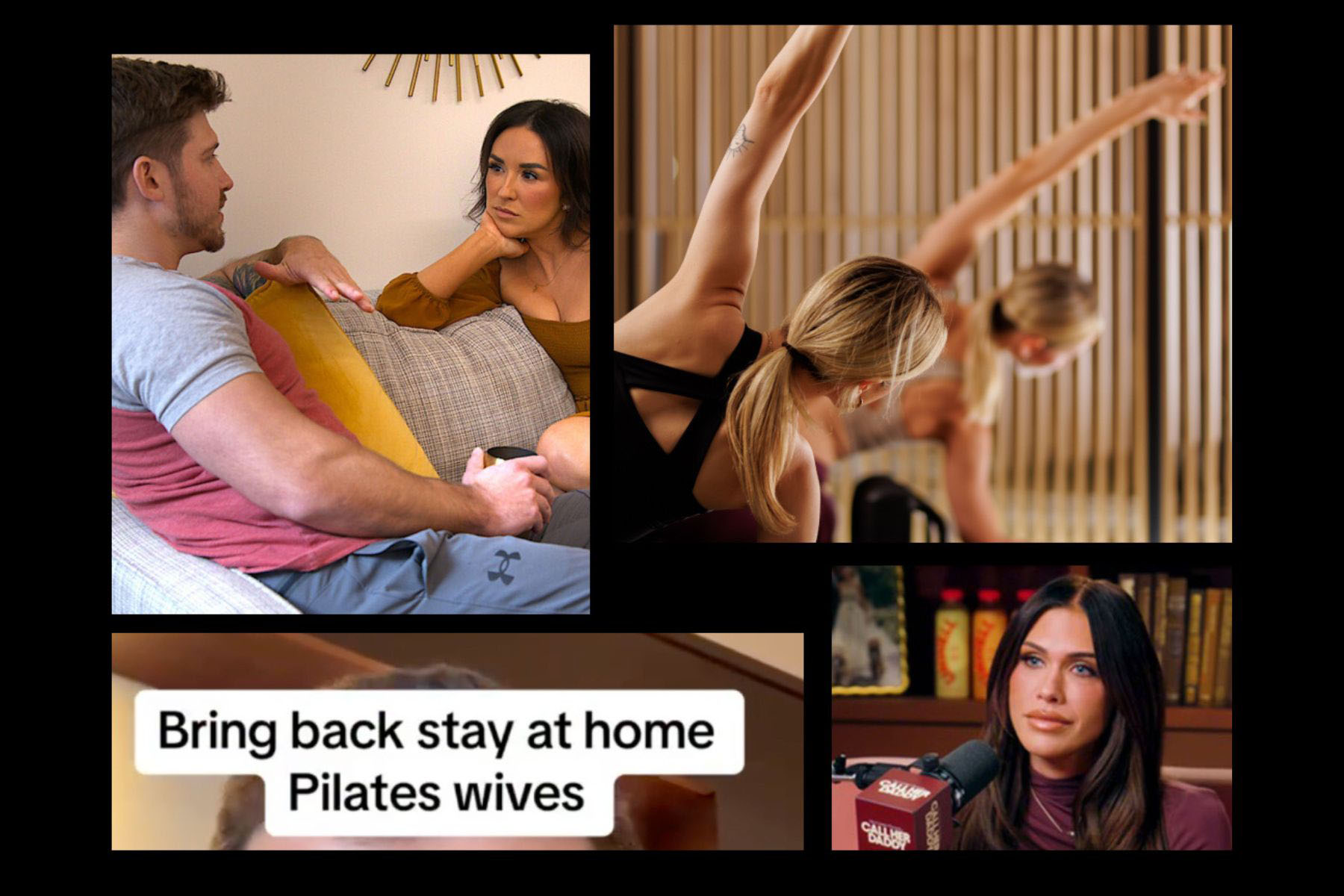
On the most recent season of Netflix’s reality dating behemoth “Love is Blind,” Chris Fusco, a 33-year-old account executive and Army veteran, joined the legions of men who have left this show as villains after he sat down with his fiancée, 38-year-old infectious disease doctor Jessica Barrett, to talk to her about why he felt like their relationship wasn’t working.
Fusco told Barrett that the physical attraction just wasn’t there for him; his usual type “does Pilates every day,” he said.
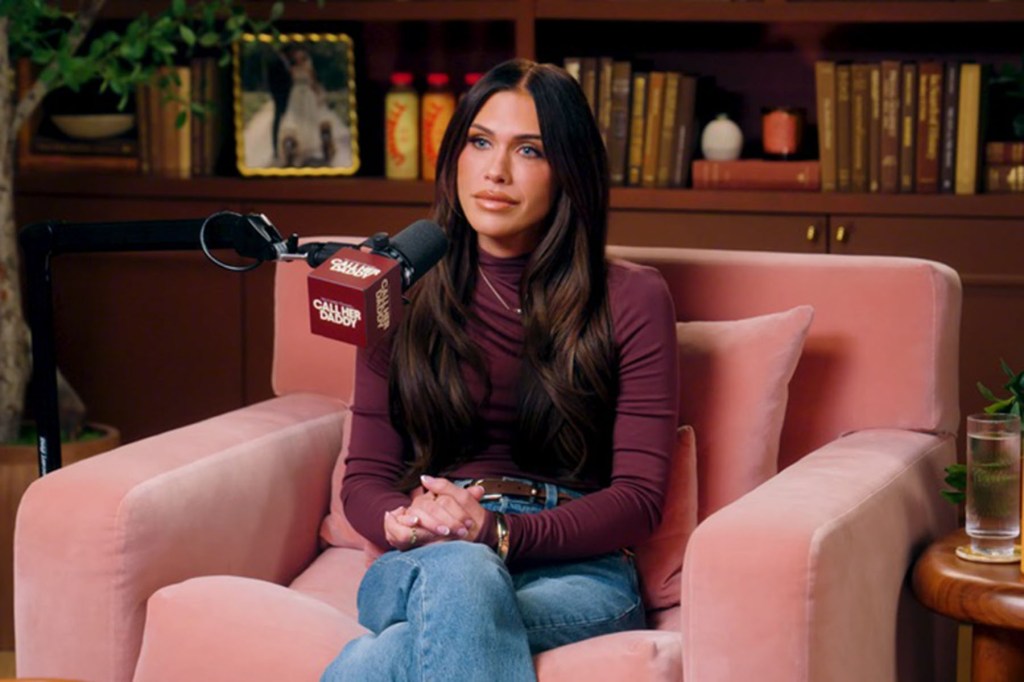
And on the latest episode of the popular podcast “Call Her Daddy,” reality TV star Jessi Draper detailed the extensive troubles she had with her husband before he filed for divorce last week. She said he threatened to make public embarrassing texts linked to an emotional affair she had last year, tracked and recorded her without her permission, and hired escorts while they were still together.
Draper said he was also emotionally abusive, telling her, among other things, to “start doing Pilates every single day.”
Pilates has grown in popularity in recent years, fueled in part by social media. This dig at the exercise routine of Draper, the “Secret Lives of Mormon Wives” cast member, has much deeper misogynist roots than simply criticizing her appearance: It serves as shorthand for both a set of instructions and expectations for how a “good” and desirable woman should be.
This logic aligns with messages from parts of the manosphere that promote the notion that men have been made victims by the onset and momentum of feminism. The manosphere directs them to reassert their dominance over women to regain social status lost by their own lack of attractiveness — which, somehow, is caused by women.
Influencers have increasingly popularized the ideal of a “Pilates girl” — a woman who engages in what they see as a feminine form of exercise, one that doesn’t result in bulky muscles. The Pilates girl doesn’t go to the gym, where she might encounter other men. (They might look at her! She might look at them!) Instead, she opts for 50-minute classes that are assumed to be filled with other White, lithe women.
“If your girl goes to Pilates, wife her up immediately,” said one man creator on Instagram who declared Pilates to be “wholesome” and “the biggest green flag ever for a girl.”
“If your girl goes to Pilates, she’s probably staying in on the weekends so she can get up early and go to a Solidcore or BodyRok class,” he continued. “And she’s going to come back from the Pilates class in a great mood because she went with her friends and didn’t get hit on by any creepy guys and got a great workout in.”
Mariel Barnes is an assistant professor of public affairs at the University of Wisconsin-Madison where she studies the manosphere and its political impact. She’s not surprised that “Pilates” has emerged as a kind of code word.
“It’s a way of telling people what you want without being explicit about it — and it’s also a way of trying to not seem like a terrible person,” she said.
She pointed to Fusco on “Love Is Blind” as an example of the latest iteration of the manosphere, one with some level of plausible deniability.
“It’s this normalization of some of these qualities that have emerged from the manosphere but couching them in a more palatable manner and making it harder for women to detect,” she said.
Pilates has a reputation in the fitness world for being associated with privilege. “Love is Blind” alum Raven Ross, who is Black, recently found herself in the middle of a social media maelstrom after posting a TikTok defending Pilates against criticisms that it lacks diversity and is inaccessible.
While YouTube videos of at-home workouts (like Ross’) abound, the practice can use specialized machinery in studios. Like yoga, the practice’s origins aren’t meant to be exclusionary, but the way it is marketed usually caters to a specific body type and socioeconomic status.
Danielle Friedman, the author of “Let’s Get Physical: How Women Discovered Exercise and Reshaped the World” and a journalist focused on the history, culture and science of women’s fitness trends, explained that Pilates was created by German boxer and gymnast Joseph Pilates while held by the British during World War I.
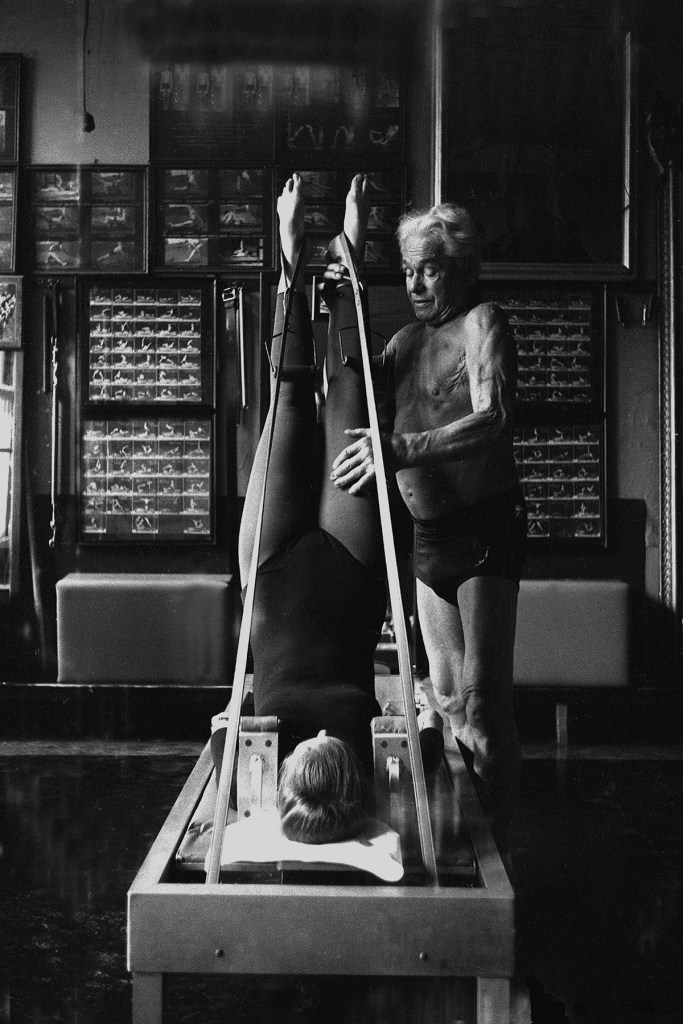
During this time, he began teaching fitness to other internees, reportedly inspired by cats’ movements. As Pilates began to refine his method, his focus shifted to what we refer to today as the mind-body connection, telling practitioners they could use their minds to control their muscles. He dubbed his new practice “contrology.”
After the war, Pilates and his new bride, Clara, arrived in New York City, where they continued to teach “contrology,” which gained a foothold in the world of classical ballet. By the 1950s, Friedman said, “contrology” was becoming known as Pilates — and had found a new audience outside the dance community: wealthy New York City socialites.
“It was still very unusual for women to devote a designated part of their day to work their bodies, but because this had an association with dancers — and thus with grace and thinness — it became something that women who had time to spare in their days pursued,” she said.
But it wasn’t until the 1990s that Pilates went mainstream in concert with yoga — which has roots in ancient Indian practices — both responding to a kind of cultural backlash against the intensity of 1980s aerobics culture.
“You could shorthand ‘yoga body’ and ‘Pilates body’ and people knew what you meant. The fact that it was practiced, both of them, by supermodels and professionally beautiful, thin women really cemented that aspirational quality,” Friedman said.
The current rise in popularity, Friedman said, can be seen as a backlash to interest in weightlifting and strength training — especially among women — and exercises that are about creating visible muscle mass, as opposed to thinness.
On social media, the virtues of Pilates are extolled by both men and women creators who don’t make explicitly political content but who promote an aspirational lifestyle rooted in wealth, traditional gender roles and living a “soft life.”
Barnes said the manosphere has a “rigid conceptualization of what a woman should be”: a traditional, submissive stay-at-home wife who doesn’t challenge a man’s status as the breadwinner and head of household and who fits a specific aesthetic presentation.
“I think the stereotype of who goes to Pilates is that aesthetic,” she said. “It’s this slim, toned svelte woman who is younger, has no curves, a flat stomach and ab definition. And they use Pilates as a euphemism for getting that kind of woman.”
The same Instagram creator who said men should “wife up” women who go to Pilates called in in another post to “bring back stay-at-home Pilates wives,” clarifying that he didn’t believe that women shouldn’t work but should choose a career that allows time to “tan by the pool, go to Pilates, go to farmer’s markets in a sundress and raise a family.”
Other men post Reels joking about working hard so their future wives can go to Pilates and drive luxury cars. Women “soft life” creators who promote Pilates as part of their highly curated aesthetics are often seen but not heard: take one Reel from a woman showing herself exercising on a Pilates reformer with the overlaid text: “You can’t hurt me. I’m a millennial with a degree I don’t use, a husband who provides and being spoiled is my love language.”
All of this isn’t to say that people — including women of all ages — shouldn’t be able to freely do Pilates without men telling them to.
“The reality is that Pilates is a great way to become strong,” said Friedman. “It’s an excellent form of resistance training. It just doesn’t tend to create as much mass as other forms of strength training.”
But Friedman also noted that throughout history, exercise culture has operated in direct dialogue with the social power women have held.
“Right now it’s hard to parse what’s happening, but I think as long as women are focused on making themselves small and controlling their bodies for other people’s pleasure or benefit, that sort of inherently puts women in an unequal position.”


