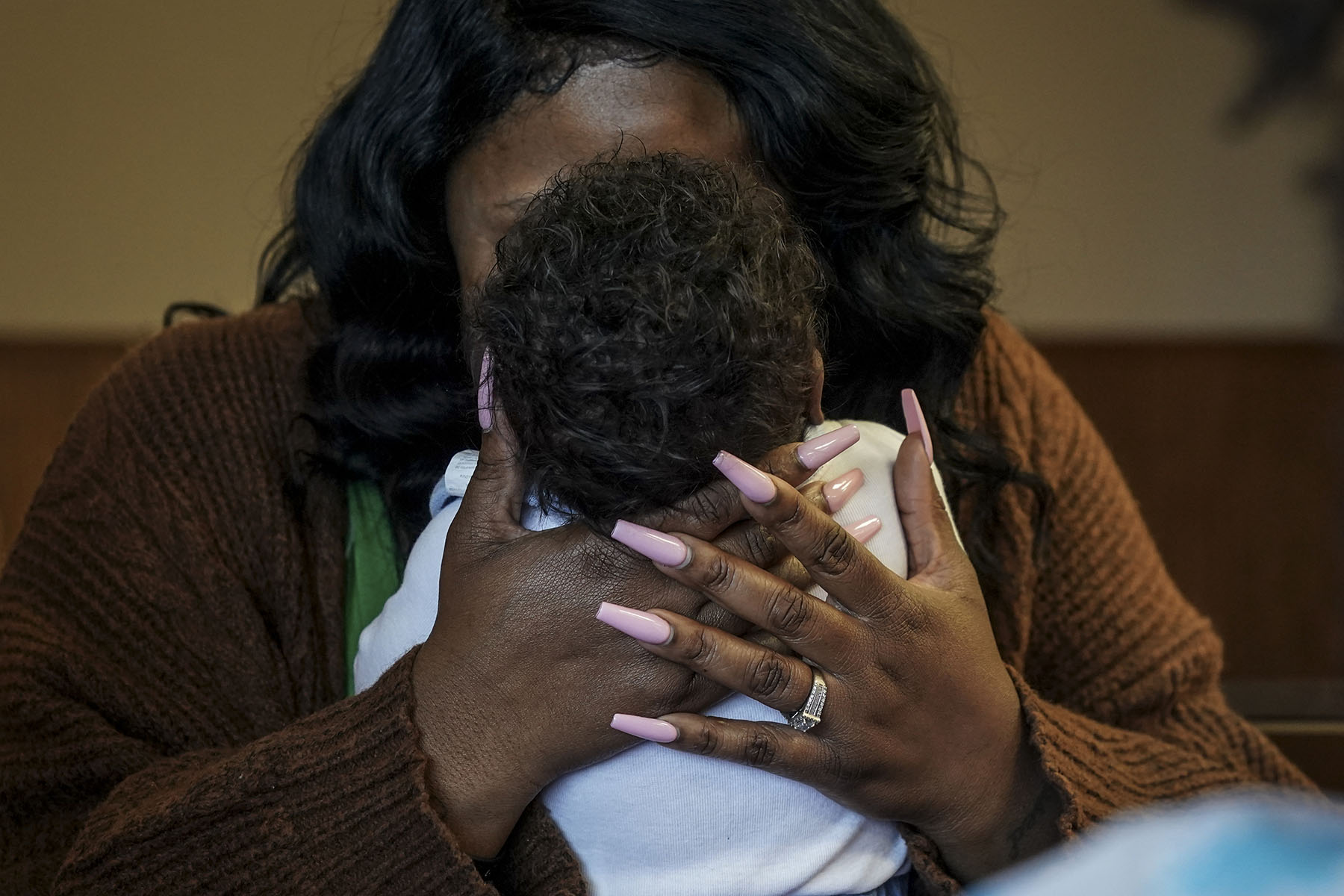

For decades, single mothers have been kept from homeownership by a market that was not designed to deliver them the American Dream. That could all be about to change thanks to a bipartisan unicorn: A massive housing bill — the largest this century — that passed Congress and is now law.
The bill contains policies advocates have championed for years, many of them designed to lift people into homeownership for the first time. One of the groups that stands to benefit the most is single mothers, and especially Black single mothers, who have increasingly pursued homeownership in recent years.
New home construction is at a six-year low, and rates for a 30-year mortgage remain high at about 6.5 percent on average, with no signs of it coming down soon. Meanwhile, other household costs, particularly energy costs, are accelerating at the fastest rate in three years, thanks in part to the war in Iran. The result is a housing market that is still too expensive for families that are increasingly struggling to afford basic needs and childcare, much less a mortgage.
The legislation, known as the 21st Century ROAD to Housing Act, is designed to make it easier to build more housing and to do it fast, which will be key to driving down costs at a time when affordability and supply are the greatest barriers for prospective home buyers. Multiple provisions are specifically meant to encourage the construction of affordable housing and create more access to mortgage lending for low-income and rural communities.
Despite the bipartisan support, the bill faced roadblocks: At the end of June, President Donald Trump abruptly canceled a planned event to sign the bill and threatened not to sign it until Congress passed the SAVE America Act, which would require people to show proof of citizenship when registering to vote but does not have the votes needed to pass the Senate. Under the U.S. Constitution, the president has 10 days to veto or sign a bill before it becomes law automatically. On Friday, Trump said he would not sign the bill in protest; it became law at 12:01 a.m. Saturday.
A bill like this one, experts said, could lead to an increase in homeownership for single moms.
“There’s an opportunity for us to understand that when you center single mothers within public policy, when you center single mothers within legislation, they serve as a proof of concept,” said Chastity Lord, the president and CEO of the Jeremiah Program, which works with low-income single mothers. “You immediately bring children into the conversation, you immediately bring gender, you immediately bring economic mobility, and so you are offering something that actually works for everyone. One of the beautiful things that this bill also represents is that single mothers aren’t a footnote in the housing crisis.”
Since at least the 1980s, when the National Association of Realtors first started tracking the data, single women have outpaced nearly every group except married couples in homeownership.
Historically, a majority of those have been White women. That has started to shift in recent years as marriage rates have dropped, especially for Black Americans, and Black women have continued to make significant strides in educational attainment, leading to higher wages for some. In 2023, about 60 percent of Black women homebuyers were first-time buyers — the highest share of any group, according to the National Association of Realtors. And by 2024, Black women made up the largest share of all single women homebuyers at about 33 percent, surpassing White women, who accounted for 20 percent.
More than single men, single women have been willing to cut spending on entertainment, take fewer vacations and even take on a second job to buy a home, said Jessica Lautz, the deputy chief economist at the National Association of Realtors. Any sacrifice they can make to come into homeownership, “they’re willing to do that,” she said. But they are doing it in the face of substantial hurdles.
At a baseline, single women have lower lifetime earnings overall than single men, making affordability a top concern. According to a study by the Center for American Progress, a liberal think tank, the median income of households headed by Black single mothers was $38,000 in 2022; for single fathers, it was $57,000. Those lower earnings make it harder for women to afford a downpayment and impact their debt-to-income ratio, which means single women are 30 percent more likely to be denied a mortgage, according to data from LendingTree.
Black women have another challenge to contend with. As the group with the largest amount of student loan debt in the country, Black women face even higher rates of mortgage denials. Black applicants overall are denied a mortgage at twice the rate of White applicants, typically because of debt or low credit scores.
Among single mothers, a whopping 97 percent report facing some type of housing hardship — which can include not being able to pay rent or mortgage, challenges paying water bills or having their electric or water service shut off — in the past year, according to a March survey of 2,250 single mothers by the Urban Institute and the Jeremiah Program. About two in three said they couldn’t pay their full rent or mortgage.
The bill, which was refined by a bipartisan set of lawmakers over months, comes in as all of those challenges are as acute as ever. The package was designed to ease a large set of federal rules around housing and incentivize local communities to build more affordable units. The bill also bars large institutional investors and private equity from buying more single-family homes if they already directly or indirectly own at least 350 homes.
Here’s how some of the provisions can impact single moms of color:
- One provision directs the Department of Housing and Urban Development (HUD) to prioritize housing projects based in communities designated as opportunity zones, which are underserved communities where investors are encouraged to build. More than half of the people living in these zones across the country are people of color and about a quarter of them are Black; almost all are low-income.
- Another part of the law is designed to make it easier for community banks, which have historically given more loans to people of color, to offer more mortgage and construction loans. That would create greater financing options for the people who rely on these banks, particularly Black communities.
- The bill makes several changes that would incentivize more small-dollar mortgages under $100,000, creating more access to affordable homes.
- It also lifts the cap on how much banks can invest in affordable housing and community development projects, making it possible to introduce more capital into affordable home construction.
- Several provisions would help finance loans for home improvements and repairs, as well as the construction of accessory dwellings, making it easier for families to fix and keep their homes, live intergenerationally or live several families to a home, an option that has become more popular among single moms.
In practice, it could look like this: The provision that would create a pilot program at HUD to support home repair programs would provide grants and forgivable loans to homeowners and landlords. That money, Lord said, could help people “fix leaky roofs, outdated plumbing, broken HVAC, all of those things that are causing them to leave their homes or sell them and move into [being] renters.”
The small-dollar mortgage change will help solve a problem that has kept borrowers from accessing financing simply because the loan they were seeking was too small. “That is a market problem, not a borrower problem,” said Alanna McCargo, a senior fellow for inclusive capitalism at the Clinton Foundation and a non-resident fellow at the Urban Institute.
“I saw it firsthand with my own mother, who had excellent credit but could not refinance her small remaining mortgage when rates fell in 2021,” McCargo said. “This legislation does not solve for that overnight, but it moves us toward a market that serves borrowers based on their creditworthiness, not the size of their loan.”
It’s also hard to overstate how much of an impact simply creating more affordable homes will have, said Emma Waters, a senior policy analyst at the Bipartisan Policy Center’s housing team. At a time when all other costs are rising and there is job instability — particularly for Black women, whose unemployment rates were climbing for much of the past year — it’s hard for people to make the leap to buying a home.
“For single-parent households, a lot of times those budgets don’t have as much wiggle room as maybe a two-income household might have,” Waters said. “That’s probably, from my perspective, where the benefit is going to come from the most.”
Given the existing housing supply, anyone with a household income below $75,000 is going to have a difficult time finding a home, and what may be available may not even fit their needs, said Lautz from the National Association of Realtors. Most of the single-family homes available are three-bedroom, two-bath homes — not ideal for most single parents.
“The housing stock in America is actually not meeting the demographic needs that we currently have when we think about home ownership,” Lautz said. “There’s opportunities to bring in entry-level buyers who have been struggling to find housing inventory that’s not available in their communities.”
Now, the big question is how long all of this is going to take. Building homes and educating people about their new financing options and avenues takes time. It will likely be years before prospective buyers feel the market easing up, Lord said, and it will be incumbent on organizations like hers to educate people about their new options.
“A lot of the responsibility is being put on the end user,” Lord said. “That individual without support, agency, education, will once again be overlooked.”
For Black single mothers, homeownership can be the key to financial security and wealth building. Homeownership makes up nearly 60 percent of the net worth for Black families, as compared with White families, for whom it’s about 43 percent. For mothers, it’s a path away from the volatility of the rental market, where Black women are subject to higher rates of discrimination and evictions. The stability homeownership creates for these families has benefits that also transfer to their children, including better educational and mental health outcomes.
But all of this also cannot happen in a bubble. Multiple experts who spoke to The 19th noted that right next to housing costs, childcare costs are the biggest expense families are facing. For single parents, accessing homeownership is not possible without affordable childcare. On average, a single parent in the United States spends about 35 percent of their income on childcare — the same share they should be spending on housing.
While a bipartisan compromise was possible for housing, no similar effort is on the horizon for childcare. The United States “can’t take care of daycare,” Trump said in April. For voters, however, childcare is another issue that is overwhelmingly bipartisan.
“The housing and childcare crisis are not two issues. They’re actually one. They’re inextricably linked,” Lord said. “I want to make sure that we aren’t thinking we can solve a housing stability problem without solving the childcare stability problem.”