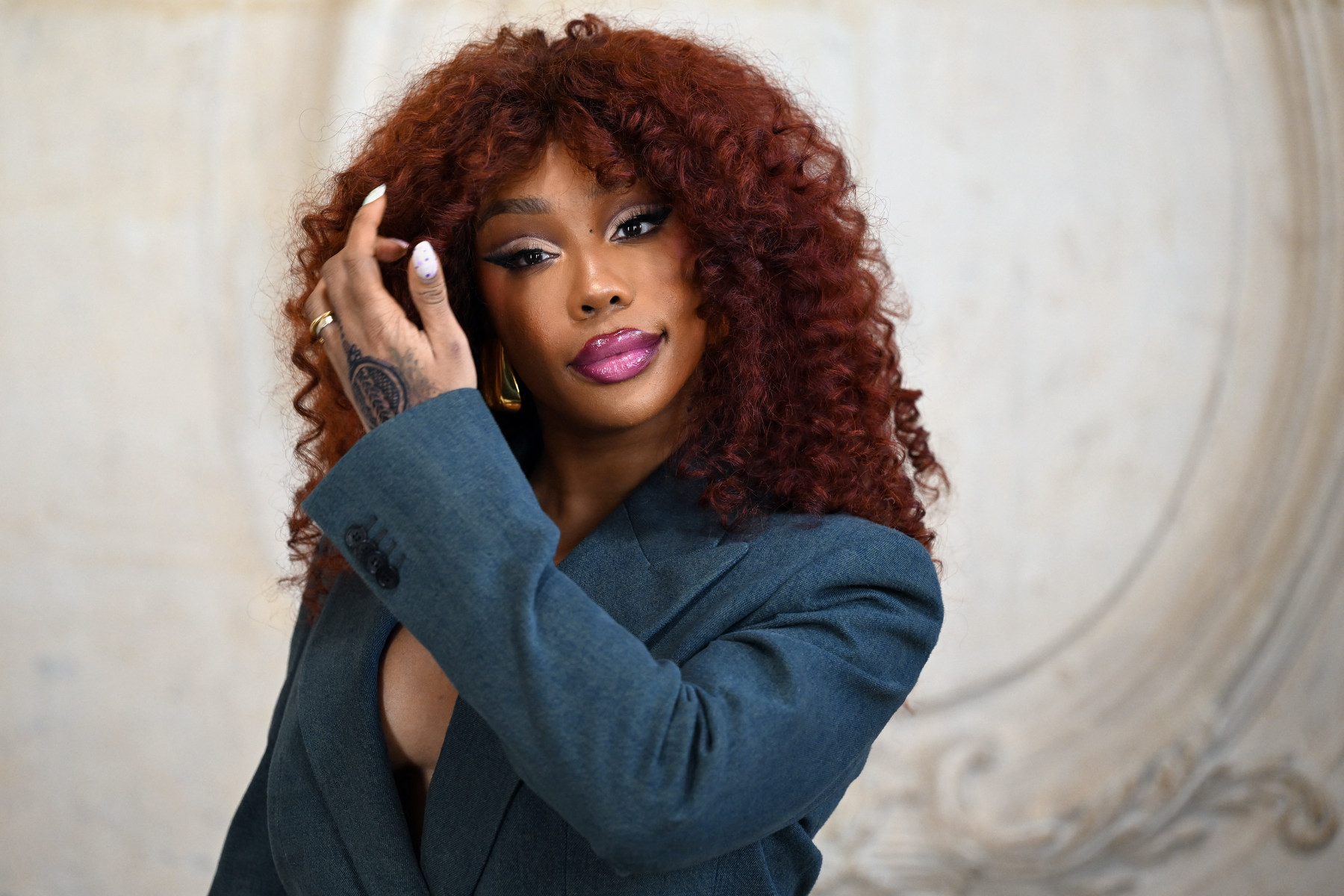

This week Grammy-winning singer SZA, née Solána Imani Rowe, shared that she had received a formal autism diagnosis. In a now-deleted Instagram post, she joked that the diagnosis meant she was “smarter than u.”
Natasha Nelson, better known as the influencer and educator Supernova Momma, is the mother of two autistic daughters and is on the spectrum herself. She wasn’t surprised by SZA’s disclosure and had previously had her own suspicions.
“I could tell that she was a little eclectic. I like to call it gang recognizes gang,” Nelson joked.
Autism is a common neurodevelopmental disability, impacting roughly 1 in 31 Americans, according to the most recent estimate from the Centers for Disease Control and Prevention. It is characterized by differences in communication, socialization and behavior and can present in a variety of ways. There are major disparities when it comes to race and gender in autism diagnosis, research, access to support and more. Women are typically diagnosed much later than men and, until recently, Black Americans were often overlooked entirely.
Desi Jones, an assistant professor of psychology at the University of Maryland, noted that Nelson’s experience is common. Her dissertation focused on the experiences of Black autistic women, and she continues to explore the topic at the Stigma, Human Interaction and Neurodivergent Experiences, or SHINE, Lab, which she leads.
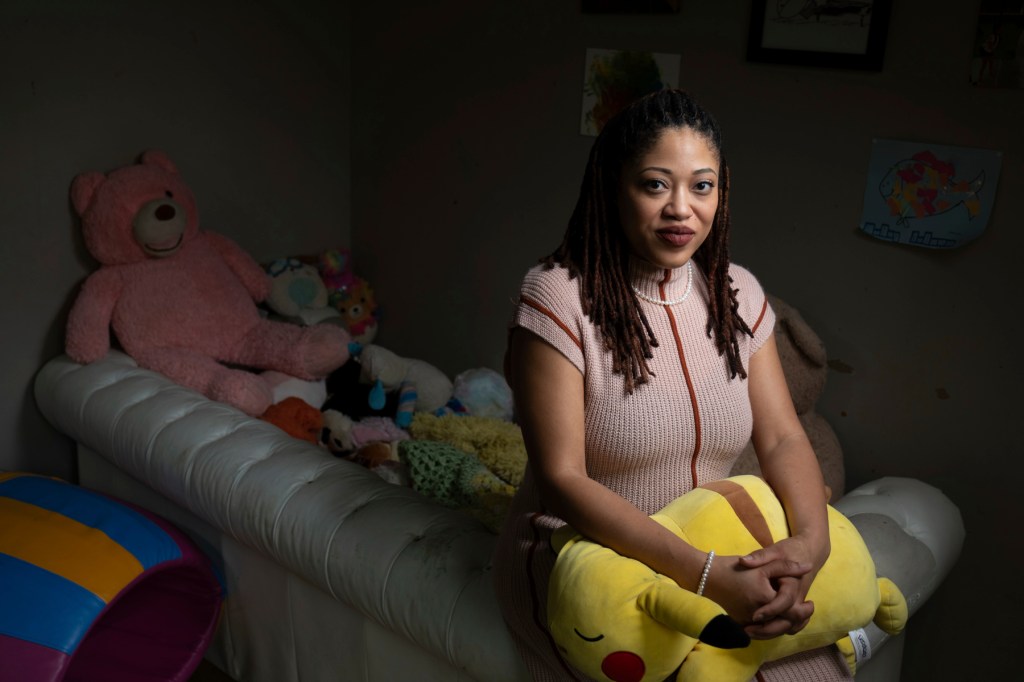
“So many of them just felt completely invisible, overlooked,” Jones said of women she has interviewed. “They weren’t being represented in the media portrayals of autism, they couldn’t really find spaces for themselves when they went to autistic spaces. Those spaces were often predominantly White people or predominantly men.”
Black women and girls were also almost entirely absent from autism research until very recently.
“The [American Psychological Association] and clinical training really emphasize looking at diverse perspectives and how a lot of different conditions can present cross-culturally, but it really wasn’t there for autism,” she said.
Beyond a lack of representation in scientific literature and in the public imagination, autism can also look different in women and girls, particularly Black women and girls. Autistic women and girls, particularly Black autistic women and girls, may also have different interests than those stereotypically associated with autism due to differences in exposure and socialization. For example, one of the women Jones interviewed for her dissertation was deeply interested in K-pop. She was bullied for that interest in her day-to-day life and found refuge online with other autistic Black women who shared her love for the genre.
Women and girls are also more likely to successfully engage in “masking,” or the act of actively attempting to disguise and compensate for autism in social contexts. On top of existing biases about what an autistic person looks like, it can make diagnosis more difficult for clinicians. This is a relatively new area of autism research, and masking among Black women and girls has not yet been investigated in any larger studies.
“They feel that they’re being misinterpreted as angry. Or they’re being seen through these racialized views of Black women, so they feel like they really have to be their absolute best version of themselves,” Jones said of the women she has interviewed for her research.
Nelson compared masking to “code-swiching,” a strategy used by marginalized people to adjust how they present themselves in different contexts.
“We’re taught to code switch from birth,” Nelson said. “We’re taught to mask from birth as a person of color and so it just becomes automatic.”
Nelson also related the extreme crucible faced by Black women on the spectrum to the idea of the “Talented Tenth,” a concept originated by Black intellectual and pioneering civil rights leader W.E.B. Du Bois in the early 20th century that asserted there is an intellectually superior leadership class in the Black community. The idea still shapes Black politics and communities today, even as some have pushed back against it. Nelson feels that this concept exerts extra pressure and by extension, extra stigma to those who don’t measure up.
“The problem is that some of us are just regular Black people,” Nelson said. “We’re not the Talented Tenth. We can’t do more. We may have a disability, and that should be okay.”
This sense of alienation is also common for Black families of autistic children. It led Camille Proctor to found the Color of Autism Foundation in 2009, after her son was diagnosed. At first, the organization’s focus was on access to childhood diagnosis and early intervention. Black children are, on average, diagnosed later than their White peers. They are also diagnosed much later after parents first report concerns to pediatricians. One study found a three-year gap for childhood diagnosis.
The experiential chasm Proctor felt between herself and the White mothers in her support groups only widened as her son got older. In particular, she remembered trying to talk about differences in how police perceive Black men and boys, after a White police officer shot and killed Black teenager Michael Brown in 2014. Her son has an intellectual disability and may not understand police instructions.
“If you’re asked by the police to yield, if you can’t process it, or you aren’t able to say who you are, say your name, it could get you killed. I was in a room full of White women who were supposed to be supporting me and they would say, ‘Oh no, that would never happen,’” Proctor said. Her organization expanded not just to connect families with diagnosis and early intervention, but to provide culturally competent support and advocacy.
As Proctor became more aware of the adult autism space and autistic adults, she also became more aware of women like Nelson Black women who went their entire lives feeling out of place and dysfunctional, without necessarily understanding why. While there is little research, anecdotally, many of those women are mothers themselves. Her organization grew to include these women too.
Nelson didn’t consider the possibility that she might be autistic until her younger daughter was diagnosed. Nelson’s older daughter is minimally speaking, but her younger daughter’s autism “shows up more like mine,” she said.
Nelson didn’t think much of her younger daughter’s behavioral differences, not just because they were different from her older daughter’s, but because she did those things herself as a child. The people who helped diagnose her daughter suggested that she might also want to get evaluated.
“I went to my family doctor and asked for a referral. And she told me, ‘I’m happy to give you one, but I don’t know where to send you. I don’t know who diagnoses adults,’” Nelson said.
Nelson eventually found five professionals in her state who were qualified to diagnose adults. Only one took her insurance and even then, it wasn’t an easy process. The provider told her it was often hard to differentiate trauma from autism or other conditions in adults but that she did have autism, like her daughters.
“I just jumped headfirst in helping families like mine, because one of the things I learned was how few Black families are navigating [the diagnostic process in the first place], and for the Black families that are navigating this, how little support resources they get and have,” Nelson said. Through her online platform and advocacy, Nelson has spoken with hundreds of late-diagnosed Black women who share her experiences and struggles.
Instead of understanding, she and other women like her were told, “I was a problem, I didn’t want to follow rules, I had oppositional defiance disorder, I don’t understand authority, I’m picky and extra and unnecessary,” Nelson said. And Nelson used her platform to push back.
“I tell them that [being autistic is] not someone’s fault. I don’t need to deduce why. I don’t need to change me. It just is what it is. And a lot of Black women I’ve spoken with said that was the first time they had heard that. They’ve been going their whole lives trying to change themselves and thinking something was wrong with them,” Nelson said.
Nelson, Proctor and Jones all highlighted the ways that Black women are often not believed about their own experiences, particularly in medical settings. This lack of trust and respect from medical professionals leads to higher maternal mortality rates and adverse health consequences for Black women and girls, but it also contributes to under-diagnosis and can cut Black women and girls off from a sense of self-understanding, as well as available autism services and supports.
SZA’s social media post about an autism diagnosis may seem trivial, but it may help more Black women and girls see themselves.
“Having more representation means having more people understand what autism can look like,” Jones said.


